Graduating this week
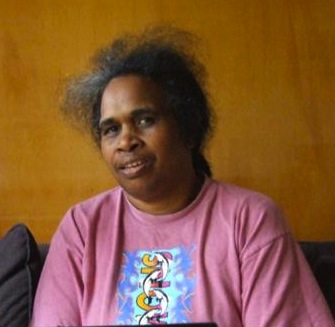 Congratulations to Lois Kusilifu (Solomon Islands) who is graduating this week with a Master of Indigenous Studies degree.
Title: The Experiences of the Solomon Islands Seasonal Workers under the Recognised Seasonal Employer scheme in New Zealand
Supervisor: Dr.Alumita Durutalo
Abstract: “Oketa chalens na osem, pipol lo dea oketa laef stael differen, espeseli na swea. Ani smol samting swea.Iumi wea garem kastom,kaen ia barava nogud lo iumi. Sapos iu no doim eniting gud oketa swea lo iu nao, so hem na osem mi faesim. Hem nogud tumas lo mi taem mi herem oketa usim nem blo God mi fil nogud tumas. Nara samting moa,mifala waka anda nit presa. Mifala bae no rest, taem,taem, everiting mas in taem. Osem gogo mifala big woman gogo osem smol pikinini tu becos mifala waka anda presa. Ma samting mi saenem na ia. Osem sapos oketa lelebet meanim wei blo iumi bae gud(9WW).”
(The challenges I have come across is that the lifestyle is different. Especially the way swearing and blasphemy are a common everyday speech. Not only that, we work under pressure. We don’t rest for long. We are expected to do things on time. This makes us feel as if we are kids. If only they understood us)
This study focuses on e focus the experiences of the Solomon Islands seasonal migrant workers in New Zealand’s Recognised Seasonal Employer (RSE) scheme. This scheme enables low-skilled seasonal migrant workers, to work temporarily in New Zealand’s horticulture and viticulture industries for a period of three to seven months each year. Interviews were conducted in two different locations- Wairarapa, New Zealand and Honiara- Solomon Islands. Qualitative research methods were used in gathering primary and secondary information. The findings of the research suggest that Solomon Islanders have benefited from participating in the scheme in ways they expressed as in building of permanent homes, advanced payment of school fees and undertaking of small businesses.
This study focused on extending the boundaries of earlier research, such as that done on Ni-Vanuatu seasonal workers in New Zealand, by having an in-depth focus on the social experiences of the Solomon Islands seasonal workers in New Zealand. What were the social experiences of the Solomon Islands seasonal workers and what could be done to improve employer and employee relations through policies to enable the benefit of all, the employers, employees and the countries involved.
Te Tumu postgraduate success
Featuring Malia Lameta & Te Ao Marama Tawhara. Six Te Tumu Masters-level students are graduating next week, with either Master of Arts, or Master of Indigenous Studies, showcasing our research strengths in the fields of Māori Studies, Pacific Island Studies, and Indigenous Development. Two are featured in today’s blog post, with more profiles forthcoming.
 Malia Ellen Mamele Lameta (Samoan)
MA (Pacific Island Studies) supervised by Professor Michael Reilly and Dr Michelle Schaaf.
“I Am The Apple Of My Brother’s Eye” : An investigation into the evolving roles of Samoan women with particular reference to religion and gender relations.
[Click here to access the thesis]
Abstract: What does it mean to be a Samoan woman? The following thesis addresses this question by exploring the lived experiences of Samoan women with particular reference to religion and gender relations. Adopting an inter-disciplinary approach, it sheds light on the tenacity of socio-cultural and political factors that influence women’s roles and status. In particular, this research explores how Samoan women navigate the differing and often contradicting worlds of culture, Christianity, family, education, politics and gender. Information for this research was obtained through a series of interviews and literature analysis of primary and secondary sources. It has been the aim of this thesis to prove, not only to myself, but to those with a background and understanding similar to my own, that we, as women, are not inferior within Samoan culture. The participants’ words have been integrated throughout this thesis from Chapter One so as to emphasise and give strength to the voice of Samoan women. This thesis is centred on the inspiration and aspiration of these women and as a result, their testimonies have been brought alongside the literature as opposed to being supplementary. Women’s roles as sisters, wives and daughters are explored and the question is posed whether their cultural importance and status has been diminished by the influence of Christianity. From the evolution of women’s roles, to the changing meanings of the feagaiga, from the arrival of Christianity to the present day, women within Samoan society play a role that is imperative to the proper function of families, villages, districts and nation. The arrival of Christianity has not stripped us of our traditional importance but has increased and expanded our roles. We, Samoan women, are not oppressed, we are not suppressed; we have a voice, a place and dreams.
 Te Ao Mārama Anna Maria Tawhara (Ngāi Tūhoe/German)
MA (Māori Studies) supervised by Dr Matiu Rātima & Associate Professor Poia Rewi.
Kia Māori te reo Māori? An investigation of adult learner attitudes towards the impact of English on te reo Māori
Abstract: This study sought to answer the following questions: What impact does the English language have on te reo Māori (the Māori language)? What attitudes do adult language learners have towards the impact of English on te reo? And what implications do these attitudes have for the revitalisation of te reo Māori? Engaging in in-depth semi-structured interviews with eight former University of Otago Māori language students from Te Tumu School of Māori, Pacific and Indigenous studies[1] (Te Tumu) forms a necessary part of this research project. Following Braun and Clarke (2008), the data gathered from the interviews was examined using Thematic Data Analysis.
The fundamental aim of this thesis is to explore and describe adult learner attitudes towards the impact of English on te reo Māori, so as to gain insight into how active language learners within Te Tumu perceive the influence of the English language. The thesis has two key foci, the first is parts of language, such as transliteration, code switching, pronunciation, grammar and idiom. The second is the impact of English within the context of teaching and learning.
On the one hand, this study shows that the participants view the impact of English as a form of contamination that is having a negative effect on Māori cultural concepts because there is less use of authentic Māori words and phrases, which in turn dilutes and minimises the representation and understanding of a Māori epistemological world view. On the other hand, some participants identified specific times when English language usage could be helpful to their developing proficiency in te reo Māori. The findings yield that there are certain exceptions such as the use of transliterations and code switching as being a necessary tool for scaffolding learning of te reo Māori particularly during the early stages of learning. The use of transliteration as a form of humour was also seen as acceptable. However, the main concern among the cohort was the maintenance of the authentic use of te reo Māori, more specifically, Māori lexicon, grammar, pronunciation, and idiom. Furthermore, the participants felt strongly about certain aspects of teaching and learning within Te Tumu that privilege Pākehā teaching methods[2] such as the grammar translation method and a lack of attention to tikanga Māori (Māori culture) and Māori centred pedagogies. The findings from this study show definitively that the participants feel that the language is in a state of contamination, on the other hand they are also concerned that there are times where transliteration and code switching can be necessary, even useful.
[1] See http://www.otago.ac.nz/tetumu/ for further information about the University of Otago department of Māori, Pacific and Indigenous studies.
[2] By Pākehā methods of teaching I am referring to the pedagogical teaching practices that favour the use of the English language.
Te Tumu scholar in successful Research Theme bid
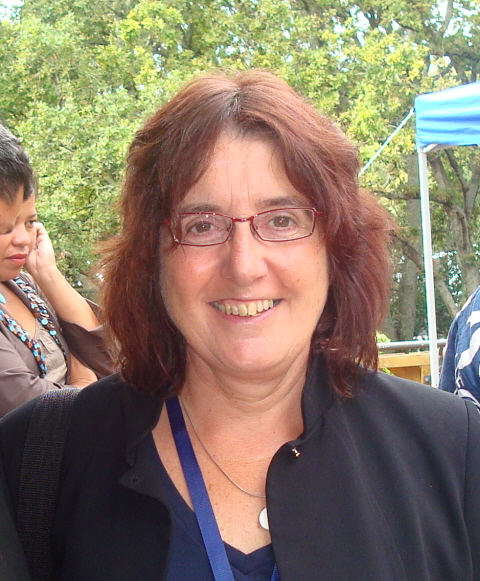
Jenny Bryant-Tokalau
Associate Professor Jenny Bryant-Tokalau of Te Tumu is one of 14 Principal Investigators in the recently awarded University Theme, Asia-Pacific Biocultural Health: Past and Present.
The theme, which is coordinated by Haille Buckley, Tuari Potiki, Tony Merriman and Sian Halcrow and has attracted academics from various Otago divisions, is funded for five years. It will investigate fundamental questions of the human past that have pressing implications for human society today in Aotearoa, the Pacific and Southeast Asia. Questions of the origins of people, non-communicable disease, and social inequality, and major subsistence and cultural change will be assessed drawing on a range of cross- and multi-disciplinary approaches mobilising research expertise in the University.
Jenny’s role in the theme is her work on adaptation to climate change and hardships and inequality in the Pacific.
Michael Reilly – selected for the JPH Virtual Special Issue
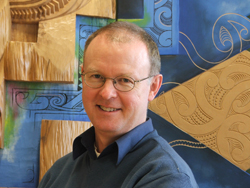
Professor Michael Reilly
The Journal of Pacific History has reached its 50th year, and the editors have produced a “Virtual Special Issue” to commemorate this milestone with 26 previously published essays. Authors include the likes of Marshall Sahlins, Greg Dening, Neil Gunson, Judith Binney and others. Included among the luminaries is Te Tumu’s Professor Michael Reilly, with his essay, ‘Grief, Loss and Violence in Ancient Mangaia, Aotearoa and Te Waipounamu’, which appeared in Vol. 47 (2012). As the editors state, this ‘is a brilliant analysis of the language of emotion in vernacular texts by a prolific contributor to JPH.’ Congratulations, Michael, for this recognition of your great contribution to Pacific history.
Three Items
The Puke Ariki Trust Scholarship, valued at $5000, supports the studies of a postgraduate student whose research relates to Taranaki’s social history. Puke Ariki is Taranaki’s Museum, Library, Archive Centre based in New Plymouth, renowned for its extensive heritage collections. If you are interested in this scholarship, check out the Puke Ariki Trust Scholarship Terms and Conditions.
Associate Professor Jenny Bryant-Tokalau presented a paper to the conference ‘Islands and Oceans: Navigating Pacific Futures’ held at Auckland University, November 12-13th 2015. Jenny’s paper, entitled ‘Reforming Land Tenure in the Pacific: requirements and implications, the case of Fiji’, was chaired by former Oxfam director Barry Coates, and was part of an intensive two day workshop between University of Auckland (Pacific Studies), Auckland University of Technology, Australian National University and the University of Otago to look at areas of collaborative Pacific research.
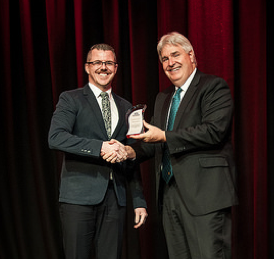
Nathan Albury (left)
Te Tumu PhD student Nathan Albury recently was awarded the Griffith University School of Language and Linguistics Outstanding Alumnus Award in recognition of his PhD research into folk linguistics for Te Reo Maori and Sami language. Nathan is completing his PhD at the Centre for Multilingualism in Society Across the lifespan – MultiLing (CoE), Department of Linguistics and Scandavian Studies, University of Oslo,with Dr Lyn Carter (Te Tumu) as one of the supervisors.
The Ngāruawāhia Tūrangawaewae Regatta
Tangiwai Rewi
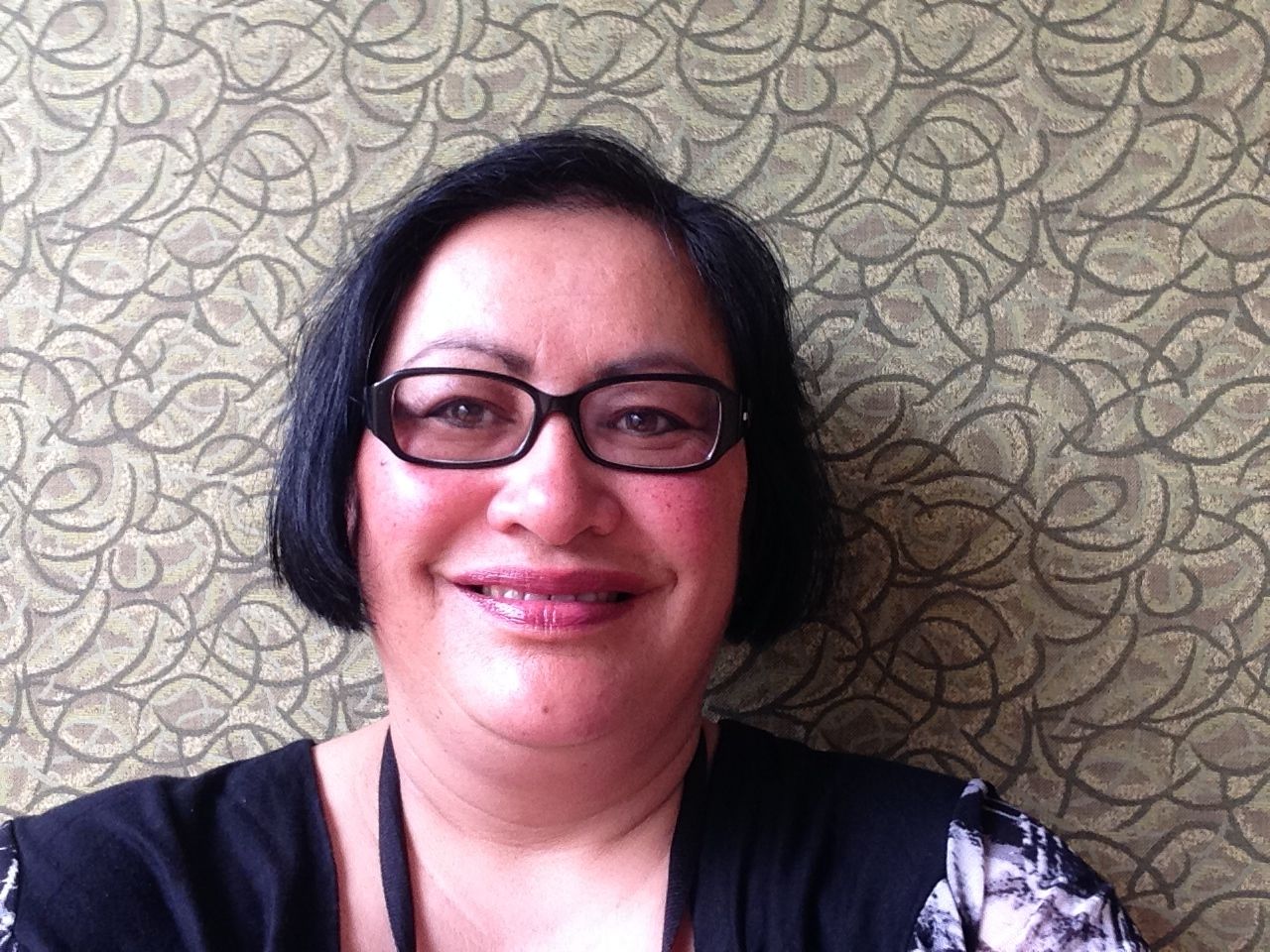
This Wednesday Tangiwai Rewi will be giving a seminar, “The Ngāruawāhia Tūrangawaewae Regatta: Today’s Reflections on the Past”, based on her on-going research on intergenerational knowlege transfer relating to Kīngitanga practices.
For more details, see the Abstract
The seminar will be in Te Iringa Kōrero (R3S10, 3rd floor, Te Tumu), 2.30-3.30, Wednesday 25 November, and is open to all.
Exciting Opportunity for PACI student.
We are happy to announce a major success for Eden Iati of the PACI201 class (Tagata Pasifika: Peoples of Oceania).
Eden has been selected by the McGuiness Foundation to participate in a 72 hour workshop in Wellington in December on TacklingPovertyNZ: Exploring ways to reduce poverty in New Zealand.
The course will bring together 30 young New Zealanders who will work together to prepare a youth perspective on poverty in Aotearoa New Zealand, and how to tackle it. Those selected will be engaging with government ministers, Treasury, Auckland City Mission, Economic think tanks and many others.
PACI201, a paper within Te Tumu’s Pacific Islands Studies major, proved to be an excellent support to Eden as it examines issues such as poverty, inequality, urbanisation and land in a Pacific context.
Well done Eden!
“How whakapapa saved my life”
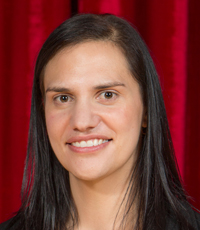 Dr Karyn Paringatai (Ngāti Porou) is perhaps best known for her innovative award-winning teaching pedagogy – teaching in the dark. But on 10 November, Karyn gave a talk for TEDxDunedin on a much more personal issue, on how learning her whakapapa saved her life. TEDx talks are about “Ideas Worth Spreading”.
Click here to watch the video of Karyn’s talk.
Karyn teaches Māori language and performing arts in Te Tumu.
Emma Dunlop-Bennett, a new PhD student in Pacific Studies.
Emma Dunlop-Bennett, a new PhD student in Pacific Studies, visited from Wellington recently. Emma is supervised by AP Jenny Bryant-Tokalau and Dr Michelle Schaaf, and her topic is ‘Strengthening Pasifika early childhood education through a Pasifika-developed model’.
Emma’s working background is as Country Director of World Vision Vanuatu, and as Programme Manager in NZAID and MFAT, largely in the Pacific. She has also worked in the Family Planning Association (NZ), and in Rural Development in Zimbabwe. Emma will be based in Wellington but will visit Te Tumu several times a year.
Tangata Whenua Internship at Waikato Museum
Mō ngā tauira… Kei te kimi te Whare Taonga o Waikato i tētahi tangata hei kaimahi āwhina mō ngā taonga Māori. He pai tēnei momo mahi hei kaupae tuatahi o tō ara mahi, rangahau rānei. Tirohia te pānuitanga, kia kitea he pai rānei tēnei tūranga mōu.
