He rongo
Aroha mai! A belated roundup of Te Tumu research news.
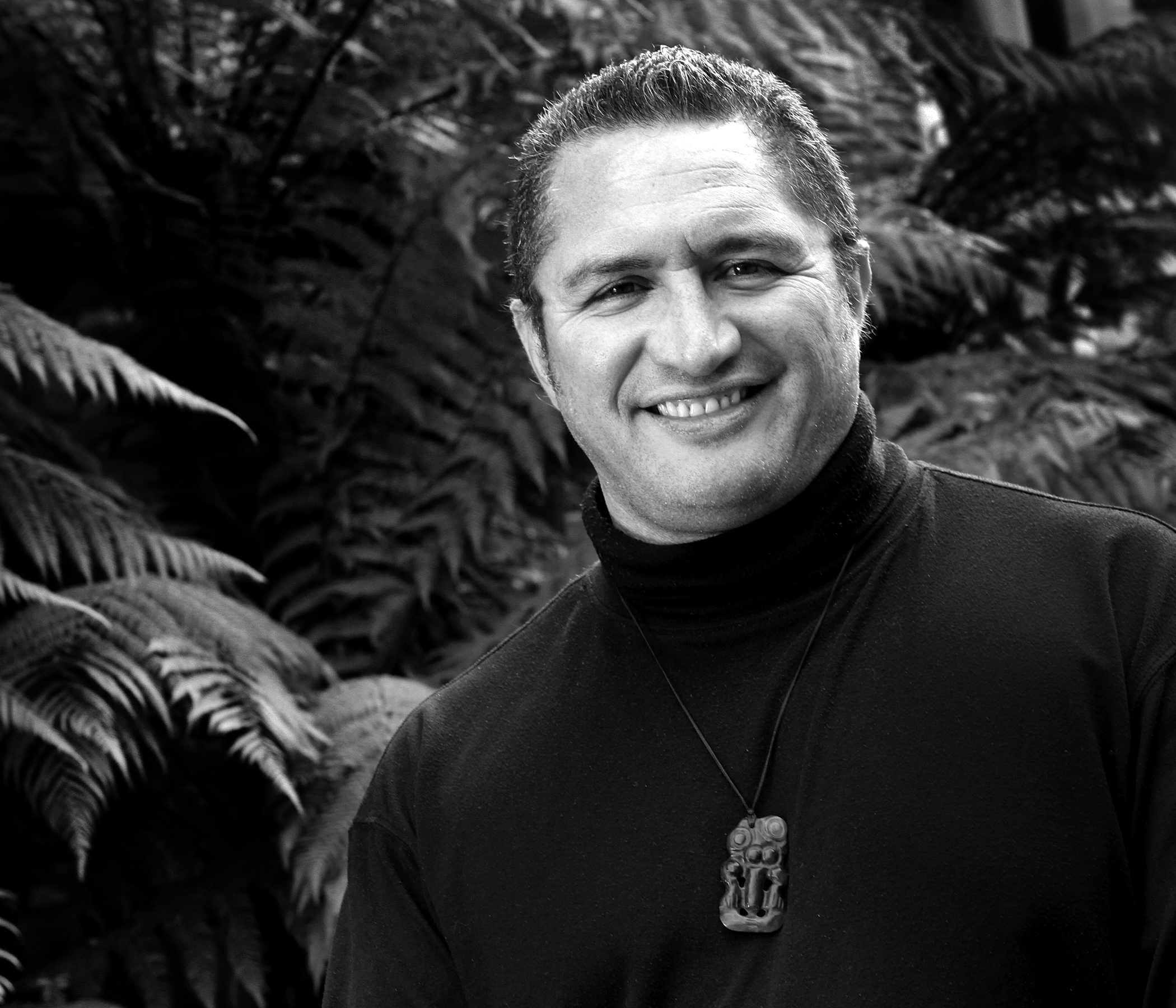
Professor Poia Rewi
In July we were treated to Poia Rewi’s Inaugural Professorial Lecture, held to celebrate his ascension to this tūranga rangatira within the university. The title of his talk was “Hoka : Motivators of Time”, a tour alongside Poia as he recounted his own academic journey, and his ZePA model of developing positivity around the use of te reo Māori. This was well attended by Poia’s whānau, staff and students, as well as many from the community, and was capped off with haka, waiata and karakia. The lecture can now be viewed on ITunes U.

Sandra Spence

Dr Gianna Leoni
In July Te Tumu were privileged to host Professor Michael Harkin as a William Evans Fellow. Professor Harkin, a cultural anthropologist and inaugural editor of Ethnohistory, gave several talks: a public lecture “The Trump at the End of the World: Monsters and Marvels in our Parlous Age”, in which he brought his knowledge of societies past and present together, and a departmental seminar, “‘The Emotional Archive’: The case of Residential Schools in Canada”, in which he examined ‘the relative lack of negative narratives [he] elicited…during fieldwork in British Columbia in the 1980s–2000s’, while also exploring ‘various forms of social memory, proposing the notion of an “emotional archive” that contains non-narrative memory traces’.
It is always great when our students gain their postgraduate degrees, after months or years of working on, and writing up their research. We had three such students graduating this August: Sandra Spence (Pākehā) and Raaniera Te Whata (Ngāpuhi, Ngāti Porou, Te Whānau a Apanui, Airihi) with the Master of Indigenous Studies, and Gianna Leoni (Ngāti Kurī, Ngāti Takoto, Itariana) with a PhD.
Dr Lyn Carter supervised Sandra, whose research was on “Kāi Tahu Chinese Unions and Identity in Otago and Southland/Murihiku”; Associate Professor Merata Kāwharu supervised Rāniera (“Tautoro, tū te ao, tū te pō (The endurance of Tautoro heritage): Investigating challenges and opportunities”); Professor Poia Rewi and Associate Professor Lachy Paterson supervised Gianna (“Mā te Taki te Kāhui Ka Tau: Te Waiaro ki te Reo Māori i ngā Hinonga Kāwanatanga”) who wrote her thesis in te reo Māori. Gianna is teaching MAOR312: Te Māhuri 2 this semster.
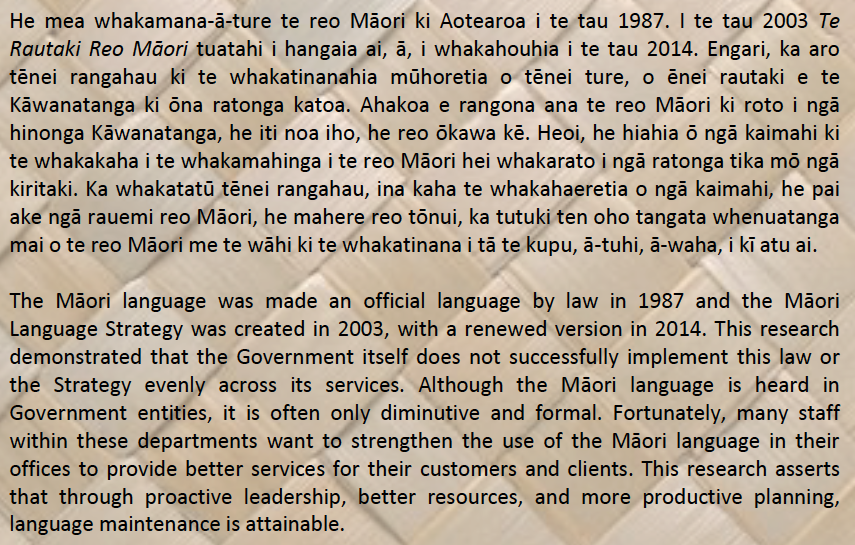
The abstract of Gianna’s PhD. Click to enlarge.
He kauhau
Te Tumu’s newest PhD graduate will be presenting a seminar to the Department of Anthropology and Archaeology this Thursday, 12pm. Ko te kaupapa te tuhi i tāna tuhinga kairangi i roto i te reo Māori; on writing a thesis in Māori. Koia kei a koe, Gianna.
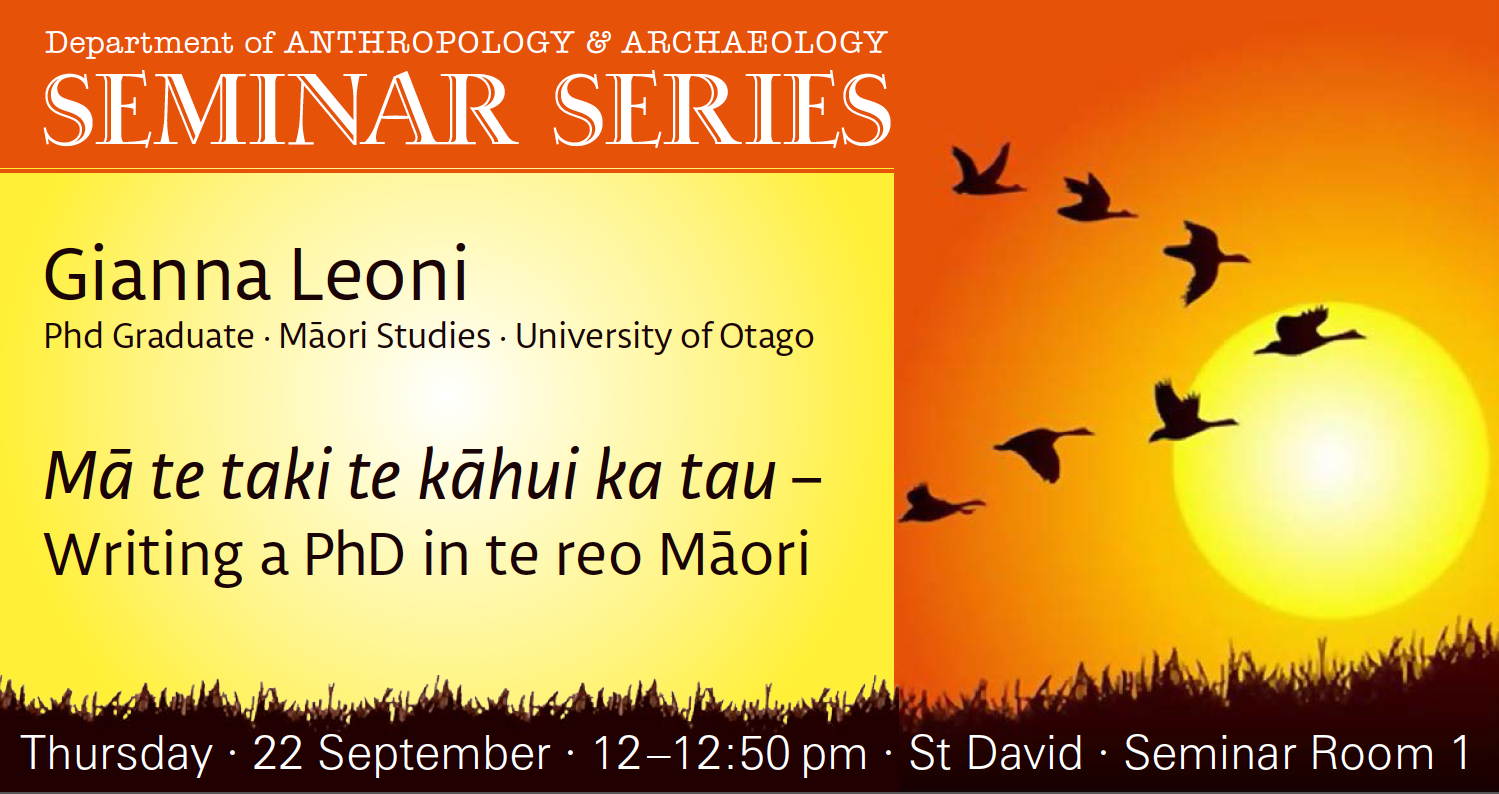
Click to enlarge
Waitangi Evidence by Associate Professor Merata Kawharu
People sometimes wonder what “value” academic work may have, particularly with regard to Humanities research. We are lucky to have Associate Professor Merata Kawharu of the University of Otago’s Research and Enterprise Office as an adjunct Research Professor in Te Tumu. Merata’s achievements that benefit Māori are many. Her latest work has been working on behalf of her own people, Ngāti Rahiri and Ngāti Kawa of the Bay of Islands, preparing evidence on early Māori-Pākehā interactions, with particular relevance to land, and presenting it from a cultural and hapū perspective. As she states “This kōrero today serves not to repeat what historians have already covered. Instead, I take a different perspective, centralising arguments from a cultural values and community-centric orientation so that the extent of significant loss can start to be more fully appreciated.” Click here to read Merata’s Summary Brief of Evidence.
Student research in Te Tumu papers
It is always gratifying to see proactive student research within Te Tumu papers, and Semester 1 2016 has been no exception.
MAOR202 students research on reducing alcohol harm
This is the second year that students in MAOR202 (Māori and Tikanga) conducted research with the objective of developing tikanga-informed solutions to reduce alcohol harm. The students acted as consultants to the New Zealand Police who came to them at the beginning of the semester and explained the complex problem of alcohol. The students then spent the semester learning about the useful nature of tikanga and the research process. This culminated in 8 groups projects which ranged from a mobile phone app that promoted connectedness and collective responsibility to reduce sexual assaults to a camp that fostered a sense of belonging and self for at risk foster youth. The projects all worked towards preventative, strengths-based, proactive solutions. They presented their projects to representatives of the New Zealand Police at a small symposium hosted at Te Tumu, and in more detail in their written research reports. Suzanne Duncan teaches MAOR202.
MAOR308 students research Ngāi Tahu history for kapa haka compositions.
Students: “As an interlude, we’re going to sing ‘Kohikohia ngā rīwai’ as a play on the song from Mount Zion. Everyone knows the tune. It’ll be cool.” (The tune of “Tutira mai ngā iwi.”)
Lecturer: “Yeah that would be great except rīwai were introduced after European arrival.”
Students: “Oh. Ok we’ll change it to ‘Kohikohia ngā kūmara’ then.”
Lecturer: “Again that would be great except kūmara didn’t grow down south because it was too cold.”
Students: “Oh. Ummmm so what can we change it to?”
Lecturer: “Think about the local food supplies down here.”
[Blank looks on their faces.]
Students: “We’ve got it – Kohikohia ngā tuaki? Kohikohia ngā tītī?”
The above conversation with one group highlighted for them early on in the semester how important research was in creating an historically accurate composition, particularly given the theme they had chosen for their performance – an insight into Ngāi Tahu/Ōtākou Māori history.
MAOR 308 was offered for the first time this year. The aim of the paper was to give students the opportunity to work in groups to compose, choreograph and teach each other a haka, waiata or poi. Given the theme, and the fact that only two of the students whakapapa to Ngāi Tahu, the need for the students to research local histories was made clear very early on. Not only did the narrative of their compositions have to be correct but also the reo, the costumes and the choreography. I did not have much to teach them in terms of performance skills – they are all highly proficient performers – but what I could help develop was their research and language skills in this area.
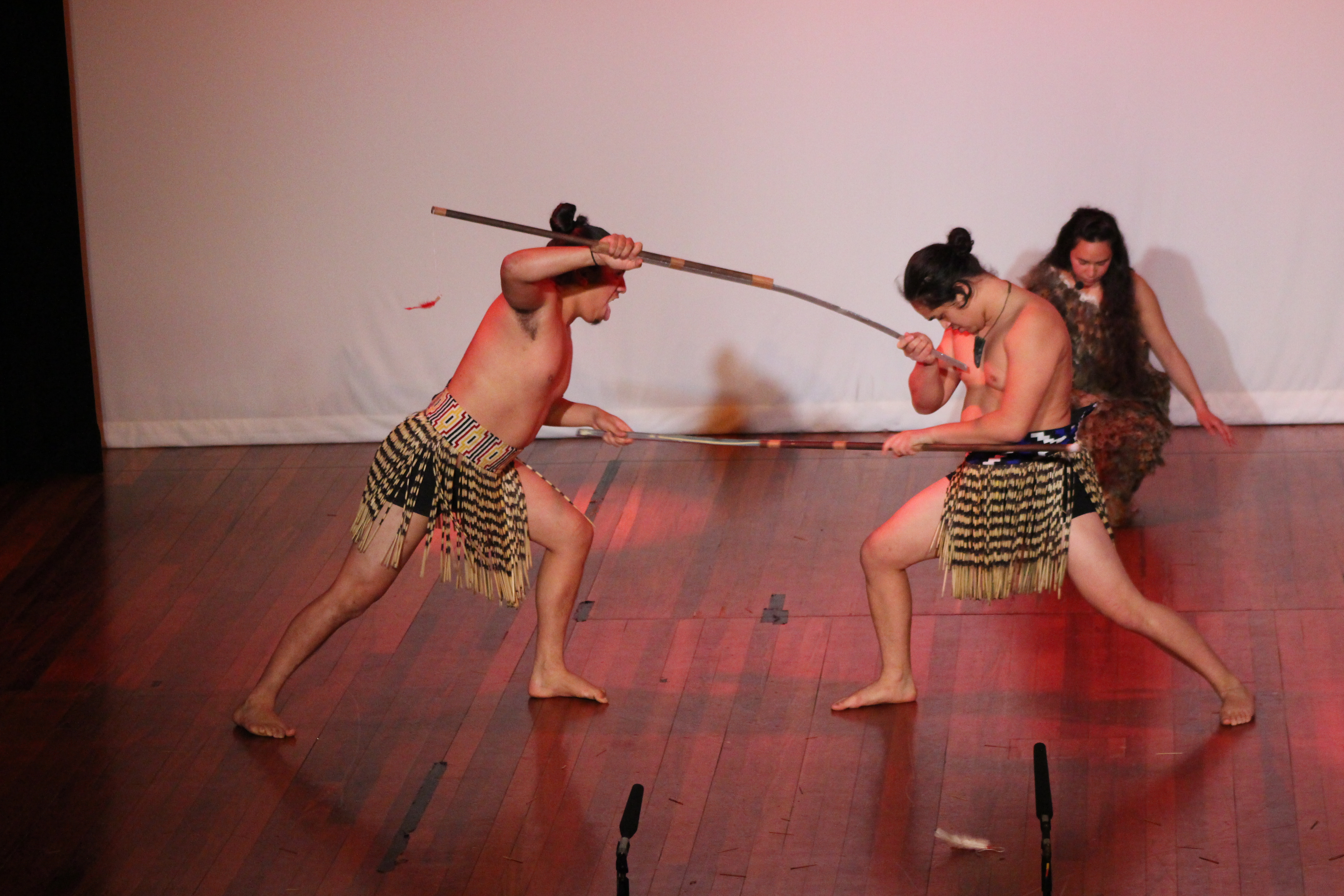
MAOR308 students performing their own compositions.
Haka and waiata is how these students know how to best express themselves and because they were responsible for each item they were more invested in the performance than if they were simply performing something someone else had written for them. The results speak for themselves and the excitement they have created within the community of the potential of Māori performing arts to extend beyond the typical ‘bracket’ performance will have long-lasting effects. Dr Karyn Paringatai teaches MAOR308.
An account of the MAOR308 performance (and also that of MAOR108 students) can also be found at the Otago Connection.
MAOR427 students translate Māori letter from 1859.
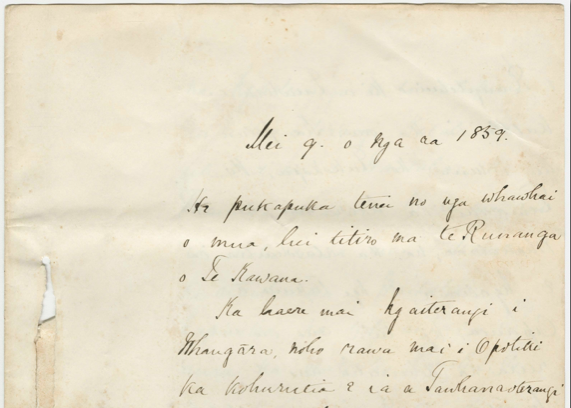 The Hocken Collections is a magnificent cultural treasury and part of the university’s library system. Within its collections are a number of untranslated Māori-language manuscripts that many researchers are unable to read. MAOR427 (He Tuhituhinga) is a paper in which students read and analyse Māori-language historical texts, with all discussion and assessment done i roto i te reo Māori. One of the mahi was to transcribe and translate a 1859 14-sheet letter written by Te Rūnanga o Awataha to the Governor concerning Māori history in Bay of Plenty. The students were able to give their work back to the Hocken as a resource for future researchers. Assoc Prof Lachy Paterson teaches MAOR427.
The Otago Peninsula: A Unique Identity
 It’s wonderful to see Te Tumu’s emerging scholars getting their research out to the world. Megan Pōtiki, one of our teaching staff and also undertaking doctoral studies, has just published an article on the Otago Peninsula in Shima: The International Journal of Research on Island Cultures. The full text of the article can be accessed here.
Ka taea te kī mō tēnei tuhinga, “Mō tātou, ā, mō kā uri, ā, muri ake nei”.
The Otago Peninsula: A Unique Identity
ABSTRACT: The Otago Peninsula on the South Island of New Zealand has a long indigenous Māori history that is rooted in the land and the people of the area. The stories and genealogy that connect Māori New Zealanders to the Otago Peninsula are well documented and retold. After European contact with and connection to the Peninsula was initiated the colonisation of the area occurred rapidly. The Otago Peninsula historically, and to the present day, has always had a separate chartacter to that of the adjascent mainland (around the city of Dunedin). Despite the short distance between them, the culture of the Otago Peninsula remains distinct to that of the mainland as if it were an island.
Professor Poia Rewi – Staff Research Profile
 Ko Ahorangi Poia Rewi te Tumuaki o Te Tumu, engari, he whakahirahira hoki āna mahi rangahau kia ora ai te reo Māori. Ko ia hoki tētahi o ngā ētita o te pukapuka, The Value of the Māori Language: Te Hua o te Reo Māori (Huia Publishers).
He uiui tēnei, he mea mahia mā runga īmēra.
Te Tumu: e te rangatira, tēnā koe. Ka harikoa te ngākau i tō whakaae kia uiuia mō tēnei putanga o tō tātou rangitaki (blog).
Nā, i tērā tau i whakatūria ai koe hei Tīni, arā hei tumuaki o Te Tumu, ā, i tēnei tau i whakaahorangitia koe. He mahi nunui pea ēnei tūranga hei hāpai i te reo Māori i roto i ngā akoranga o Te Tumu, i ngā mahi rangahau, i te whare wānanga hoki. Engari, ka whakapā tāku pātai tuatahi ki tō huarahi ki ēnei tūranga hou. I tō tamarikitanga me tō kuranga, he mea nui te reo Māori ki a koe? Ka aha koe ki te whare wānanga? Nā te aha koe i tahuri ai ki tō mahi hei pūkenga reo Māori? Ko wai ngā pūkenga e whai nei koe?
Poia Rewi: He roa pea te takahanga ki konei. Nā Hine-maringanui pea, nā ngā mana o ngā tīpuna pea, nā ngā pākeke mōhio pea ki te arataki, nā taku hapū ake hoki i runga i te mea, katoa rātou i whakawatea i a au i nga kawenga o te hapū i wātea ai au ki te whai i te ao mātauranga nei. Āpiti atu, ko ngā hoa mahi i roto i ngā whare wānanga e rua (otirā i ngā whare wānanga maha i ngā mahi rangahau) – nā ngā hoa mahi nei au i whakawātea, arā, ka pīkauhia e rātou ngā mahi akoako kia oti i a au ngā rangahau. Ko taku whakapae, nā te rangahau rawa i ū ai te piki tūranga ki uta.
Te Tumu: I tō tamarikitanga me tō kuranga, he mea nui te reo Māori ki a koe?
Poia Rewi: Ehara i te mea i noho motuhake te reo: i aro nui au ki ngā mea Māori (noho marae, mahi whānau, haere ki ngā huihui)
Te Tumu: Ka aha koe ki te whare wānanga?
Poia Rewi: Ko aku aronga nui i ēnei tau, 1) ko te whakapakari hoa mahi, 2), ko te whakapakari i ngā kaupapa akoako a Te Tumu, c) ko te whakapūmau me te whakatairanga i ngā mātauranga Māori, Pasifika , iwi taketake ki te Whare Wānanga o Otākou.
Te Tumu: Nā te aha koe i tahuri ai ki tō mahi hei pūkenga reo Māori?
Poia Rewi: i tīmata noa iho au hei kaiāwhina mā Te Haumihiata Mason i Waikato, koia taku whakamarumaru whakaako reo tuatahi, hua noa, ka hapū tētahi kaiako reo, ka riro māku e kawe, nā, kua pūkenga reo Māori.
Te Tumu: Ko wai ngā pūkenga e whai nei koe?
Poia Rewi: Kua whakahuatia e au a Te Haumihiata, arā atu ano a Te Wharehuia, a Hirini, a Tīmoti. Arā anō ngā pūkenga ā-iwi nei, i aku hapū, i aku iwi nui tonu.
Te Tumu: Kua tino mārama nei, he nui rawa atu tō aroha ki te reo Māori, ā, kei te pīrangi koe kia kōrerotia whānuitia te reo i roto i te hapori. He aha ōu wawata mō te reo?
Poia Rewi: kia nui ake te korerotia, kia tokomaha ake te hunga korero; mātua, koinā.
Te Tumu: Me aha kia tutuki ai?
Poia Rewi: Kia tangata whenua anō te reo i te whenua nei, kātahi ka tutuki.
Te Tumu: he huhua ngā momo kura onāianei e whakaako ana i te reo Māori, engari kei ngā whare wānanga ngā tini mahi rangahau. Whakamāramatia tō koutou hōtaka rangahau ko āu ākonga paerunga. He aha ngā painga e tūmanakohia ana? He aha ērā atu rangahau kāore anō kia meatia, engari kei te matea tonu?
Poia Rewi: ko Te Kura Roa te Kawenga Rangahau matua – he kaupapa nā māua ko Ahorangi Rawinia Higgins o Te Kawa A Māui. E mātua aro ana ki te hua o te reo Māori (ahakoa hapori, ahakoa tari kāwanatanga), Ko Te Kura Roa – Waiaro te wāhi ki Otākou, anā, ko tāna he titiro ki te waiaro o ngā tari kāwanatanga ki te reo Māori i Aotearoa. I Tīmata i 2011. Ko ngā kairangahau kua whai waahi ki tenei rangahau o Otākou nei, ko Dr Delyn Day, ko Gianna Leoni, ko Norma Bartlett, ko Merirangitiria Rewi, ko Julia Coates, ko Suzanne Duncan, ko Awhi Wakefield, ko Kelly-Ann Tahitahi, ko Tawini WHite, ko Raphael Richter-Gravier, ko Jacob Myhre, ko Victoria Campbell, ko Te Hau White, ko Marcelle Wharerau.
Ko ngā mātua kitenga o te rangahau rā, kia kura unua nei te whakarauora reo, arā, ko tā tētahi tētahi riu he titiro ki te whakapūmau i te oranga o te reo, ko tā tētahi, he he whai kia tipu te reo.
Te Tumu: He aha ngā painga e tūmanakohia ana?
Poia Rewi: kia whakahingāia mai ngā tari kāwanatanga, me te motu whānui o Aotearoa ka pai ake te waiaro ki te reo Māori.
Te Tumu: He aha ērā atu rangahau kāore anō kia meatia, engari kei te matea tonu?)
Poia Rewi: Kua nui pea nga rangahau, ko te tīni i te waiaro te mate nui. Hei ahakoa, ka whakamanatia te Pire Reo Māori ākuanei, tera pea koinā te rongoā ināhoki, ko tētahi o ngā tohutohu matua o te Pire, kia riro mā te iwi āna kaupapa mō te reo e kōkiri, ka mutu, ka mātua tophu Te Taura Whiri i te Reo Māori hei whai i te aro mai o ngā Tari Kāwanatanga ki te reo Māori. Kāore anō ngā tari kāwanatanga kia āta aro turukihia ā-hōmiromiro tonu nei. Koinā pea te mātua niho o te Pire Reo Māori ā taka iho ki te anamata.
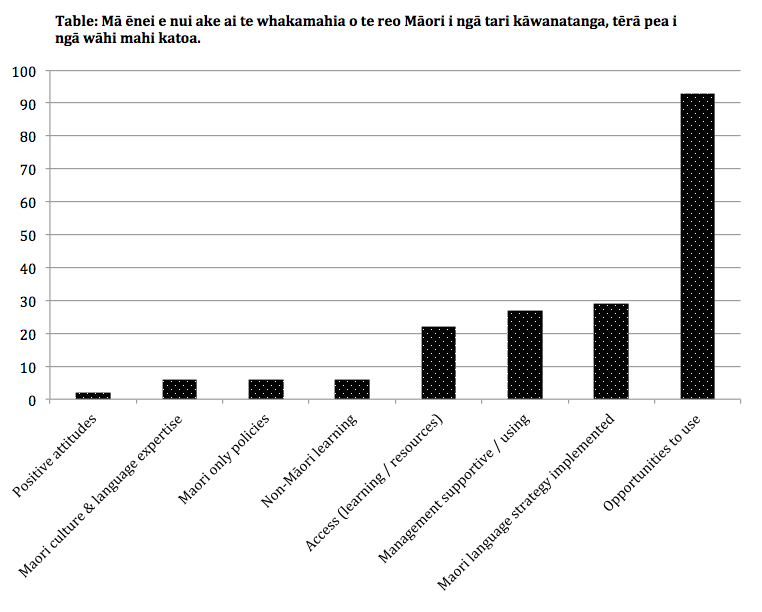
Koia ēnei ngā mea e tautoko ana i te whakamahia o te reo Māori i ngā tari kāwanatanga:
Te Tumu: Kia ora, e hoa.
Nā, ā te Tāite, 14 Hōngongoi a Poia tū ai ki te kōrero mō ana mahi rangahau. Kō tāna Kauhau Ahorangi (Inaugural Professorial Lecture) tēnei. Hei te 5:30pm, Burns 2, kei te Whare Wānanga o Otākou. Haramai nei ki te whakarongo ki a ia.
Seminar on the Teina Pora conviction
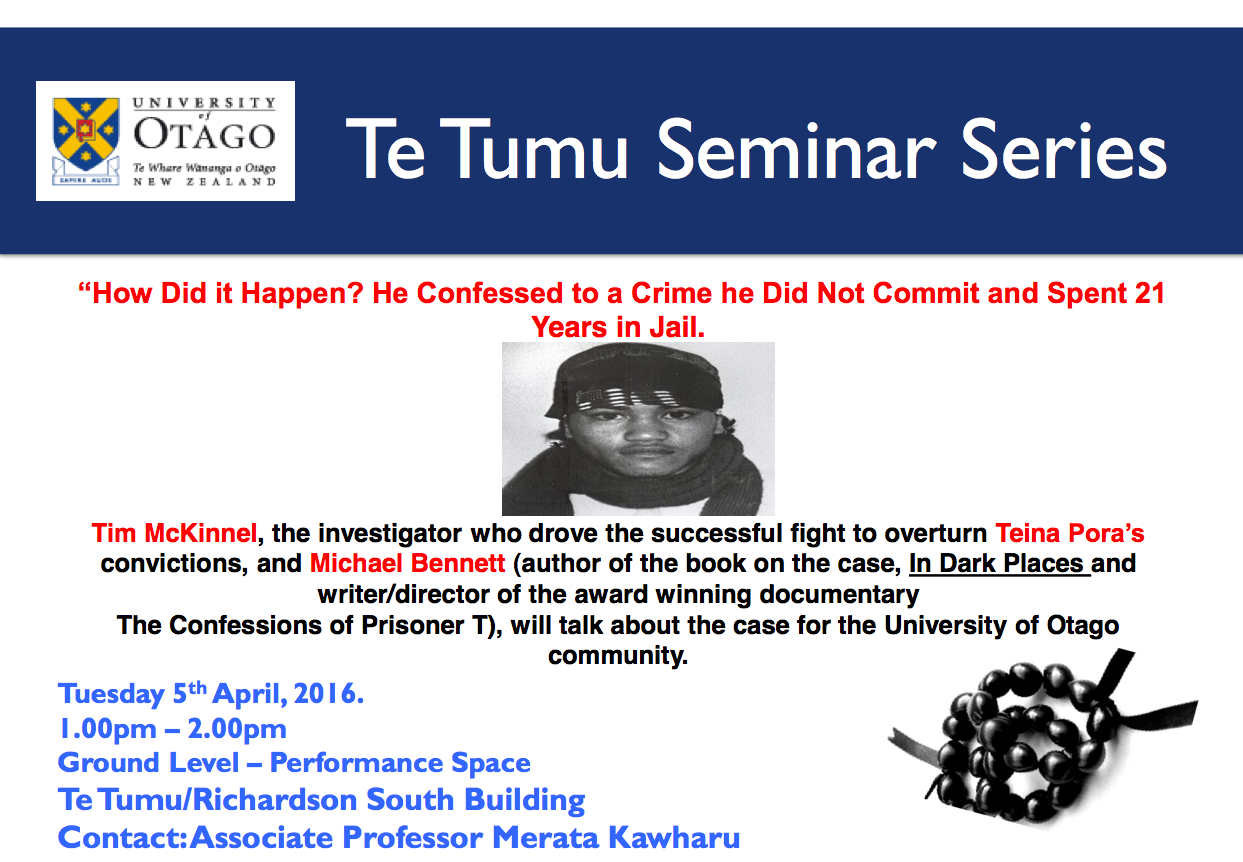
Teina Pora’s conviction is a clear case of injustice, but not unique in New Zealand’s legal history. Come along to Te Tumu this Tuesday to listen to Tim McKinnel and Michael Bennet talk about how Teina Pora was eventually freed.
ZePA research behind Māori language initiative at university
“Nōku te korikori” is a new initiative to help promote and normalise te reo Māori on campus, based on the ZePA model.

Developed by researchers Professor Poia Rewi, Dean of Te Tumu, and Professor Rāwinia Higgins (former Te Tumu staff member and now Head of School of Māori Studies at Victoria University), ZePA stands for Zero->Passive->Active, in which individuals might “right-shift” to a more active use of te reo Māori. The principles behind this model are explored in the book, The Value of the Māori Language: Ngā Hua o te Reo Māori.
“Nōku te korikori”, spear-headed by Tangiwai Rewi, the coordinator of Te Tumu’s Māori Studies programme, encourages learners and speakers of te reo Māori to don distinctive wristbands so that other learners and speakers can easily identify people who are receptive to a kōrero i roto i te reo rangatira. For full details check out this Otago Bulletin article.
Seminar on the Samoan Elections
Te Tumu Seminar Series
Talofa lava. Come along to:
“The 2016 Samoan Elections: A Comparative Analysis of Elections in the Pacific Islands Region” (Roundtable Discussion)
Dr. Iati Iati, Senior Lecturer, Department of Politics & Dr. Alumita Durutalo, Lecturer, Te Tumu/Maori, Pacific & Indigenous Studies
Friday 11th March, 2016. 2.00pm – 3.00pm
RS8, Level 2, Te Papakori, Te Tumu/Richardson South Building.
Congratulations to Nathan Matthews
He mihi nunui ki a Nathan Matthews, e piki haere ana ki te ara mātauranga. Congratulations to Nathan Matthews in his new role at Te Whare Wānanga o Awananuiārangi. Nathan completed his undergraduate and postgraduate studies in Māori Studies in Te Tumu, completing his PhD in 2006. He also taught te reo Māori and Māori performing arts in Te Tumu for a number of years. In 2009 Nathan moved to Massey University to take up the role of Māori doctoral studies coordinator, later shifting to Whangārei as the founding principal of Te Kura Hourua O Whangarei Terenga Paraoa, a partnership secondary school. It’s great to hear that our former colleague and alumni of Te Tumu is heading back to the tertiary sector as Head of the School of Indigenous Graduate Studies at Te Whare Wānanga o Awanuiārangi.
