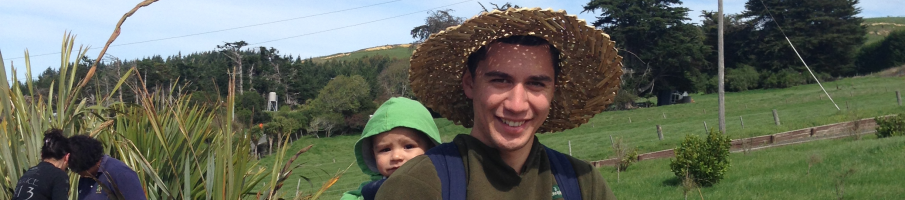
Tāwhati te reo mā wai te marae e taurima?
Amidst these turbulent times, attributed in no small part to an anti-Māori government agenda, rangatahi Māori are at the forefront of resistance efforts to speak truth to power and remind everyone of Aotearoa’s history and (broken) promises to Māori.
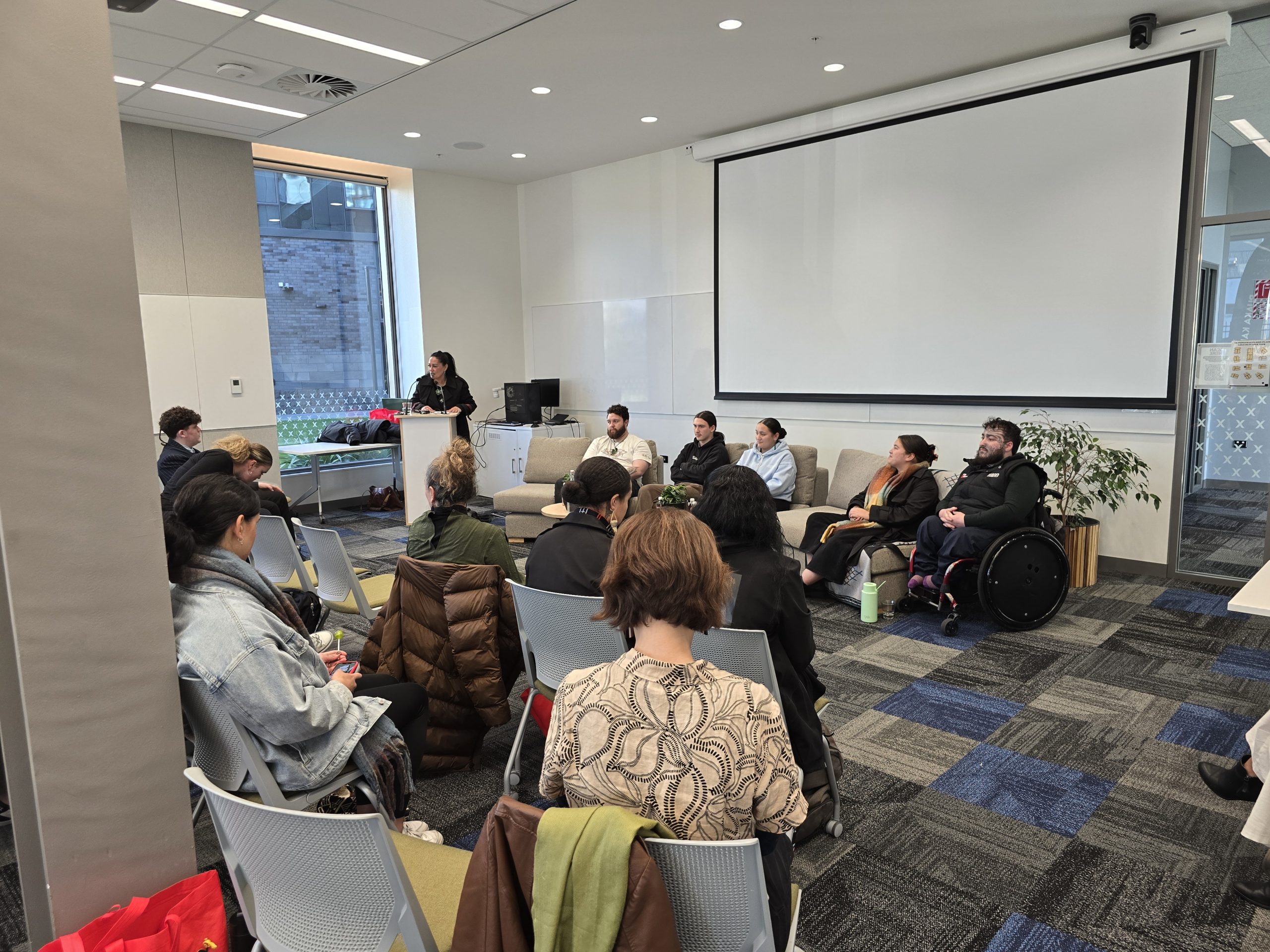
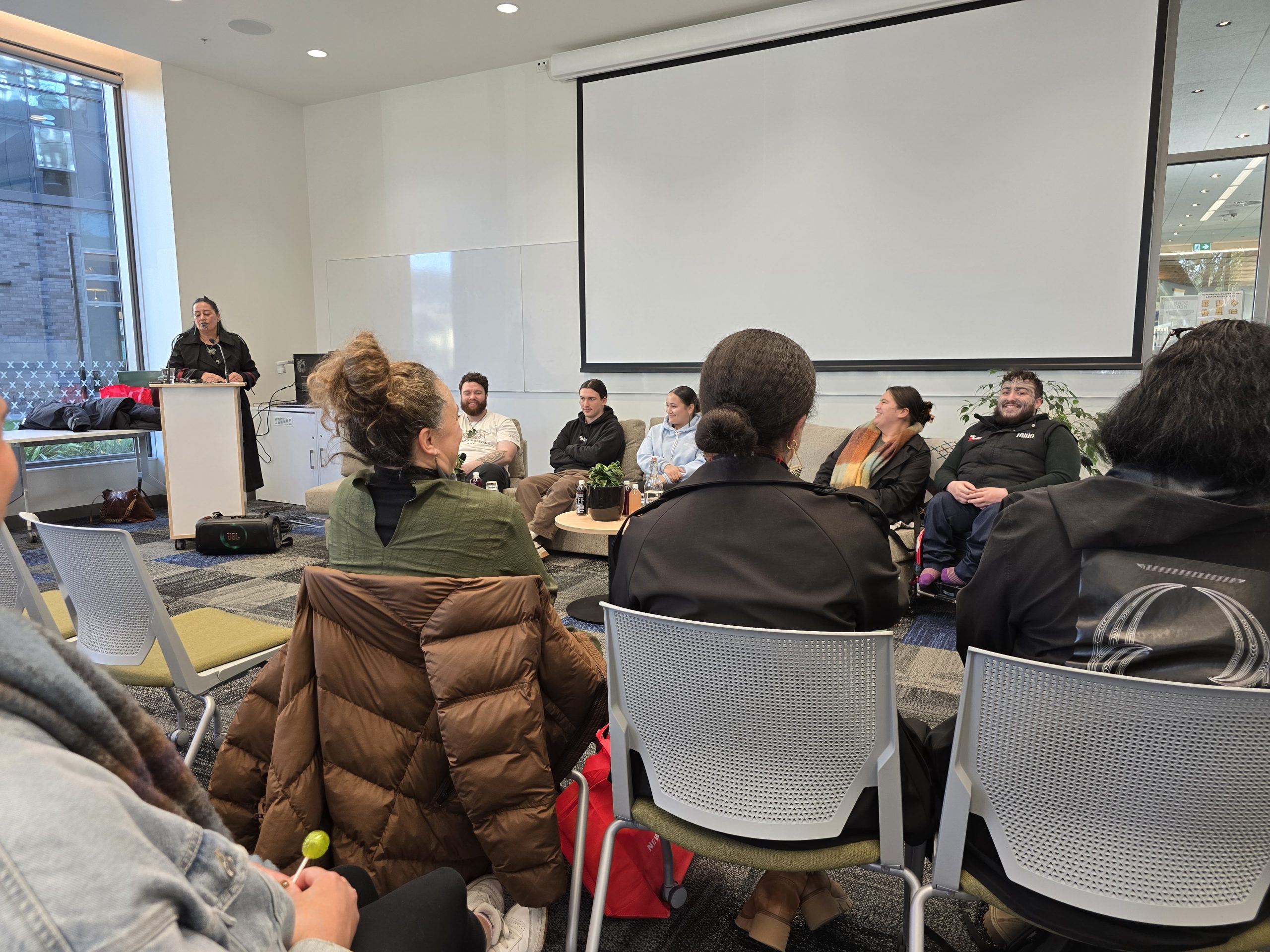
Against this backdrop, Te Tumu Research Committee had the privilege of hosting a small group of exceptional rangatahi for the Rangatahi reo symposium on Wednesday 21st May at Te Rangihīroa College.
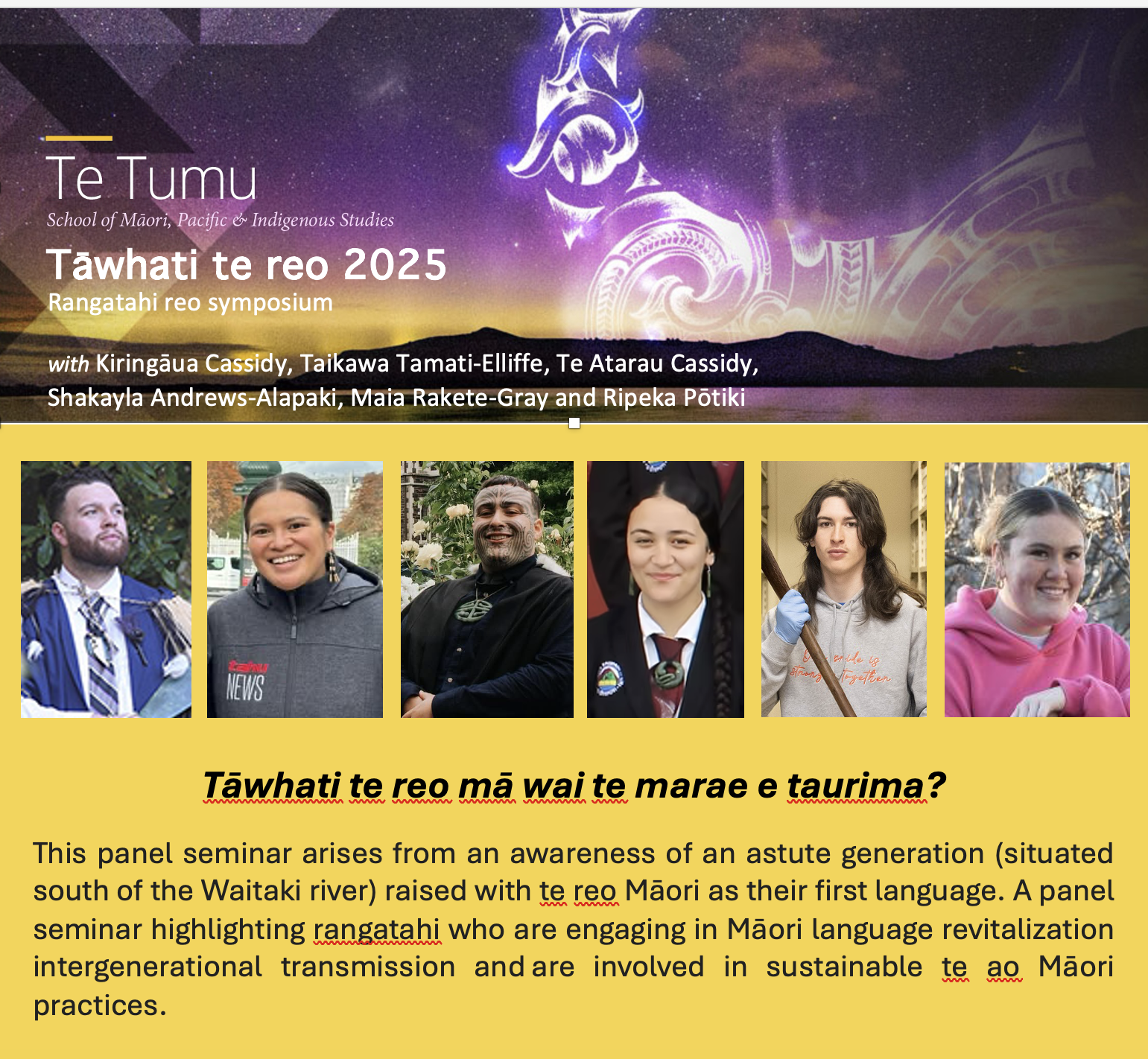 Kiringāua Cassidy, Taikawa Tamati-Elliffe, Te Atarau Cassidy, Shakayla Andrews-Alapaki and Maia Rākete-Gray, are all te reo Māori first language learners who were raised in Ōtākou. The rangatahi shared thoughts and approaches for revitalising te reo Māori, and engaged a range of other topics, like Māori and youth identity, contemporary politics, racism and discrimination, whānau and future aspirations. The event was led by Kare Tipa and supported by whānau, friends and the Te Tumu Research Committee.
Taikawa, tuākana of Kiringāua and Te Atarau, founder of Ngāti Gaming, is an award-winning leader and expert in the technology and gaming industries. He reflected on the growth of numbers of people speaking te reo Māori in his lifetime and spoke about the power of social media and the ethics of using it for good.
Te Atarau is the youngest of the three brothers, and similarly reflected on larger numbers of reo speakers, particularly because of the Kai Tahu Kōtahi Mano Kāika programme. He recalled learning te reo as a toddler and is now in the position of leading karakia, mihi and whaikōrero in a range of hui today.
 Maia is the first te reo Māori speaker in her whānau for three generations. She said she owes this achievement to the education philosophy and curriculum of Te Aho Matua and Te Kura Kaupapa Maori o Ōtepoti. With Maia, talk turned to the impact of Hīkoi mō te Tiriti and how it galvanised Māori and Tangata Tiriti. Maia noticed that one positive effect was that it made people angry and more motivated to participate in political processes, to stand up for Māori rights.
Shakayla, a media reporter for Tahu News, shared her experiences of reporting in Te Waipounamu in the face of a news reporting industry that tends to focus on activities or issues in Te Ika a Māui. Shakayla is of Māori and tagata Niue heritage and recalled the challenges of being the only brown student to attend Southland Girls High School.
 Kiringāua is the middle brother of Taikawa and Te Atarau. He is the youngest officially registered te reo Māori translator in the country (only two reside in Ōtākou). Kiringāua has long been interested in politics. Although he is sad that the coalition government and issues like the Treaty Principles Bill have pitted Māori against Māori, like Maia, he was pleased that recent events had generated more political interest and willingness to challenge injustice.
An intermission featured the beautiful singing of Rīpeka Pōtiki, and students from Te Kura Kaupapa Māori o Ōtepoti: Ratana Kahukura, Zynalee Parata-McIntosh and Te Oranga Tau. They were followed by Taikawa, who gave the audience a quick taste of how Ngāti Gaming Limited is integrating te ao Māori in their project, ‘Guardian Maia’ – a fun and lucrative venture!
So, it seems fitting that on the eve of the ‘No BS (but completely BS) Budget’, attendees of the first rangatahi reo symposium received a glimpse of how this generation of gifted reo Māori speakers are paving a bright and better way for future generations of rangatahi Māori. In doing so, they challenge us all to do better: to learn more local hītori through haka and waiata and for everyone to make the effort to learn te reo. As one rangatahi pointed out, given the wealth of resources now at our disposal, there’s no reason not to.
Seminar: Ecotourism and Cultural Tourism
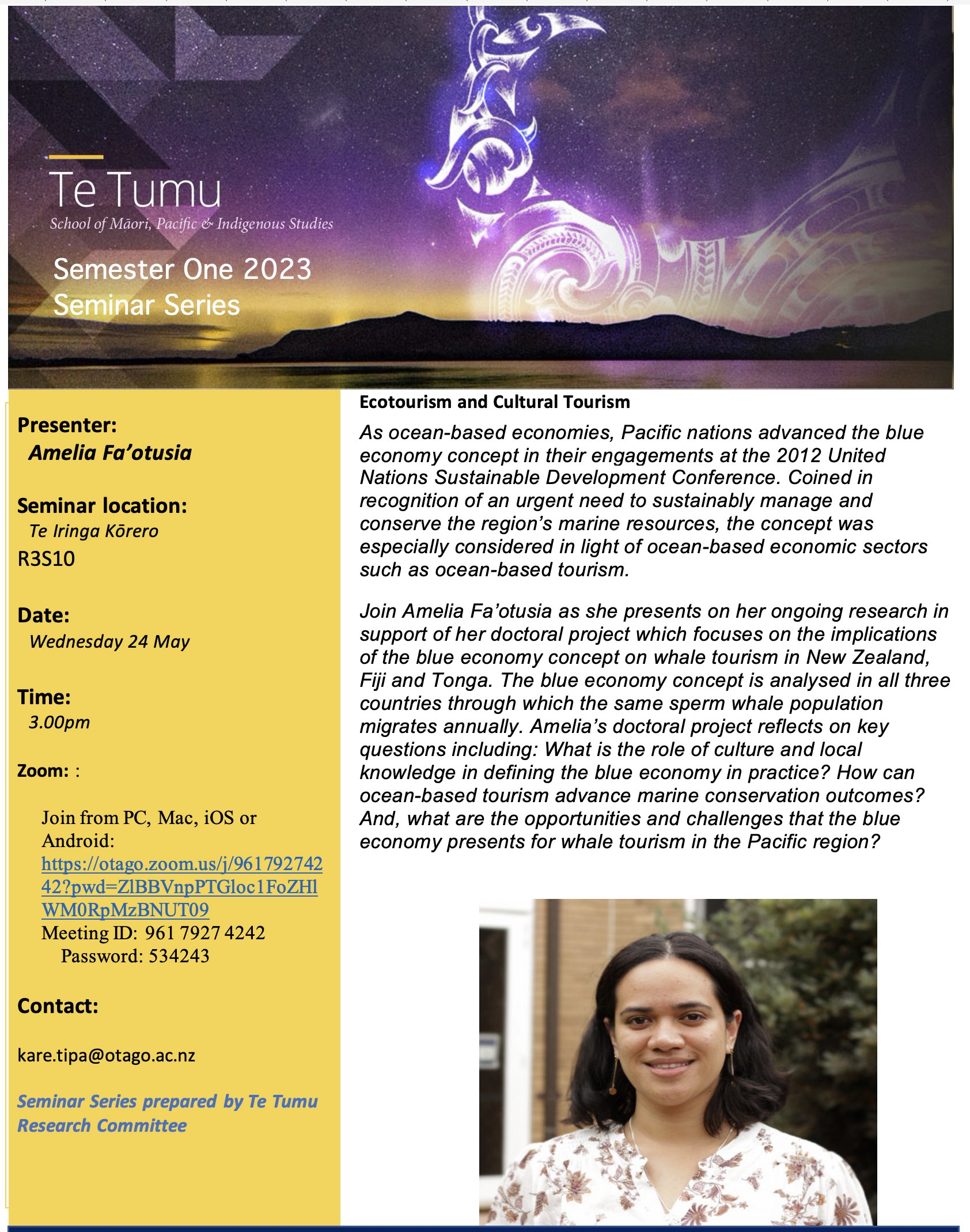
For more details, click to enlarge.
Amelia Fa’otusia, a PhD candidate at Australia National University, is currently in New Zealand undertaking research on whale tourism, as part of a wider comparison with similar ventures in Fiji and Tonga, and has kindly agreed to give a seminar to Te Tumu on “Ecotourism and Cultural Tourism”.
Amelia’s seminar will be in Te Iringa Kōrero (R3S10, 3rd floor of Te Tumu) at 3pm (NZ Time), on Wednesday 24 May.
This will also be available via Zoom. Click here to enter the Zoom Room.
Meeting ID 961 7927 4242
Password 534243
All interested people are most welcome to attend.
Please click on the poster for more information,
Seminar: E kore au e ngaro – whānau & the CDH1 gene
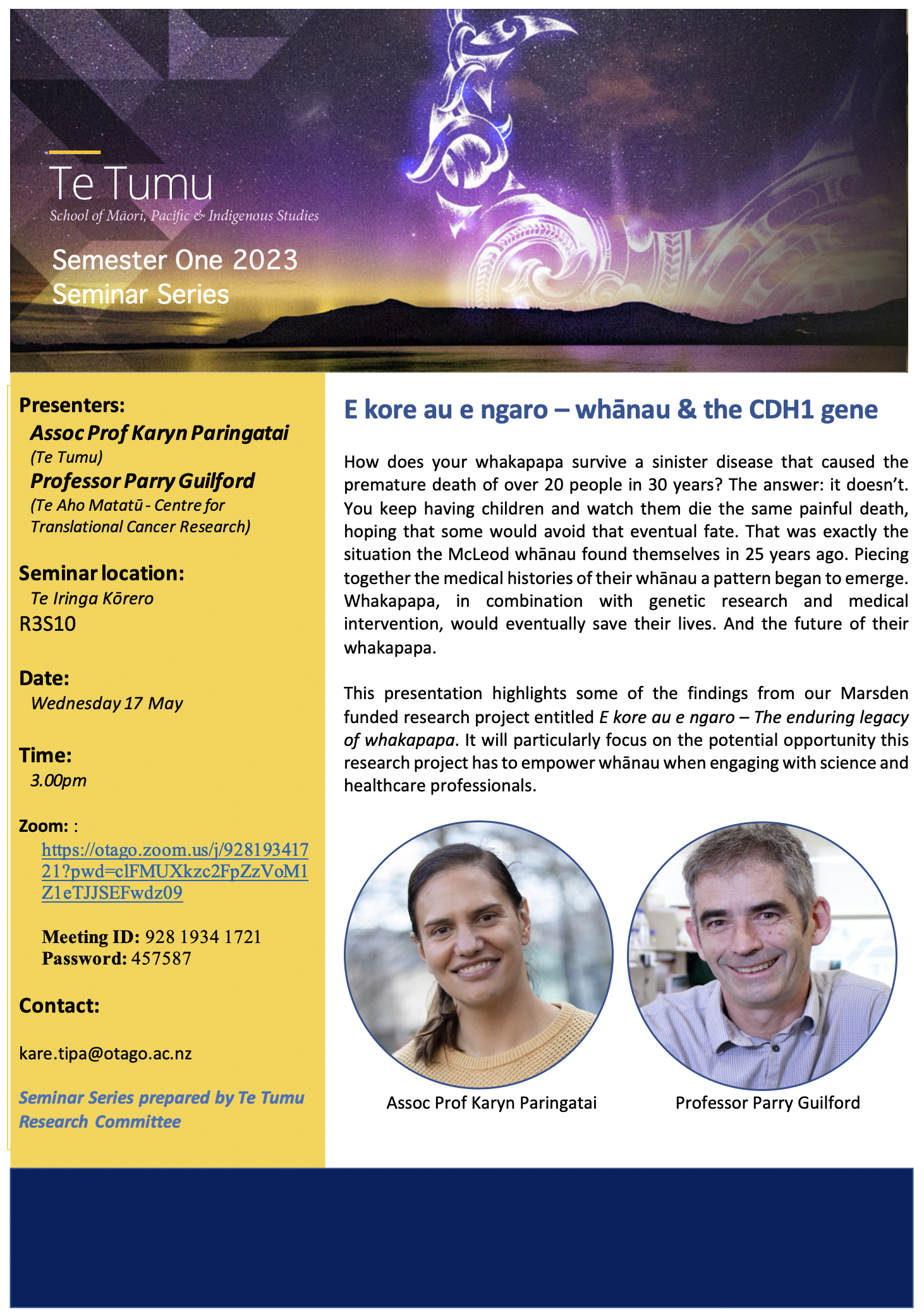
Click to enlarge
Assoc Professor Karyn Paringatai of Te Tumu has been collaborating with Professor Parry Guilford of Te Aho Matatū – Centre for Relational Cancer Research in a Marsden-funded project on the impact on Māori whānau of the CDH1 gene, a condition with a high risk of stomach cancer.
Come along to the next Te Tumu seminar to hear how Humanities and the Health Sciences have been working together to create positive outcomes for Māori whānau.
When and where? At 3.00pm in Te Iringa Kōrero (third floor of Te Tumu), Wednesday 18 May.
People can also “attend” via Zoom. Click here to enter the Zoom room. Meeting ID: 928 1934 1721 Password: 457587.
Click on the poster for more info. All Interested people are most welcome to attend.
Te Tumu Seminar: transcending low levels of literacy and numeracy for Pacific people.
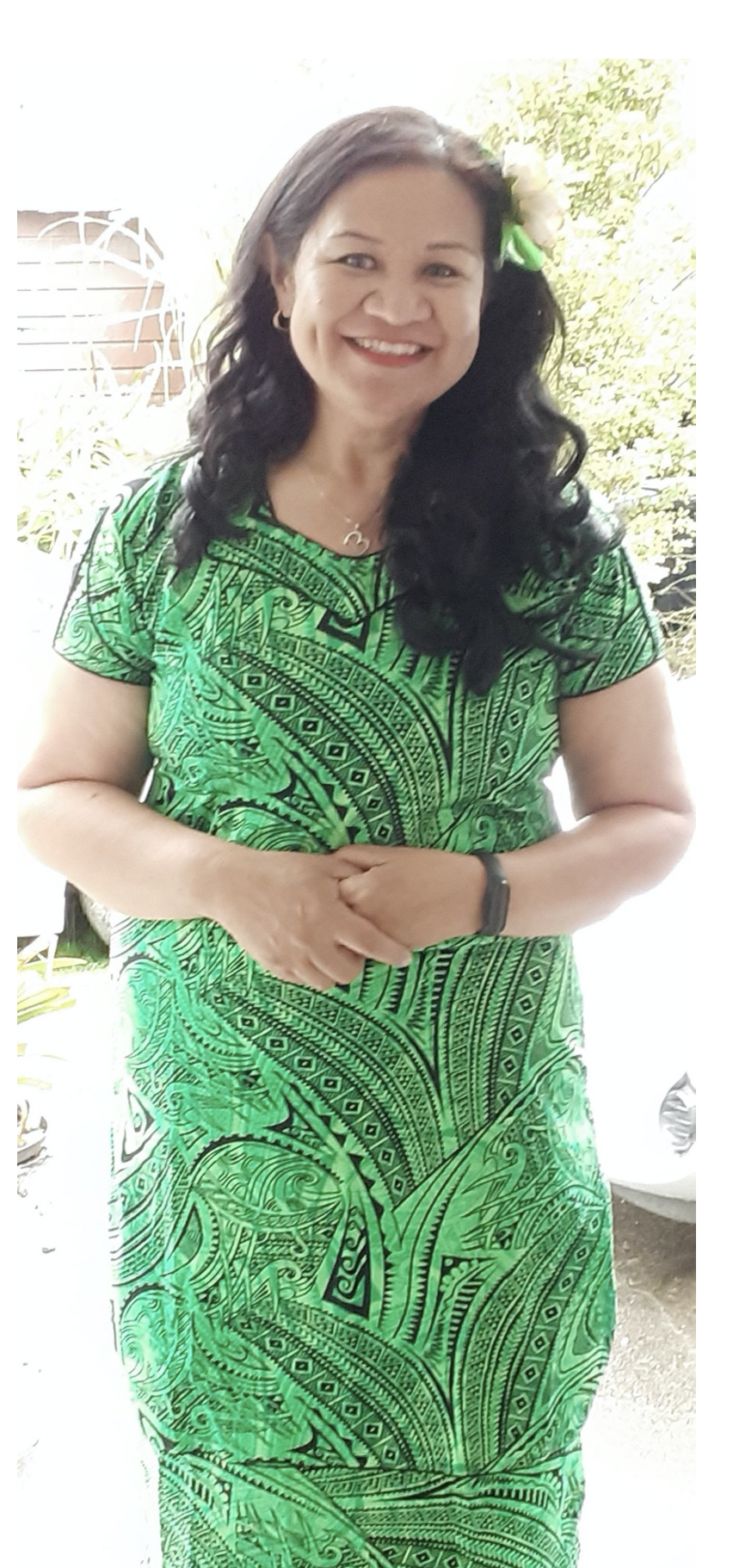
Maulupeivao Dr Betty Ofe-Grant
Maulupeivao Dr Betty Ofe-Grant is a lecturer from Auckland University of Technology Business School, researching Pacific peoples’ issues in labour migration, careers, glass ceilings, diversity, gender, intersectionality, literacy and numeracy and work. She is also the acting Vice President for the National Council of Women, New Zealand, and a matai (Samoan chief).
Password: 959841
Pacific people in New Zealand are among the most disadvantaged ethnic groups who over-represent the adult working-age population with low literacy and numeracy skills. Individuals with low literacy and numeracy tend to experience higher levels of marginalisation, vulnerability, cycles of poverty and significant risks of poor health and well-being.
Two great seminars on Monday 10 Oct.
Te Tumu Research Committee has TWO great seminars coming up on Monday 10th October. Everyone is welcome to attend these events.
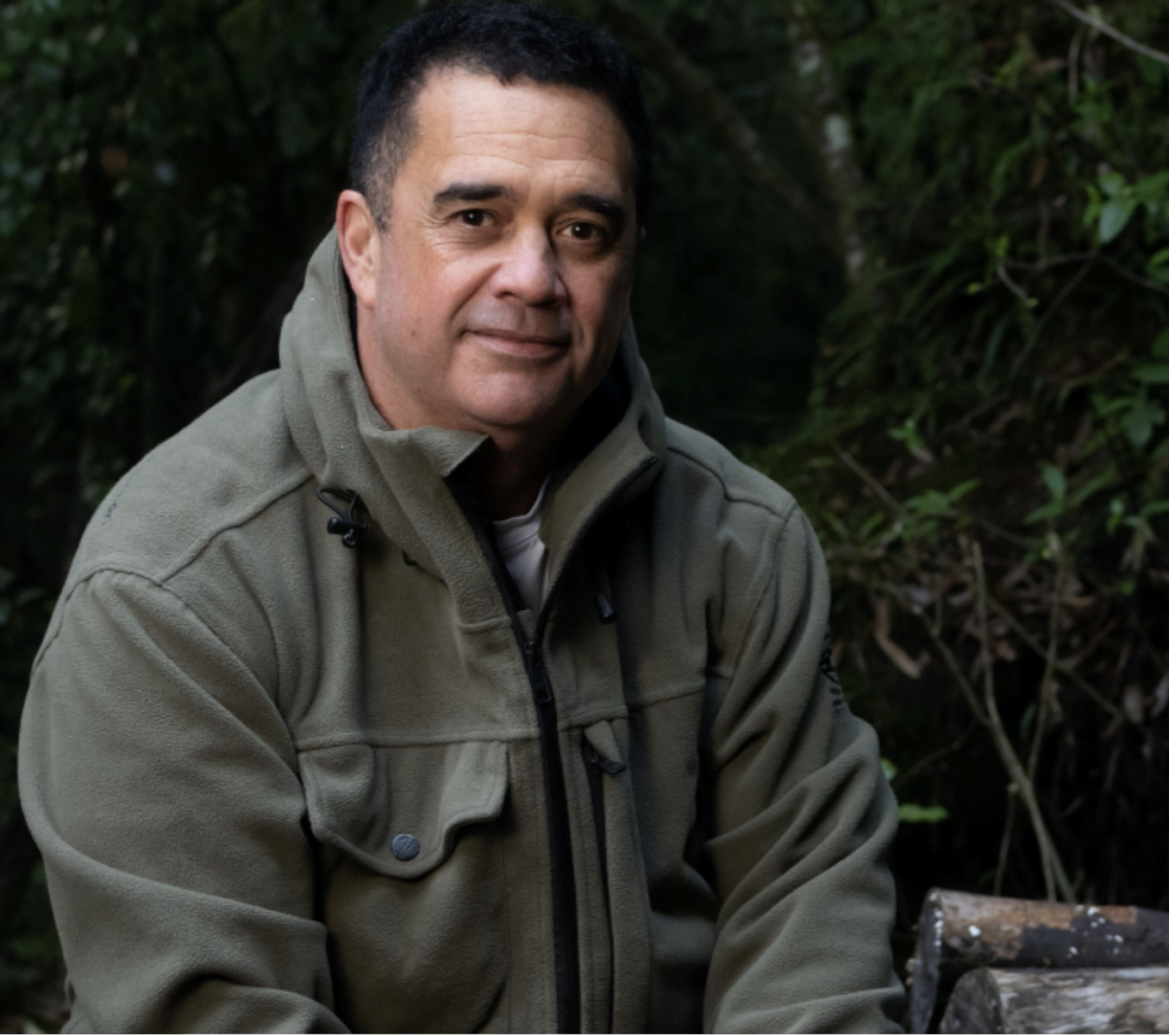 In the morning, Professor Rangi Mataamua (Ngāi Tūhoe) will present “Ko tātai arorangi hei kaiarataki i te rā: a Māori division of time”.
This presentation will explore a Māori understanding of time, taking into account the movements of celestial bodies, ecological factors local environmental phenomena and our unique cultural beliefs. The title for this lecture is “Ko tātai arorangi hei kaiarataki i te rā”, meaning the astronomical bodies rule over our daily activities.
This will be held in GS1 (ground floor Te Tumu) starting at 10am.
Contact: kare.tipa@otago.ac.nz
In the afternoon, Miriama Cribb (Te Ātihaunui-a-Pāpārangi) will be “Unpacking some truths of Te Awarenesses Tupua Act 2017)”. Miriama is a PhD student at Massey University.
 In 2017, the Te Awa Tupua (Whanganui River Claims Settlement) Act was passed, formalising a new way to view, use and understand Te Awa Tupua—the Whanganui River. Five years since its passing and there continues to be a lot more unpacking needed to fully comprehend and understand the Te Awa Tupua Act and the drivers and intentions informing its design. This seminar attempts to unpack some of the truths of the Te Awa Tupua Act by debunking some common misconceptions and reminding ourselves how the act differs from other legislative, political, managerial, social, cultural, and governance arrangements. The reflections shared here have been collated throughout Miriama’s time as a former trustee of Ngā Tāngata Tiaki (the post-settlement governance entity for the Whanganui River), a doctoral student studying the implementation of Te Awa Tupua Act in non-Indigenous organisations, and as a hapū (sub-tribe) member engaged in community affairs at a local level.
This seminar will be at 3-4pm, in blended format: in person in R3S10 (3rd floor of Te Tumu), and on zoom. Click here to join the zoom. Password is 126692.
Contact: emma.powell@otago.ac.nz
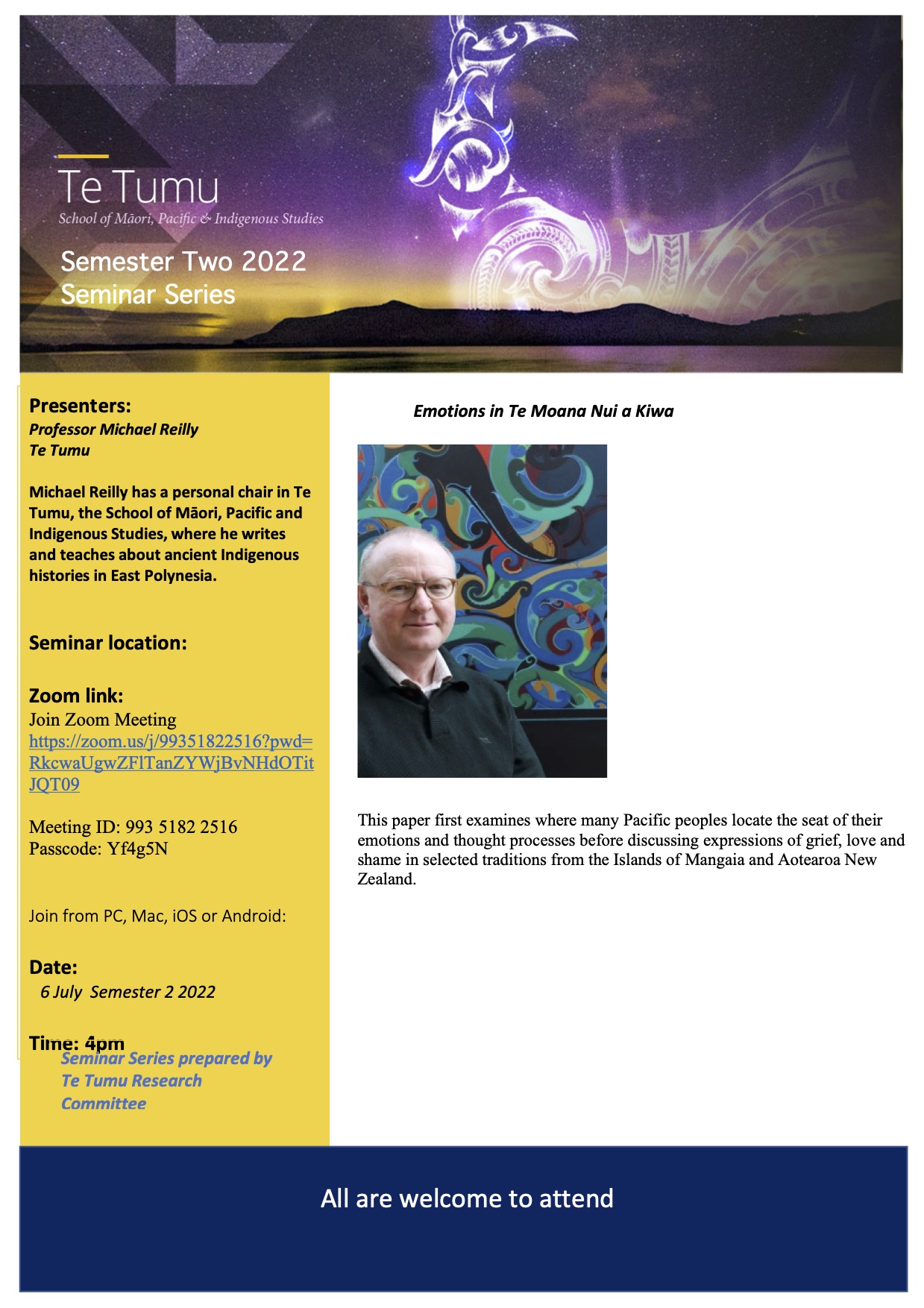
Te Tumu Seminar: Emotions in Te Moana Nui a Kiwa
Click to enlarge
Professor Michael Reilly will be presenting a seminar, Emotions in Te Moana Nui a Kiwa, at 4pm, on Wednesday 6 July. Please click on the poster below for more details.
This will be by zoom:
https://zoom.us/j/99351822516?pwd=RkcwaUgwZFlTanZYWjBvNHdOTitJQT09
Meeting ID: 993 5182 2516; Passcode: Yf4g5N
Please feel free to forward to anyone who might be interested.
Paerau Warbrick seminar, 28 September
Click on poster to enlarge
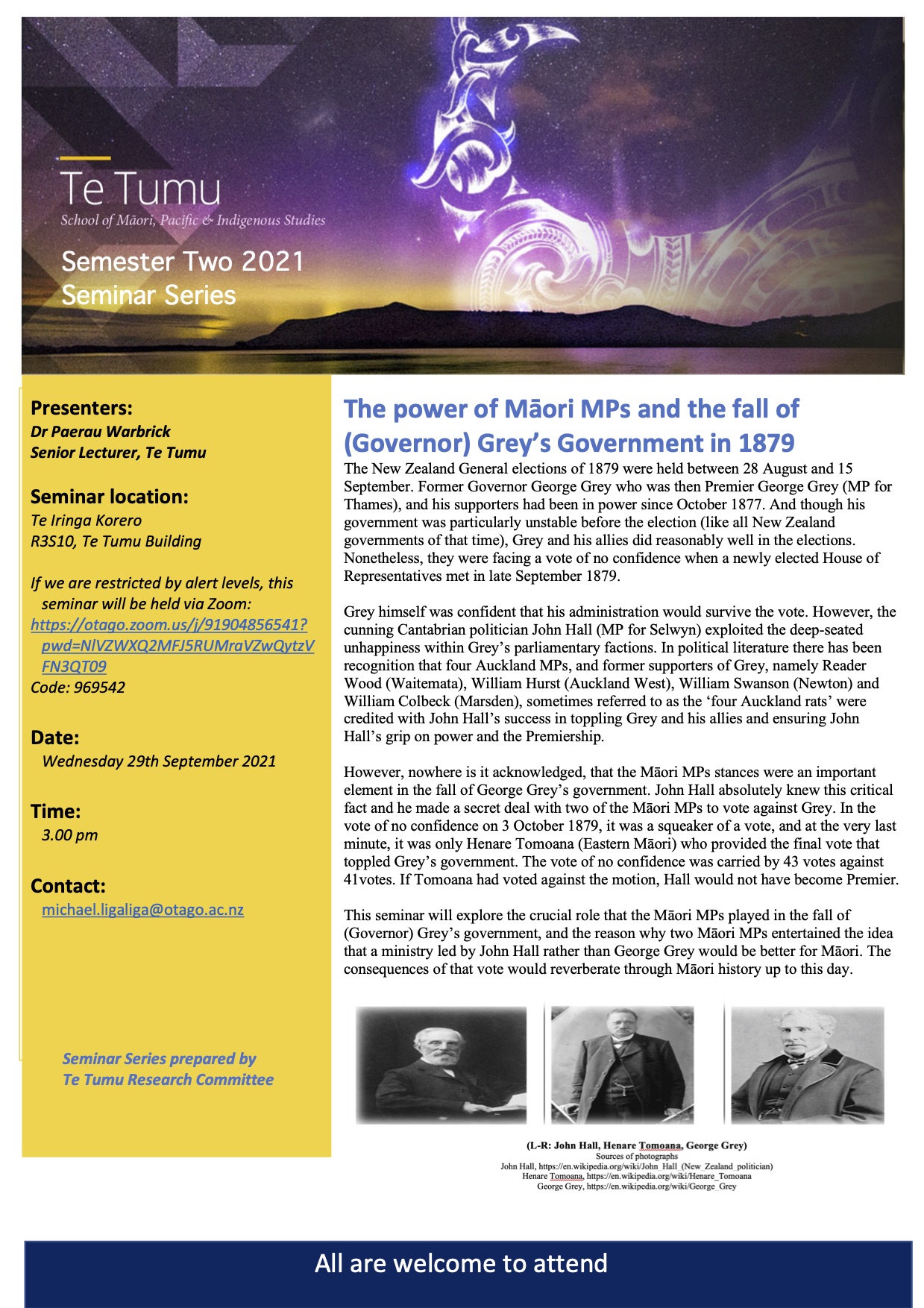
Paerau Warbrick will be presenting on “The power of Māori MPs and the fall of (Governor) Grey’s Government in 1879” for the Te Tumu Seminar Series at 3pm Wednesday, 29 September. We may be lucky by then and be able to have the seminar in Te Iringa Kōrero, but if not Paerau will present a Zoom seminar.
There are many interesting stories relating to Māori parliamentary politics and elections, about which Paerau is an expert. His interests in this area span from 1868 when the first Māori members sat in the House right up to the present day; with this seminar looking at the Māori contribution to the fall of the Grey Ministry in 1879. Click on the poster for the full abstract.
Click here for the Zoom connection. The code, if needed, is 969542.
Te Tumu seminars are open to all interested people; please feel free to attend and to share this post.
Upcoming Te Tumu seminar

Click to enlarge this poster
Lachy Paterson‘s seminar, “Periodicals and Proselytising: Māori and religion during the Second World War” was originally scheduled for August, but with the onset of Covid, it has been put off till 3pm Wednesday, 8 September. If we are permitted (unlikely) it will be on campus in Te Iringa Kōrero (3rd floor of Te Tumu); in the more likely event that we will still be under lockdown conditions, it will be a zoom seminar.
Lachy will be looking at aspects of Māori religious experiences during the Second World War, coming out of research from the Te Hau Kāinga: Māori Home Front, the Marsden-funded research project headed by Angela Wanhalla and him. Click on the poster for more information.
Click here for the Zoom connection. The code (if needed) is 969542.
Te Tumu seminars are open to all interested people; please feel free to attend and to share this post.
Webinar with leading Māori CEOs.

Do you want to listen to listen to some inspiring Māori leaders? Join a webinar hosted by Te Tumu’s Dr Tangiwai Rewi and Dr Gianna Leoni, on behalf of Ngā Pae o te Māramatanga on Friday, 18 September at 2pm. You will hear the words of wisdom from the following CEOs: Shane Taurima (Māori Television), Larry Parr (Te Māngai Pāho), Ngahiwi Apanui (Te Taura Whiri i te Reo Māori) and Dr Poia Rewi (Te Mātāwai). Click here for more info and to register.
Poia’s last seminar as Dean of Te Tumu
Professor Poia Rewi will be giving his last ever seminar to Te Tumu as Dean of our School. Poia has been an inspiring leader of Te Tumu and, as most of you know, we are very sad that he will soon be leaving the university for greener pastures elsewhere.
It would be wonderful if you are able to come along to the seminar; if not, then his talk will also be live-streamed on Te Tumu’s Facebook page.
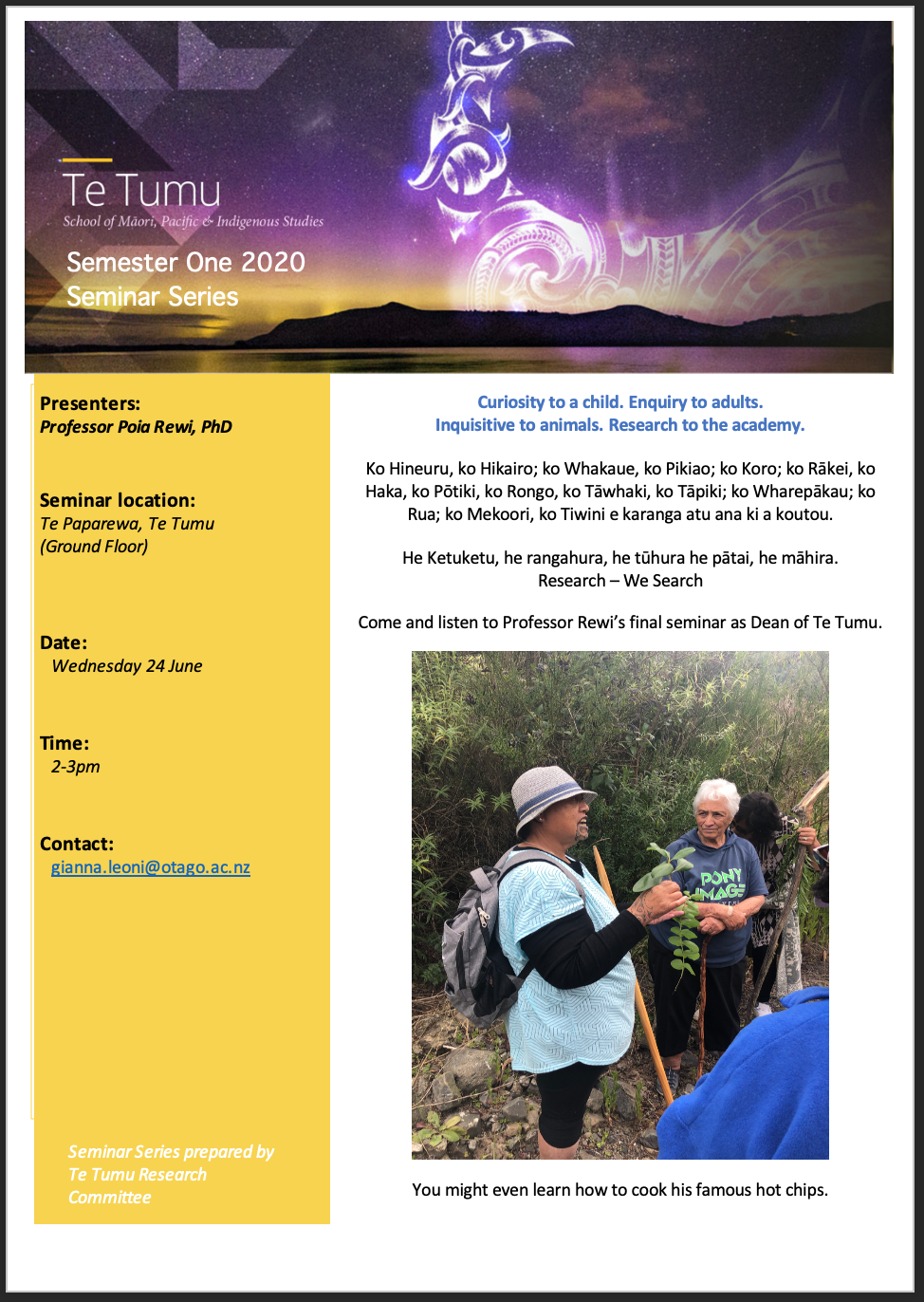
Seminar details: click to enlarge
Poia Rewi (Ngāti Manawa, Tūhoe, Te Arawa, Ngāti Whare and Tūwharetoa) hails from Murupara in the Bay of Plenty. He migrated south from Waikato University to Te Tumu, the University of Otago’s School of Māori, Pacific and Indigenous Studies in 2003 to help boost our Māori-language teaching programme. He is an acknowledged master of te reo Māori, always teaching the advanced-level language classes. A noted composer in his own right, he also taught Te Tumu’s advanced kapa haka classes. Poia completed his PhD in 2005, written completely in te reo Māori.
He has always been popular with students as a teacher and supervisor, as willing to feed their bellies with his soups as their minds with his knowledge. He became the Dean of Te Tumu and full professor in 2016.
Poia is also a serious and respected researcher, with publications on te reo Māori, language revitalisation, tikanga Māori, Māori oratory and Māori history. Indeed his thesis, published in 2010 as Whaikōrero: The World of Māori Oratory by Auckland University Press, went on to win the Best First Book Non-Fiction Award in the 2011 New Zealand Book Awards.
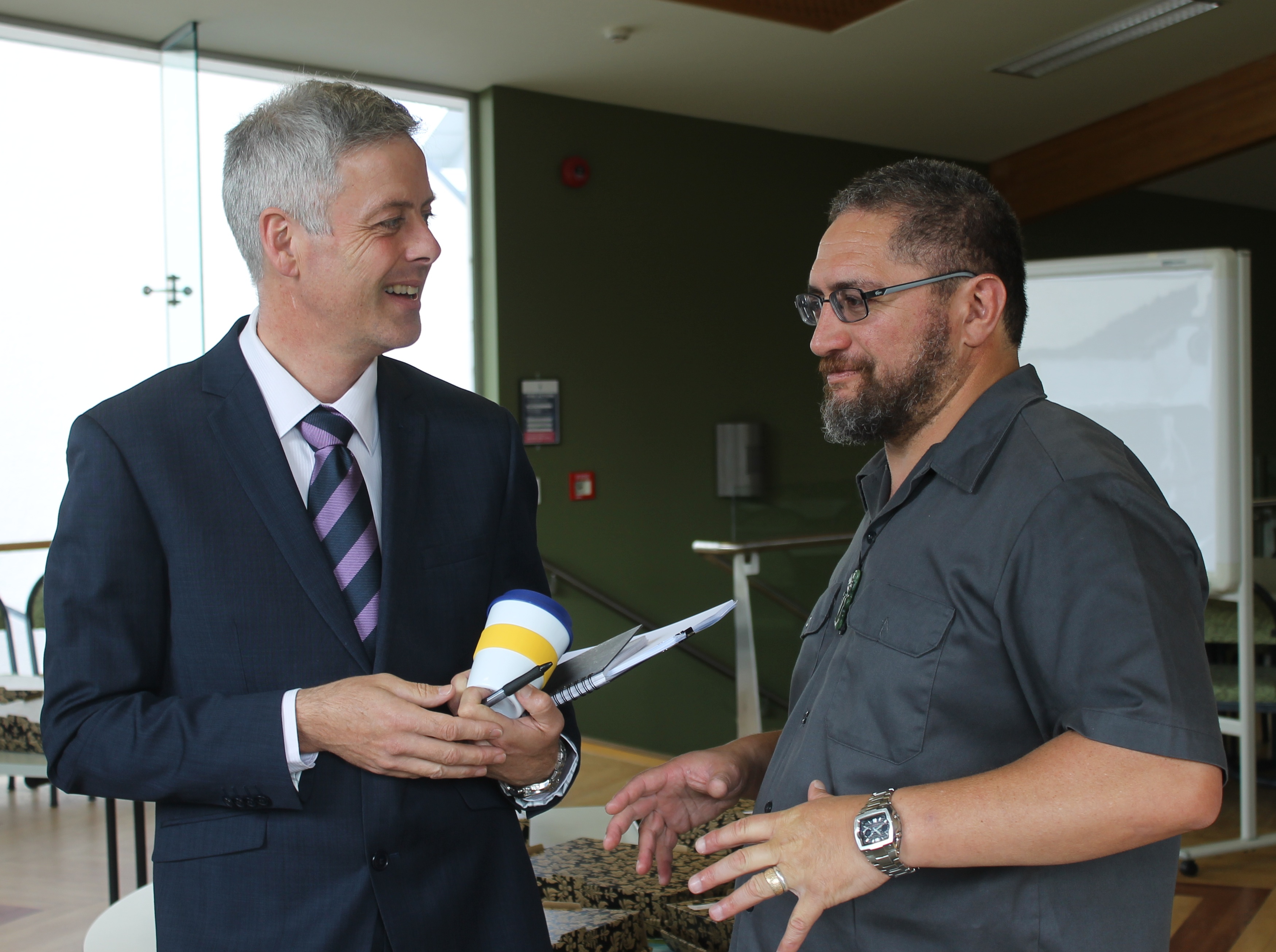
Professor Poia Rewi with DVC (Research and Enterprise) Professor Richard Blaikie at the launch of AKI.
Poia has always been a great innovator and collaborator. He helped develop AKI, an app to help learn Māori vocabulary with other Otago academics. He is also part of the team that came up with ZePA (Zero Passive Active), a model to advance the public’s attitudes and engagement with te reo Māori, and to promote Māori-language revitalisation, that is now used by a number of government agencies. Recently, Poia has worked with academics at Victoria and Auckland as a Co-Principal Investigator of Te Pae Tawhiti: Te Reo Māori, funded by Ngā Pae o te Māramatanga, looking at the value of te reo Māori in terms of the economy, cultural identity and social cohesion. This led to The Value of the Māori language: Te Hua o te Reo Māori, published by Huia in 2014, that won the Te Reo Māori category of Ngā Kupu Ora Aotearoa Māori Book Awards in 2015. Poia is currently Deputy Director of Ngā Pae o te Māramatanga, a position he will reluctantly have to leave behind for his new role in Wellington.
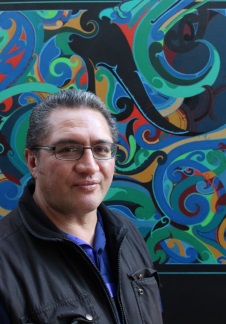 The revitalisation and advancement of te reo Māori have always been Poia’s passions. He was appointed to the board of Te Taura Whiri i te Reo Māori (Māori Language Commission) in 2012, and in 2014 was seconded from the university to be their acting Chief Executive. Poia’s new role, starting next month, is also in a similar field, as Tumu Whakarae (Chief Executive) of Te Mātāwai, a government agency created to assist hapū, iwi and communities in the important task of Māori-language revitalisation.
Our loss will be the community’s gain. Poia has been an amazing example for us in Te Tumu and the University of Otago, as a person who lives and breathes tikanga Māori, as an inspirational teacher, a leader in research, as well as a colleague and friend in the academy. We will surely miss him.
