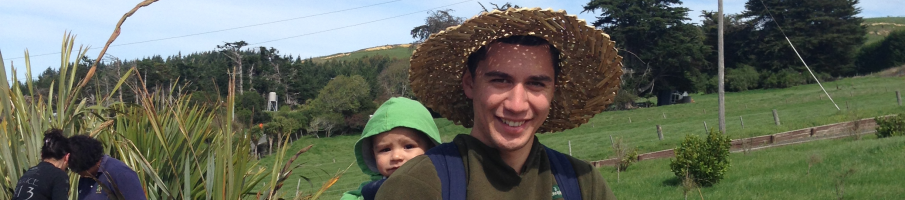
Rapa Nui trip connects and inspires University delegation
Sitting in Rapa Nui, Te pito o te henua, it is difficult not to reflect on the many connections that have revealed themselves throughout this haerenga. Some have been immediately recognisable, while others have presented themselves more quietly through conversations, shared experiences, and the everyday interactions that come from living alongside people rather than simply visiting a place.
As a lecturer within Te Tumu, this experience has reinforced the value of learning through relationships. Throughout my time here, I have found myself recognising familiar linguistic features, cultural values, and ways of relating that speak to the shared foundations of our Polynesian heritage. These moments have prompted reflection on the enduring connections of Te Moana nui ā-Kiwa and the ways our histories continue to shape Indigenous communities and scholarship across the Pacific.
Rapa Nui is the eastern-most island that makes up te taimana o te Moana nui ā-Kiwa, or the Polynesian triangle, with Aotearoa being the western point of the triangle and Hawai’i the north. Experiencing the island and meeting the tāngata whenua firsthand has deepened my appreciation of the cultural and linguistic relationships that continue to connect Te Moana nui ā-Kiwa. Although Rapa Nui language and culture have developed in distinctive ways, there are clear connections with both Māori and Tongan language and cultural practices that will compliment and influence my current research trajectory. Observing these similarities in context has reignited my interest in comparative research, particularly in the areas of language revitalisation, intergenerational transmission of pūrākau, and the maintenance of cultural identity.
One of the many highlights of this haerenga has been being hosted by whānau in Rapa Nui. Staying in family homes has provided insights that could never be gained through formal study alone. The generosity with which we have been welcomed, fed, included in everyday living and cared for as part of the whānau reflects values that resonate strongly with Māori understandings of manaakitanga and whanaungatanga, all while navigating three, sometimes four languages. These experiences have reinforced the importance of building genuine relationships as the foundation for collaborative research and meaningful engagement with Indigenous communities.
Our delegation of eight tauira and four academic staff travelled to Rapa Nui to facilitate a series of community wānanga covering te reo Māori, education, hauora Māori, law and the environment, archaeology, sport and health. While we came intending to share knowledge from Aotearoa, the wānanga quickly became spaces of reciprocal learning. It was particularly rewarding to see our tauira confidently contribute their own experiences and perspectives, creating genuine kōrero and space to wānanga.
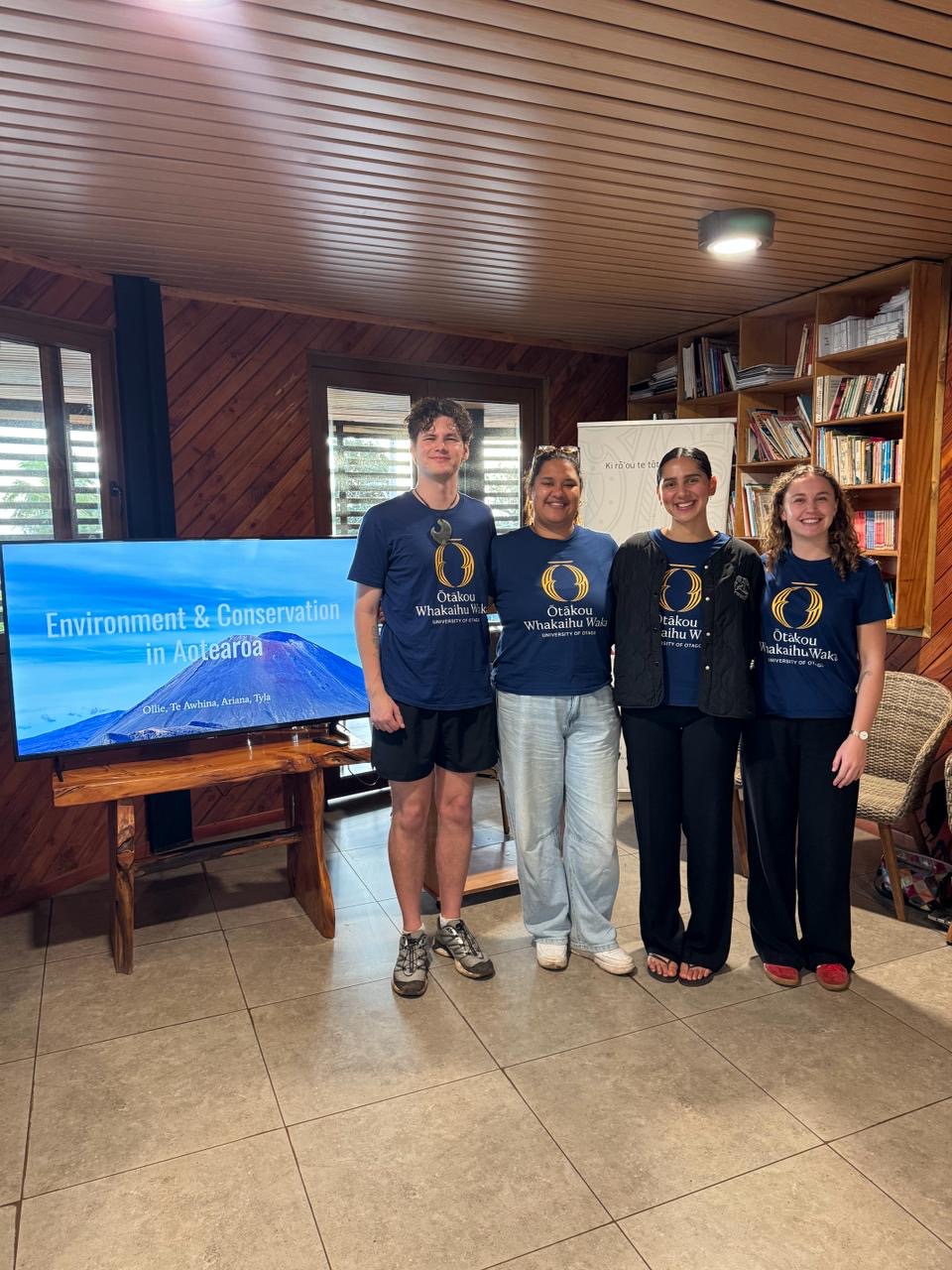
L-R Ollie Ihaka-Gudsell (Indigenous Studies and Law), Tyla Te Puawai Hill -Moana (PhD Candidate Genetics and Mātauranga Māori), Te Āwhina Brundell (Masters of Peace and Conflict), Ariana Davis (Indigenous studies and Law).
Ollie Ihaka-Gudsell, a Te Tumu and Law student described his experience as special, “Every rainy or sunny day, every experience, and every story and connection has been special. My experience has connected me to the people of Rapa Nui and to my own whakapapa”.
Te Āwhina Brundell, a tauira from Te Tumu, doing her masters with Te Ao o Rongomaraeroa comments, “This experience has expanded me in the most beautiful of ways. My favourite part has been the connection between our histories, our stories and our languages. It becomes impossible to deny our shared identity as one people”.
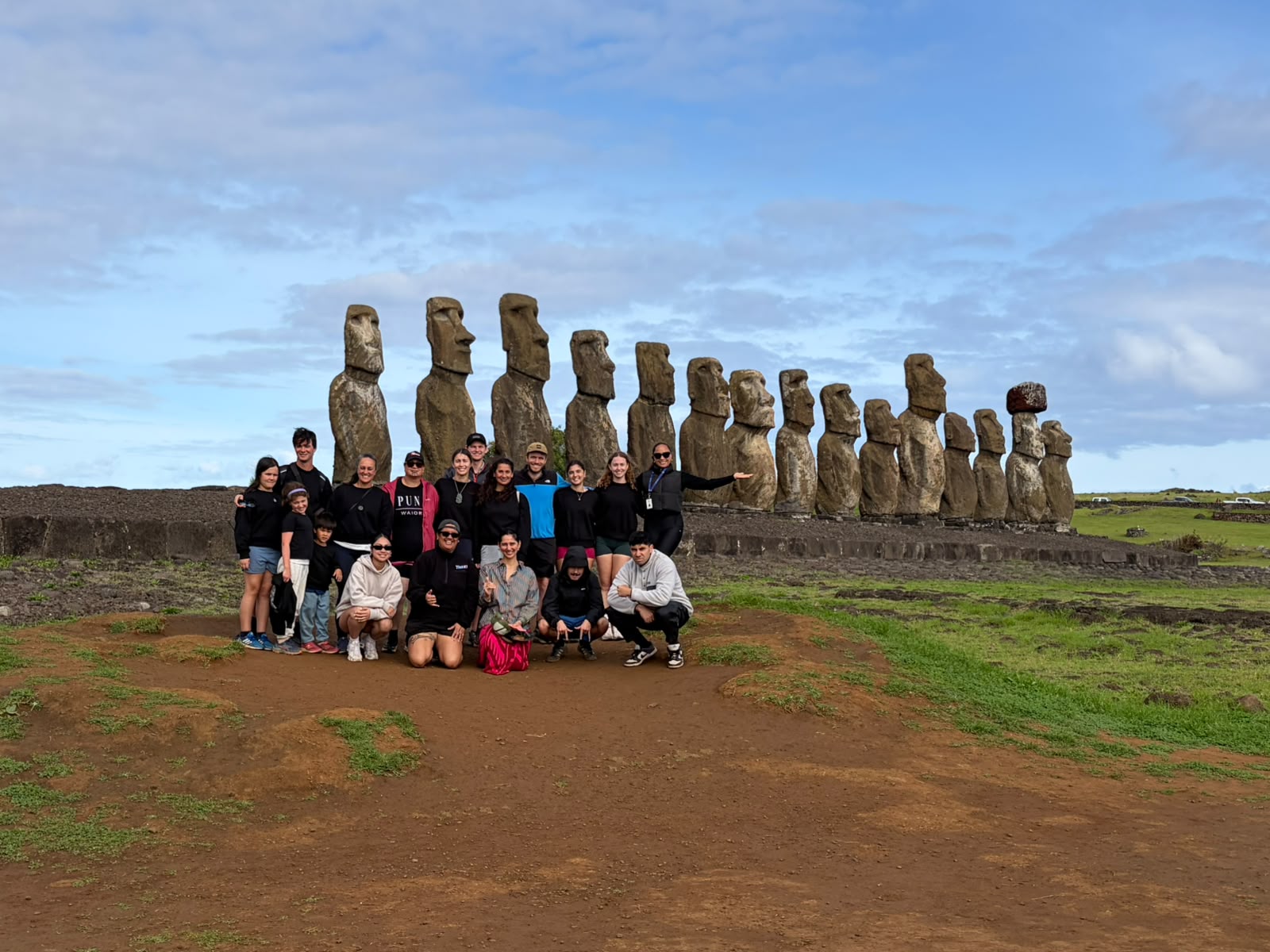
Prime Minister’s Scholarship Ōtākou Whakaihu Waka delegation at Tongariki, in Rapa Nui
It’s clear that this experience will have a lasting influence on all students and staff involved. The relationships established here have opened opportunities for future collaborations exploring Indigenous language maintenance, comparative Polynesian linguistics, and culturally grounded approaches to education…which will see many of the current delegation return. The experience of being on this haerenga will also enrich my teaching by enabling students to better understand te reo Māori within its wider Polynesian context and appreciate both the diversity and interconnectedness of Pacific languages and cultures.
As our time in Rapa Nui draws to a close, I sit with a deep sense of gratitude for the people who have welcomed us into their homes and communities. While the formal wānanga have been an important part of this visit, it is the everyday moments of sharing meals, navigating conversations in a mixture of Rapa Nui, Spanish, te reo Māori and English, singing, dancing and sharing stories that have left the greatest impression. These experiences have strengthened not only my understanding but the students too, of our shared Pacific whakapapa, culture and language. ‘Iorana māuruuru te ta’ina o te pito o te henua, te poki, te tupuna o te henua nei māuruuru ‘iorana.
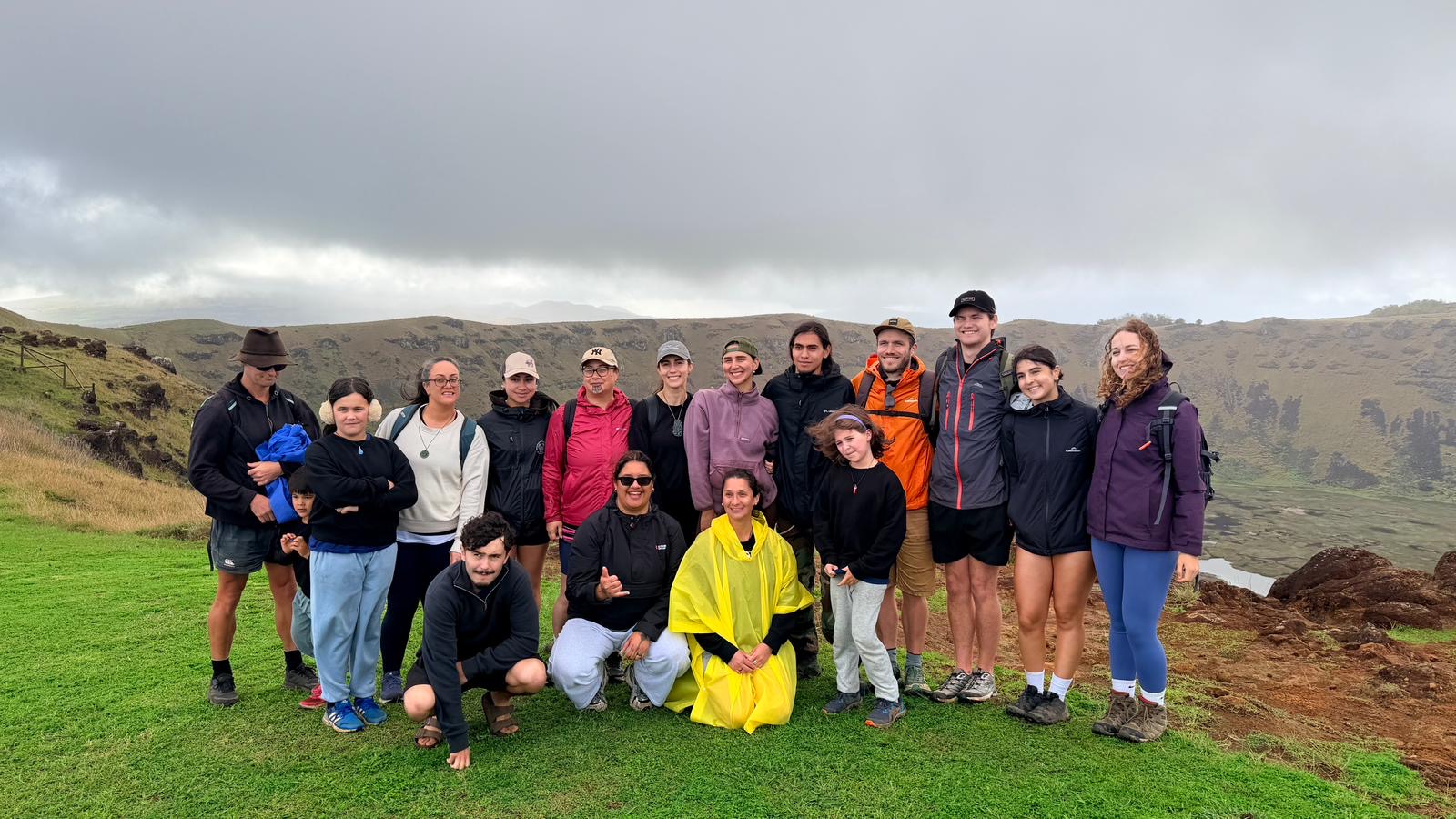
Kāhui after a tour around Orongo historical village, standing above the crater of Rano Kau.
Niue academic’s collaborations with community achieving deeper recognition of Indigenous knowledge
Te Tumu Pacific Studies academic Jess Pasisi’s recent collaborations with Niue community are advancing Niue knowledge and pushing the boundaries of how this knowledge is recognised in scholarly spaces. Alongside Niue Palmerston North Community (NPNC) representatives Sunlou Liuvaie, Sontel Liuvaie, Alister Patali Lavini (Tali), and Randy Liuvaie, Wellington-based Inangaro Vakaafi, and Auckland-based Shimpal Lelisi and Ioane Aleke Fa‘avae, Jess facilitated a roundtable session at the Niue Research Symposium 2025, held 6-7 November in Auckland and hosted by Te Poutoko Ora a Kiwa at the University of Auckland.
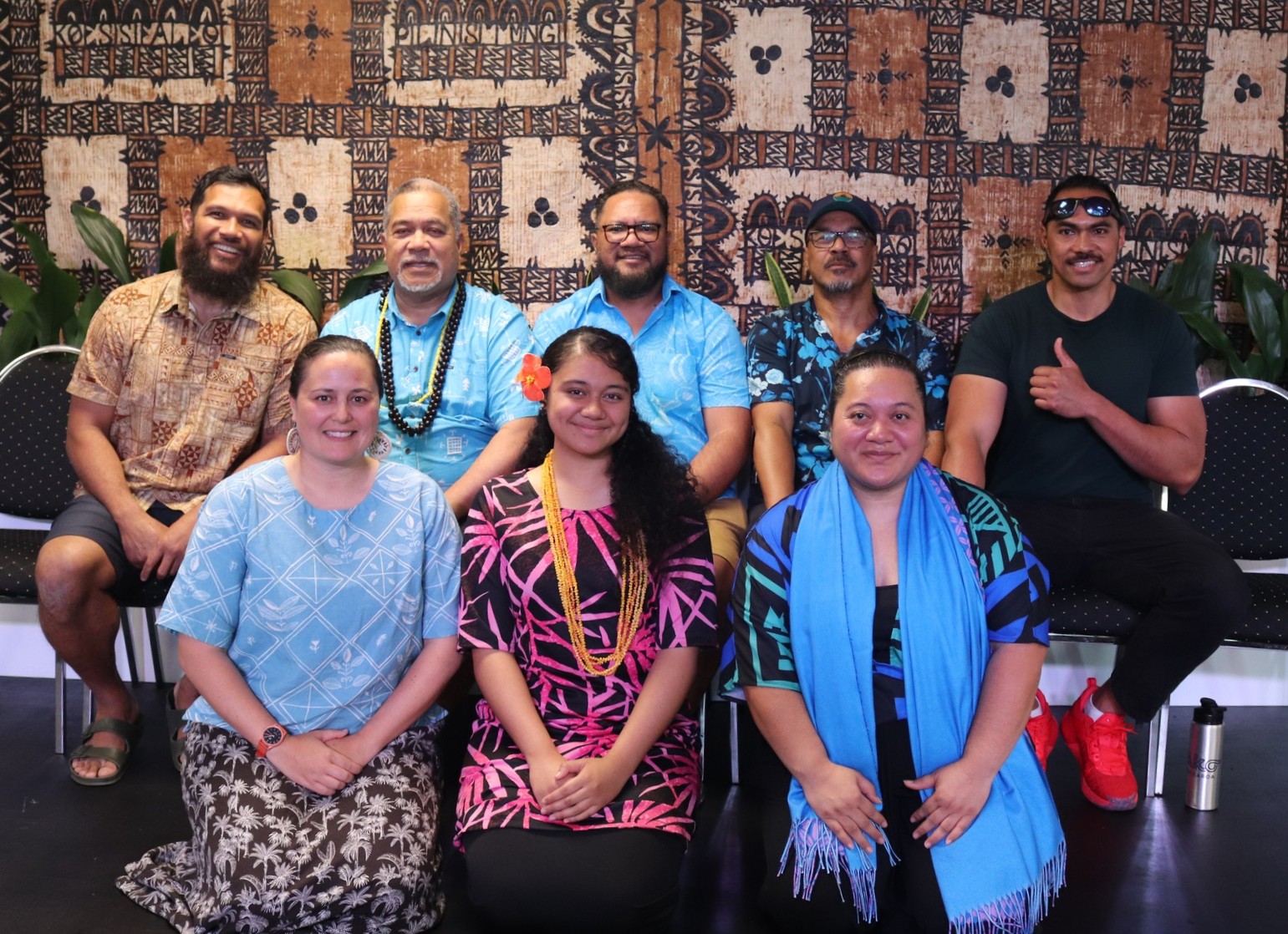
Photo caption: Niue researchers from back L-R: Randy Liuvaie, Sunlou Liuvaie, Ioane Aleke Fa‘avae, Shimpal Lelisi, Alister Patali Lavini; front L-R: Jess Pasisi, Sontel Liuvaie, Inangaro Vakafi. Photo credit: Toliain Makaola
As the largest roundtable of the Symposium, the group that delved into serious questions about how tertiary institutions can be held to account by community, specifically in how these institutions engage lotomatala Niue, Niue knowledge in research. The youngest presenter of the entire event, Sontel, showcased some of her work using Niue knowledge and design in contemporary art as well as strong perspectives on her experiences growing up tagata Niue in Te Papaioea Palmerston North. Community leaders Sunlou, Randy and Tali shared experiences of growing communities of successful Niue learners, championing multi-generational events and spaces for sharing knowledge, and ways of nurturing the values of Niue culture and language with family and in aspects of life. Discussion about the recognition of Niue knowledge holders in creative work was reflected on by Inangaro and Shimpal who had collaborated to the recently released documentary “Being Niuean” documentary series. Ioane’s reflection complemented earlier points he had raised in a “Niue knowledge in research” webinar, also facilitated by Jess, in how Niue knowledge needs more careful consideration in how people treat, understand and use it, both in and beyond the academy.
The session centred questions about how Niue knowledge is constructed, understood and engaged, how to build strong communities of Niue learners, how to adapt Niue knowledge appropriately in different environments and for different purposes, and how to uphold Niue principles and values in the myriad ways we come to research. Being in conversation enabled collective reflection and attended to the specificities of Niue experience (with particular focus on experiences outside of Auckland) that can be expressed in different forms which include storytelling, creativity, practice, relationality, recording and repositing knowledge, intergenerational knowledge sharing and lived experiences.
Jess strongly advocates for the inclusion of community in academic spaces and pushes for greater recognition of the way Niue knowledge in research is not the domain of any singular institution or body. Blurring the boundaries between “academic” and “community” enable deeper discussions about how lotomatala enriches both spaces and has the ability to overcome some of the barriers and shortfalls of institutions as they increasingly seek Indigenous knowledge and knowledge holders to stay relevant and progress.
Jess also belongs to the Matala he Toume collective alongside Ioane, Inangaro, Lisimoni Birtha Togahai, Cora-Allan Lafaiki Twiss and Rennie Atfield-Douglas, that hosted the first Niue knowledge Symposium in 2022 followed by a Niue Knowledge Conference in Niue in 2024. The next Matala he Toume conference is scheduled for 2026.
Reflections from the Indigenous Futures International Conference 2025: Wahineata Smith, Ariana Nisa-Waller & Erana Severne-Takataka
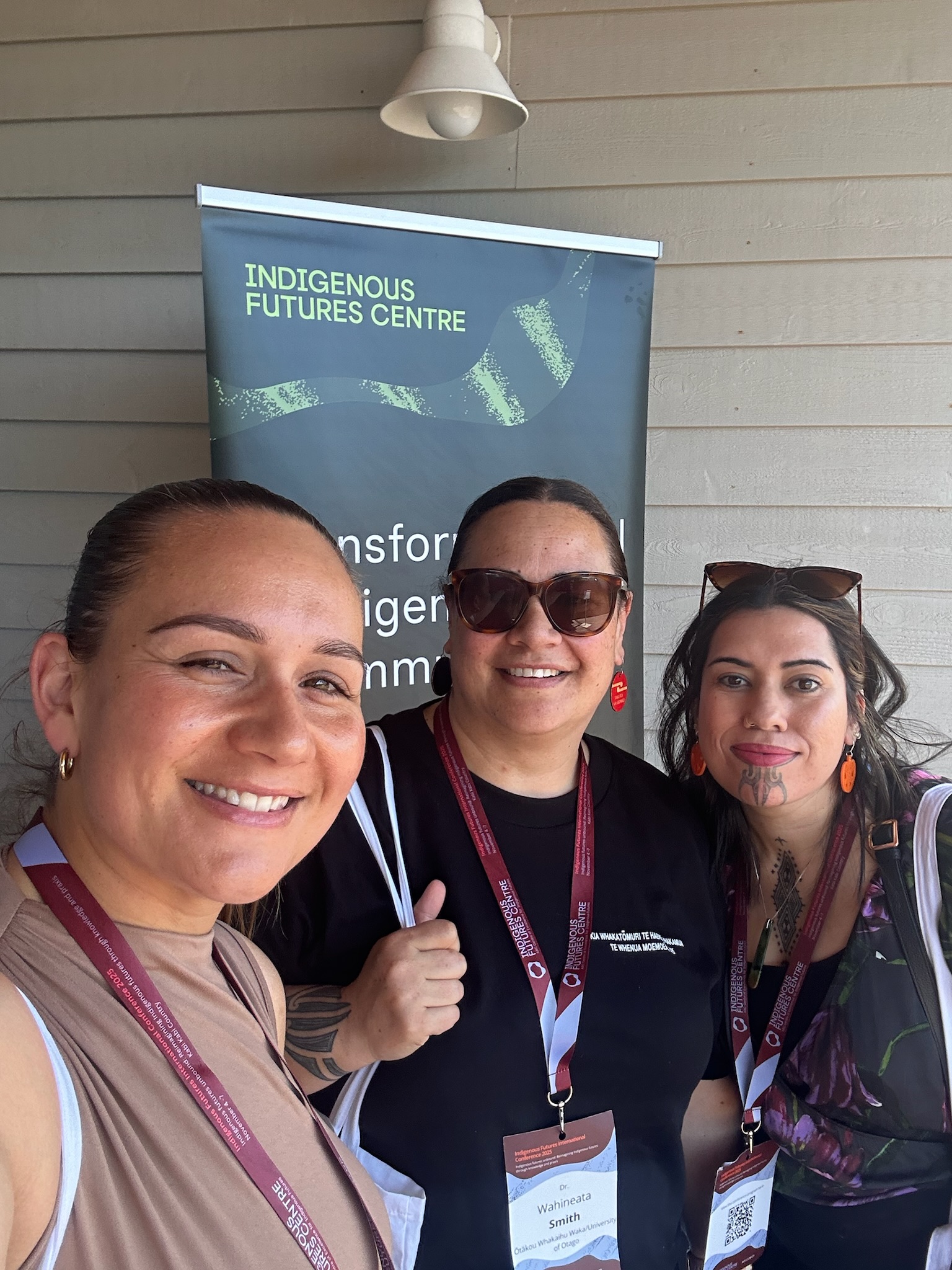
In early November, Te Tumu Māori Studies academic Wahineata Smith travelled to the Indigenous Futures International Conference 2025, taking with her two Māmā that had been part of her research which focuses on parenting practices in dual heritage Māori and Tongan families. Their reflections on the event are published here.
Wahineata Smith
A call for abstracts to an Indigenous conference landed in my inbox and I was immediately interested. I had been thinking about how to bring some people from my research along with me as a way to acknowledge and give voice to the whānau or co-creators of my rangahau that explores how parents and caregivers actively shape their children’s cultural identity across geographic, linguistic, and social boundaries. As the number of Māori and Pacific families with multi-ethnic whakapapa grows, so too does the need to understand how identity, wellbeing, and belonging are nurtured in diverse whānau contexts. Research related funds were sought and I was able to invite two Māmā as representatives of the two phases of my rangahau, giving them the opportunity to co-present on their experiences of raising tamariki who have both Māori and Tongan whakapapa. Titled “Navigating layered identities: Co-creating knowledge with Māori and Tongan whānau in Aotearoa”, our presentation drew on kōrero from wānanga held with Māori-Tongan families in Ōtepoti Dunedin, Phase One and Kirikiriroa Hamilton, Phase Two.
Attending the conference was a meaningful and enriching experience, both personally and professionally. Hosted on beautiful Kabi Kabi country in Sunshine Coast, Australia, the gathering brought together more than 300 Indigenous scholars, researchers, and community leaders from across the region and beyond. While the conference theme spoke to “Indigenous futures,” many of the presentations carried a deep emotional weight. The kōrero reflected ongoing experiences of mamae, resilience, and reclamation, clear reminders that the work of decolonisation and self-determination continues to be deeply felt amongst Indigenous communities. It was powerful, yet at times heavy, as we collectively navigated the tension between inherited trauma and imagined possibility.
Hei whakakapi ake, e mihi tonu ana ki ōku hoa haere me ō rāua whai wā, ō rāua tautoko anō hoki ki te tohatoha ō rāua ake wheako. E mihi tonu ana ki Te Tumu, ki Ōtākou Whakaihu Waka anō hoki, mō te pūtea tautoko me te tirohanga whānui kia tutuki ai tētehi mahi pēnei, te kōrero ngātahi te kairangahau me ngā whānau kua rangahautia. Ko te whāinga matua, ko te whakatupu tamariki kia whīkoi poho kererū ai i roto i ō rātou ake whakapapa, i ō rātou ake ahurea, i ō rātou ake tuakiritanga anō hoki.
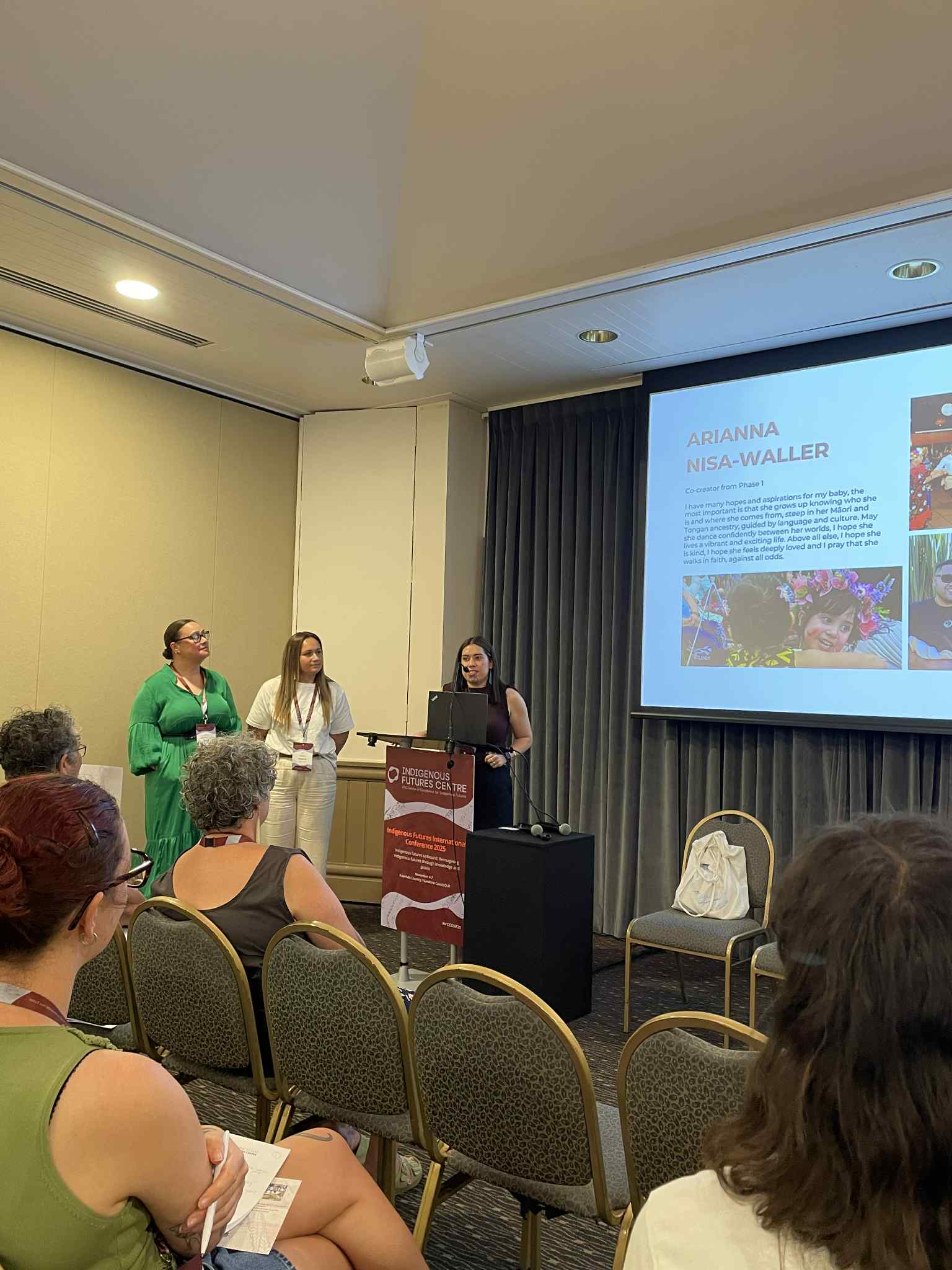
Arianna Nisa-Waller
I firstly wanted to express my gratitude to Wahineata for moving beyond traditional and Western research parametres and daring to ensure whānau voices, through her rangahau, are honoured, not just by way of doing research but in the dissemination of the rangahau and taking participating whānau with her to these indigenous hui. I know this challenges the idea of investment in rangahau within tertiary institutions being an individual pursuit that only sees and values the researcher. Wahineata has created an example located in collective indigenous realities to create new horizons where whānau voice becomes an enduring legacy enriching the outcomes of ao Māori driven rangahau, no longer are whānau just there in the recruitment phase and data collection, but they are integrated all the way through.
I think this is a model to consider in future investments for kairangahau Māori because this collective voice mahi is not a new concept to us but we could also think about how we push this as the norm in the institution. In the lead up to the conference, we had all met together on zoom to ensure we could co-create the presentation taking Wahineata’s lead. We were prepared for the time given to our session to go quickly but when we got into it, given the talks before us in our concurrent session went over time, our time was cut shorter. Despite this, Wahineata delivered an impressive and inspiring presentation on her kaupapa rangahau about ensuring the continued legacy of encouraging the dualities of Māori and Tongan identity for our tamariki.
This is the heartbeat of what we each have in common and what had compelled us to travel across the ocean to share kōrero with this indigenous audience. In a time of global unrest where vast losses are occuring and a thick political divide is erupting, this kaupapa of language and identity revitalisation pertinent to our tamariki bought a lightness and transformative power to the space. We sadly ran out of time to cover the full length and breadth of what we had planned however, the lasting message in my perspective was delivered by Wahineata. There was much interest in the rangahau and I think just enough was laid out for people to know this is a rangahau journey that Wahineata will continue as a longitudinal study with the further research funding she has been awarded.
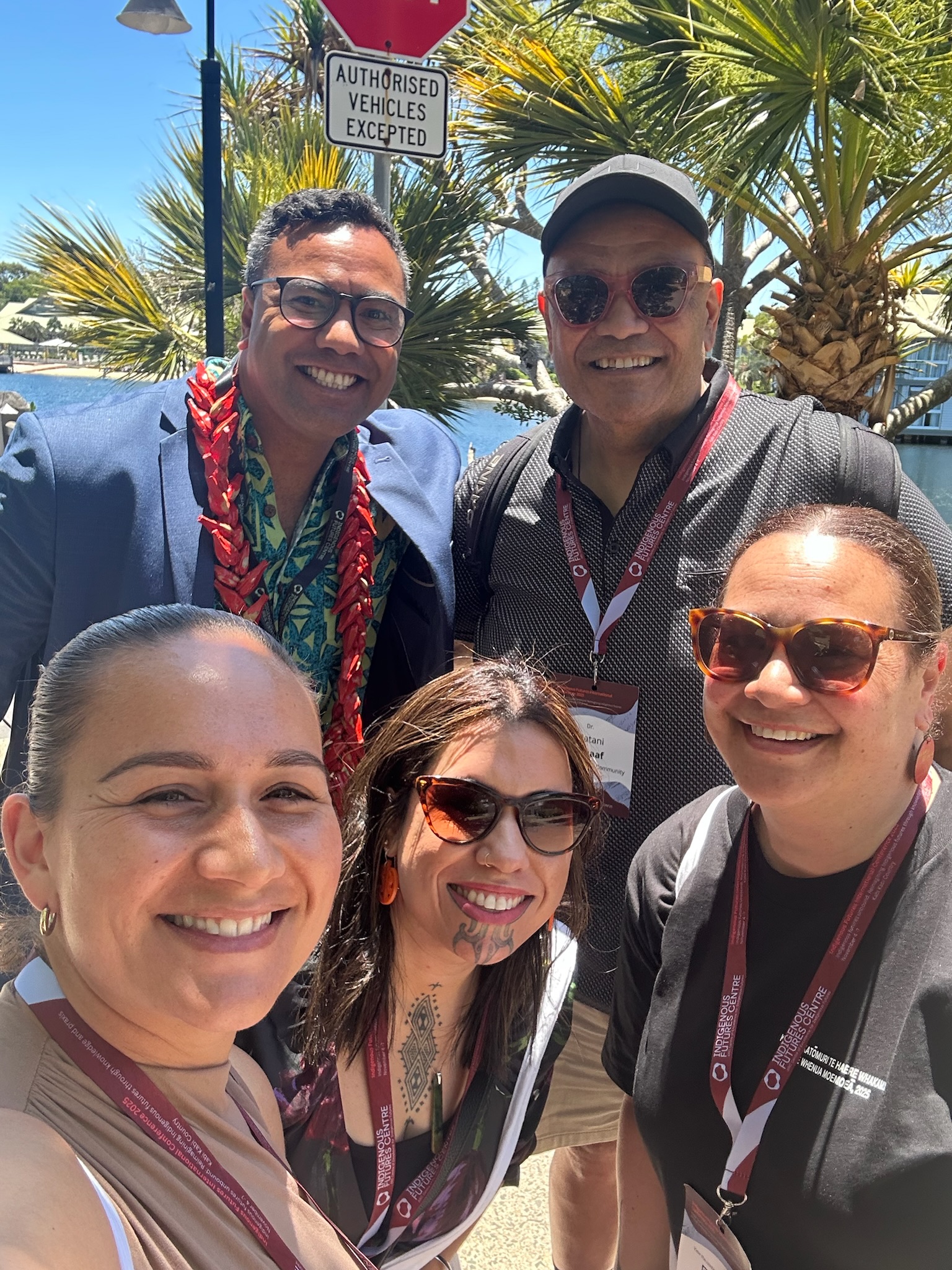
Erana Severne-Takataka
This is such important mahi and very close to my heart. We are going to see more blends of Tongan and Māori children, and I know first-hand some of the complexities that come with raising strong, confident, vibrant children in multiple ahurea (cultures). Reflections I have a deep appreciation for how far Māori has come, even though there are still many ongoing challenges in Aotearoa. I could feel the anger and almost rage from our brothers and sisters in Australia. There is so much mamae there, and a lot of complexity. While this is true for Māori as well, I found myself thinking about how each of us could have stood up and done our presentation entirely in te reo Māori. After one of the sessions, a young Aboriginal wāhine made a comment saying, “You all stand so confidently, knowing who you are and where you come from.” That wasn’t something we had really thought about, but for others whose loss of reo and connection to culture feels so distant, it can seem aspirational. I hadn’t really heard of identity fraud before, but it came up a lot at the conference as a challenge they’re facing in Australia. In a discussion with the girls, we wondered how that might play out in New Zealand. We felt that at a small level you might get away with it, but in a larger forum our country is so small that someone would definitely call it out.
I’m not from the education field, but one thing I noticed was the style of presentations. Many were pre-written, often delivered by very intelligent people with amazing kaupapa, yet I rarely saw truly engaging presenters. Sometimes the tone was so clinical that it was hard to stay focused, especially with complex topics delivered in the same way throughout. It reminded me how important storytelling is. How do we bring people along on the journey and make complex or difficult topics easy to understand? How do we clearly explain our context to those who may not know our world? How do we use pitch, tone, and pace to support our message and thinking? It made me wonder how we could present ideas differently so they connect more deeply with people.
Contributions to a special issue on “The Invisibility of the Realm of New Zealand”
 Te Tumu academic staff members Dr. Emma Powell and Dr. Jess Pasisi were a part of a team of Pacific scholars who contributed to the latest special issue of Waka Kuaka. The issue delves into the “Realm of New Zealand,” exploring why it is often dismissed in both historical and contemporary narratives. This dismissal has led to a lack of awareness and limited understanding of what the Realm is and how it impacts Pacific communities connected to it. The team of authors highlight the tangible consequences of this oversight, particularly for communities from the Realm who now often have larger populations in Aotearoa than back in their home islands. This special edition aims to bring awareness, stimulate critical discussion, and advocate for a more inclusive understanding of the Realm’s place within the broader Aotearoa context.
“Sustaining culture in isolation is exhausting. But necessary”: Dr Wahineata Smith reflects on the realities of being away from iwi and hapū
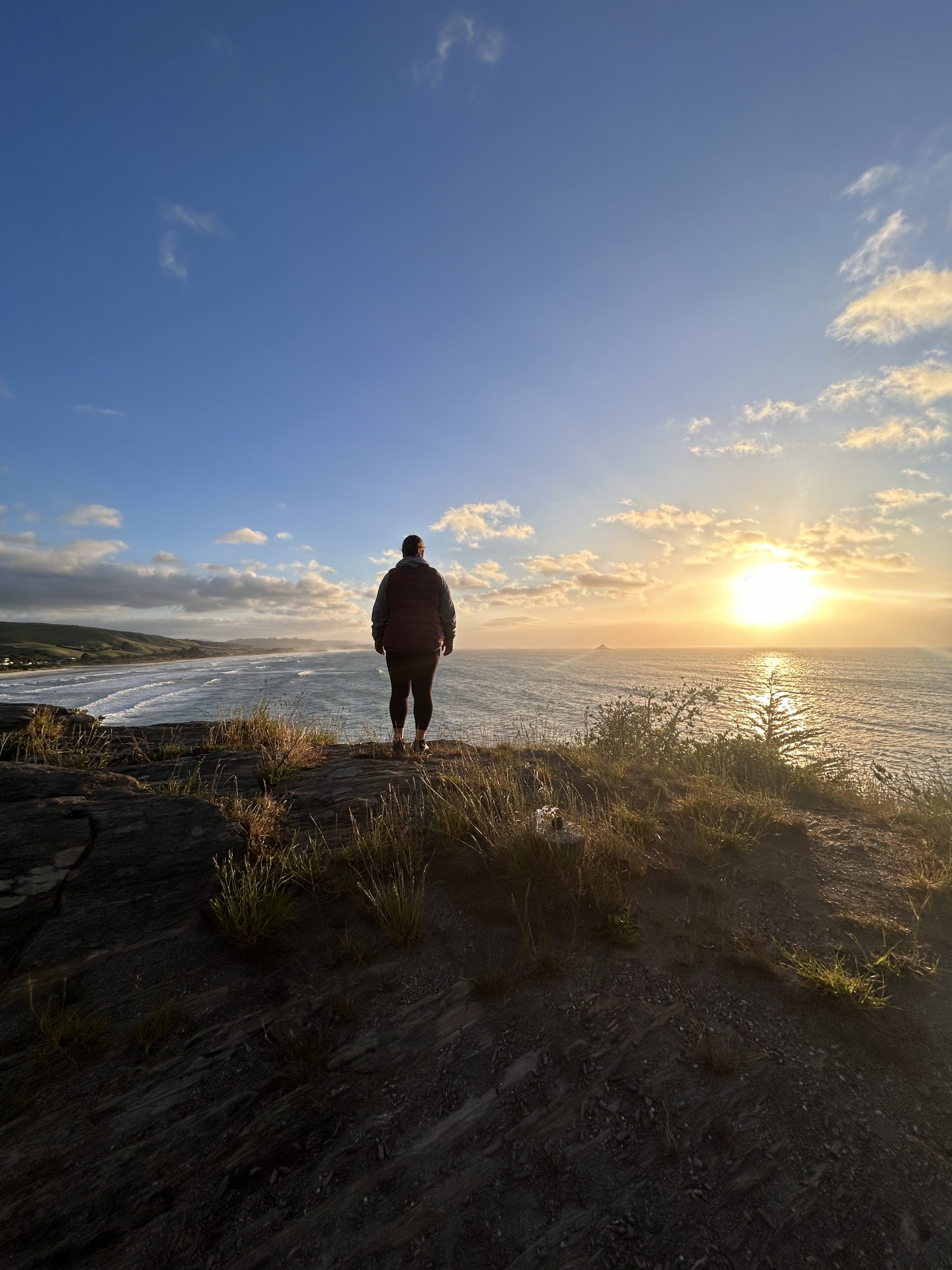
Photo credit: W Smith
In a recent article for the Mana Wahine series of the Otago Daily Times, Te Tumu’s Māori Studies lecturer, Dr Wahineata Smith, shares some of the costs and realities for whānau who are geographically distanced from iwi and hapū. Specifically, navigating the costs associated with cultural, spiritual and social connections as well as the emotional weight of having to make “cruel economic decision[s] between tikanga and balancing the family finances.” Woven through the article is Smith’s clear respect for and accountability toward her children and the worlds she wants them to know, be part of and move through with confidence. And while she mentions the tension and struggle of having to be “the sole bearer of all things Māori” within her home, the relationships she has with mana whenua and mātāwaka here in Ōtepoti strengthen and support her as she carries that responsibility. The article, which appears in the May 25 issue of the Mana Wahine series, has also featured article from Te Tumu staff, Professor Karyn Paringatai and Kare Tipa.
Mātauranga Māori seminar from key wāhine Māori centres relationships, community and hapū
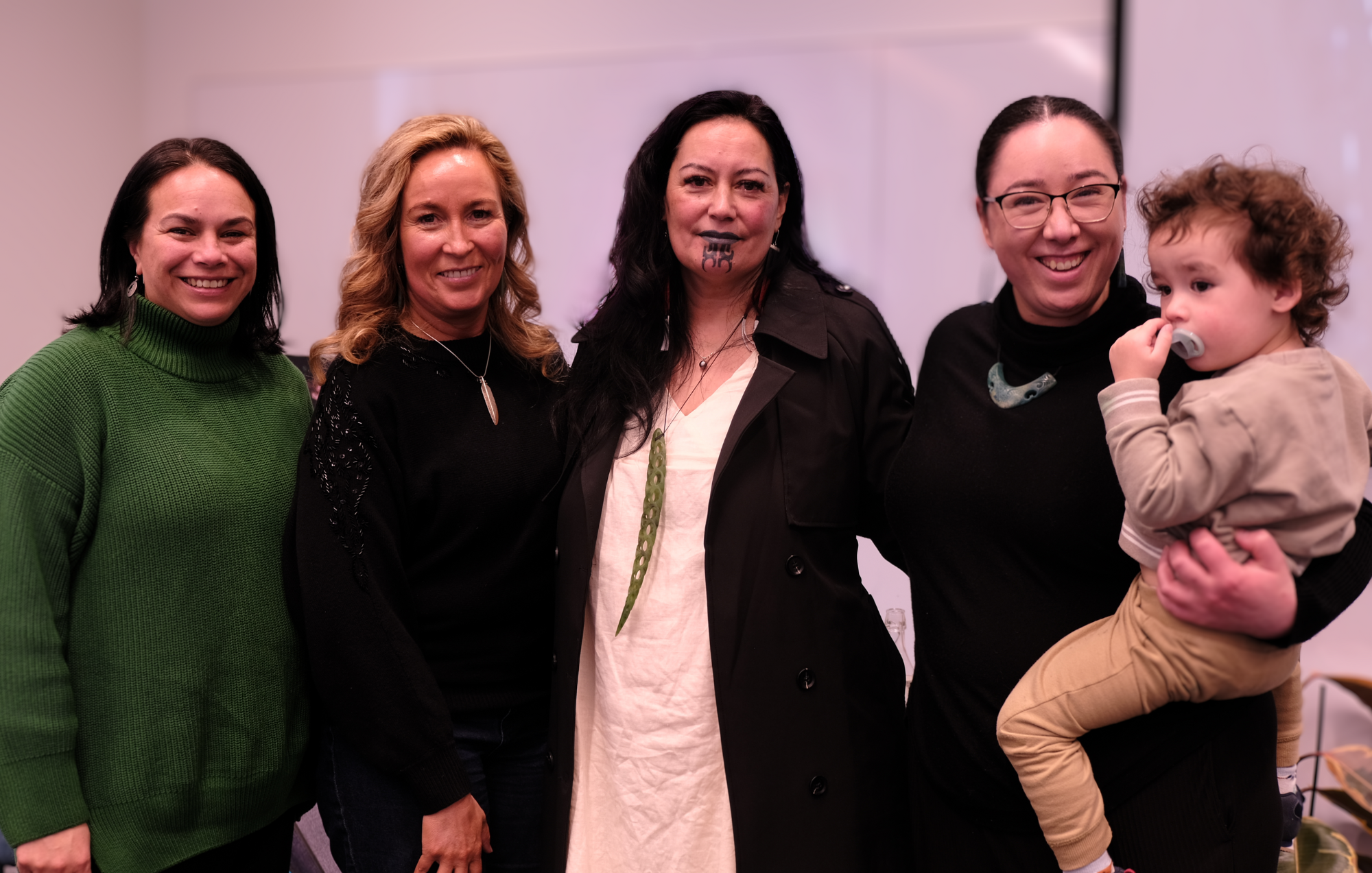
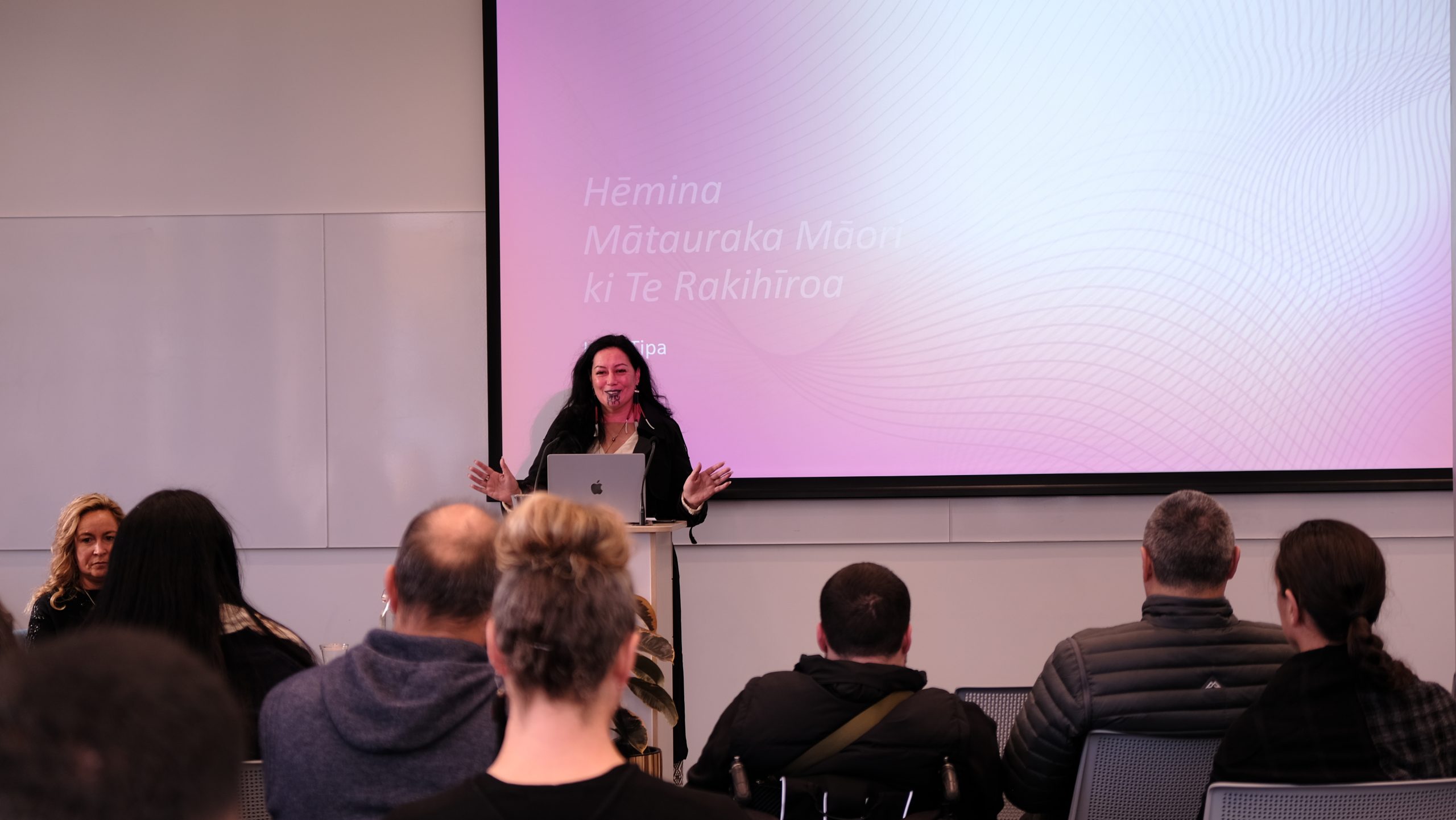
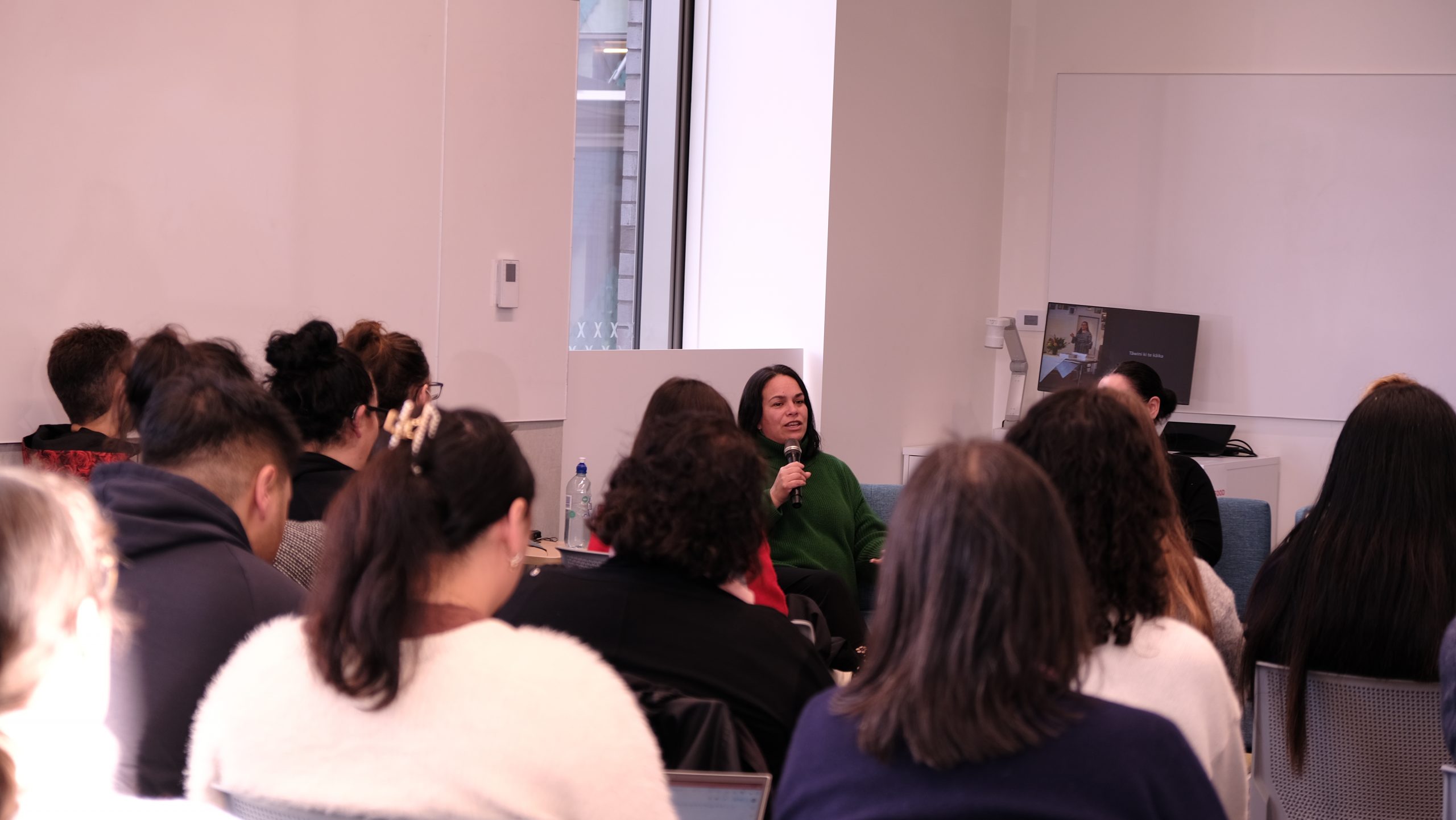
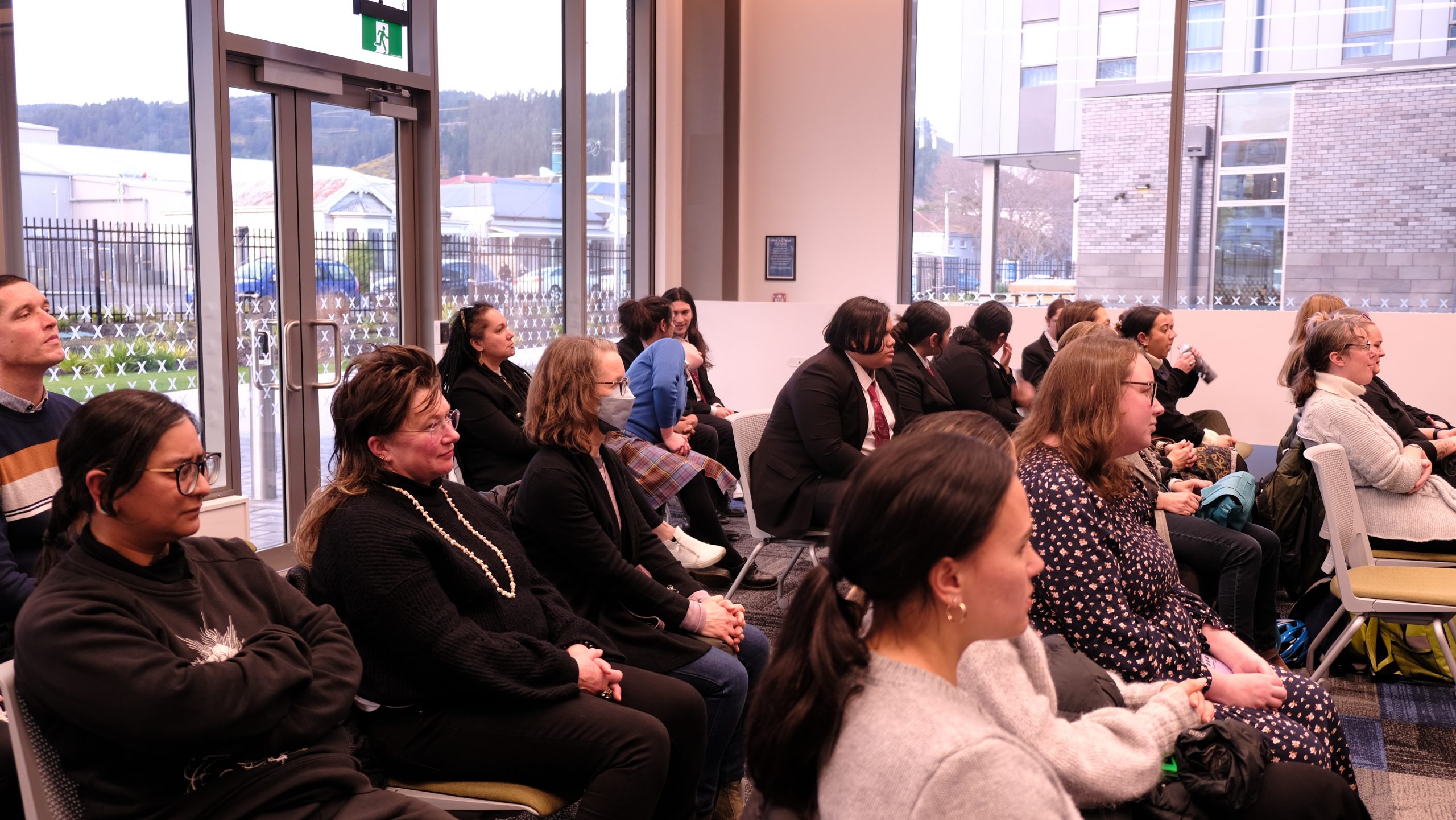
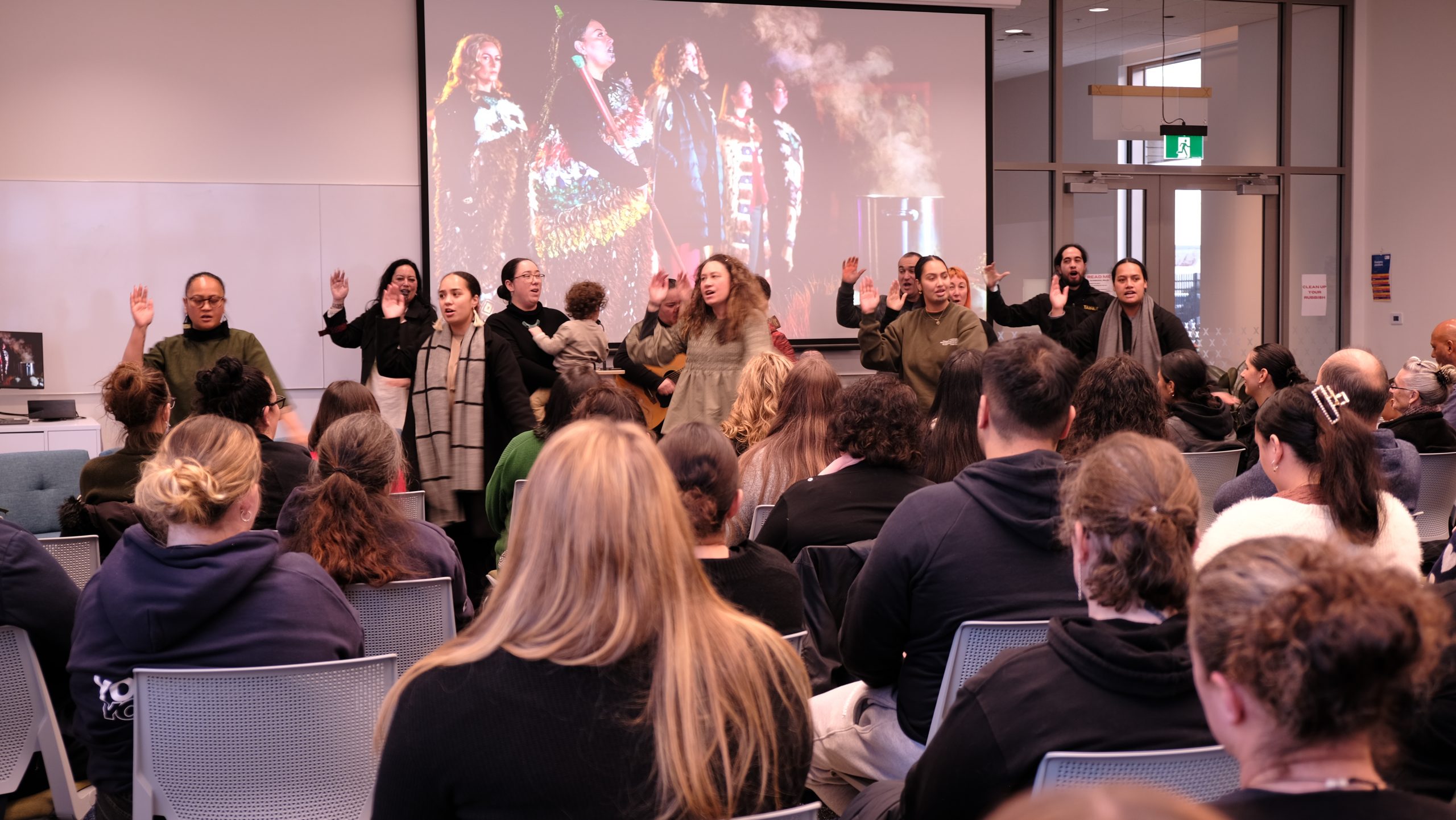
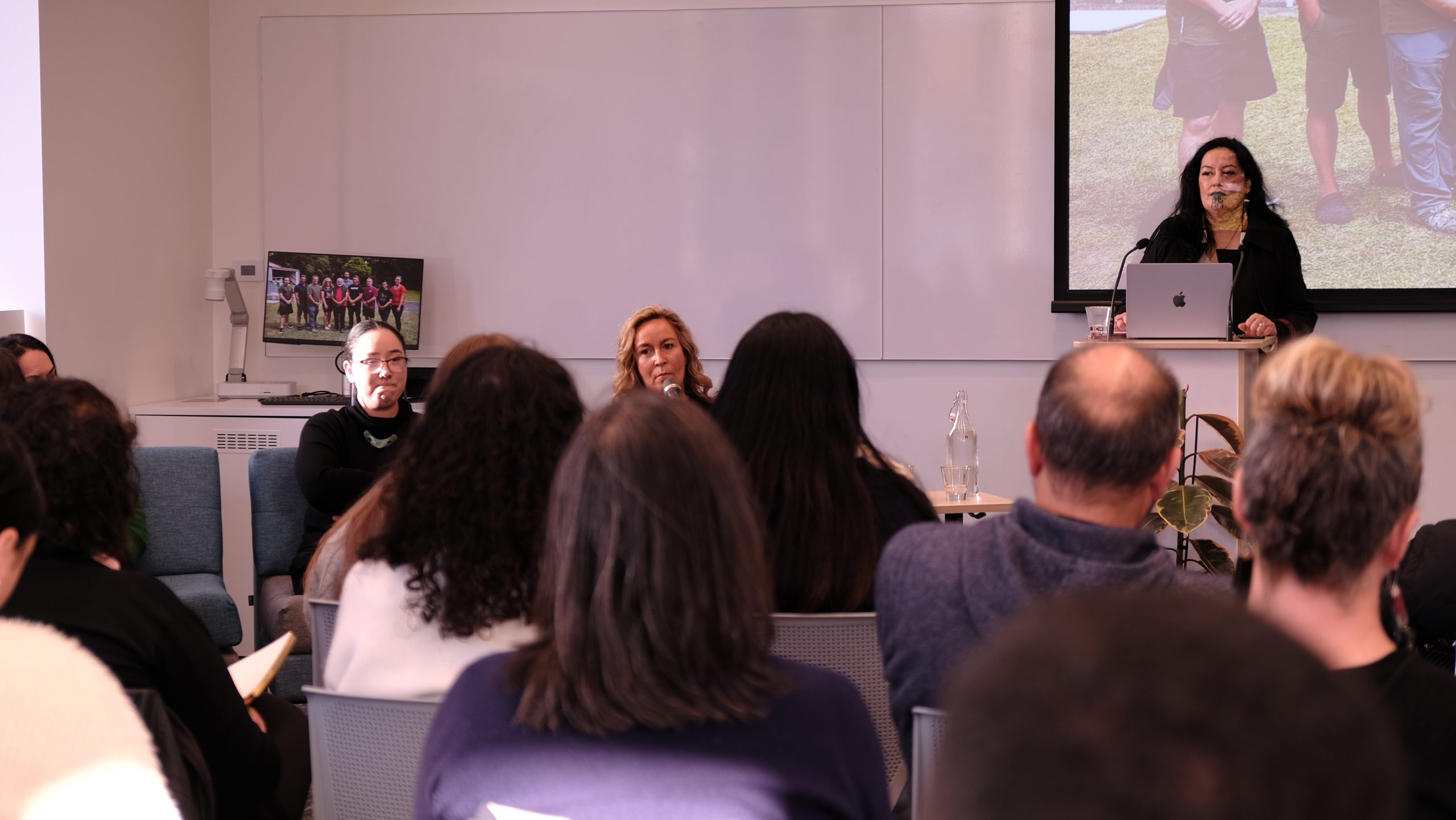
Mātauranga Māori was the centre of a fabulous Te Tumu Special Seminar Panel on Wednesday afternoon hosted at Te Rangihīroa College. Te Tumu Pūkenga Kare Tipa facilitated a vibrant, engaging and generous kōrero with wāhine Māori, Paulette Tamati-Elliffe, Tāwini White, Victoria Campbell as they reflected together about their experiences in the national Hautapu for Matariki as well as broader roles and responsibilities they have for uplifting and sustaining mātauranga Māori in their respective spaces.
There were several important themes that developed during the panel including leadership, family and the importance of relationships, locality, community, humility, responsibility, hapū, and doing your best. All of which was well received by a room filled with family, university students and staff, high school students and other interested people from the wider community.
For each of the panellists there were clear moments in their lives where the motivation for wanting their children and their mokopuna to have the language, really pushed the directions that they took in their careers, with their families, and in their communities. As each speaker reflected on her personal journey into te reo, it was clear that the process can look different and take time, but that it can positively change the way you live and the way you connect with the world around you.
Tāwini White commented that her “Mum was the key to the door of Kāi Tahutaka”. Both her parents were strong advocates of te reo and would take her along to things like Kotahi Mano Kāika (KMK) as it launched. As White’s niece made her way in the world, White knew that she wanted to be someone who could provide access to te reo and mātauranga, something she also practices with her two-year-old son.
Victoria Campbell talked about how there are different ways of navigating te reo journeys. Her early experiences of te reo and being Māori were quite formal and centred around her Mum, who, as an excellent cook, would often be out at the marae, at schools or in other community spaces. While her Mum and other women around her would often speak in English, the way they spoke, they idioms they used, the way they were with each other, all connected with Māori ways of being and knowing. Her Mum started learning te reo in her 50s and that has been really inspiring for her to see.
Tamati-Elliffe and her partner wanted to be “te reo grandparents” to create spaces where their children and mokopuna would have te reo because “it’s not just a language, it’s a worldview. Something that connects you to your past, present and future”.
Kare Tipa provided useful framing in the colonial underpinnings of the term mātauranga Māori but also the ways it has been reclaimed by Māori. Which opened a space for the panellists to consider the ways they apply and embed mātauranga in their lives and the work they do. Tipa emphasised that “everything we do comes from our localities, our knowledge”, but not all knowledge belongs to all people. There is knowledge that is specific to whānau, to hapū, to iwi and then there is knowledge for everyone, and it is important to uphold those boundaries.
Campbell also highlighted the importance of connecting with and understanding Indigenous time and seasonality, particularly (but not only) as it is practised for ceremonies related to Matariki and Puaka. Early on, Tamatai-Elliffe made a statement about the vastness of mātauranga Māori as something that one could easily study for a lifetime, “but unless you can apply it, what does it mean?”.
Strong perspectives were also given on the role the university can play in upholding and embedding mātauranga Māori across all spaces in the institution. These wāhine are all significantly involved practitioners of mātauranga Māori. And while some do not consider themselves as experts, it is clear how integral the practice and execution of mātauranga Māori is in their lives and the wide-ranging and beneficial work that they do. This is reflected in the roles they had as part of the kairuruku for the national Hautapu ceremony, but it also extends to kaupapa and movements that have been decades in the making and that each of these women are committed to continuing for the benefit of generations to come.
All the panellists were generous with their time and insight which had deep valuable for all who attended. There is certainly appetite and anticipation for more kōrero of this nature and wider engagement with diverse groups. The event was made possible with support from the Office of Māori Development, the team at Te Rangihīroa College and Te Tumu Research Committee.
Niue texts researcher signs MOU with Tāoga Niue

Last week, Dr Jess Pasisi (Mutalau, Hikutavake, Niue; Ngāti Pikiao, Tahiti) signed a Memorandum of Understanding (MOU) alongside Moira Enetama, Director of Tāoga Niue, Ministry of Social Services, of the Government of Niue. The MOU relates to Dr Pasisi’s Marsden […]
PacTNet panel discussion & Pacific Voices Alumni celebration
On 27 November 2023, 20 years of the University of Otago’s Pacific Voices Postgraduate Symposium was celebrated with alumni, staff and current Pacific students at the Auahi Ora space in the Student Union Building. The evening programme began with an address from Tofilau Nina Kirifi-Alai, past manager of the Pacific Islands Centre and current Pacific Community Engagement Manager in Auckland. Tofilau shared reflections on establishing the symposium after seeing the need for postgraduate support in 2002 and gave encouraging words for organisers and students taking the symposium forward.
Her opening remarks were followed by an address from Deputy Vice Chancellor, Research & Enterprise, Professor Richard Blaikie who commented on Pacific research within the context of the University’s strategic direction. He enthusiastically supported Tofilau’s opening remarks and later engaged openly with the audience during the Q&A session at the end of the evening.
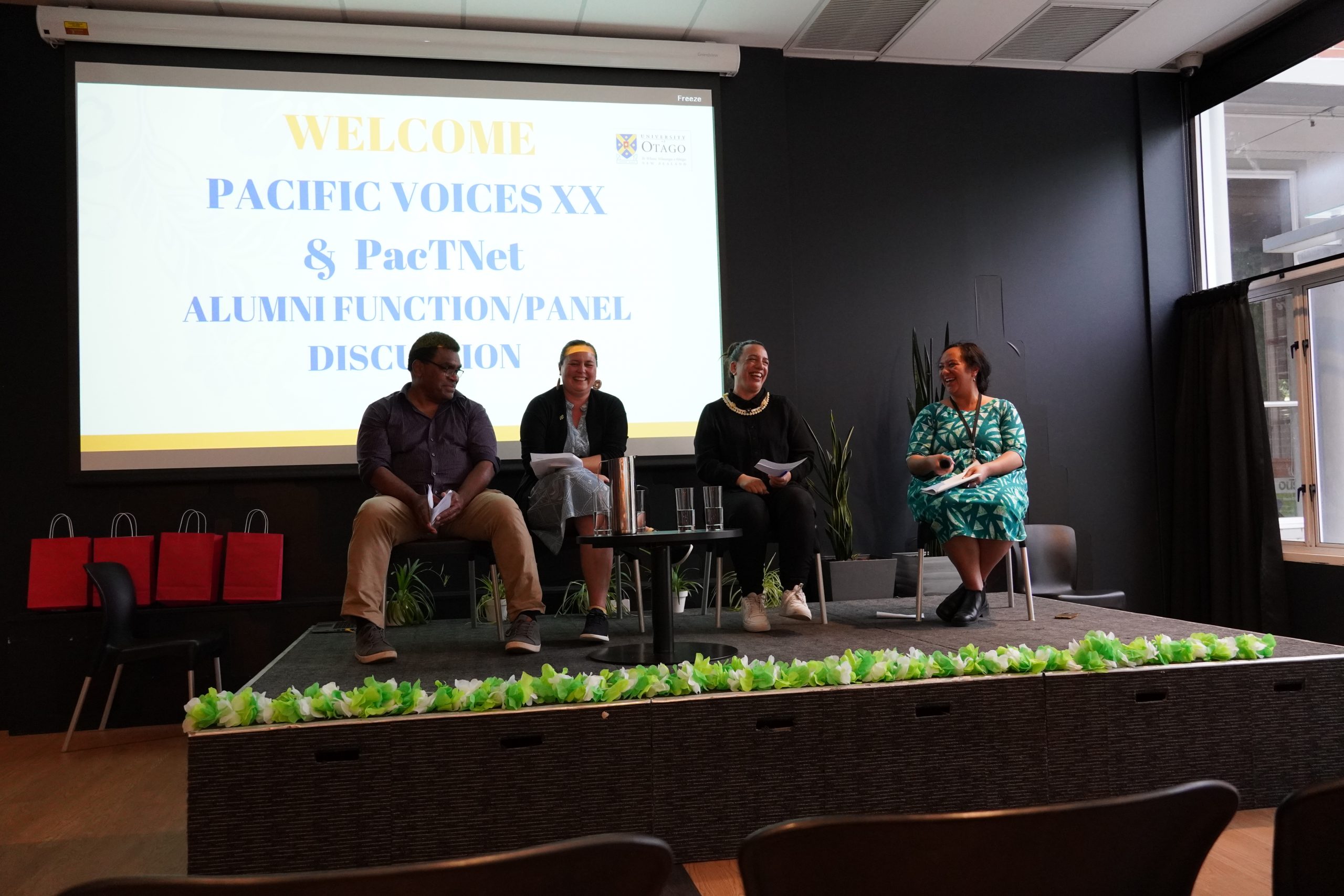
Panelists L-R Dr Tui Rakuita (Sociology), Dr Jess Pasisi (Te Tumu), Professor Rose Richards (Acting Director, Pacific Development Office & Co-Director of Coastal People, Southern Skies) and facilitator Dr Emma Powell (Te Tumu).
As a part of the programme, the symposium organisers and staff from the Pacific Development Office teamed up with the Pacific Thought Network (PacTNet) to arrange a public panel discussion. Earlier this year in May, PacTNet held its inaugural Pacific Lecture which was given by Tootooleaava Dr Fanaafi Aiono Le-Tagaloa and the panel gathered key Pacific thinkers from our university community to reflect on the ideas and comments made in the lecture. The panellists were Professor Rose Richards (Acting Director, Pacific Development Office & Co-Director of Coastal People, Southern Skies), Dr Tui Rakuita from Sociology and our very own, Dr Jess Pasisi. All of the panellists gave stimulating thoughts on Tootooleaava’s lecture, ranging from comment on Pacific leadership at the University of Otago, the significance of the diaspora to Pacific thinking, and the romanticism with which we hold Indigenous knowledge.
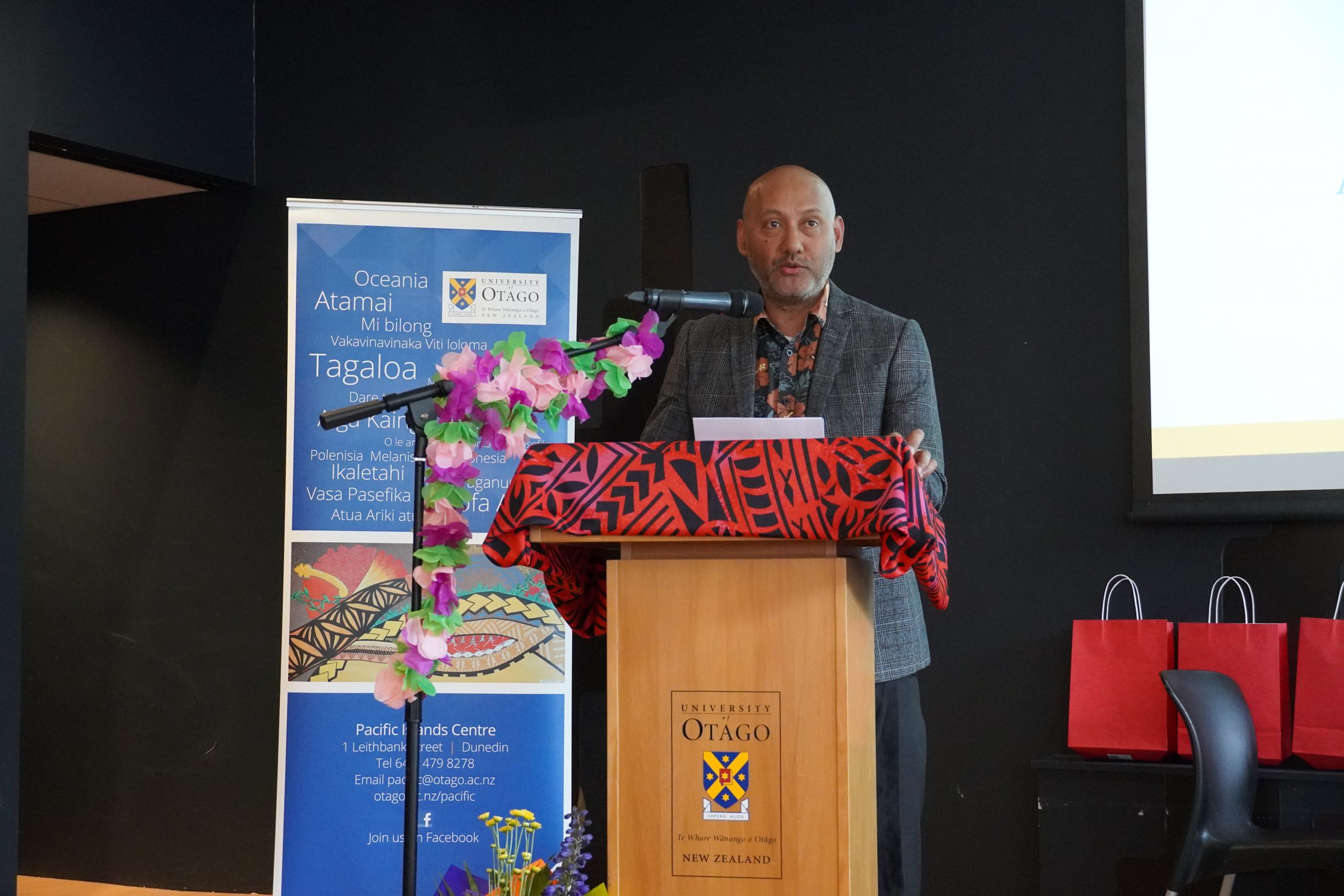
Dean of Te Tumu, Professor Patrick Vakaoti.
The PacTNet steering committee is made up of a number of our Te Tumu staff: Professor Patrick Vakaoti, Dr Telesia Kalavite and Dr Emma Powell. They are also joined by Dr Allamanda Fa‘atoese who is based in Christchurch and Dr Charles Radclyffe from Archaeology.
A number of our Te Tumu students participated and presented on their research during the Pacific Voices Symposium XX which was held on the following day, Tuesday 28 November 2023. For photos and coverage, check out the story from Pacific Communications Advisor, Keilah Vaetoru Fox, here.
MAI hui-ā-tau hosted by Te Kunenga ki Pūrehuroa, Massey University in Palmerston North
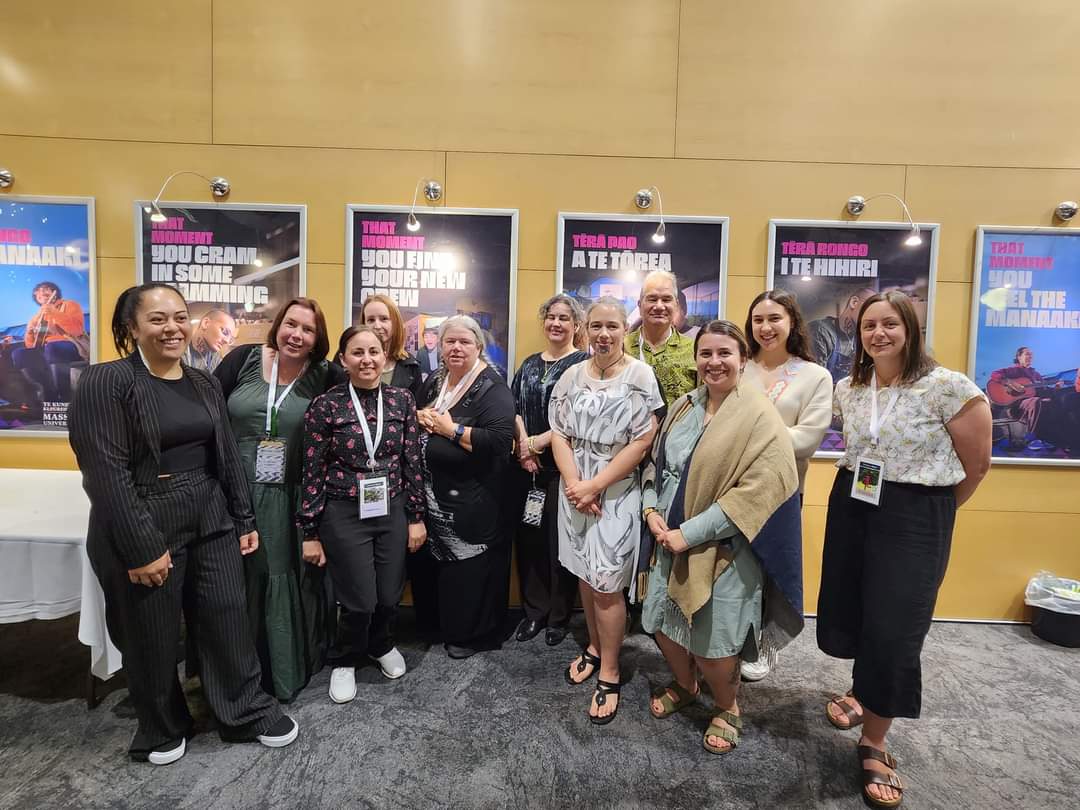
MAI ki Otago contingent at MAI hui ā-tau ki Te Kunenga ki Pūrehuroa, Massey University in Pamerston North.
Tokowhā ngā tauira Tohu Kairangi o Te Tumu e haere ana. Te rawe hoki o ngā kōrero me te whakawhanaungatanga i puta ai i reira. Kei runga noa atu te manaakitanga o ngā kaiwhakahaere nō reira, ngā mihi maioha ki a rātou. E rere hoki ana ngā mihi ki Te Kura Rangahau Tāura, ki a Rachel Sizemore kōrua ko Inano Walter i ā kōrua manaaki i a mātou, ko MAI ki Otago.
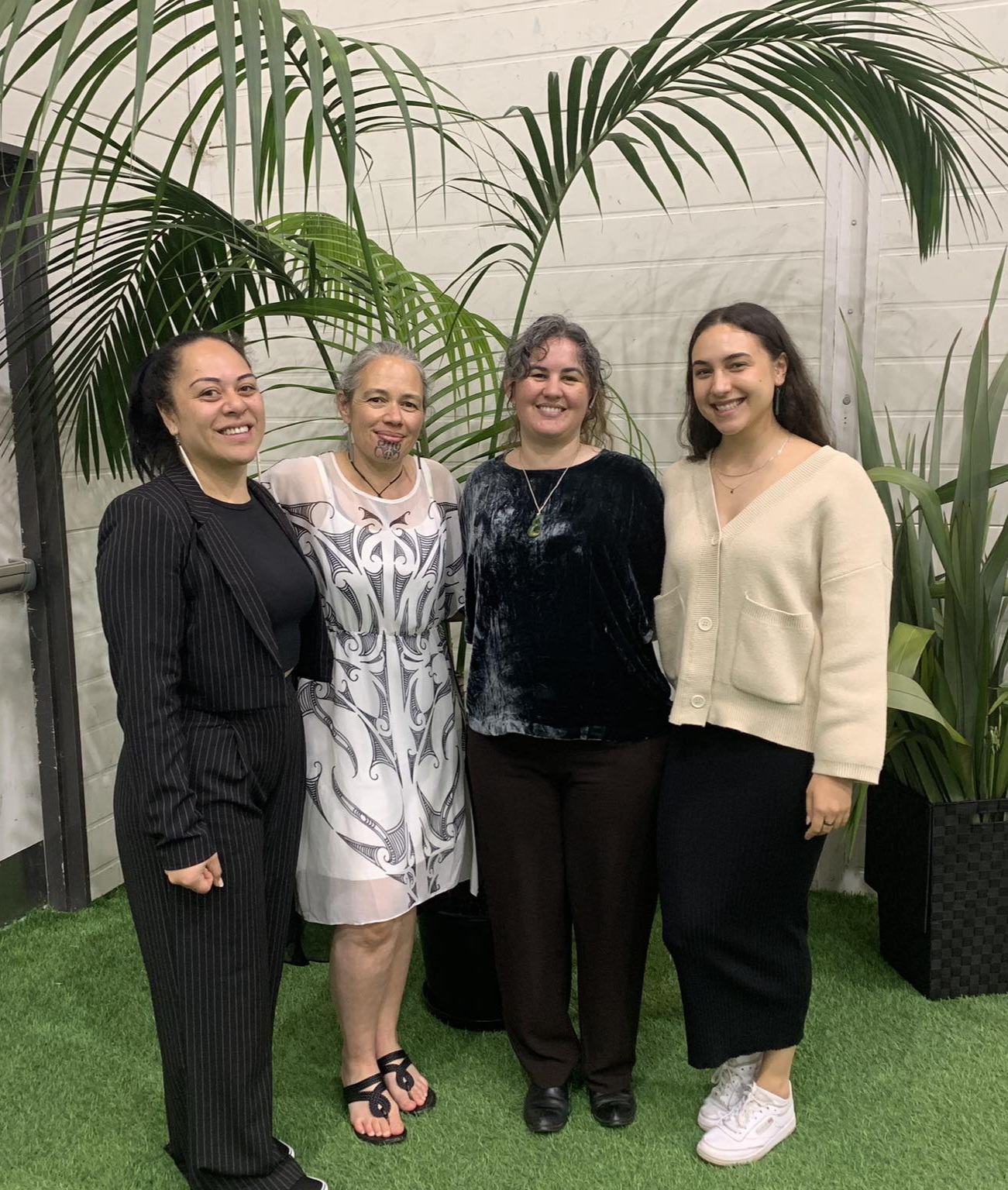
Inano Taripo-Walker, Paia Taani, Alice Karetai, Leteisha Te Awhe-Downey
This year the annual MAI conference was hosted by Te Kunenga ki Pūrehuroa, Massey University in at the Palmerston North campus. Four PhD students from Te Tumu attended the hui. The presentations and networking opportunities were awesome. The hospitality of our hosts was amazing which we all appreciated. We also thank The Graduate Research School especially Rachel Sizemore and Inano Walter for supporting and looking after the MAI ki Otago group.
Highlighting research: Teachers of mainstream curricula, teaching Māori speaking children
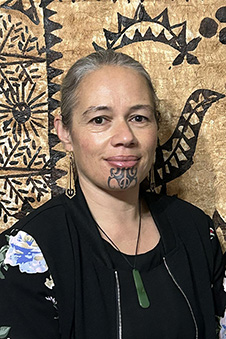
Paia Taani, Ngāi Tūhoe, Ngāti Whare, Te Whakatōhea, Ngāti Uenukukōpako
Earlier this year Paia Taani, one of Te Tumu’s staff members published an article based on the research undertaken for her master’s degree which investigated teacher preparedness to teach te reo Māori speaking children in mainstream primary schools. Some of her key findings included an awareness of how language and culture impact on identity and educational outcomes. Although participants acknowledged the absolute necessity that te reo Māori and tikanga Māori are included in all aspects of the education setting, they also reported that tikanga Māori is a more comfortable space to be in than te reo Māori as there were clear connections to their own values.
Four key themes emerged from the findings which Paia promotes in the article as key factors for teacher readiness to teach reo Māori speaking children. These are: Kia rite (be prepared), Kia hono (be connected); Kia tātatiako (be culturally competent and responsive) and, Kia whakauruuru (be integrative). This article discusses those four factors listed above and implications for tamariki, their whānau, teachers and ITE providers. You can find the link to her article here, published in the New Zealand Journal of Teachers’ Work, June 2023.
https://ojs.aut.ac.nz/teachers-work/article/view/362
Paia will be presenting on this kaupapa next week, at the New Zealand Association for Research in Education Conference in Palmerston North.
