Rapa Nui trip connects and inspires University delegation
Sitting in Rapa Nui, Te pito o te henua, it is difficult not to reflect on the many connections that have revealed themselves throughout this haerenga. Some have been immediately recognisable, while others have presented themselves more quietly through conversations, shared experiences, and the everyday interactions that come from living alongside people rather than simply visiting a place.
As a lecturer within Te Tumu, this experience has reinforced the value of learning through relationships. Throughout my time here, I have found myself recognising familiar linguistic features, cultural values, and ways of relating that speak to the shared foundations of our Polynesian heritage. These moments have prompted reflection on the enduring connections of Te Moana nui ā-Kiwa and the ways our histories continue to shape Indigenous communities and scholarship across the Pacific.
Rapa Nui is the eastern-most island that makes up te taimana o te Moana nui ā-Kiwa, or the Polynesian triangle, with Aotearoa being the western point of the triangle and Hawai’i the north. Experiencing the island and meeting the tāngata whenua firsthand has deepened my appreciation of the cultural and linguistic relationships that continue to connect Te Moana nui ā-Kiwa. Although Rapa Nui language and culture have developed in distinctive ways, there are clear connections with both Māori and Tongan language and cultural practices that will compliment and influence my current research trajectory. Observing these similarities in context has reignited my interest in comparative research, particularly in the areas of language revitalisation, intergenerational transmission of pūrākau, and the maintenance of cultural identity.
One of the many highlights of this haerenga has been being hosted by whānau in Rapa Nui. Staying in family homes has provided insights that could never be gained through formal study alone. The generosity with which we have been welcomed, fed, included in everyday living and cared for as part of the whānau reflects values that resonate strongly with Māori understandings of manaakitanga and whanaungatanga, all while navigating three, sometimes four languages. These experiences have reinforced the importance of building genuine relationships as the foundation for collaborative research and meaningful engagement with Indigenous communities.
Our delegation of eight tauira and four academic staff travelled to Rapa Nui to facilitate a series of community wānanga covering te reo Māori, education, hauora Māori, law and the environment, archaeology, sport and health. While we came intending to share knowledge from Aotearoa, the wānanga quickly became spaces of reciprocal learning. It was particularly rewarding to see our tauira confidently contribute their own experiences and perspectives, creating genuine kōrero and space to wānanga.
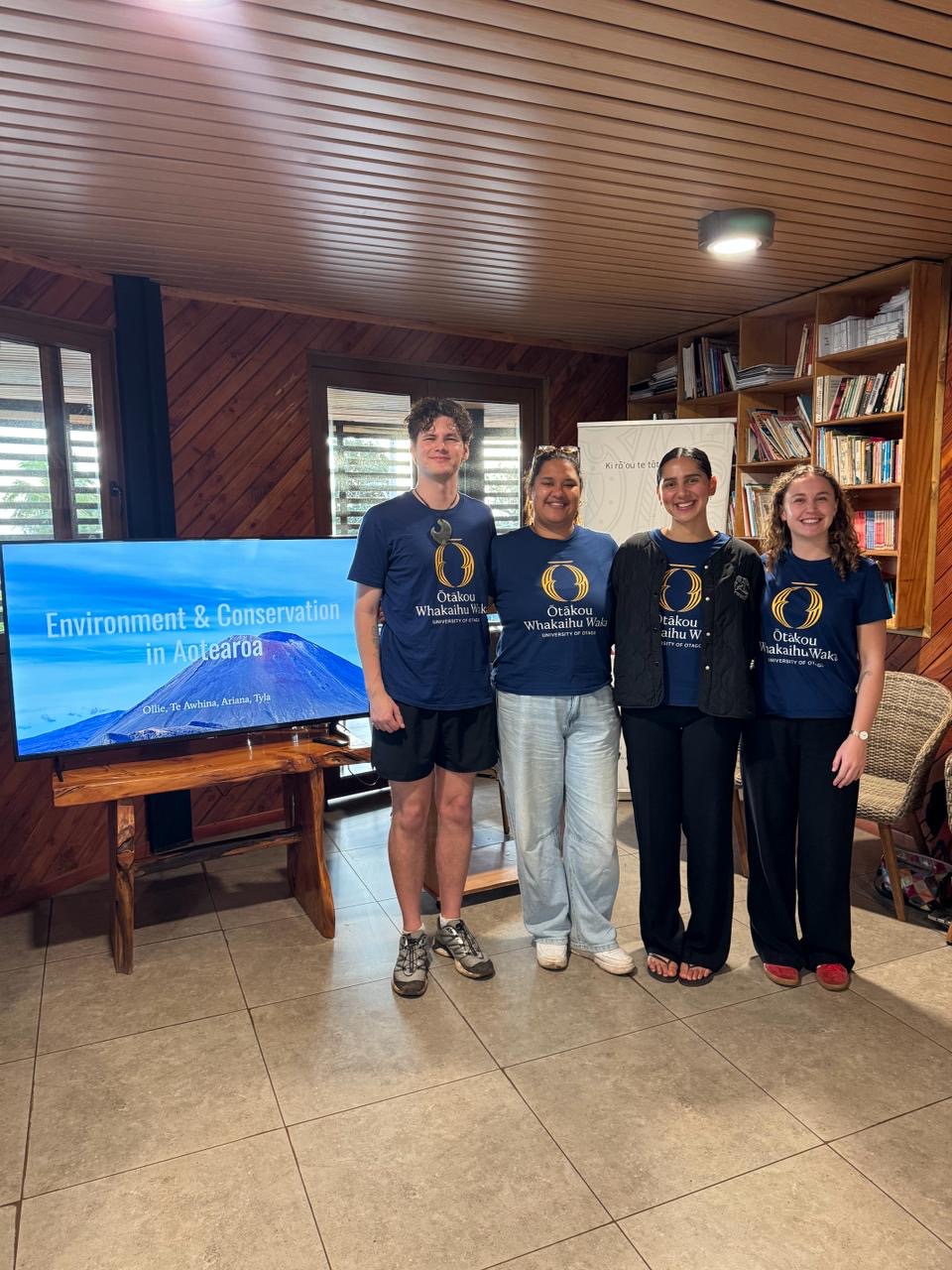
L-R Ollie Ihaka-Gudsell (Indigenous Studies and Law), Tyla Te Puawai Hill -Moana (PhD Candidate Genetics and Mātauranga Māori), Te Āwhina Brundell (Masters of Peace and Conflict), Ariana Davis (Indigenous studies and Law).
Ollie Ihaka-Gudsell, a Te Tumu and Law student described his experience as special, “Every rainy or sunny day, every experience, and every story and connection has been special. My experience has connected me to the people of Rapa Nui and to my own whakapapa”.
Te Āwhina Brundell, a tauira from Te Tumu, doing her masters with Te Ao o Rongomaraeroa comments, “This experience has expanded me in the most beautiful of ways. My favourite part has been the connection between our histories, our stories and our languages. It becomes impossible to deny our shared identity as one people”.
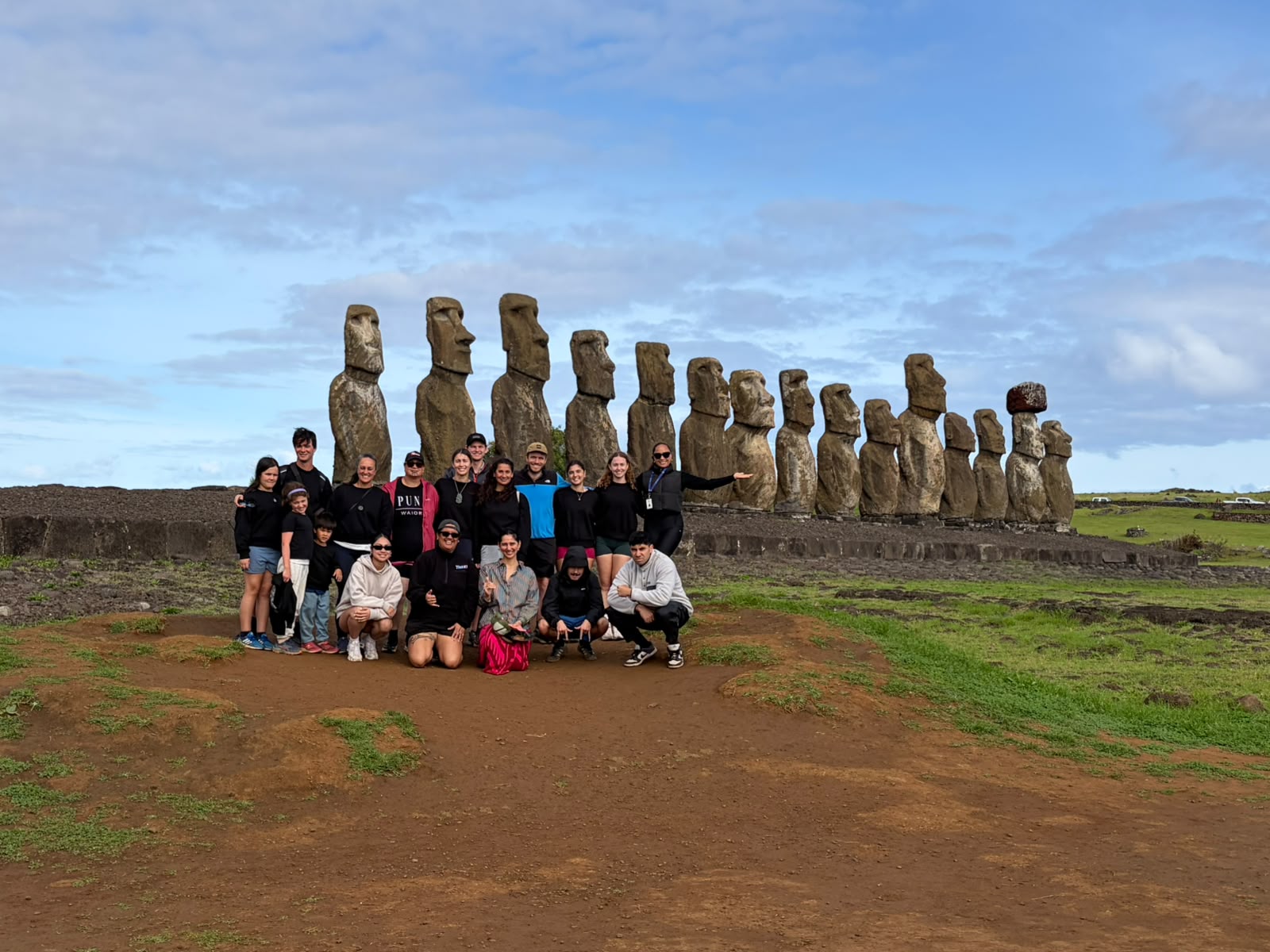
Prime Minister’s Scholarship Ōtākou Whakaihu Waka delegation at Tongariki, in Rapa Nui
It’s clear that this experience will have a lasting influence on all students and staff involved. The relationships established here have opened opportunities for future collaborations exploring Indigenous language maintenance, comparative Polynesian linguistics, and culturally grounded approaches to education…which will see many of the current delegation return. The experience of being on this haerenga will also enrich my teaching by enabling students to better understand te reo Māori within its wider Polynesian context and appreciate both the diversity and interconnectedness of Pacific languages and cultures.
As our time in Rapa Nui draws to a close, I sit with a deep sense of gratitude for the people who have welcomed us into their homes and communities. While the formal wānanga have been an important part of this visit, it is the everyday moments of sharing meals, navigating conversations in a mixture of Rapa Nui, Spanish, te reo Māori and English, singing, dancing and sharing stories that have left the greatest impression. These experiences have strengthened not only my understanding but the students too, of our shared Pacific whakapapa, culture and language. ‘Iorana māuruuru te ta’ina o te pito o te henua, te poki, te tupuna o te henua nei māuruuru ‘iorana.
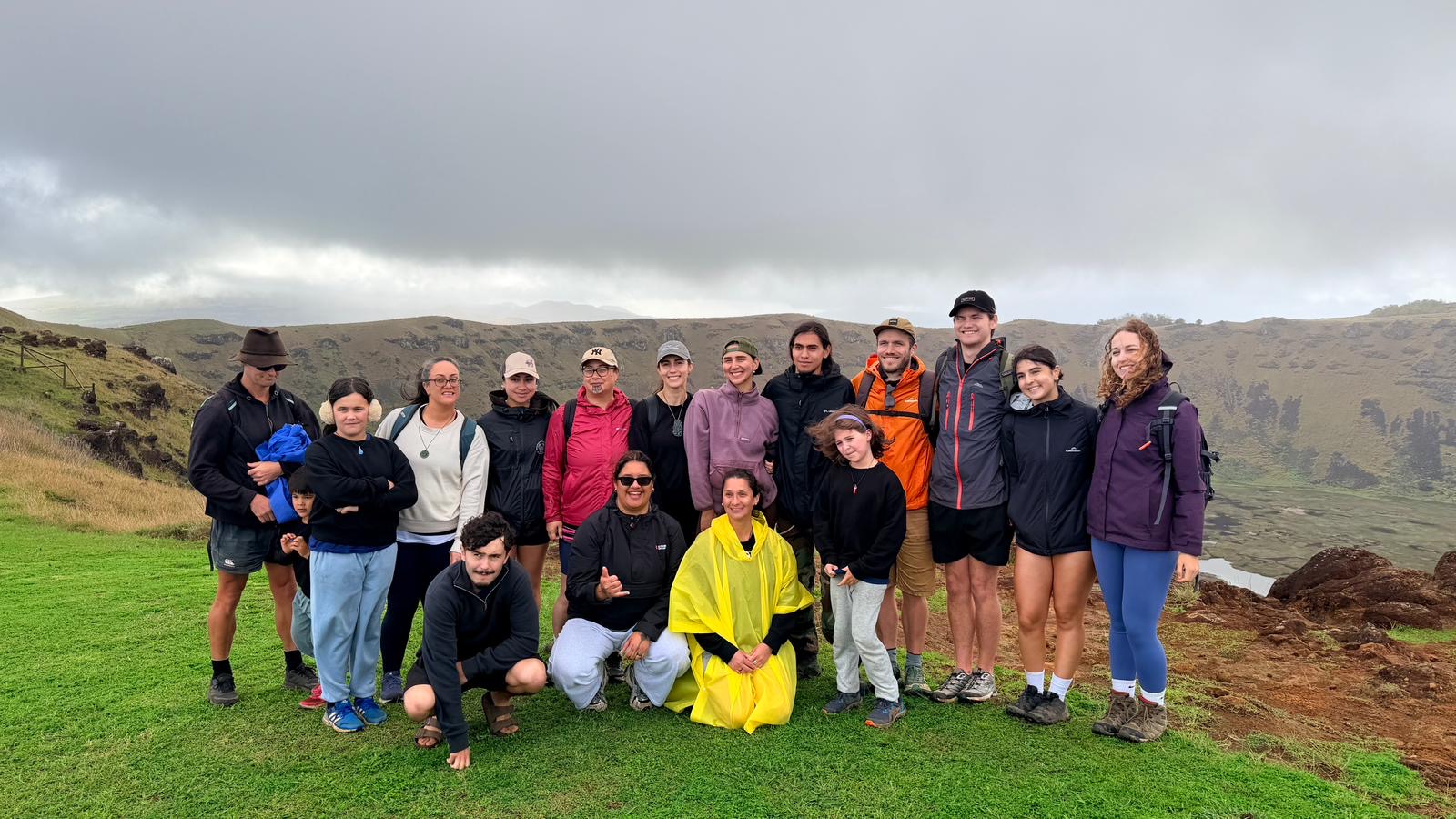
Kāhui after a tour around Orongo historical village, standing above the crater of Rano Kau.
Niue academic’s collaborations with community achieving deeper recognition of Indigenous knowledge
Te Tumu Pacific Studies academic Jess Pasisi’s recent collaborations with Niue community are advancing Niue knowledge and pushing the boundaries of how this knowledge is recognised in scholarly spaces. Alongside Niue Palmerston North Community (NPNC) representatives Sunlou Liuvaie, Sontel Liuvaie, Alister Patali Lavini (Tali), and Randy Liuvaie, Wellington-based Inangaro Vakaafi, and Auckland-based Shimpal Lelisi and Ioane Aleke Fa‘avae, Jess facilitated a roundtable session at the Niue Research Symposium 2025, held 6-7 November in Auckland and hosted by Te Poutoko Ora a Kiwa at the University of Auckland.
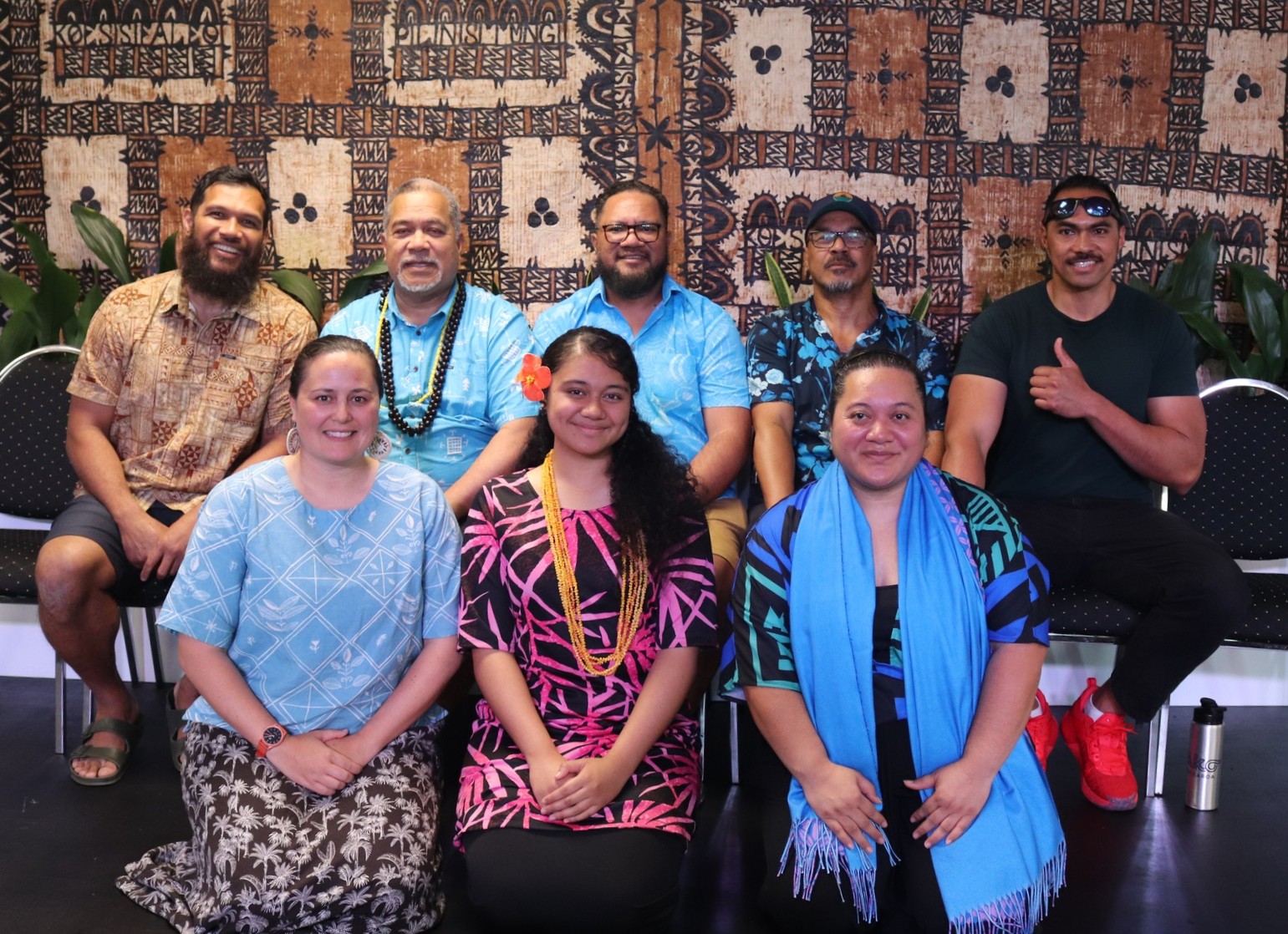
Photo caption: Niue researchers from back L-R: Randy Liuvaie, Sunlou Liuvaie, Ioane Aleke Fa‘avae, Shimpal Lelisi, Alister Patali Lavini; front L-R: Jess Pasisi, Sontel Liuvaie, Inangaro Vakafi. Photo credit: Toliain Makaola
As the largest roundtable of the Symposium, the group that delved into serious questions about how tertiary institutions can be held to account by community, specifically in how these institutions engage lotomatala Niue, Niue knowledge in research. The youngest presenter of the entire event, Sontel, showcased some of her work using Niue knowledge and design in contemporary art as well as strong perspectives on her experiences growing up tagata Niue in Te Papaioea Palmerston North. Community leaders Sunlou, Randy and Tali shared experiences of growing communities of successful Niue learners, championing multi-generational events and spaces for sharing knowledge, and ways of nurturing the values of Niue culture and language with family and in aspects of life. Discussion about the recognition of Niue knowledge holders in creative work was reflected on by Inangaro and Shimpal who had collaborated to the recently released documentary “Being Niuean” documentary series. Ioane’s reflection complemented earlier points he had raised in a “Niue knowledge in research” webinar, also facilitated by Jess, in how Niue knowledge needs more careful consideration in how people treat, understand and use it, both in and beyond the academy.
The session centred questions about how Niue knowledge is constructed, understood and engaged, how to build strong communities of Niue learners, how to adapt Niue knowledge appropriately in different environments and for different purposes, and how to uphold Niue principles and values in the myriad ways we come to research. Being in conversation enabled collective reflection and attended to the specificities of Niue experience (with particular focus on experiences outside of Auckland) that can be expressed in different forms which include storytelling, creativity, practice, relationality, recording and repositing knowledge, intergenerational knowledge sharing and lived experiences.
Jess strongly advocates for the inclusion of community in academic spaces and pushes for greater recognition of the way Niue knowledge in research is not the domain of any singular institution or body. Blurring the boundaries between “academic” and “community” enable deeper discussions about how lotomatala enriches both spaces and has the ability to overcome some of the barriers and shortfalls of institutions as they increasingly seek Indigenous knowledge and knowledge holders to stay relevant and progress.
Jess also belongs to the Matala he Toume collective alongside Ioane, Inangaro, Lisimoni Birtha Togahai, Cora-Allan Lafaiki Twiss and Rennie Atfield-Douglas, that hosted the first Niue knowledge Symposium in 2022 followed by a Niue Knowledge Conference in Niue in 2024. The next Matala he Toume conference is scheduled for 2026.
Bringing researchers together for 2025 Symposium
Kua ea te Hui Taumata o Te Tumu 2025! Kātahi te rā mīharo ko tēnei! The second annual Te Tumu research symposium hui was held on Wednesday 2 July in Te Wānanga, in the newly refurbished Te Tumu building. […]
Contributions to a special issue on “The Invisibility of the Realm of New Zealand”
 Te Tumu academic staff members Dr. Emma Powell and Dr. Jess Pasisi were a part of a team of Pacific scholars who contributed to the latest special issue of Waka Kuaka. The issue delves into the “Realm of New Zealand,” exploring why it is often dismissed in both historical and contemporary narratives. This dismissal has led to a lack of awareness and limited understanding of what the Realm is and how it impacts Pacific communities connected to it. The team of authors highlight the tangible consequences of this oversight, particularly for communities from the Realm who now often have larger populations in Aotearoa than back in their home islands. This special edition aims to bring awareness, stimulate critical discussion, and advocate for a more inclusive understanding of the Realm’s place within the broader Aotearoa context.
Tāwhati te reo mā wai te marae e taurima?
Amidst these turbulent times, attributed in no small part to an anti-Māori government agenda, rangatahi Māori are at the forefront of resistance efforts to speak truth to power and remind everyone of Aotearoa’s history and (broken) promises to Māori.
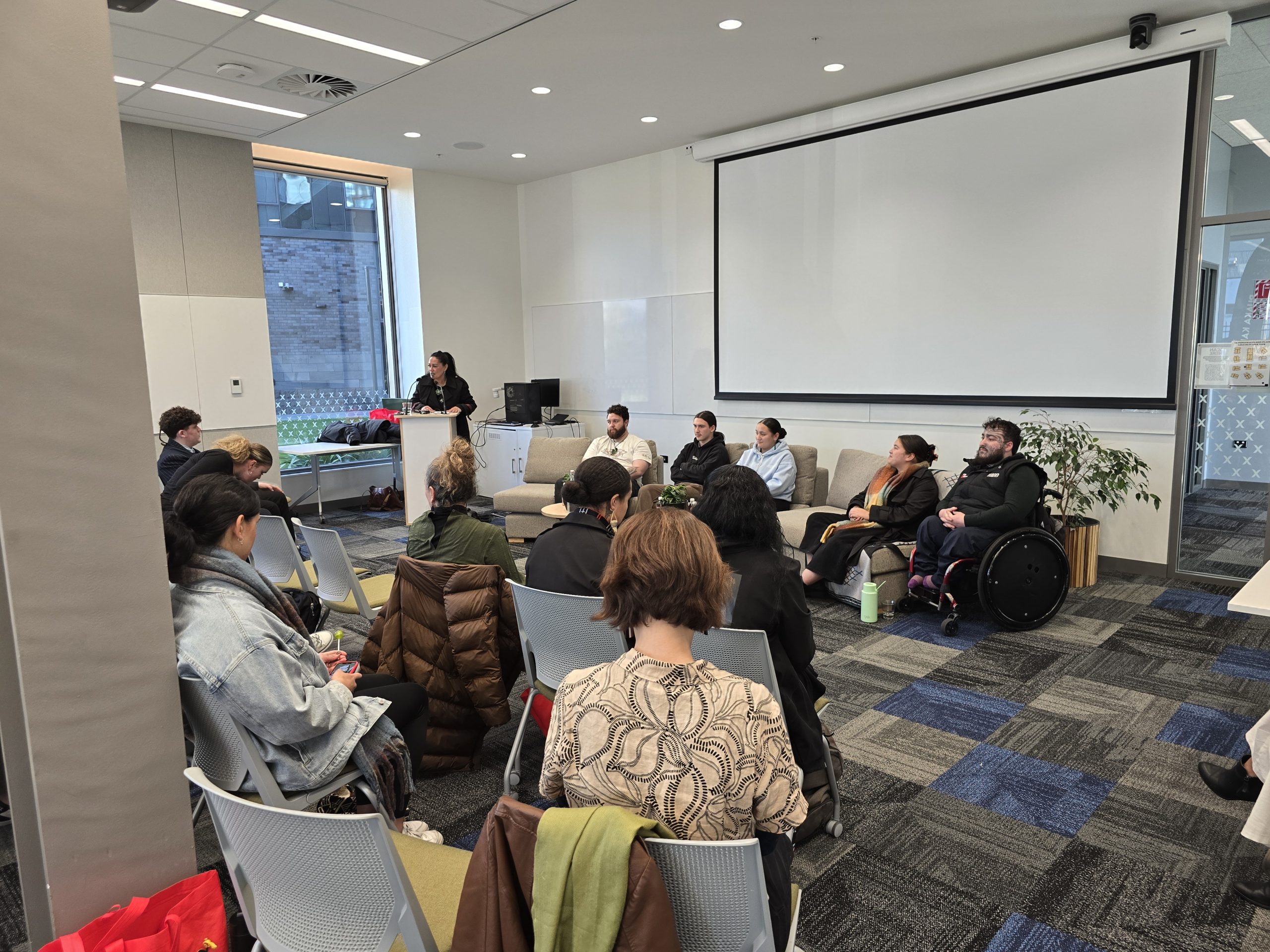
Against this backdrop, Te Tumu Research Committee had the privilege of hosting a small group of exceptional rangatahi for the Rangatahi reo symposium on Wednesday 21st May at Te Rangihīroa College.
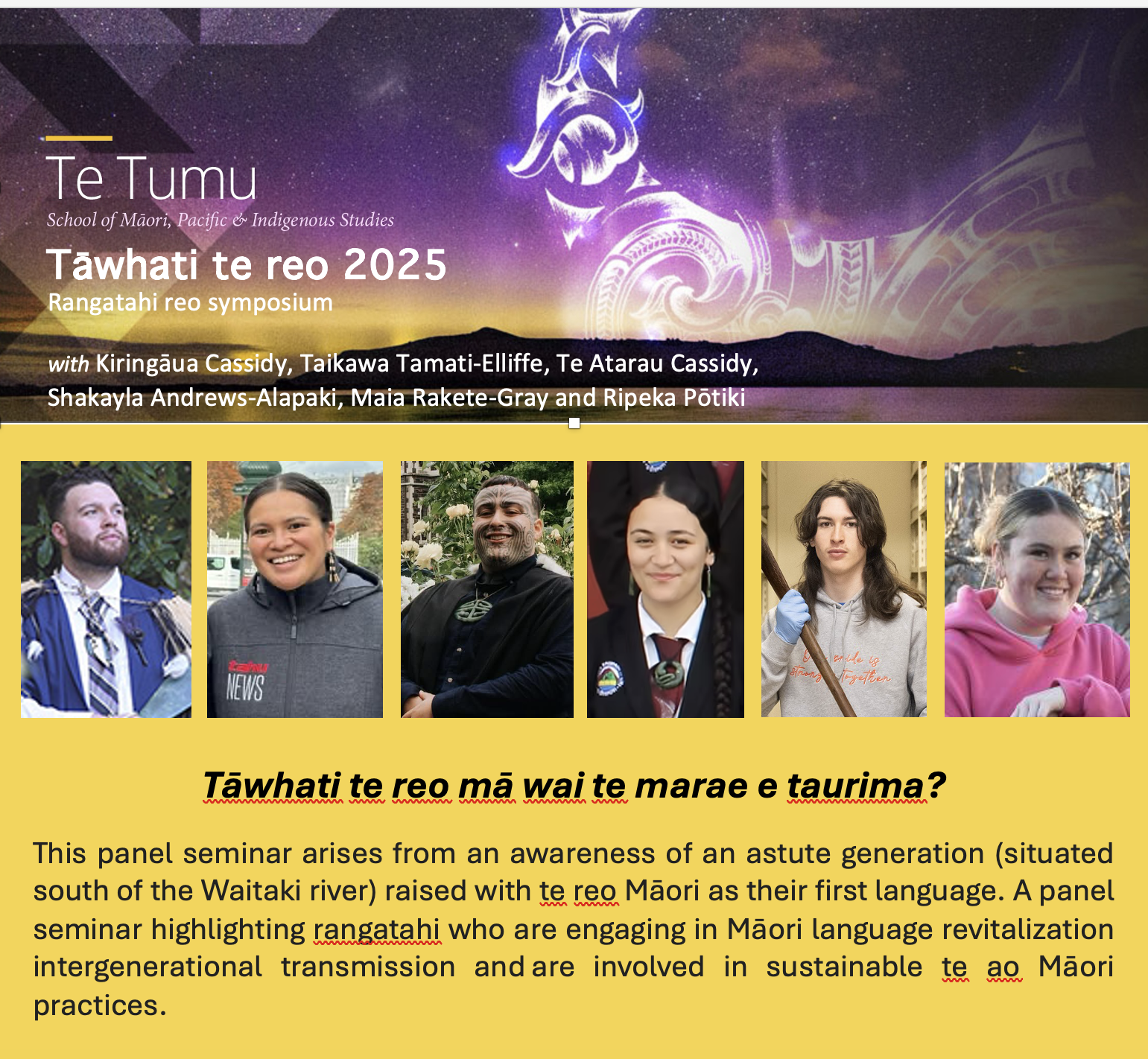 Kiringāua Cassidy, Taikawa Tamati-Elliffe, Te Atarau Cassidy, Shakayla Andrews-Alapaki and Maia Rākete-Gray, are all te reo Māori first language learners who were raised in Ōtākou. The rangatahi shared thoughts and approaches for revitalising te reo Māori, and engaged a range of other topics, like Māori and youth identity, contemporary politics, racism and discrimination, whānau and future aspirations. The event was led by Kare Tipa and supported by whānau, friends and the Te Tumu Research Committee.
Taikawa, tuākana of Kiringāua and Te Atarau, founder of Ngāti Gaming, is an award-winning leader and expert in the technology and gaming industries. He reflected on the growth of numbers of people speaking te reo Māori in his lifetime and spoke about the power of social media and the ethics of using it for good.
Te Atarau is the youngest of the three brothers, and similarly reflected on larger numbers of reo speakers, particularly because of the Kai Tahu Kōtahi Mano Kāika programme. He recalled learning te reo as a toddler and is now in the position of leading karakia, mihi and whaikōrero in a range of hui today.
 Maia is the first te reo Māori speaker in her whānau for three generations. She said she owes this achievement to the education philosophy and curriculum of Te Aho Matua and Te Kura Kaupapa Maori o Ōtepoti. With Maia, talk turned to the impact of Hīkoi mō te Tiriti and how it galvanised Māori and Tangata Tiriti. Maia noticed that one positive effect was that it made people angry and more motivated to participate in political processes, to stand up for Māori rights.
Shakayla, a media reporter for Tahu News, shared her experiences of reporting in Te Waipounamu in the face of a news reporting industry that tends to focus on activities or issues in Te Ika a Māui. Shakayla is of Māori and tagata Niue heritage and recalled the challenges of being the only brown student to attend Southland Girls High School.
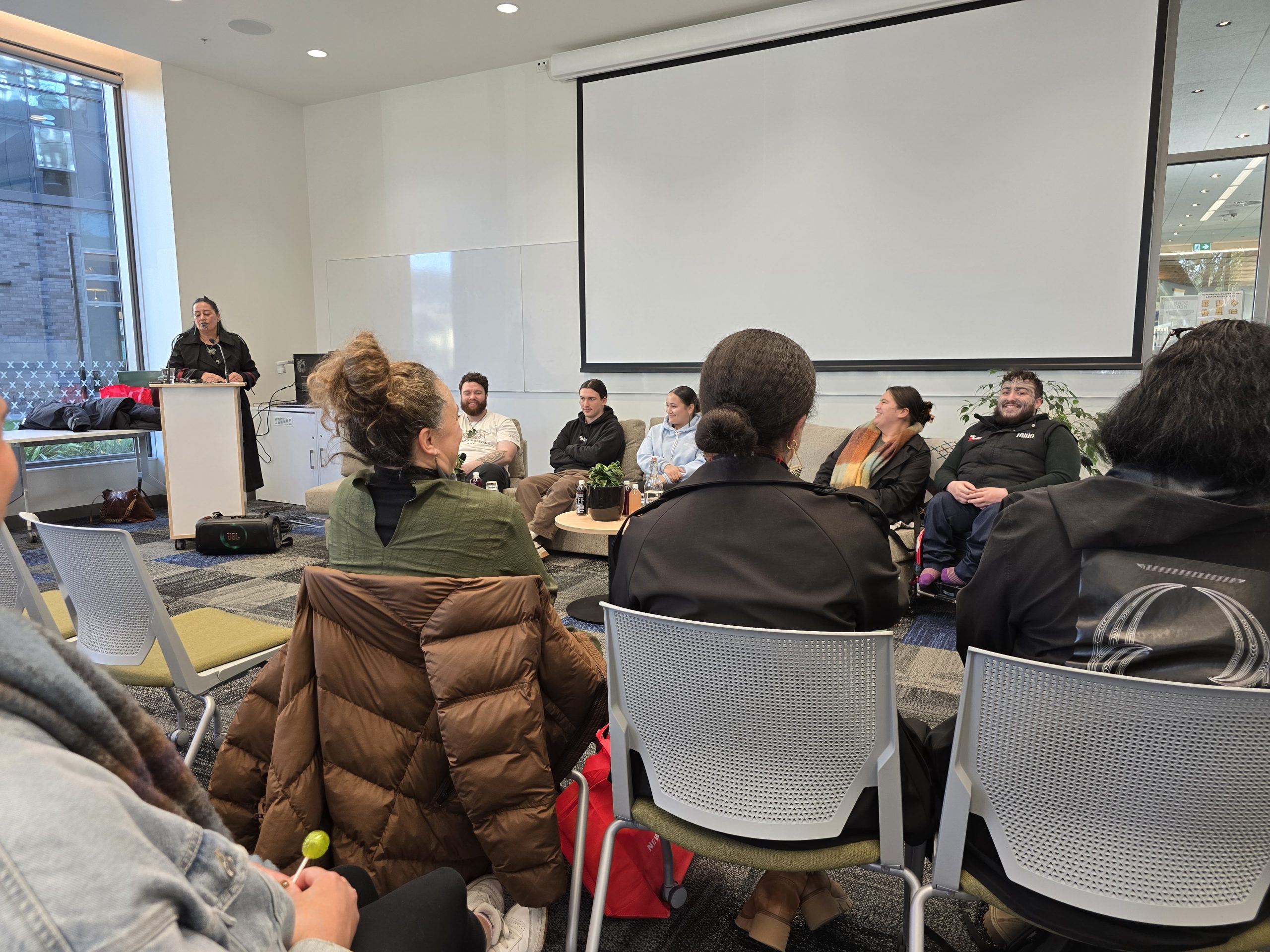 Kiringāua is the middle brother of Taikawa and Te Atarau. He is the youngest officially registered te reo Māori translator in the country (only two reside in Ōtākou). Kiringāua has long been interested in politics. Although he is sad that the coalition government and issues like the Treaty Principles Bill have pitted Māori against Māori, like Maia, he was pleased that recent events had generated more political interest and willingness to challenge injustice.
An intermission featured the beautiful singing of Rīpeka Pōtiki, and students from Te Kura Kaupapa Māori o Ōtepoti: Ratana Kahukura, Zynalee Parata-McIntosh and Te Oranga Tau. They were followed by Taikawa, who gave the audience a quick taste of how Ngāti Gaming Limited is integrating te ao Māori in their project, ‘Guardian Maia’ – a fun and lucrative venture!
So, it seems fitting that on the eve of the ‘No BS (but completely BS) Budget’, attendees of the first rangatahi reo symposium received a glimpse of how this generation of gifted reo Māori speakers are paving a bright and better way for future generations of rangatahi Māori. In doing so, they challenge us all to do better: to learn more local hītori through haka and waiata and for everyone to make the effort to learn te reo. As one rangatahi pointed out, given the wealth of resources now at our disposal, there’s no reason not to.
Niue texts researcher signs MOU with Tāoga Niue

Last week, Dr Jess Pasisi (Mutalau, Hikutavake, Niue; Ngāti Pikiao, Tahiti) signed a Memorandum of Understanding (MOU) alongside Moira Enetama, Director of Tāoga Niue, Ministry of Social Services, of the Government of Niue. The MOU relates to Dr Pasisi’s Marsden […]
Te Hiringa o te pao
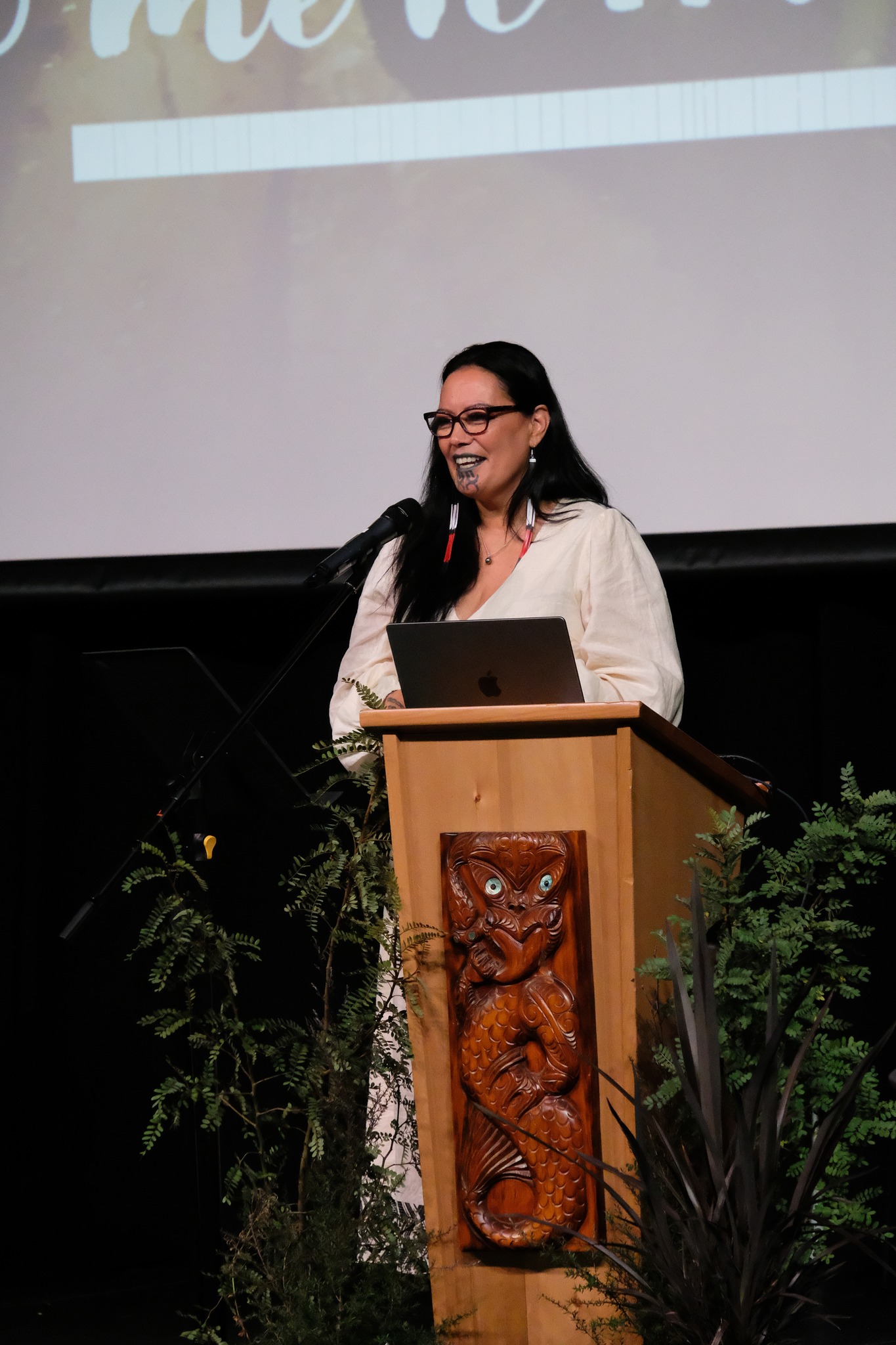
Ko Kare Tipa tēnei, e kauwhau ana i Te Kura o Ōruapaeroa, Ōtautahi 2024.
Inātata nei, i rarau atu kā kaimanako o te reo ki tētahi hui taumata ki Te Kura o Ōruapaeroa, Ōtautahi 23-24 Māehe 2024. Ko Terea Te Waka te hui taumata e kōrero nā, he mea whakatū e Te Pae Motuhake o Te Tai Toka. He mea tautoko hoki tēnei hui e Te Mātāwai hai whakaohooho, hai whakaaweawe i kā reaka o nāianei kia tika te kawe i kā ōhākī tuku iho, kia whakairohia te anamata mō ā tātau tamariki mokopuna.
Nā ko tētahi o kā kaikōrero matua o te hui nā, ko Kare Tipa. He kaiako ia ki Ōtākou Whakaihu Waka, waihoki, koni atu i te kahuru tau ia e whakaako ana ki kā Kura Reo. He taiwahine a Kare i pakeke mai i Te Tai o Araiteuru, i raro hoki i āna mauka kōrero. Ko Moeraki ake te papamoe ō ōna tīpuna, heoi, nō te tokorima taotao o Tahu tou tēnei īnati.
Kaupapa Kōrero: Te Hirika o te pao!
Ko tā Kare he hāpai, he whakatinana, he whakatauria i te reo me ōna tikaka. I te nuika o te wā kai ruka i te horopaki o ‘Te tū o te wahine nō Kāi Tahu’. I tō Kare whai i te reo, ko KMK hoki tētahi puna reo i whai waahi atu a Kare i roto i kā tau. Ko tōhona takeka pūkeka, kai kā mahi a Rukutia, arā ko kā mahi tito ko kā wānaka reo me kā wānanka tikaka Māori, otirā, kai te tuhia hoki tana tuhika kairaki. Nō nākuanei a Kare kua whakahaere wānaka hai whakapakari i kā pūkeka wāhine, pūkeka karaka, pūkeka pao, pūkeka mōteatea hoki, tae atu ki ētahi tikaka mahika kai.
PacTNet panel discussion & Pacific Voices Alumni celebration
On 27 November 2023, 20 years of the University of Otago’s Pacific Voices Postgraduate Symposium was celebrated with alumni, staff and current Pacific students at the Auahi Ora space in the Student Union Building. The evening programme began with an address from Tofilau Nina Kirifi-Alai, past manager of the Pacific Islands Centre and current Pacific Community Engagement Manager in Auckland. Tofilau shared reflections on establishing the symposium after seeing the need for postgraduate support in 2002 and gave encouraging words for organisers and students taking the symposium forward.
Her opening remarks were followed by an address from Deputy Vice Chancellor, Research & Enterprise, Professor Richard Blaikie who commented on Pacific research within the context of the University’s strategic direction. He enthusiastically supported Tofilau’s opening remarks and later engaged openly with the audience during the Q&A session at the end of the evening.
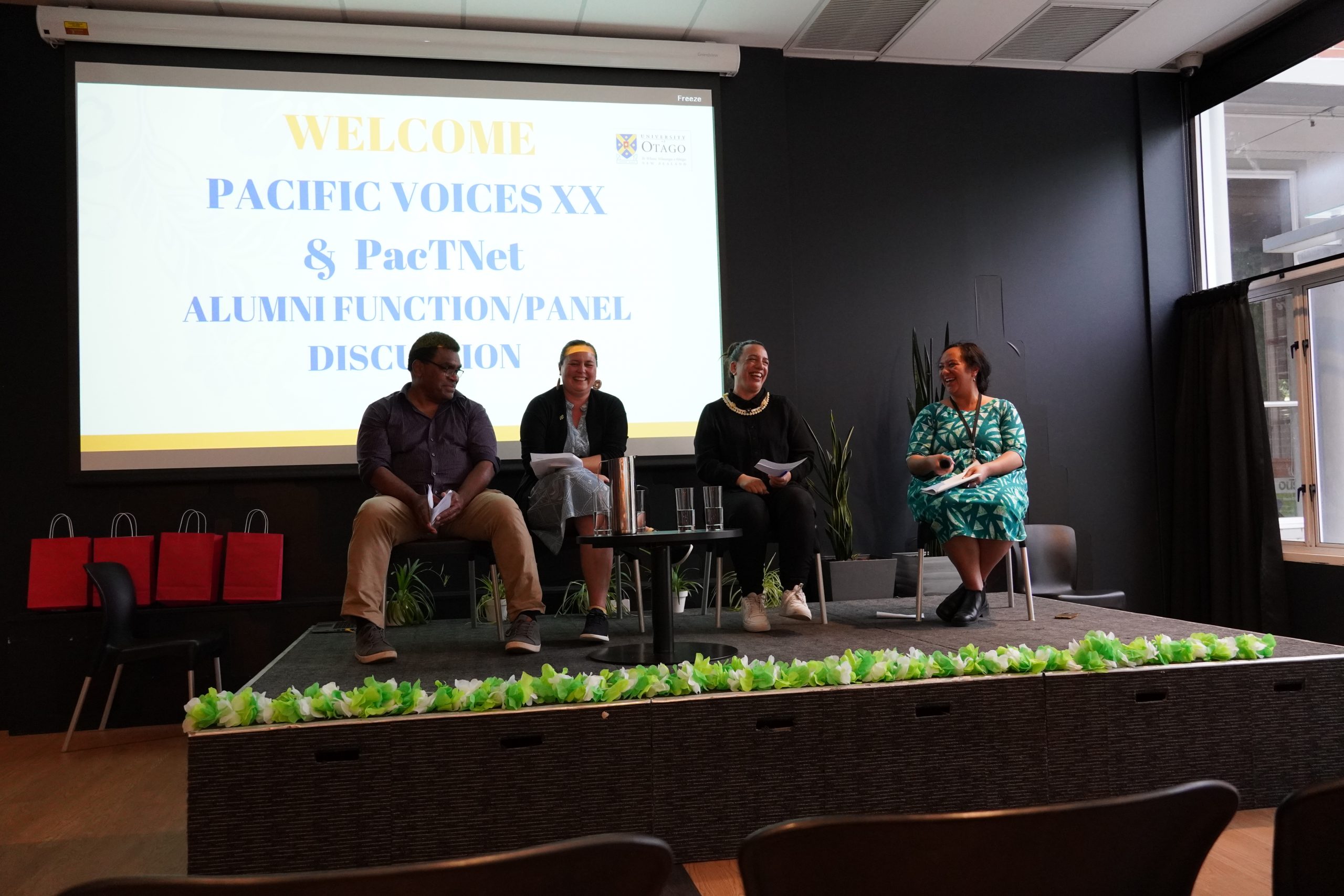
Panelists L-R Dr Tui Rakuita (Sociology), Dr Jess Pasisi (Te Tumu), Professor Rose Richards (Acting Director, Pacific Development Office & Co-Director of Coastal People, Southern Skies) and facilitator Dr Emma Powell (Te Tumu).
As a part of the programme, the symposium organisers and staff from the Pacific Development Office teamed up with the Pacific Thought Network (PacTNet) to arrange a public panel discussion. Earlier this year in May, PacTNet held its inaugural Pacific Lecture which was given by Tootooleaava Dr Fanaafi Aiono Le-Tagaloa and the panel gathered key Pacific thinkers from our university community to reflect on the ideas and comments made in the lecture. The panellists were Professor Rose Richards (Acting Director, Pacific Development Office & Co-Director of Coastal People, Southern Skies), Dr Tui Rakuita from Sociology and our very own, Dr Jess Pasisi. All of the panellists gave stimulating thoughts on Tootooleaava’s lecture, ranging from comment on Pacific leadership at the University of Otago, the significance of the diaspora to Pacific thinking, and the romanticism with which we hold Indigenous knowledge.
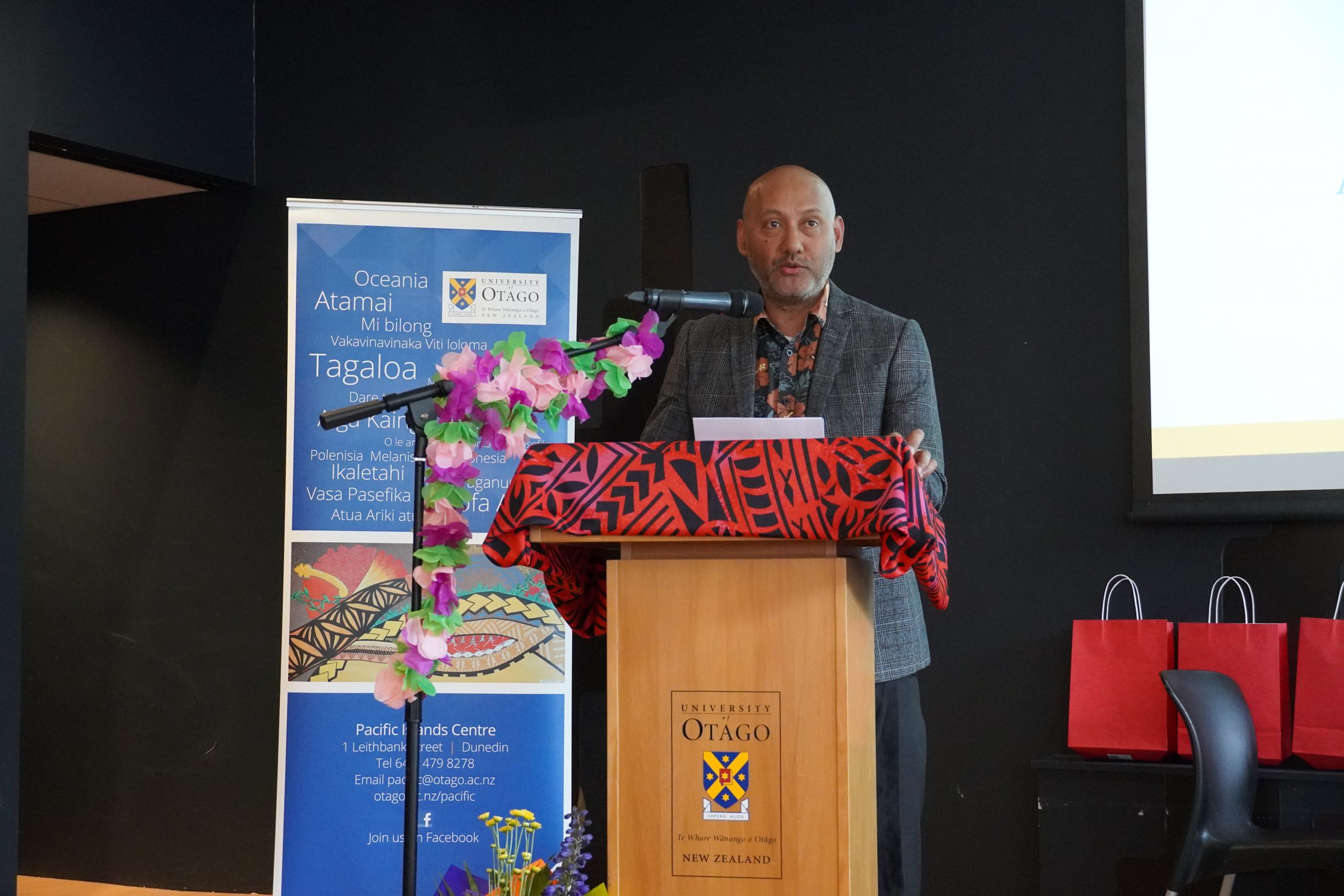
Dean of Te Tumu, Professor Patrick Vakaoti.
The PacTNet steering committee is made up of a number of our Te Tumu staff: Professor Patrick Vakaoti, Dr Telesia Kalavite and Dr Emma Powell. They are also joined by Dr Allamanda Fa‘atoese who is based in Christchurch and Dr Charles Radclyffe from Archaeology.
A number of our Te Tumu students participated and presented on their research during the Pacific Voices Symposium XX which was held on the following day, Tuesday 28 November 2023. For photos and coverage, check out the story from Pacific Communications Advisor, Keilah Vaetoru Fox, here.
MAI hui-ā-tau hosted by Te Kunenga ki Pūrehuroa, Massey University in Palmerston North
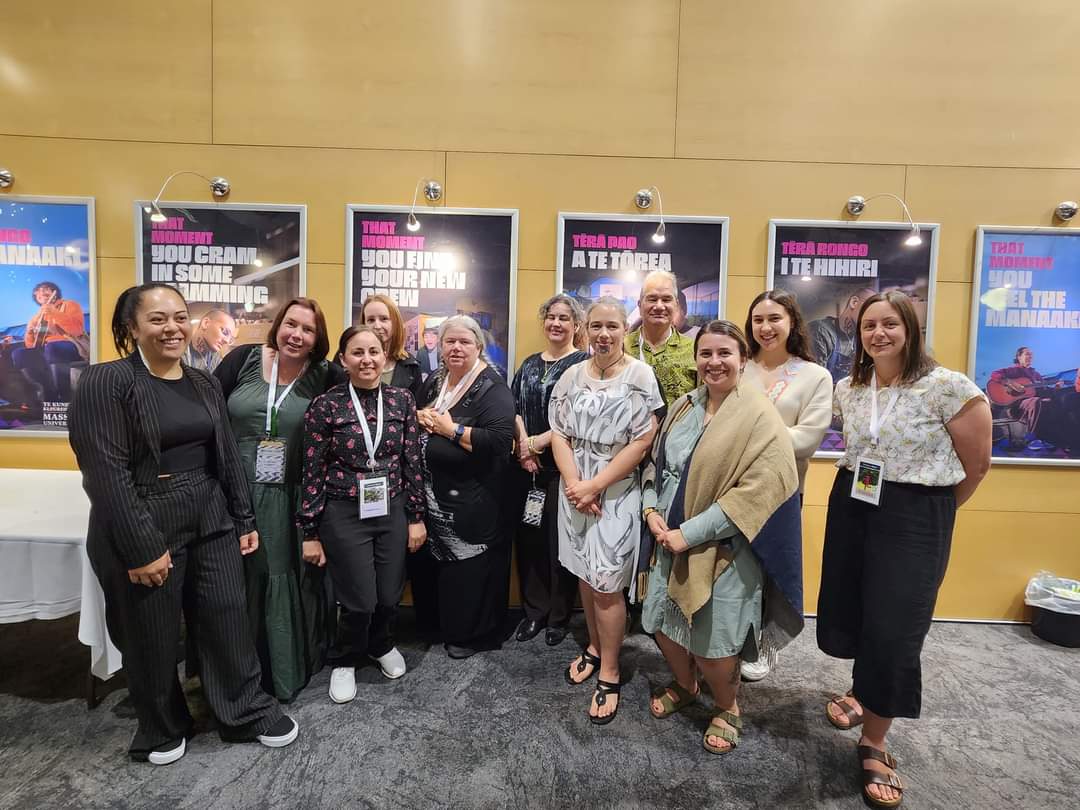
MAI ki Otago contingent at MAI hui ā-tau ki Te Kunenga ki Pūrehuroa, Massey University in Pamerston North.
Tokowhā ngā tauira Tohu Kairangi o Te Tumu e haere ana. Te rawe hoki o ngā kōrero me te whakawhanaungatanga i puta ai i reira. Kei runga noa atu te manaakitanga o ngā kaiwhakahaere nō reira, ngā mihi maioha ki a rātou. E rere hoki ana ngā mihi ki Te Kura Rangahau Tāura, ki a Rachel Sizemore kōrua ko Inano Walter i ā kōrua manaaki i a mātou, ko MAI ki Otago.
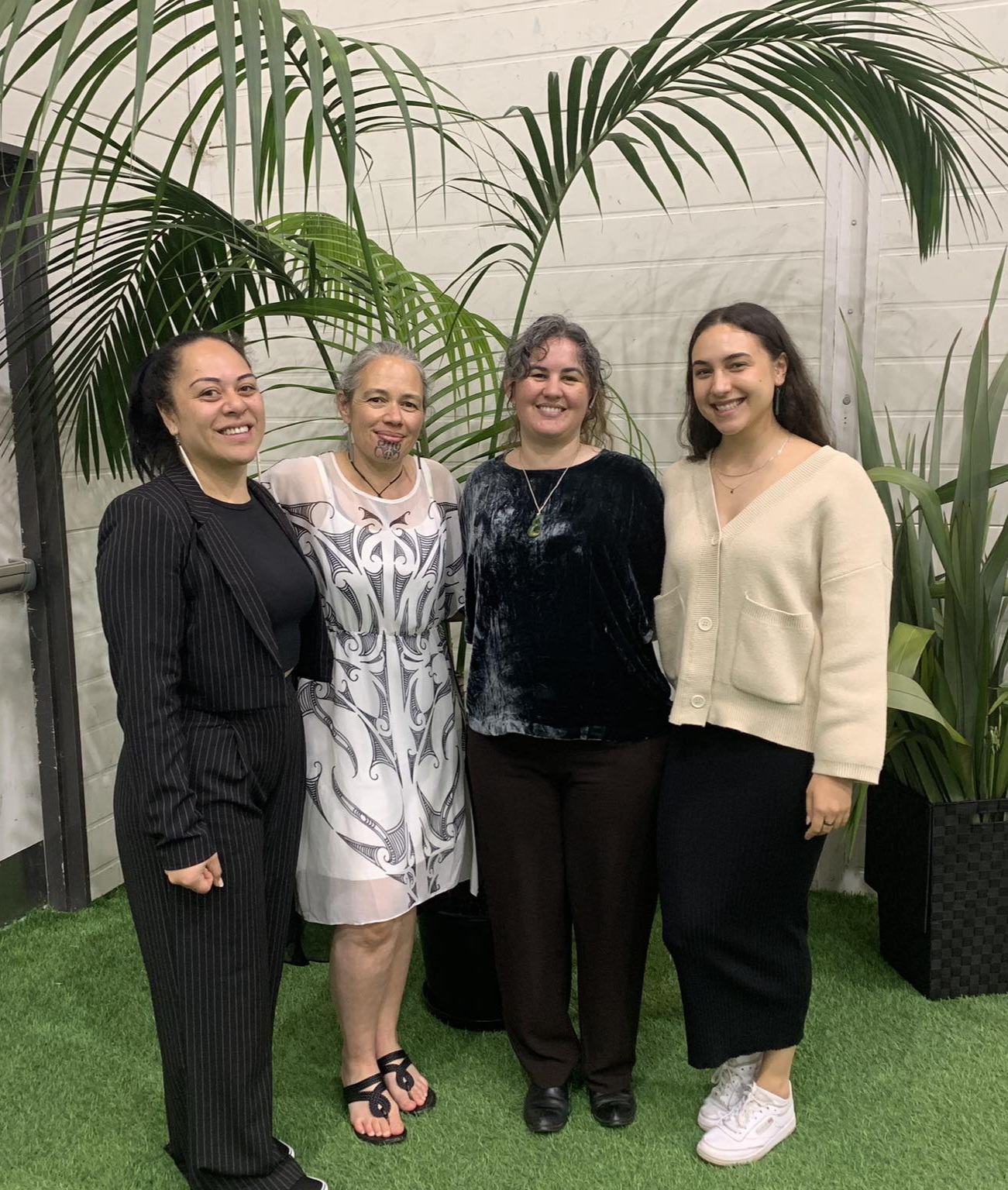
Inano Taripo-Walker, Paia Taani, Alice Karetai, Leteisha Te Awhe-Downey
This year the annual MAI conference was hosted by Te Kunenga ki Pūrehuroa, Massey University in at the Palmerston North campus. Four PhD students from Te Tumu attended the hui. The presentations and networking opportunities were awesome. The hospitality of our hosts was amazing which we all appreciated. We also thank The Graduate Research School especially Rachel Sizemore and Inano Walter for supporting and looking after the MAI ki Otago group.
Highlighting research: Teachers of mainstream curricula, teaching Māori speaking children
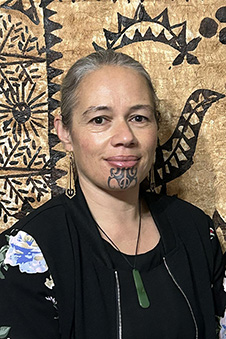
Paia Taani, Ngāi Tūhoe, Ngāti Whare, Te Whakatōhea, Ngāti Uenukukōpako
Earlier this year Paia Taani, one of Te Tumu’s staff members published an article based on the research undertaken for her master’s degree which investigated teacher preparedness to teach te reo Māori speaking children in mainstream primary schools. Some of her key findings included an awareness of how language and culture impact on identity and educational outcomes. Although participants acknowledged the absolute necessity that te reo Māori and tikanga Māori are included in all aspects of the education setting, they also reported that tikanga Māori is a more comfortable space to be in than te reo Māori as there were clear connections to their own values.
Four key themes emerged from the findings which Paia promotes in the article as key factors for teacher readiness to teach reo Māori speaking children. These are: Kia rite (be prepared), Kia hono (be connected); Kia tātatiako (be culturally competent and responsive) and, Kia whakauruuru (be integrative). This article discusses those four factors listed above and implications for tamariki, their whānau, teachers and ITE providers. You can find the link to her article here, published in the New Zealand Journal of Teachers’ Work, June 2023.
https://ojs.aut.ac.nz/teachers-work/article/view/362
Paia will be presenting on this kaupapa next week, at the New Zealand Association for Research in Education Conference in Palmerston North.
