Kua ea te Hui Taumata o Te Tumu 2025! Kātahi te rā mīharo ko tēnei!
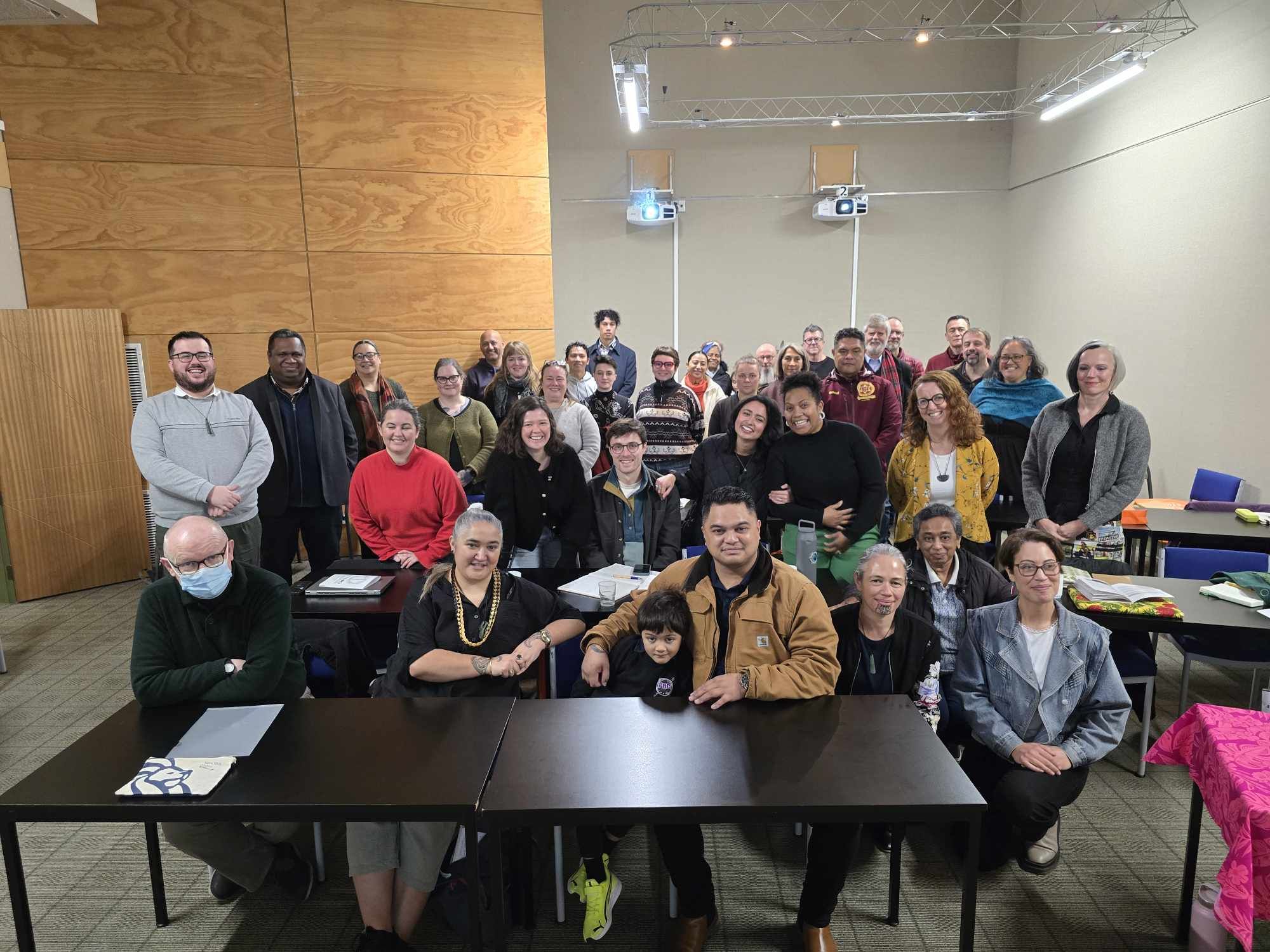
The second annual Te Tumu research symposium hui was held on Wednesday 2 July in Te Wānanga, in the newly refurbished Te Tumu building. We had over 60 attendees throughout the course of the day to listen to 16 postgraduate students and academic researchers share their research stories and journeys in a collegial and warm setting. Guided by the ethos of the 2024 inaugural symposium, the event similarly aimed to promote knowledge sharing and deepen connections across te whānau o Te Tumu. Colleagues, whose research resonated with the broader kaupapa of the school, also participated.
Professor Patrick Vakaoti, Te Tumu Dean, opened the symposium by launching attendees from the metaphorical mooring post of Te Tumu Herenga Waka, towards new research learnings with the saying “the master’s tools will never dismantle the master’s house”. This thought-provoking provocation by black feminist Audrey Lorde served as a touchstone throughout the day, prompting attendees to question why we do research: What house will we build? Or will we strive to repurpose, rebuild or refurbish the one we occupy currently, and how will we do this?
The next speaker was Postgraduate Research Committee Chair, Professor Michael Reilly, who provided rich insights about the history of Te Tumu and how the school had journeyed to this point. Ōtākou Whakaihu Waka was the oldest university, yet in 1990 had established the youngest Māori studies department in Aotearoa. The number of students and teachers in Te Tumu grew rapidly, which was unanticipated and surprised everyone. Michael drew attention to the significance of the shape and position of Te Tumu within the university and reminded new students that they are part of this history too.
Perhaps the greatest highlight of the day was our esteemed keynote speakers, former Te Tumu students and lecturers, Dr Gianna Leoni (Ngāi Takoto, Ngāti Kuri, Te Aupōuri), Senior Adviser at Te Hiku Media and Suzanne Duncan (Te Rarawa, Te Aupōuri, Ngāi Takoto), Chief Operating Officer at Te Hiku Media. Gianna and Suzanne talked about their innovative work at Te Hiku Media to support the revitalisation of te reo Māori. Gianna recalled that one of her first jobs with Te Hiku involved sorting through old cassette tapes, where she found her uncle’s (her father’s brother) interview and the subsequent drive to protect te reo o te kāinga o Te Hiku o te Ika. Over 80% of tāngata whenua reside outside of the rohe, so digital apps such as Whare Kōrero, Kaituhi, Piki and Rongo have been developed by Te Hiku Media to enable better access to the reo and enhance language revival and data protection measures.
After a break for morning tea, session one began and was facilitated by Māori Studies Senior Lecturer, Paia Taani. Social anthropologists Dr Julia Wilson and Tautemaria Silva presented first about encouraging students to write and submit assessments in te reo Māori and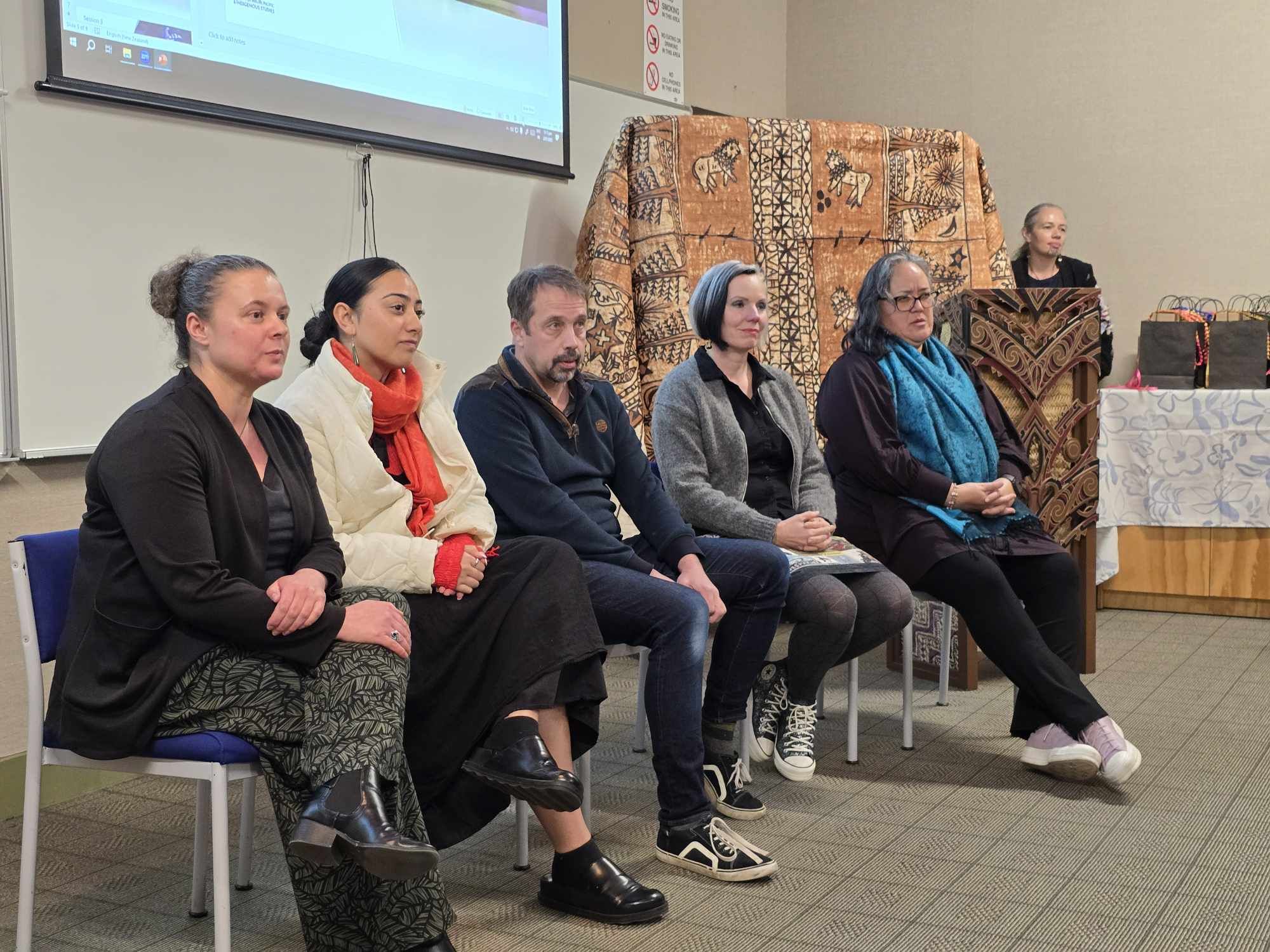 strategies for supporting lecturers with marking. They were followed by Te Mihinga Komeme, whose doctoral study investigates how iwi Māori are navigating the digital and online spaces for language revitalisation. Andrea Lemm, of German heritage, spoke next about how wānanga supported her investigation into how tauira working in the social services sector think about and engage kaitiakitanga. Finally, PhD research by French student Frédéric Dichtel presented in te reo Māori, exploring the context and conditions that lead te reo Māori language students to ask “Why?” about grammar. Fred hopes to elicit insights that can support a kaiako response beyond “Because they are the rules!” This opening session covered diverse and stimulating issues that reflect the significance of te reo Māori in contemporary times.
Lunch followed, and it would be terribly remiss to write about the symposium and not mention the deliciousness of the kai! Massive thanks to the University catering team for their ‘Pacifica Style Menu’ (the Kūmara and Chickpea Curry was a revelation).
Session two was facilitated by Prof. Patrick Vakaoti and highlighted Pacific-centred and ethical approaches to research. Mereoni Ketewai spoke frankly about the problems and tensions associated with humanitarian aid in Fiji and Vanuatu, with a focus on the way that NGOs and local actors work together. The thought-provoking topic of gender-based violence in Fiji followed. Avelina Rokoduru, with care and sensitivity, discussed the importance of research that investigates violence from the perspective of iTaukei men and employing methodologies that reflect Pacific/Indigenous understandings of manhood and society. Archaeologists Dr Monica Tromp, Dr Amber Aranui and Sophie White followed with the rich work that they are undertaking to examine human–Ika moana relationships. Their research spans many different projects and stakeholders to question, for example: What are the ika our tūpuna use? How did their use of ika change? How are these relationships are described in pūrākau? This research has led them to the Wairau Bar in Te Tauihu, Kahukura in Fiordland, and even Harvard University in the USA. The final speaker was Dr Regina Maniam (undertaking a second PhD, mīharo!) who spoke about the different Western and Indigenous worldviews, values and approaches that are applied to research. She argued that students should be exposed to and use Indigenous research approaches – she was certainly preaching to choir with this point. 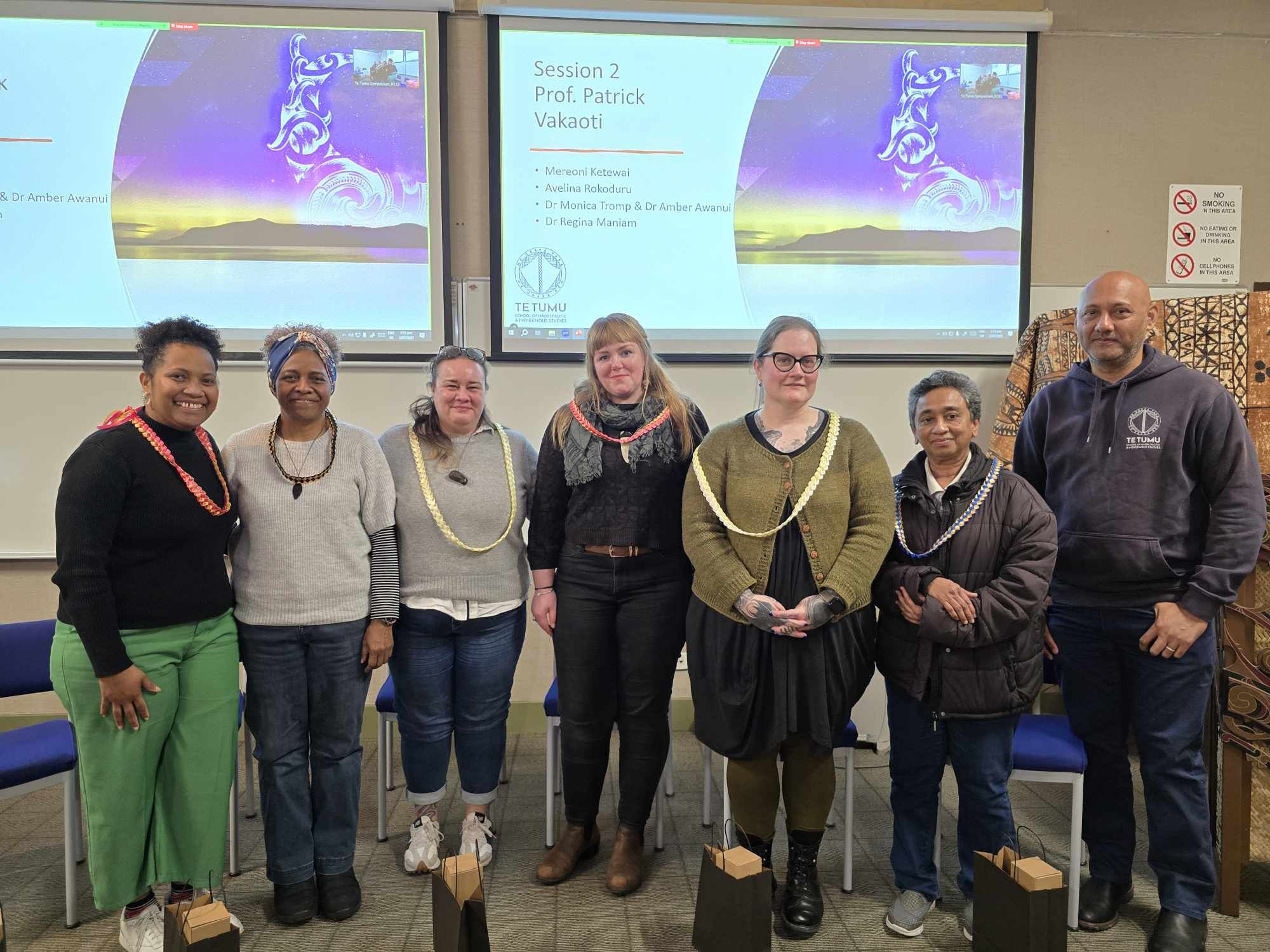
Session three followed, facilitated by Associate Professor Liana MacDonald. Masters student Jesse Matheson of Kāi Tahu, Kāti Mamoe, Waitaha descent was the first speaker, and delivered an engaging kōrero about the significance of developing a better understanding about Māori interests in and protection of DNA. He hopes to do a PhD that develops a whakapapa DNA database that can support Māori to reconnect with their whakapapa – watch this space! The following two speakers were from Te Ao o Rongomaraeroa | The National Centre for Peace and Conflict Studies. John Hobbs delivered a moving presentation about New Zealand’s foreign policy approach to Palestine, questioning our (lack of) involvement and the promise of a decolonised approach that centres the principles of Te Tiriti o Waitangi. Sally Angelson concluded the session with her foray into ‘Flipping Localisation’(!) in the Solomon Islands, revealing again the personal nature of research and the potential of non-Indigenous scholars and allies who are committed to advancing social justice for Indigenous-led ends. 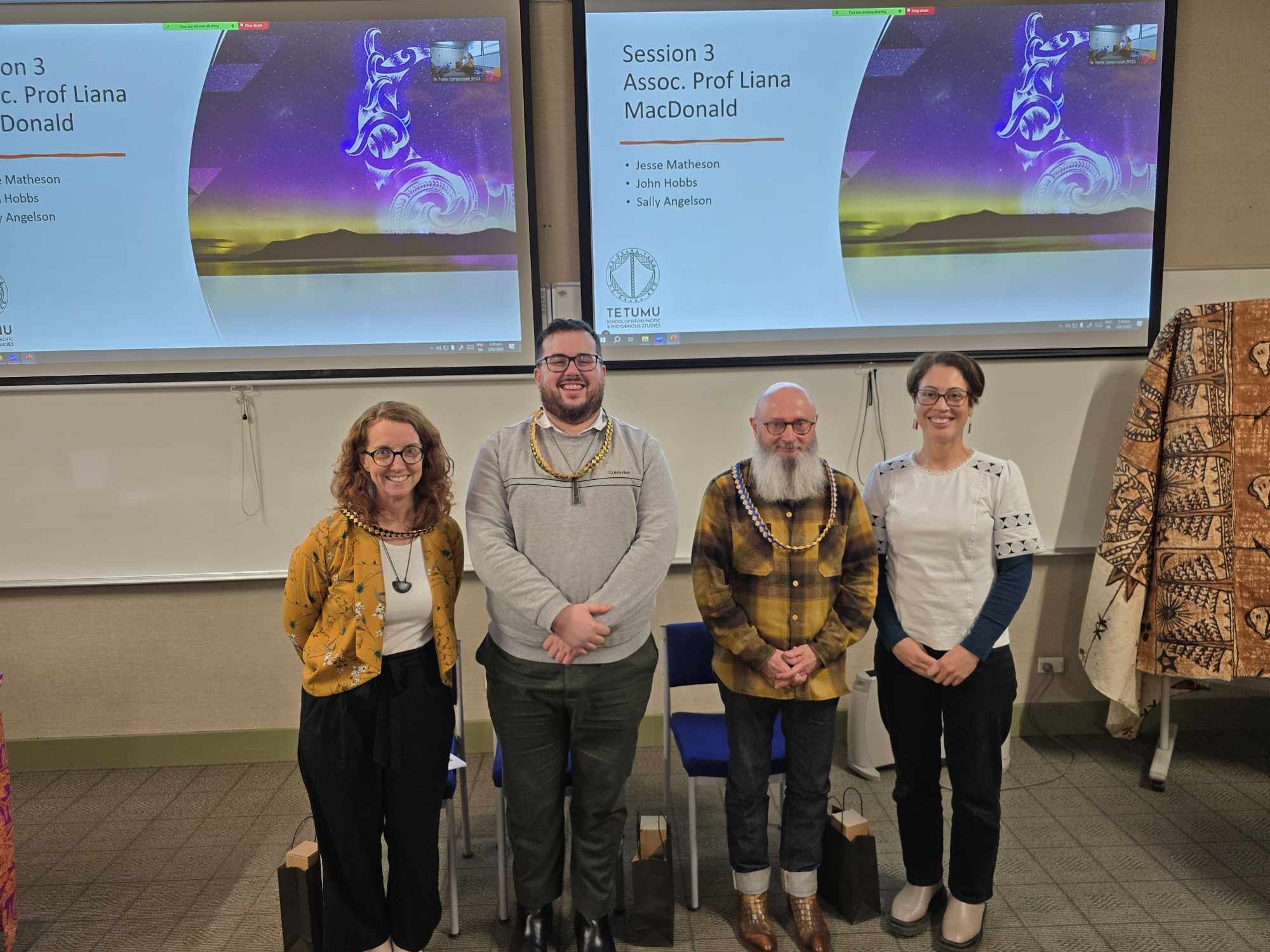
After afternoon tea, attendees returned to Te Wānanga one last time for session four, facilitated by Associate Professor Paerau Warbrick. Vanessa Bradbury-Leather treated attendees with an ethnographically rich account of how a Kaupapa Māori Alcohol and Drug service employs relational methodologies to deliver decolonial and transformative outcomes for vulnerable children and families. She was followed by Adelie Filippi, who considered why native plants are under-researched in archaeology and why it is important that the discipline grapples with ‘plant blindness’. Adelie began with a discussion of the Polynesian plants that were brought to Aotearoa to make the point that native plants were here and used frequently (more so in the South). The session rounded off with a thoughtful and well-timed Q&A session, whereby attendees and presenters let their thoughts roam freely in the vicinity of philosophy, history, colonialism and social justice. They considering such questions like “Can we decolonise?” to return to the provocation that had lurked in the back of the minds of all at the symposium throughout the day: To what extent can the master’s tools dismantle the master’s house? 
The day ended with reflective and uplifting final words from Research Committee Co-Chairs, Dr Wahineata Smith and Dr Jess Pasisi. They acknowledged the quality and wide range of kaupapa that had been shared and remarked on common themes woven throughout all the kōrero, such as connections, relationships, manaaki and aroha. Afterwards, an attendee commented that they felt uplifted from the day’s events; an apt reflection of the spirit of the day and the generosity of those who contributed to make the symposium a resounding success. We had returned to our moorings at Te Tumu, inspired and fulfilled.
Me mihi ka tika ki ngā kaikōrero katoa i ā rātou kōrero whakahirahira. We look forward to seeing what 2026 will bring.
