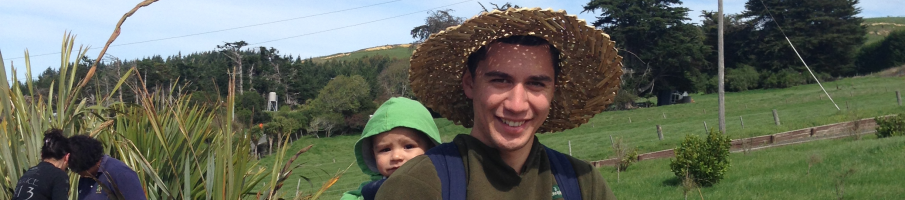
Tāwhati te reo mā wai te marae e taurima?
Amidst these turbulent times, attributed in no small part to an anti-Māori government agenda, rangatahi Māori are at the forefront of resistance efforts to speak truth to power and remind everyone of Aotearoa’s history and (broken) promises to Māori.
Against this backdrop, Te Tumu Research Committee had the privilege of hosting a small group of exceptional rangatahi for the Rangatahi reo symposium on Wednesday 21st May at Te Rangihīroa College.
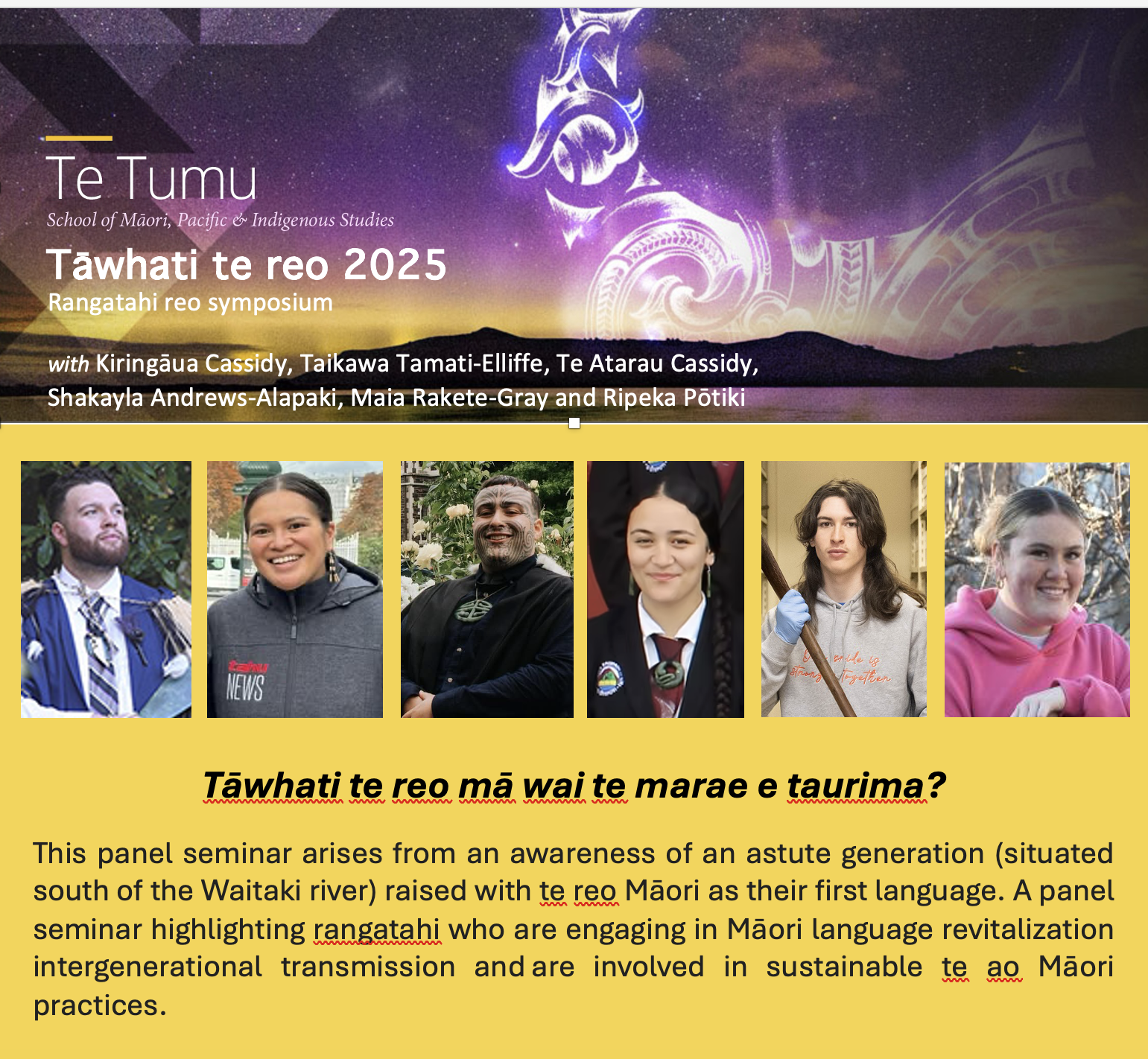 Kiringāua Cassidy, Taikawa Tamati-Elliffe, Te Atarau Cassidy, Shakayla Andrews-Alapaki and Maia Rākete-Gray, are all te reo Māori first language learners who were raised in Ōtākou. The rangatahi shared thoughts and approaches for revitalising te reo Māori, and engaged a range of other topics, like Māori and youth identity, contemporary politics, racism and discrimination, whānau and future aspirations. The event was led by Kare Tipa and supported by whānau, friends and the Te Tumu Research Committee.
Taikawa, tuākana of Kiringāua and Te Atarau, founder of Ngāti Gaming, is an award-winning leader and expert in the technology and gaming industries. He reflected on the growth of numbers of people speaking te reo Māori in his lifetime and spoke about the power of social media and the ethics of using it for good.
Te Atarau is the youngest of the three brothers, and similarly reflected on larger numbers of reo speakers, particularly because of the Kai Tahu Kōtahi Mano Kāika programme. He recalled learning te reo as a toddler and is now in the position of leading karakia, mihi and whaikōrero in a range of hui today.
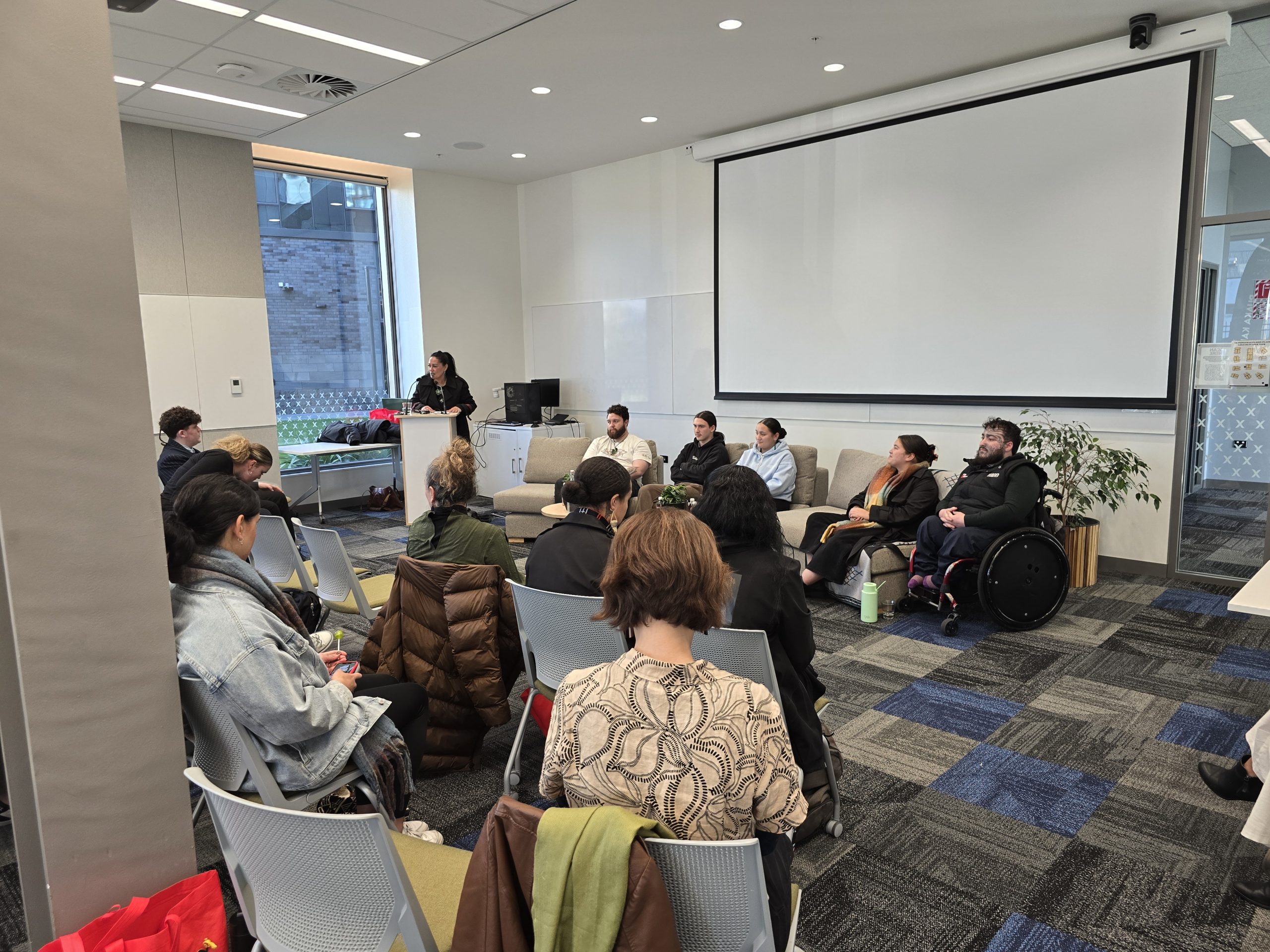 Maia is the first te reo Māori speaker in her whānau for three generations. She said she owes this achievement to the education philosophy and curriculum of Te Aho Matua and Te Kura Kaupapa Maori o Ōtepoti. With Maia, talk turned to the impact of Hīkoi mō te Tiriti and how it galvanised Māori and Tangata Tiriti. Maia noticed that one positive effect was that it made people angry and more motivated to participate in political processes, to stand up for Māori rights.
Shakayla, a media reporter for Tahu News, shared her experiences of reporting in Te Waipounamu in the face of a news reporting industry that tends to focus on activities or issues in Te Ika a Māui. Shakayla is of Māori and tagata Niue heritage and recalled the challenges of being the only brown student to attend Southland Girls High School.
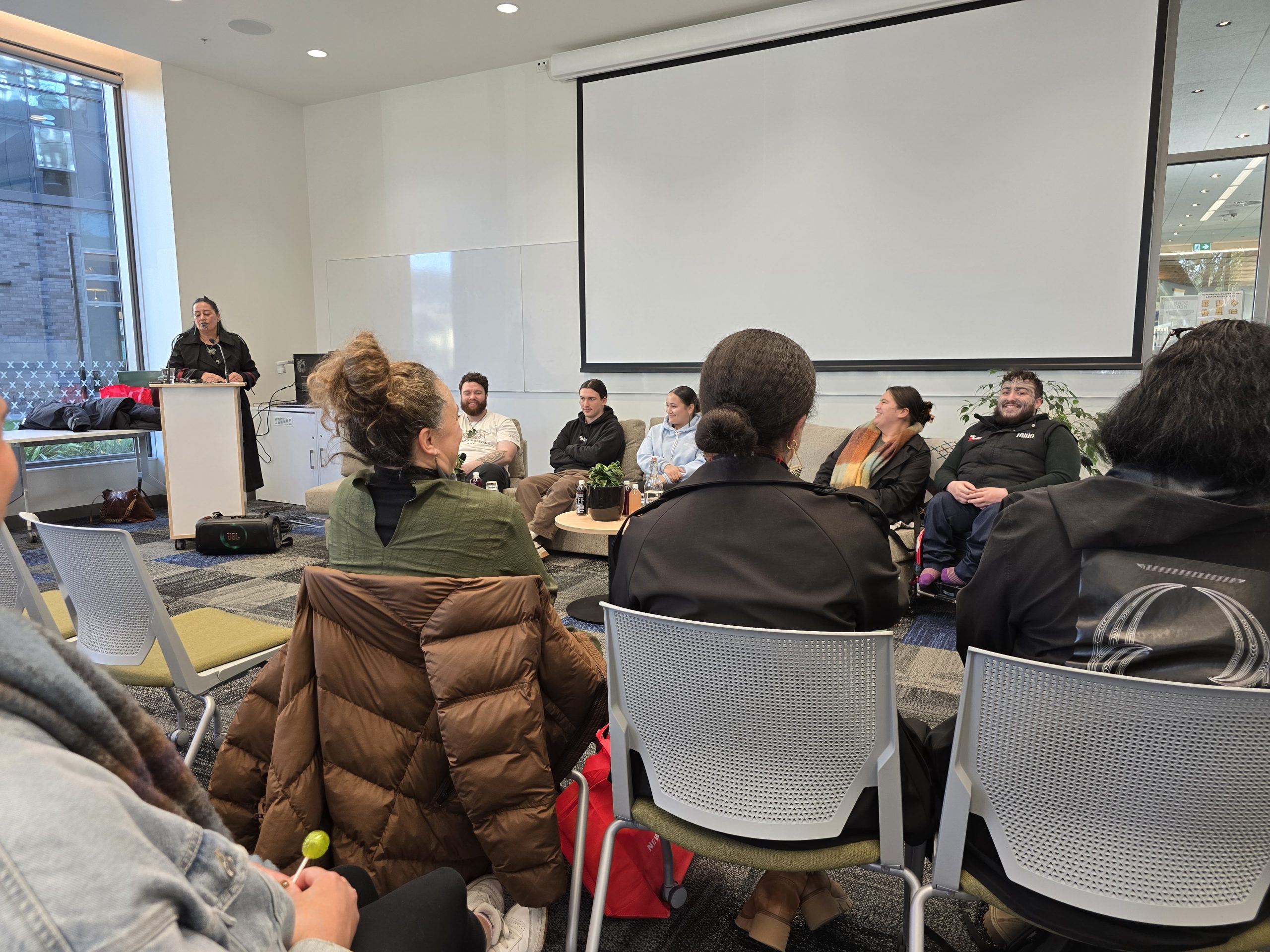 Kiringāua is the middle brother of Taikawa and Te Atarau. He is the youngest officially registered te reo Māori translator in the country (only two reside in Ōtākou). Kiringāua has long been interested in politics. Although he is sad that the coalition government and issues like the Treaty Principles Bill have pitted Māori against Māori, like Maia, he was pleased that recent events had generated more political interest and willingness to challenge injustice.
An intermission featured the beautiful singing of Rīpeka Pōtiki, and students from Te Kura Kaupapa Māori o Ōtepoti: Ratana Kahukura, Zynalee Parata-McIntosh and Te Oranga Tau. They were followed by Taikawa, who gave the audience a quick taste of how Ngāti Gaming Limited is integrating te ao Māori in their project, ‘Guardian Maia’ – a fun and lucrative venture!
So, it seems fitting that on the eve of the ‘No BS (but completely BS) Budget’, attendees of the first rangatahi reo symposium received a glimpse of how this generation of gifted reo Māori speakers are paving a bright and better way for future generations of rangatahi Māori. In doing so, they challenge us all to do better: to learn more local hītori through haka and waiata and for everyone to make the effort to learn te reo. As one rangatahi pointed out, given the wealth of resources now at our disposal, there’s no reason not to.
Te Tumu scholar part of Kāhui Kairuruku the national Hautapu for Matariki
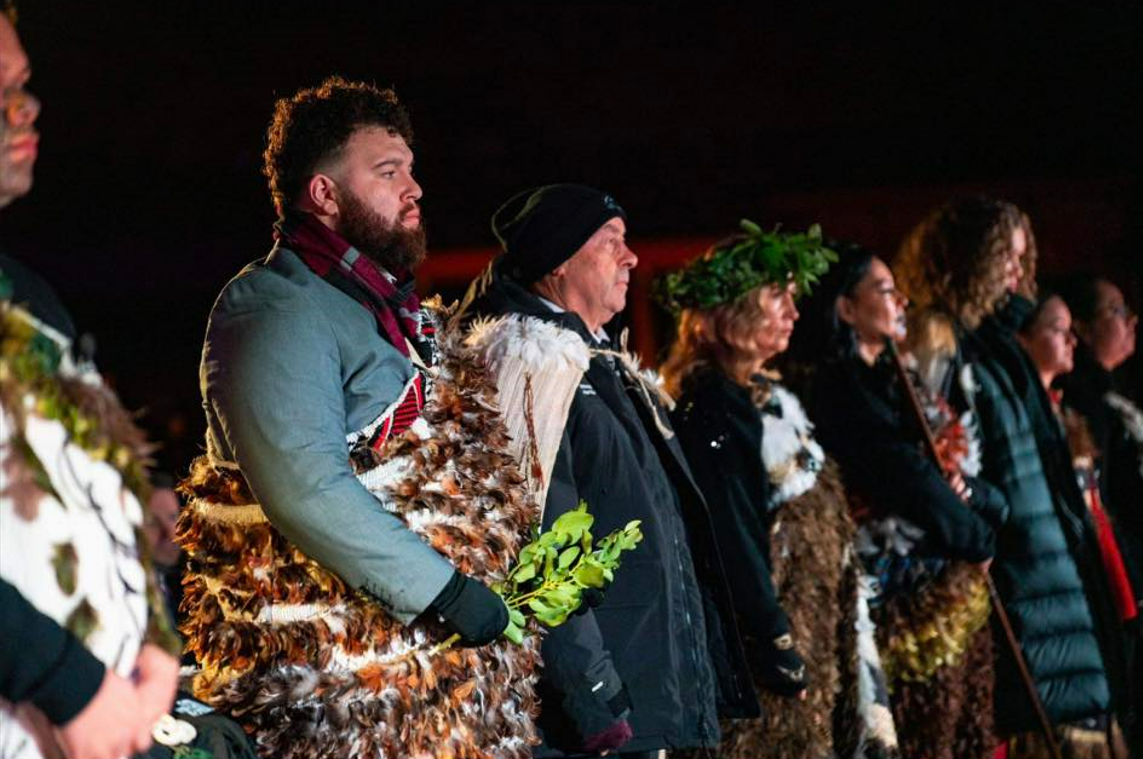
Ko Kare Tipa tōku ikoa, my ancestry comes from many hapū of Kāi Tahu iwi: (Kāti Ruahikihiki, Kāti Hāteatea,Kāi Te Aotaumarewa, Hinematua, Kāi Tuke, Kāti Huirapa, Kāti Rakiāmoa, Kāi Tuahuriri, Kāti Hinemihi, Kāti Wairaki, Kāti Urihia On Friday 28 June I was honoured to be part of the Kāhui Kairuruku, a collective of language and cultural practitioners that delivered 13 karakia as part of the national Hautapu ceremony held 2,008m above sea level, adjacent to the mighty ranges of Kā Tiritiri O Te Moana, on a pituresque mountain widely known as Treble Cone. Matariki allows us to reflect on whānau and experiences at a time when we welcome the new year. It is also a time to farewell the old, the past year gone.
It was appropriate to hold the hautapu ceremony in Wānaka. Māori history tells of Wānaka where early iwi, in particular ‘Waitaha’, assembled for learning of tribal lore. Wānaka is Kāi tahu alternative form of the word ‘wānanga’ referring to the ancient schools of learning. The area boasts of rocky alpines, tussock foliage and lakes dug out from the eponymous ancestor Rākaihautū. From the ski field on Treble Cone, one is able to feast eyes on the visible features of the land, the aesthetic appeal formed by the digging stick of Rākaihautū. Lakes dug out in Te Waipounamu are known as Kā Puna Karikari a Rākaihatū (the springs of water dug by Rākaihautū).
From ancestoral acts of the past to what is experienced today, Kāti Ruahikihiki descandants (the kairuruku for the hautapu) are made up primarily of young language assailants raised in the Kāi Tahu language revitalisation strategy: Kotahi Mano Kāika (KMK). KMK leads the charge to reinvigorate our language within Kāi Tahu homes and communities. It is a 25 year old strategy which aims to have at least 1000 Kāi Tahu kāika speaking te reo Māori by 2025.
As a practitioner, I have been both a beneficiary of and contributor to KMK. My children and grandson are part of the collective to revitalise and change the narrative with language normalisation here in Te Waipounamu. To be apart of the collective with our young adults is a tremendous highlight for me as a hākui in the strategy. The Hautapu ceremony is shared with a different iwi annually, this recent ceremony is historical for Kāi Tahu, it highlights the language strategy in action alive and vibrant, it sets a precedence of first language speakers who can conduct formal tikaka in te reo. I may not be here to stand with this collective when the Hautapu returns to Kāi Tahu iwi in the future, but I’m proud to have had this moment of standing with first language speakers adding to the histories of today.
