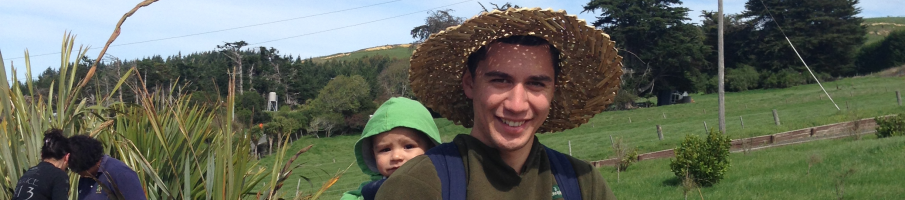
New qualification for Te Tumu alumnus
Hone Te Rire is the sort of person who collects qualifications, one of which was our Master of Indigenous Studies, completed in 2009. Hone also trained as an amorangi minister in Te Aka Pūaho (the Presbyterian Māori Synod) and has been working at Nawton Community Presbyterian Church in Hamilton while studying for his Diploma in Ministry through the Knox Centre for Ministry and Leadership.

From left: Tangiwai Rewi and Lachy Paterson (Te Tumu), Hone Te Rire, Pearl Matahiki (Tumuaki, Te Huka Mātauraka) and Rev Wayne Te Kaawa (former Moderator of Te Aka Pūaho, and current PhD student and the University’s Māori chaplain).
Several Te Tumu staff members and other University colleagues went along to support Hone at his graduation at John McGlashan College on Wednesday. Hone is considering where his path will lead, and is even contemplating another qualification, a PhD at the University of Otago. Koia ki a koe, e Hone. Kia kaha e hoa.
Te Tumu in this year’s Marsden Round
This has been a great year for research in Te Tumu. Every November Te Pūtea Rangahau a Marsden (Marsden Fund), run by the Royal Society Te Apārangi, announces its forthcoming research grants. Winning a grant is a two stage process, with applicants having to get past a preliminary round, then develop their applications for the second round; they have about a 10% chance of success in the Humanities and Social Sciences panels. There are six successful applications within the Division of Humanities, three of which have a Te Tumu connection.
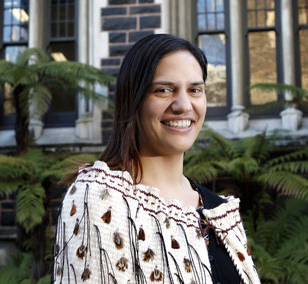
Karyn Paringatai (Ngāti Porou)
Dr Karyn Paringatai‘s project “E kore au e ngaro! The enduring legacy of whakapapa” ($823,000, Social Sciences panel) looks at how the knowledge of whakapapa can impact on health, with particular reference to Māori affected by the CDH1 cancer-causing gene. Click here for more information. Professor Parry Guilford, Director of Otago’s Centre for Translational Cancer Research, is an associate investigator on the project.
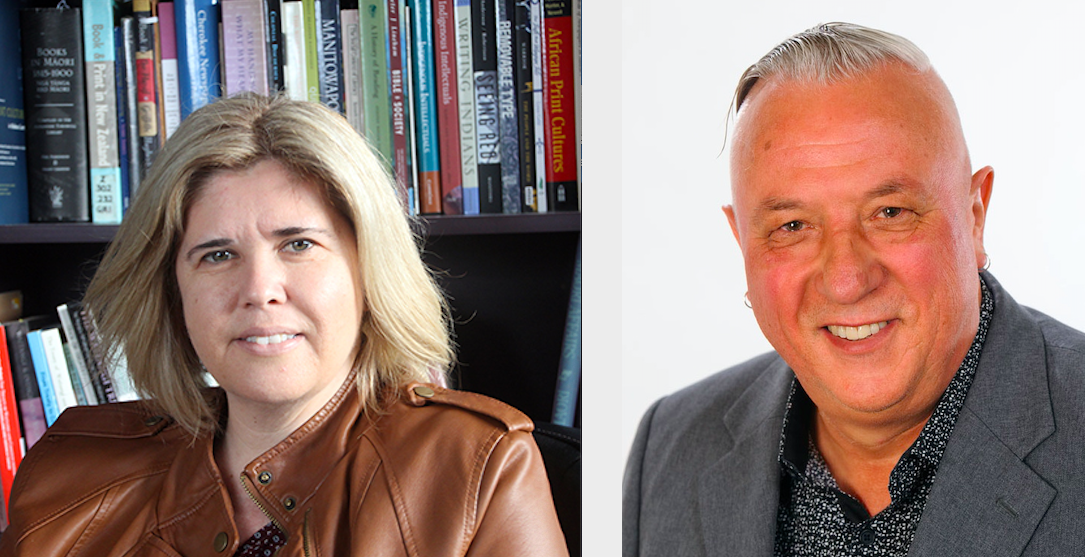
Angela Wanhalla (Ngāi Tahu) & Lachy Paterson
Associate Professor Lachy Paterson is a principal investigator alongside Associate Professor Angela Wanhalla (History Department) on “Te Hau Kāinga: Histories and Legacies of the Māori Home Front, 1939-1945” ($746,000, Social Sciences panel), exploring the lived experiences of Māori who remained in New Zealand during the Second World War. Click here for more information. Although the project begins next year, one of our undergraduate students, Haeata Watson, has already started a project looking at Ngāti Kahungunu experiences, funded through a Ngā Pae o te Māramatanga Summer Internship.
Both Karyn and Lachy are based in Te Tumu’s Māori Studies programme, occasionally teaching into the Indigenous Development programme. Karyn also coordinates the Master of Indigenous Studies programme.
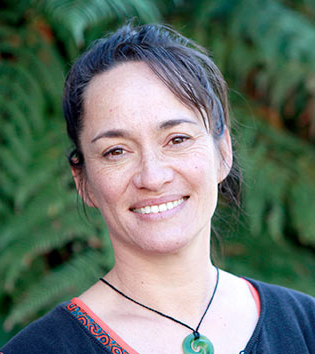
Merata Kawharu (Ngāti Whātua, Ngāpuhi)
Professor Merata Kawharu, who until recently held an adjunct position within Te Tumu but is now based at the Centre for Sustainability, was also successful. Her project, “A question of identity: how connected are Māori youth to ancestral marae, and does it matter?” ($605,000, Humanities panel) will investigate the relationships that young Māori have with their marae. Click here to find out more. Merata with be working with associate investigators, Dr Stephen McTaggart (University of Auckland), former Dean of Te Tumu, Professor Paul Tapsell (now at the University of Melbourne) and Dr Krushil Watene (Massey University).
Special thanks to Marjoleine Righarts, Research and Enterprise’s Research Advisor for Humanities who helped immensely with all the applications.
Journal of MAOR202: Tikanga and Māori 2 (2018)
MAOR202 is the core 200-level paper in the Indigenous Development major. It’s an exciting paper in which students can explore Māori cultural concepts and their relevance to today’s society through undertaking their own research.
This year, MAOR202 students undertook a research project to investigate how tikanga Māori was or should be incorporated within an organisation. The students each chose an organisation and pursued a literature-based research project to provide an understanding of how it incorporates the use of tikanga Māori as seen through their websites, public documents, newspaper articles, etc. Their essays thus provide an snapshot of how these organisations portray themselves to the public.
At the start of the course the lecturer, Dr Erica Newman, informed the students that their final essay could be presented in an in-house ejournal that would be published on Te Tumu’s Research Blog. They were given the opportunity to edit their work after their research essay was graded then submit a final version for the ejournal. Of the more than 50 students enrolled in MAOR202 this year, 42 decided to send in their final essay, three of which are written in te reo Māori.
Journal of MAOR202: Tikanga and Māori 2 is the second edition of this ejournal; please click on the following link to download it: MAOR202 EJOURNAL 2.
Te Tumu’s Postgraduate Graduands
Te Tumu would like to congratulate its four postgraduate students who will be graduating this December.
Roma-Kiritahi Simmons-Donaldson (Ngāti Porou, Taranaki, Ngāti Tūwharetoa) is graduating with a BA(Hons) in Māori Studies. Her dissertation, “Walking in two worlds – Te reo Māori in urban New Zealand” was supervised by Dr Karyn Paringatai.
 Abstract: The aim of this dissertation is to examine ways in which te reo Māori (the Māori language) can exist in urban New Zealand. Specifically, it will outline a history of te reo Māori, before looking at different ways in which language can be acquired and developed in an urban environment. It will then analyse ways in which te reo Māori has enabled Māori people to negotiate their place in urban New Zealand, in the absence of those environmental stimuli that traditionally inform and enhance a Māori identity and worldview. Central to this dissertation is the concept of intergenerational language transmission. As such, the experiences of my grandmother, mother, and myself will be presented throughout this dissertation to provide context, and to illustrate the interaction between urban migration, language, mechanisms of language acquisition and development, and identity, in a way that contextualises and enriches the literature.
Future plans: “I have just accepted an offer to undertake PhD study at the University of Otago, which will look to fill a gap in the conversation surrounding bilingualism and intergenerational language transmission, and explore in depth the journey of language transmission between second language speaking parents and their first language speaking children. It is my hope that this thesis will help to increase our collective understanding of the intersection of these two stark pathways of language acquisition, and help whānau who are looking to do the same.” Dr Karyn Paringatai and Professor Poia Rewi will supervise Roma’s doctoral thesis.
Pia Cristóbal Kahn undertook the thesis pathway for her Master of Indigenous Studies degree. Her thesis, “Sacred Katuiran: Decolonial Sensibility in the Katipunan Papers / An ‘indigenist hermeneutic’ of 19th century Tagalog revolutionary texts” was supervised by Professor Poia Rewi.
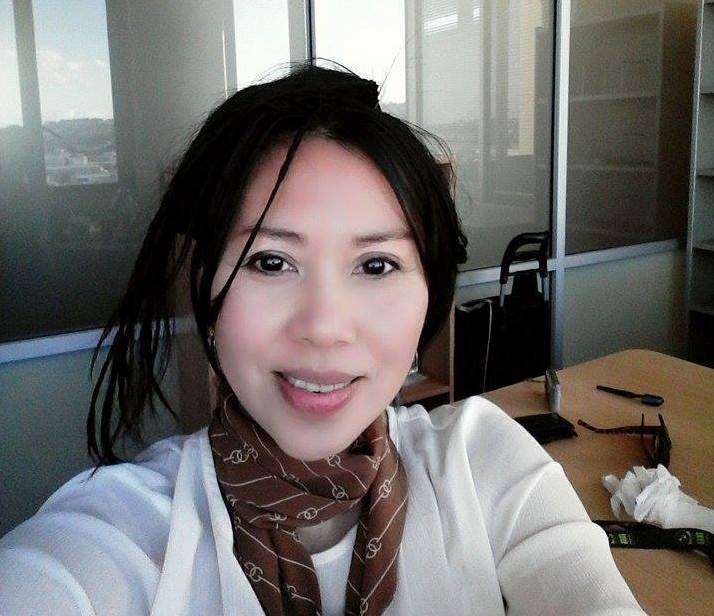 Abstract: Indigenous meanings and renderings tend to be forgotten and buried, and even erased, by non-indigenist interpretations and translations. This is a case study of an ‘indigenist hermeneutic’ approach to a re-translation of the “Kartilya” and other selected texts authored by members of the Katipunan, a 19th century revolutionary movement against Spanish colonial rule in the Philippines. The Tagalog word katuiran, which is often translated to ‘reason’, in support of a prevailing narrative in Philippine historiography that credits the European Enlightenment for primary Katipunan ideas, becomes central to the research as intertextual analyses unearth a variety of its forgotten meanings and usages, and concomitant mistranslations. A comparative conceptual analysis of katuiran and the Māori word tikanga opens up a viable hypothesis for an expanded indigenous meaning of katuiran, that necessitates the re-translation of many passages and other principle ideas of the Katipunan. This re-translation results in a re-narration that depicts an indigenous 19th- century ‘decolonial’ Tagalog movement that sought to delink from European constructs epistemically, ethically and politically; and thus, a re-narration that offers a challenge to a ‘European Enlightenment narrative’ for the Katipunan revolution.
Future plans: “I plan to continue my research on the doctoral level, with a focus on Tagalog cultural conceptualisations, and drawing from the fields of indigenous studies, cultural linguistics, memory studies and oral history.”
Te Tumu also has two staff members who are graduating with their PhDs.
Dr Tangiwai Rewi (Waikato, Ngaati Tiipaa, Ngaati Amaru, Ngaati Tahinga) has completed a doctorate, “Examining traditional Maaori knowledge frameworks and intergenerational knowledge transmission. “Titiro, Whakarongo” – he huarahi ako noo ngaa raa o nehe.” Professor Michael Reilly was the primary supervisor, with Professor Helen May as co-supervisor until her retirement in Dec 2016, and Dr Michelle Schaaf as an Advisor.
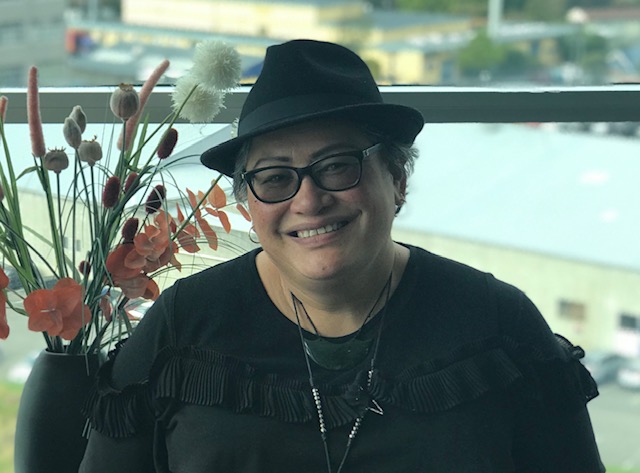 Ariaa: Abstract: This thesis investigates the way knowledge is transmitted inter-generationally, and the teaching and learning methods (or pedagogies) used to do this. The transmission referred to here relates to knowledge about practices associated with the Kiingitanga ‘kingship movement’ of which the Waikato iwi ‘tribe’ have long been the kaitiaki ‘guardians’. The pouwhirinaki ‘participants’ are from the Ngaati Tiipaa and Ngaati Amaru hapuu ‘sub tribes’ from the Port Waikato area; however, participants also came from other hapuu and iwi within the Waikato-Tainui rohe ‘region’.
I set out to analyse whether there is any correlation between the traditional Maaori knowledge frameworks of old being utilised in the way we learn the roles associated with three domains on the marae ‘communal gathering place’ during three key Kiingitanga events. This thesis explores how learning was undertaken in ngaa whare waananga tawhito ‘traditional houses of learning’ before documenting my participants’ narratives about how they learned their roles. It concludes with my analysis of these findings and offers some recommendations, based on what the participants said, about cultural revitalisation looking forward.
Future Plans: After an enforced leave period from roles and responsibilities in order to complete the thesis, Tangiwai is now relishing the challenge of resuming these expectations. From January 2019 she takes on the 0.5 Academic Dean Maaori position in the Division of Humanities. This is in addition to being the new Co-chair of Poutama Maaori, the Maaori academic staff network across the Otago University campuses which she recently took up in September 2018.
On the research front she is busy implementing one of the translational priorities of her PhD research, Tuupuna Times, which encourages whaanau to record the life stories /narratives of their ruuruhi (elderly women) and koroheke (elderly men). While she has continued to teach her Maaori education papers of MAOR 213, 313 and 413, she also expects to conduct comparative research with two other New Zealand iwi and two other indigenous tribes from Northern America related to her PhD study during her pending Research and Study Leave forecast for the back end of 2020 / start of 2021.
Dr Erica Newman is also graduating, having completed a PhD on Adoption in Fiji. Associate Professors Jenny Bryant-Tokalau and Jacqui Leckie supervised Erica’s thesis, assisted by the Advisory Committee of Professor Michael Reilly and Dr Michaelle Schaaf.
 Abstract: The arrival of Europeans in Fiji, from the late 1700s, impacted the established social structures of the indigenous communities, removing what were considered inappropriate social behaviours and introducing concepts and values which altered the societal relationships and status of iTaukei (indigenous Fijians). This included the introduction of colonialist terms and practices of ‘orphan’ and ‘adoption’. Scholars such as Vern Carroll, Ivan Brady and Ward Goodenough have questioned whether the use of these terms were appropriate when referring to the traditional practices of child circulation amongst kin within Oceania. Yet the iTaukei population came to use these terms, practices and their meanings, although not entirely in the same context as the European.
This thesis investigates the colonialist perspective of Fiji’s traditional child circulation and introduced European practices of child care, guardianship, adoption and orphanage institutions. The research covers a number of key topics that are relevant for this thesis. It begins with an understanding of Fijian kinship structure prior to, and just after, the arrival of the first Europeans. The research then explores colonial interventions of guardianship (the first being a consequence of the introduced Indian Indentured Labour Scheme). Missionaries brought with them the institution of orphanages and a history of these are explored (today orphanages are now known as Children’s Homes). The Child Welfare Department in Fiji is responsible for the placement of vulnerable children into safe homes. As they are an important part of guardianship and adoption today this thesis provides a history of how this scheme developed into a government department. In 1945 Fiji enacted the Adoption of Infants Act as a formal process for all children of Fiji, regardless of ethnicity, and this research follows the path of creation. Although the Adoption of Infants Act caters for all ethnicities of Fiji, ‘informal adoption’ or child circulation continued and continues to be practised by iTaukei. During the colonial period the colonial government accepted this customary practice as an acceptable form of child care.
This thesis provides a history of adoption and guardianship practices in Fiji during the colonial period of 1874 to 1970.
Future Plans: Erica will continue to work at Te Tumu, teaching and researching.
Undergraduate research through te reo Māori
E kīa ana, he wāhi rangahau te whare wānanga, engari, kāore e waiho ana anake taua mahi mā ngā ahorangi, mā ngā pūkenga, mā ngā ākonga paerunga rānei. Uru ai hoki ngā ākonga paeraro ki roto i ēnei momo mahi. I tēnei hēmeta e toru ngā mahi rangahau i mahi ai ā mātou tauira reo Māori o te Whare Wānanga o Ōtākou.
I mahia ngātahitia te “Kāinga Waewae” e ngā tauira o ngā karaehe reo, arā, he rōpū nō ngā tāngata o MAOR112 Te Kākano, te MAOR212 Te Pihinga, me te MAOR312 Te Māhuri. I tēnei tau ka rangahaua ngā mahi a ngā tini tari o te Kete Aronui (Humanities). He momo whakaaturanga tā tēnā rōpū, tā tēnā rōpū mō te tari i rangahau ai rātou.
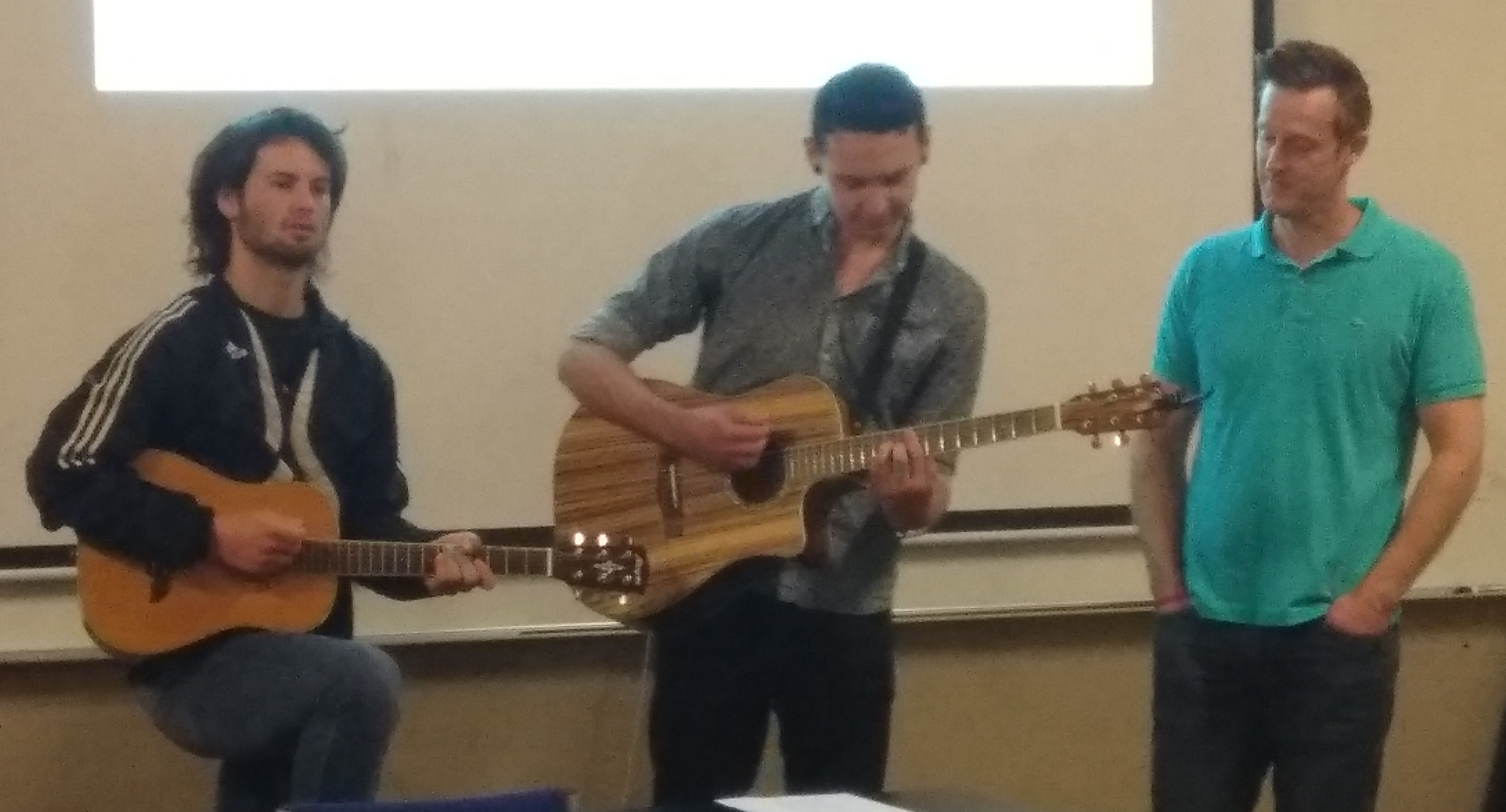
Ko Haeata rātou ko Dane ko Rodney e waiata ana mō te Tari Whakamātau Hinekaro (Psychology)
Ko tēnei te tau tuatahi i tū ai te pepa MAOR206/306 Ngā Pūkenga Tuhi, arā he kōhi hei whakapakari i ngā pūkenga, i ngā āheitanga e pā ana ki ngā momo tuhituhinga. Tokowhā ngā kaimahi o Te Tumu i whakaako i te pepa nei. Ko te tuhituhi ā-whare wānanga tētahi o ngā kaupapa, kia reri ai ngā tauira mehemea ka tahuri rātou ki te tuhi i ā rātou rangahau o ngā tohu paerunga i roto i te reo Māori. Mō tēnei pepa, ka hangaia e rātou he pānuitanga ānō nei kei tētahi hui rangahau rātou.

Ka riro i a Lyric Bird (taha mauī) te paraihe mō te pai o te whakapaipai o tāna pānuitanga e pā ana ki te tāmoko; ka whiwhi a Orini Herewini-Macdougall (taha matau) ki te paraihe mō te pai o te rangahau, mō te hunga “ahi matao”, arā, mō te hunga kāore e uru ana ki ngā mahi a ō rātou marae.
I tēnei wiki hoki ka tū te konohete a ngā tauira o MAOR308 Ngā Hākinakina a te Māori, ko Kelly Ann Tahitahi te kaiako, ā, ko Karyn Paringātai te kaiwhakahaere. Nā ngā tauira ngā waiata i rangahau, i tito, i whakarite; ko te “Reaka Z” te kaupapa, arā, ko te whakatipuranga e ako ana ki te whare wānanga ināianei. Tokomaha ngā tāngata i tae mai ki te mātakitaki, ki te whakarongo ki ngā waiata mō ngā āhuatanga o te ao hurihuri o tēnei wā.
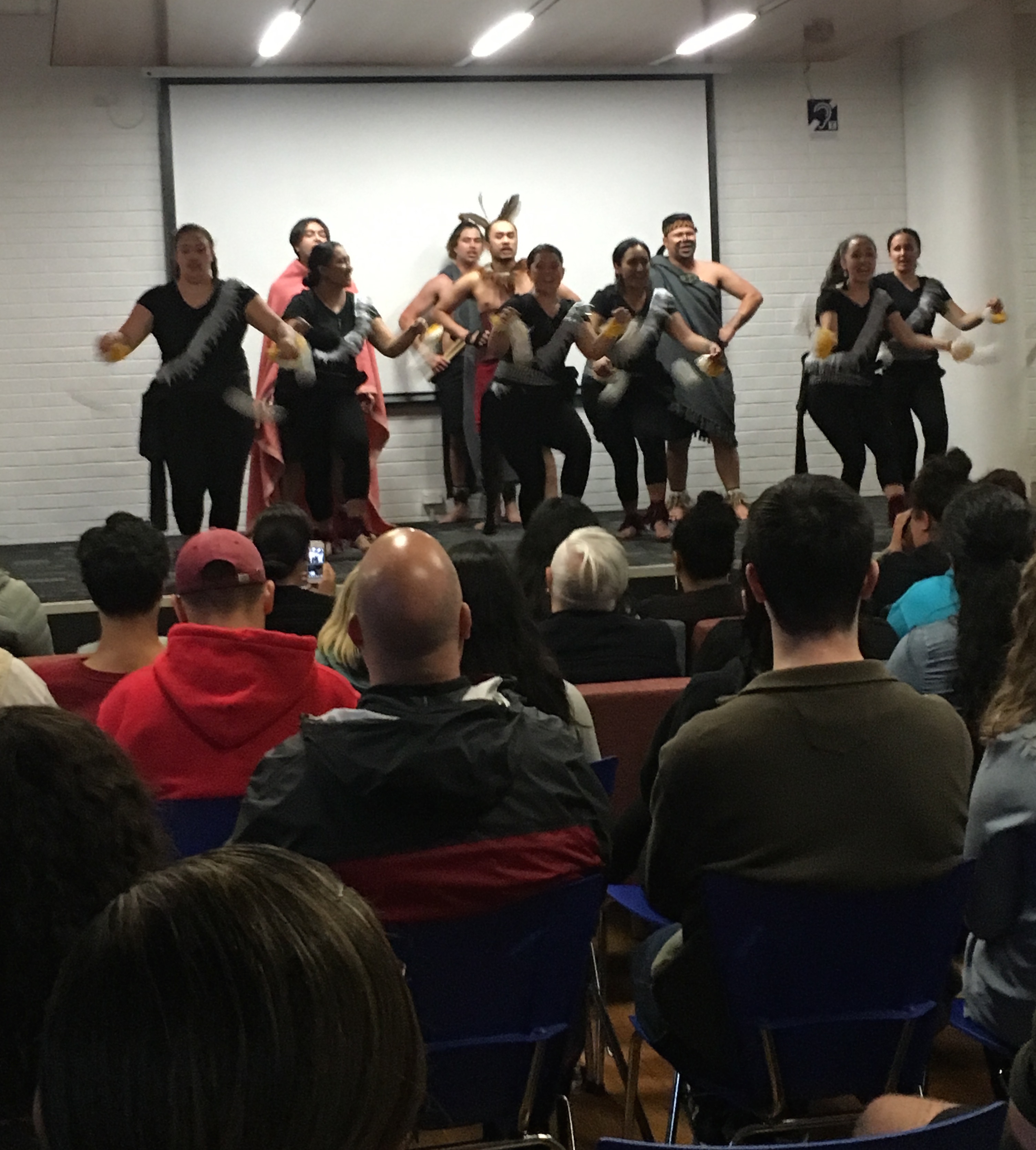
Ko ngā tauira o MAOR308 (Ngā Hākinakina a te Māori) e waiata ana.
Ngā Pae o te Māramatanga Summer Internships
Are you a Māori pre-doctoral student who is interested in advancing your skills and capacity in Indigenous research, and wanting some paid work over summer? Or do you know someone who may be interested? Ngā Pae o te Māramatanga have 27 Summer Internships on offer. Closes 10 October.
**** CLICK HERE TO FIND OUT MORE ****
Employment Opportunities for Māori and Pacific PhD graduates.
The following has been received from AUT, with employment opportunities for new Māori and Pasifika PhD graduates.
———————
Recruiting Now – Māori and Pacific Early Career Academic Programme
- Permanent Lecturer appointments available for Māori and/or Pacific scholars
- Utilise your PhD and begin your academic career
- Variety of disciplines sought across three outstanding facultie
Auckland University of Technology (AUT) aspires to be the University of opportunity for Māori and Pacific people and is proactively engaged in growing the number of our Māori and Pacific academics. AUT is dedicated to increasing the participation and success of Māori and Pacific peoples across all academic disciplines. We are a young university with an innovative, student centric academic environment with a strong focus on research-led teaching
The 2019 Māori and Pacific Early Career Academic Programme offers Māori and/or Pacific scholars’ permanent, full-time appointments as research-active lecturers.
- Click HERE visit our dedicated programme page on the AUT Careers site. Watch videos of some of our current early career academics speak, access individual job links for further information and make an application!
We are currently recruiting the following subject areas:
- Lecturer in Management (Business School)
- Lecturer in Public Relations (School of Communication Studies)
- Lecturer in Digital Media (School of Communication Studies)
- Lecturer in Communication Design (School of Art & Design)
- Lecturer in Digital Design (School of Art & Design)
- Lecturer in Māori Studies and New Zealand History (Te Ara Poutama)
A full programme information pack for the programme is also attached to each job advert. For an initial confidential chat, just contact Mike Wood, Executive Recruitment Partner on +64 9 921-9185 or mike.wood@aut.ac.nz.
Professional development and networks
In all roles you can expect to be surrounded by an extensive support programme designed to develop your teaching skills, extend research capability and advance your professional skills in supervision and graduate mentoring. This includes a dedicated development programme and cultural support network, access to approved expenditure on research, a commitment from the school to your personal professional development, as well as ongoing support from your line manager, a dedicated senior academic mentor and a member of the University’s Strategic Leadership Team in your development as an academic.
Important programme eligibility criteria:
- This must be your first full-time, permanent academic teaching position in either a university or other tertiary education provider. You will also have no more than 5 years fixed-term contract academic teaching experience (in total) in a university or other tertiary education provider.
- You must have a completed PhD within 3 years of application to this programme, or will have submitted your completed thesis for examination by 22 February 2019
- Programme is open to applicants of Māori or Pacific genealogical descent
- You must be able to start before 25 February 2019
AUT already has over 30,000 adventurous, energised, innovative educators, researchers and students that have been drawn to test boundaries, challenge established theories, break new ground and discover what is possible… Join us!
Please Note:
- Closing date for applications is Sunday, 30 September 2018
- Interviews will take place throughout October 2018
The Maraea Project: Indigenous Health Solutions
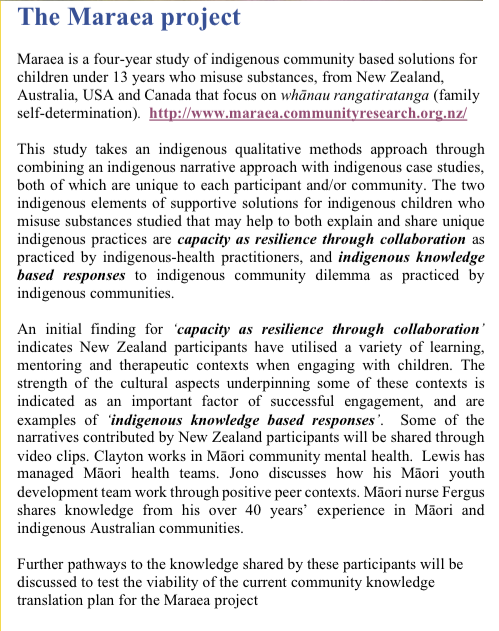
Dr Lisa Chant (Ngāti Whātua, Senior Fellow at Taupua Waiora Centre for Māori Health Research) is our guest presenter at the next Te Tumu Seminar, speaking on the Maraea Project and Indigenous-based health solutions. The seminar will be in Te Iringa Kōrero [3rd floor] of Te Tumu, 3pm on Friday 21 September. Everyone is welcome.
10 questions with . . . Jenny Bryant-Tolalau
Last week we featured Lyn Carter’s new book on Indigenous Pacific responses to Climate Change and her 10-question interview with the Association of Social Anthropologists of Aotearoa/New Zealand. Jenny Bryant-Tokalau has researched collaboratively with Lyn, and until her recent retirement, was a member of Te Tumu’s Pacific Islands Studies programme. Jenny has published Indigenous Pacific Approaches to Climate Change, as a companion volume to Lyn’s as part of the Palgrave Studies in Disaster Anthropology series. Click here to download Jenny’s book. ASAA/NZ also asked Jenny the 10 questions. Click here to see.
10 questions with . . . Lyn Carter.
The Association of Social Anthropologists of Aotearoa/New Zealand recently conducted a ’10 questions with’ session with Te Tumu’s Lyn Carter about her newly released book Indigenous Pacific Approaches to Climate Change: Aotearoa/New Zealand on their blogsite. Click here to read all about it.
