Matani Schaaf Seminar
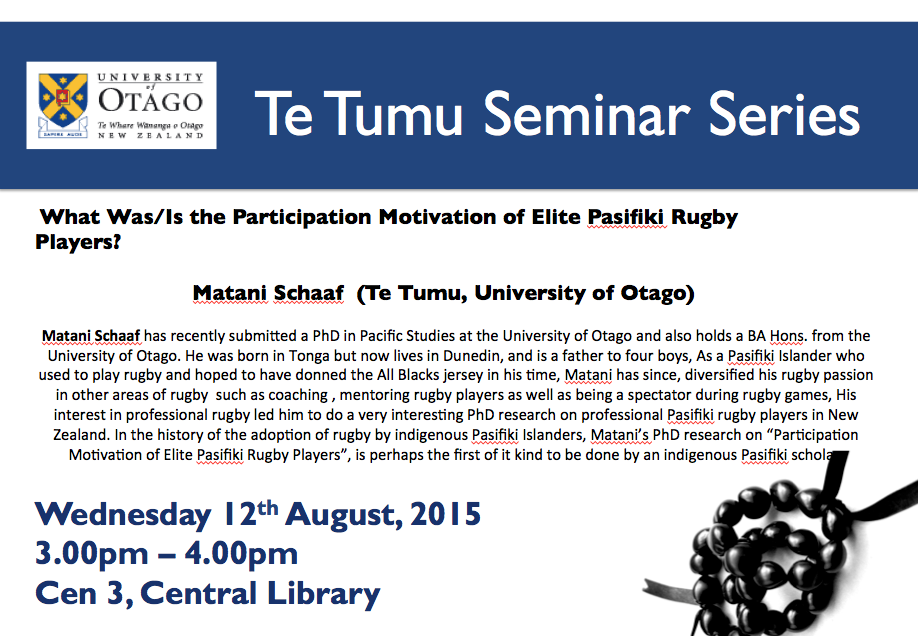
Matani Schaaf, who has just submitted his PhD thesis, will be presenting the next Te Tumu seminar on “What Was/Is the Participation Motivation of Elite Pasifiki Rugby Players?”
Click to enlarge.
This will be held in CEN3, (Central Library) at 3pm, Wednesday 12 August. All interested people are welcome. Click on the image below for more details.
Dr Lyn Carter – Te Wiki o te Reo Māori
Ko Te Wiki o te Reo Māori tēnei wiki.
Hei hāpai i te kaupapa, kei te Whare Pukapuka Pokapū he whakaaturanga nō ngā mahi rangahau a Tākuta Lyn Carter: he whakaaturanga ā-tuhi, he whakaaturanga kōataata hoki. Ko ‘Whakapapa: hei herenga tangata ki te whenua’ te ingoa.
Kei te Uare Hākena he whakaaturanga e pā ana ki ngā take hauora Māori mai i te tekautau 1950 tae atu ki nāianei.
Hei te te wā ō o te Rāmere (te 31 o Hōngongoi) ka tū hoki a Dr Lyn Carter rātou ko Ahorangi Tuarua Jacinta Ruru ko Dr Lisa Te Morenga ki Te Aka (i te papa-ki-raro o te Whare Pukapuka) kōrero ai mō ā rātou rangahau. He āhua poto ngā kauhau, 10-15 meneti mō tēnā, mō tēnā.
Dr Lyn Carter‘s research is currently being featured at the university’s Central Library as part of Te Wiki o te Reo Māori. This will be in the form of both a static display as well as a slide show presentation. This is entitled ‘Whakapapa: hei herenga tangata ki te whenua: Whakapapa: connecting people to the land’
There is also a display relating to Māori health issues from the 1850s to the present day.
On Friday 31 July Dr Lyn Carter, Associate Professor Jacinta Ruru and Dr Lisa Te Morenga will be giving lunchtime floor-talks at Te Aka, on the ground floor of the Central Library. Each presentation will be 10-15 minutes in length.
Te Tumu Research Roundup
Te Tumu staff have been active with research in the first half of the year. The highlights (listed below) show the depth and diversity of the research undertaken at the School.
In April Te Tumu hosted a three-day conference, Te Kura Roa: Minority Language & Dialect Conference, that attracted a number of speakers, from within New Zealand, as well as from USA, Tahiti, Australia, Scotland and Israel. Poia Rewi was the driving force behind this conference, a collaboration between the University of Otago, Victoria University and Ngā Pae o te Māramatanga. Suzanne Duncan was the key organiser, ably assisted by a number of students.
In May Te Tumu celebrated its 25th Anniversary, in conjunction with the Māori Centre’s anniversary. Events were organised by a committee headed by Karyn Paringatai and Suzanne Duncan. Of particular note was a one-day symposium at which a number of Te Tumu alumni presented on where their university educations had taken them.
In July, the book “The Lives of Colonial Objects” was published by Otago University Press, comprising a number of short essays on particular objects. Four Te Tumu staff contributed chapters: Megan Pōtiki on a tokotoko held by her whānau; Paerau Warbrick on a Māori Land Court Minute Book; Pāora Tapsell on the Te Haupapa cannon at Maketū; and Lachy Paterson on a press used to print a Māori-language newspaper in the 1860s. Also in this volume is a chapter by Michael Stevens, a former Te Tumu post-doc, on his whānau’s kahukiwi.
Pāora Tapsell, Poia Rewi and Tangiwai Rewi were on Research and Study Leave in Semester 1, with Matiu Ratima, Jim Williams and Michael Reilly away for Semester 2. Pāora Tapsell has recently returned from Vienna, having given a keynote address “Waka Wairua: Imagining an Other way of knowing our Pacific” at the New Zealand Studies Association conference. Matiu Rātima was awarded the Fulbright-Nga Pae O Te Maramatanga Scholar Award; this allows him to spend time at the University of Hawai’i to observe the teaching of Hawaiian languages.
In May, Megan Pōtiki published an article in the New Zealand Journal of History, 49, 1 (2015) on the Māori-language writings of H.K. Taiaroa and Tame Parata, and in June presented at a paper at the 4th International Conference on Language, Literature and Linguistics in Singapore on the use of old manuscripts as a means of revitalizing Kāi Tahu reo. Megan is writing this up for publication at present.
In February, Lachy Paterson gave a Waitangi Day at the Dunedin Art Gallery on past, present and future perceptions of the Treaty of Waitangi. As he didn’t have any teaching duties in Semester 1 he was able to travel to Canada in February/March where he gave a number of talks at the University of Alberta and University of Manitoba on ‘Indigenous Literacy and Literacy Practices: Māori in the 19th Century’ and (with Angela Wanhalla) ‘Indigenous Women, Writing and Colonialism’. In April he presented at a conference on colonial print media at the University of Cambridge, UK.
In June Jenny Bryant-Tokalau presented a paper entitled ‘New Communities and the State in Suva, Fiji’ to the Urban Melanesia theme at the European Society for Oceanistes Conference (ESFO), in Brussels. The paper will be published in a special edition of the Journal de la Société des Océanistes in 2016.
Tangiwai Rewi has recently published an article in the Journal of the Polynesian Society, 124, 1 (2015) on ‘The Ngāruawāhia Tūrangawaewae Regatta: Today’s Reflections on the Past’. Click here to access.
In February, Michelle Schaaf presented on ‘The role of family in Pacific migrant participation in physical activity and sport’ at the Inaugural International Conference on Migration Social Disadvantage and Health, in Melbourne.
Merata Kawharu and Karyn Paringatai both spoke at at Hui Poutama 2015: Māori Research Sympoisum in May. Hui Poutama is the University of Ōtāgo’s biennial symposium of Māori research. Karyn’s talk was on ‘The value of the dark: The students’ perspective’, and Merata Kawharu’s on ‘Entrepreneurship: the relevance of a customary context. A Ngāti Whātua narrative’.
Karyn Paringatai‘s research on teaching in the dark is in demand. She presented at a recent Pecha Kucha event at the Dunedin Public Art Gallery, and in July gave a keynote presentation at the Tuia Te Ako hui at Lincoln University.
Lyn Carter has two works in press: ‘Climate Change and Aotearoa New Zealand: A review’, a journal article with Wiley Interdisciplinary Review (LSE); and ‘Iwi are where the People are: Rethinking Ahi Kā and Ahi Matao in Contemporary Māori Society’ in the forthcoming Huia Publishers book, Home. Here to Stay!
Finally, Te Tumu is revamping its MAOR 102 textbook. The old book, Ki te Whaiao: An Introduction to Māori Culture and Society was published in 2004, and while it had served its purpose well, staff felt that a new volume was necessary. As with Ki te Whaiao, Te Tumu staff are doing most of the writing for this new book.
Paul Tapsell keynote in Vienna
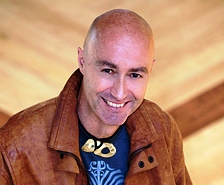 Te Tumu’s Professor Paul Tapsell is currently in Vienna as a keynote speaker at the New Zealand Studies Association conference “Empires and Cultures of the Pacific”. His address is entitled “Waka Wairua: Imagining an Other way of knowing our Pacific“.
Click on link for the Abstract of Paul’s address.
Dr Paringatai as keynote speaker at Tuia Te Ako hui
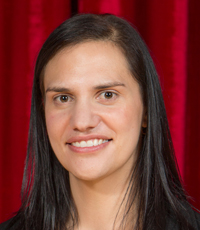 Te Tumu lecturer, Dr Karyn Paringatai, will be giving a keynote address at the Tuia Te Ako hui to be held at at Te Kete Ika, Lincoln University, Lincoln, Canterbury, 8 -10 July 2015. This hui will bring together the diverse Māori tertiary whānau to discuss, debate and challenge current issues relating to Māori success in tertiary education. Karyn, who won the Prime Minister’s Supreme Teaching Award last year, will be talking about her innovative teaching methods of “teaching in the dark”.
Click here for biographies of the Keynote Speakers.
Better than Australians?
Nathan Albury suggests that Pākehā have embraced the Māori language better than white Australians have supported their indigenous languages. In an opinion piece for SBS Nathan makes this claims.
But the Australians have done so little to protect their languages, it’s not hard being better than them in this regard. And te reo Māori still needs everyone’s support. Me āwhi tonu te reo Māori, me tautoko, me kōrero.
Nathan is at Oslo University, but is supervised by Te Tumu’s Lyn Carter.
Career Advancement for Te Tumu Graduate
A belated congratulations also from Te Tumu to Matiu Payne who is now Te Ihu Takiwā Regional Manager for Te Wānanga o Aotearoa. Matiu completed his Master of Indigenous Studies at Te Tumu, and is currently undertaking PhD study with us on Ngāti Mutunga and the Native Land Court.
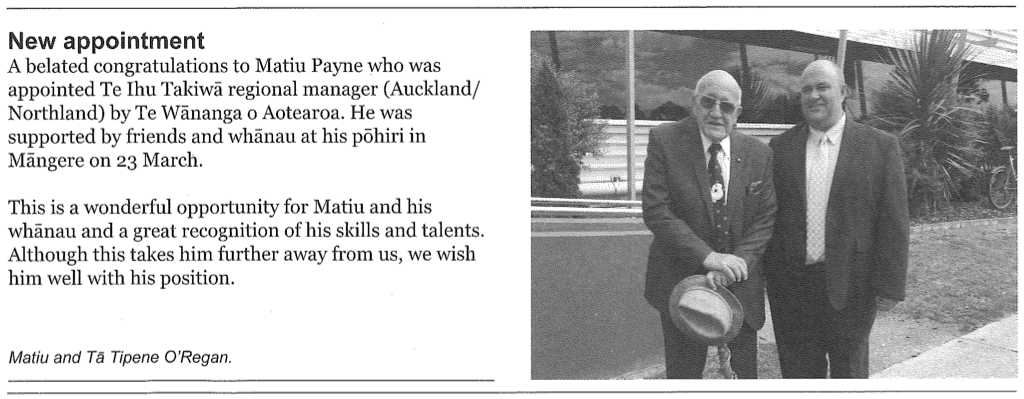
Click to read: News from Te Rūnanga o Koukourārata, Te Pānui Rūnaka: A Monthly Newsletter of Kāi Tahu News, Views and Events, May 2015.
New PhD Scholarship opportunity
PhD Scholarship on Peace Traditions in Aotearoa/New Zealand
Applications are now being sought for a one-off 3-year PhD scholarship to investigate Indigenous peace traditions in early New Zealand. The scholarship, funded under the Marsden Research Project, “A New Politics of Peace? Investigations in Contemporary Pacifism and Non-violence”, provides a NZD$25,000 annual stipend and covers tuition fees for a period of three years. The successful applicant will be based within the National Centre for Peace and Conflict Studies (NCPACS), University of Otago, New Zealand, and supervised by Professor Richard Jackson (NCPACS), Professor Murray Rae (Theology) and Dr Michael Stevens (History).
Research Proposals which explore the following topics are particularly welcome:
- The influence of Christianity in the emergence of Māori nonviolent resistance traditions;
- The subjugation of Māori peace traditions by settler society in nineteenth-century New Zealand;
- The instances and causes of Māori groups avoiding conflict during the New Zealand Wars;
- Māori resistance to conscription during World War One.
If you are interested, contact Professor Richard Jackson of NCPACS for details. Application deadline: Friday 3 July, 2015.
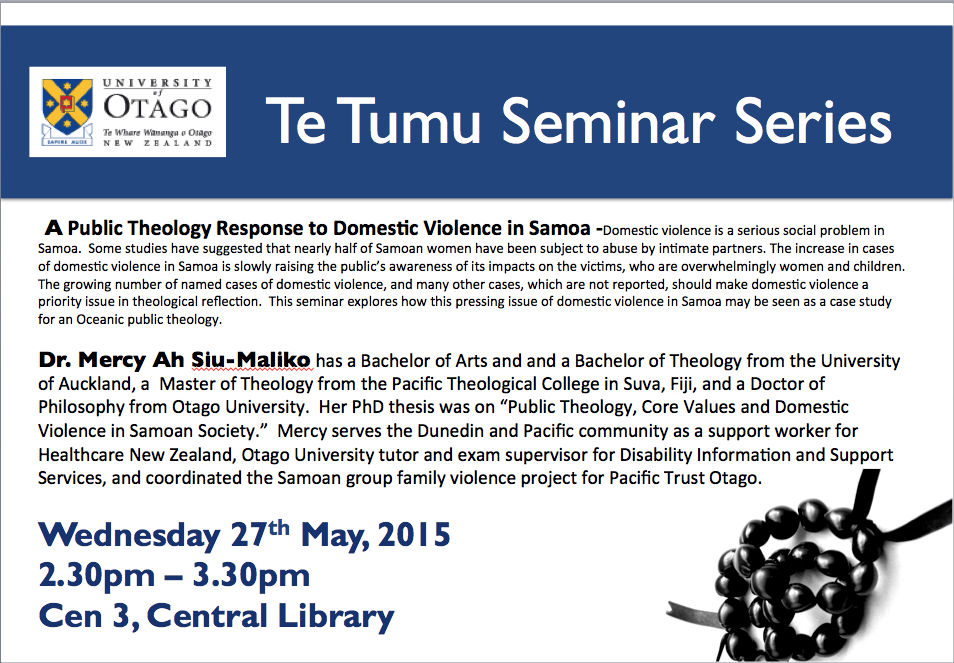
A Public Theology Response to Domestic Violence in Samoa
Dr Mercy Ah Siu-Maliko will be giving the next Te Tumu seminar: “A Public Theology Response to Domestic Violence in Samoa”. All interested people are welcome.
Research Success for Te Tumu Staff
The New Zealand Centre of Research Excellence, Ngā Pae o Te Māramatanga, has been refunded for 2016-2020 . Although Ngā Pae is hosted through University of Auckland, it has now been organised in conjunction with other institutions. One of the new co-directors is Associate Professor Jacinta Ruru from Law Faculty at the University of Otago. At Te Tumu: School of Māori, Pacific and Indigneous Studies we are proud that four of our staff members are among the confirmed Principle Investigators, Research: Professor Paul Tapsell, Associate Professor Poia Rewi, Associate Professor Merata Kawharu, and Dr Lyn Carter.
