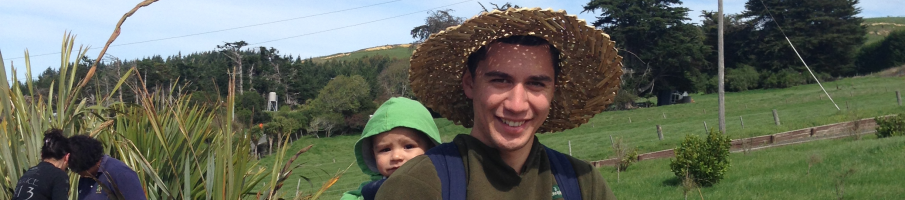
Māori-language research in Teaching
It is always good when students can use their skills and research to produce a resource to benefit the university. MAOR427 “He Tuhituhinga” is a 400-level Māori history paper that looks at historical Māori-language texts. All the work and discussion is conducted in the Māori language. This year one of their assignments was the translation of a text, selected by Jeanette Wikaira, Kaituhituhi Ratonga Māori at the Hocken Library, was an account by Hauāuru Taipari of Ngāti Maru about a visit to Ngāti Awa and Whakatōhea in 1864. The students divided the text up, and transcribed and translated it. This was then given back to the Hocken Library as an accompanying resource to the original text.
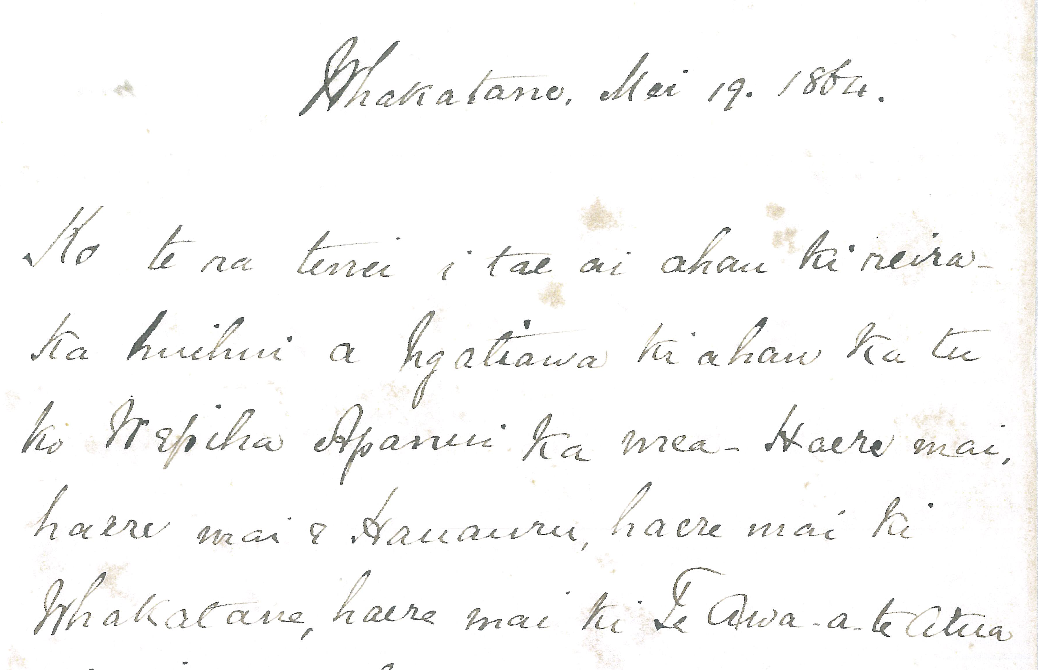
He wāhanga nō te tuhinga a Hauāuru Taipari.
Fragment of the text by Hauāuru Taipari.
He mea tino pai kia whakamahia e ngā ākonga ō rātou pūmanawa me tā rātou rangahau hei whakaputa mai i te rauemi, hei painga mō te whare wānanga. He pepa hītori, he pepa tau-tuawhā te pepa MAOR427 “He Tuhituhinga” e āta tirohia nei ētahi tuhinga reo-Māori o neherā. E mahia ana ngā mahi katoa i roto i te reo Māori. He mahi whakapākehā tētahi o ngā aromatawai. Nō te tau nei, ka whiriwhiria e Jeanette Wikaira, e te Kaituhituhi Ratonga Māori o te Uare Hākena te tuhinga nei, nā Hauāuru Taipari o Ngāti Maru i tuhi mō tāna haere ki a Ngāti Awa rāua ko Whakatōhea i te tau 1864. Wehewehea ana te tuhinga e ngā ākonga, tuhia ana ngā kupu Māori ki te rorohiko, whakapākehātia ana. Kātahi ēnei ka tukuna atu ki te Uare Hākena hei tākoha, hei rauemi hoki i te taha o ngā kupu ake a te kaituhi.
Dr Karyn Paringatai’s success celebrated.
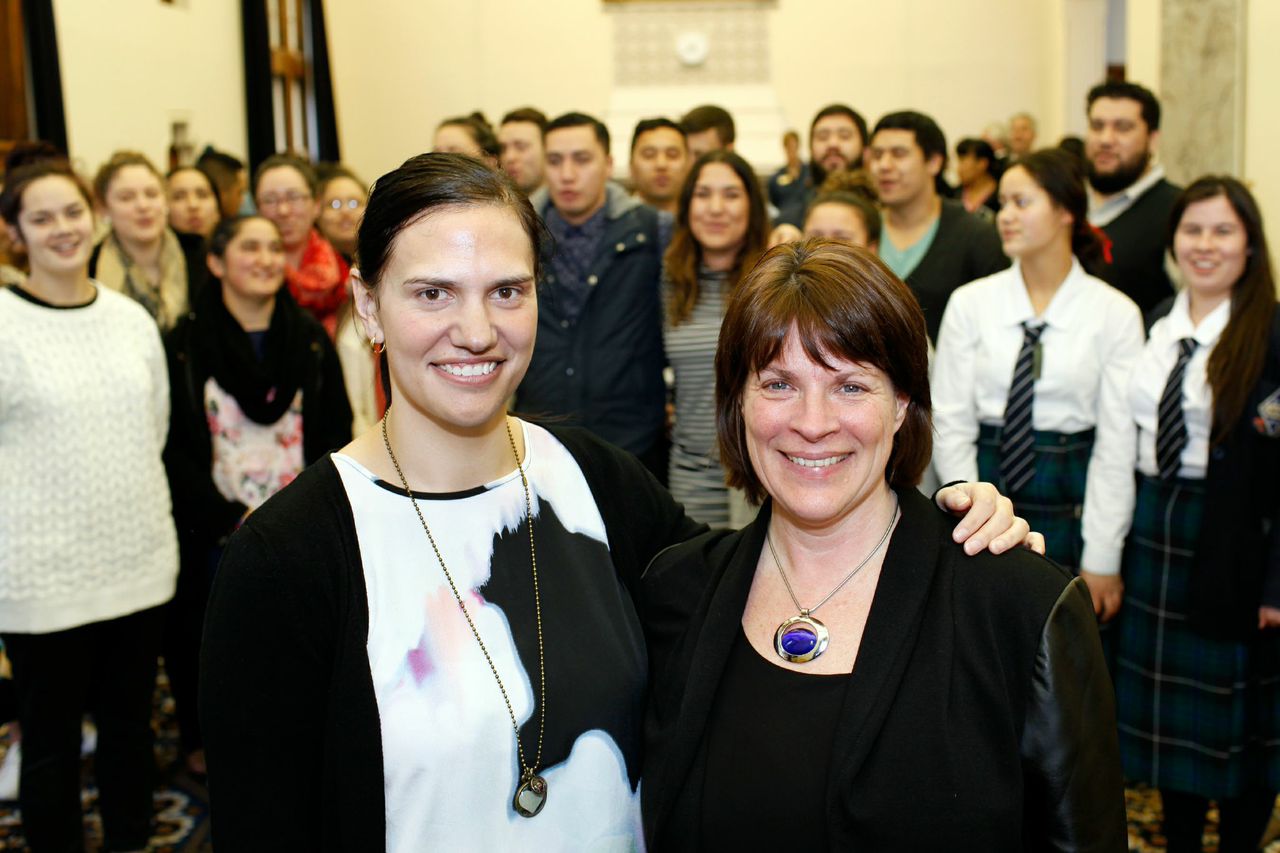
Te Tumu lecturer, Dr Karyn Paringatai and Professor Harlene Haynes, Vice Chancellor of the University of Otago.
On Monday night, the Vice-Chancellor celebrated Te Tumu staff member, Dr Karyn Paringatai’s success, with an event attended by many people from within the university, including Te Tumu staff and students. See the Otago Bulletin story here.
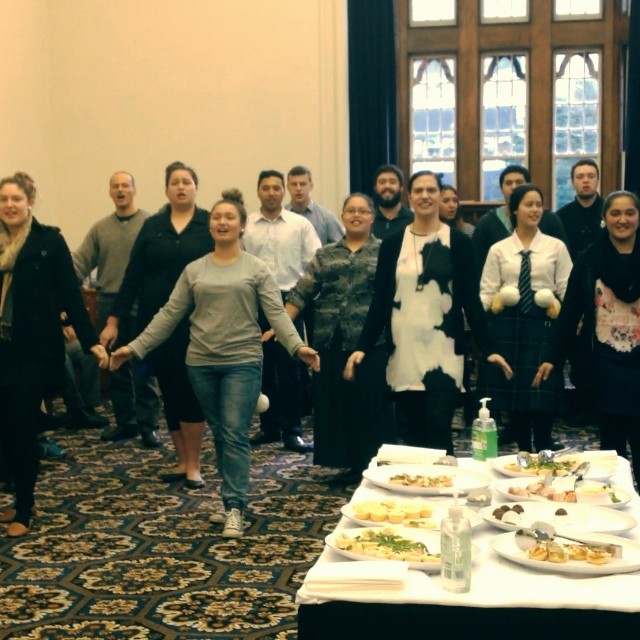
Indigenising the Academy – performing Ngoi Pewhairangi’s “Whakarongo” in the University of Otago’s Council Chambers to celebrate the success of Dr Karyn Paringatai.
Karyn won New Zealand’s top tertiary teaching award recently in Wellington, the Prime Minister’s Supreme Award for Tertiary Teaching Excellence, based on utilising the pre-contact Māori pedagogy of teaching in complete darkness, which has proved to be outstandingly successful in her performing arts paper, MAOR108 Waiata: Te Tīmatanga. Listen to the Radio NZ interview and Dunedin Television item in which Karyn explains her teaching practice.
Karyn has undertaken significant research to ensure that her teaching in the dark, and has just published on this ‘A Return to the “Dark Ages”’ in the journal Akoranga 10 (2014).
Just this week Karyn also employed the same methods in a guest lecture for the 900 students of MAOR102: Māori Society, showing that this pedagogy can be applied to more than just performing arts. She is planning to continue to use and develop “teaching in the dark” and publish more on this research.
Seminar Video: Killing Demons and Cultural Collisions
A Te Tumu Seminar by Megan Pōtiki, 16 July 2014.
“Killing Demons” is the title of a detailed account of tapu clearing activities that occurred at Ōtākou in 1865. The diary extract was written by H.K. Taiaroa. This account is an incredible example of a collision of fundamentally different religious beliefs. Christianity and Christian prayer meets one of the significant Māori demi gods.
New book on the value of the Māori Language
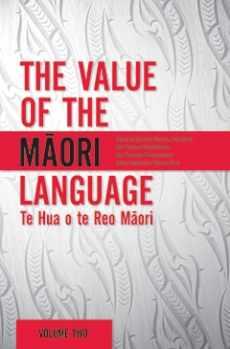 Te Tumu staff member, Associate Professor Poia Rewi and Professor Rāwinia Higgins of Te Kawa a Māui (Victoria University of Wellington) have released an edited collection, The Value of the Māori Language: Te Hua o te Reo Māori, with Huia Publishers. The book features 25 essays from an illustrious field of Māori commentators, responding to the question ‘What is the value of the Māori language?’ more than twenty five years after the passing of the Māori Language Act.
The book was launched recently in Wellington at an event attended by many of the big names of Māori-language education.
This publication is one output emerging from Poia and Rāwinia’s three-year project, Te Kura Reo – Waiora, research funded by Ngā Pae o te Māramatanga.
