Two great talks coming up
This Wednesday, 1 October 2014, 5:30pm – 7:00pm in Archway 2 Lecture Theatre (This is a Public Lecture, open to all.)
The Fulbright/Te Tumu lecture by Sir Tamati Reedy (Ngāti Porou)
“Ngā Wai Whakaata o Hine-Kauorohia: The Reflecting Waters of Hine Kauorohia”
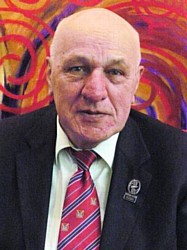
Professor Sir Tāmati Reedy
The Māori goddess Hine-kauorohia allows us to look into the stillness of her reflecting waters to see the past with clarity, gaze at ourselves in the shimmering present, and with a finger-touch, fathom a ruffled glimpse of the future.
The mauri, the life-essence, of Aotearoa New Zealand is our sense of nationhood. What is it? Who says so? I will focus on the themes of our history – Māori and Pākehā – reflecting on the hopes and promises of our partnership under the Treaty of Waitangi. I will comment especially on themes of our relationships: economic (land and people), socio-cultural (the realities of race-relations, identity and democracy), educational (the way to advantage), political (levers of power and privilege) and of course, my place as Māori in the future Aotearoa New Zealand.” – Sir Tamati Reedy
——-
Dr Jim Williams giving the Te Tumu Seminar on Wednesday 8.
To watch this LIVE, click here.
![Jim Williams[1]](https://blogs.otago.ac.nz/tetumuresearch/files/2014/07/Jim-Williams1.jpg)
Click to enlarge
Seminar Video: Ārihi Te Nahu and the Te Waka Maori Libel Case, 1877.
Lachy Paterson “Ārihi Te Nahu & the Te Waka Maori Libel Case, 1877.”
Te Tumu Seminar Series, University of Otago, 20 August 2014.
Short Abstract: In 1876 a letter from Ārihi Te Nahu and several others was published in Te Waka Maori o Niu Tirani, the government’s Māori-language newspaper concerning the wealthy Hawkes Bay runholder, Henry Russell. Russell sued the newspaper for libel, but the case was informed by dodgy Māori land purchases, race relations, and squabbling within the Pākehā political elite. This presentation explores how the libel case came about, and its ramifications.
Seminar Video: Killing Demons and Cultural Collisions
A Te Tumu Seminar by Megan Pōtiki, 16 July 2014.
“Killing Demons” is the title of a detailed account of tapu clearing activities that occurred at Ōtākou in 1865. The diary extract was written by H.K. Taiaroa. This account is an incredible example of a collision of fundamentally different religious beliefs. Christianity and Christian prayer meets one of the significant Māori demi gods.
