Did Newton Adopt Hypothetico-Deductivism?
Kirsten Walsh writes…
In 1718, Newton published the second edition of Opticks. Query 23 was renamed Query 31, and in this query Newton expanded on his method of analysis. He wrote:
- “If no Exception occur from Phænomena, the Conclusion may be pronounced generally. But if at any time afterwards any Exception shall occur from Experiments, it may then begin to be pronounced with such Exceptions as occur.”
At first glance, this passage suggests that Newton adopted the hypothetico-deductive method, in that the epistemic status of a theory is sensitive to new evidence. However, if we consider how Newton put this methodology into practice, in Principia book III, we will get a different reading of this passage.
In the 3rd edition of Principia, Newton introduced a 4th rule of philosophising:
- “In experimental philosophy, propositions gathered from phenomena by induction should be considered either exactly or very nearly true notwithstanding any contrary hypotheses, until yet other phenomena make such propositions either more exact or liable to exceptions.”
The similarities between this rule and the earlier passage from Query 31 are striking: that new evidence can make a proposition “either more exact or liable to exceptions” is similar to pronouncing the conclusion either “more generally” or “with such Exceptions as occur”. So looking at how this rule was employed should tell us a lot about how to interpret the earlier passage.
In Principia, Newton only explicitly employed rule 4 once: in proposition 5 book III. In this proposition, Newton made his argument for universal gravitation by generalising step-by-step from the motions of the planets around the sun, and the satellites of Saturn and Jupiter around their respective centres, to the forces producing those motions. Newton introduced three corollaries, the third of which states that “all planets gravitate towards one another”.
In the scholium following this corollary, Newton said:
- “Hitherto we have called ‘centripetal’ that force by which celestial bodies are kept in their orbits. It is now established that this force is gravity, and therefore we shall call it gravity from now on. For the cause of the centripetal force by which the moon is kept in its orbit ought to be extended to all the planets, by rules 1, 2, and 4.”
Rules 1 and 2 tell us not to postulate more causes than necessary, and that we should assume that effects of the same kind have causes of the same kind. In this context, rule 4 tells us that, if exceptions to universal gravitation occur, then instead of reducing our credence in the theory, we should reduce the scope of the theory: it is still true, but true of less instances. De-generalising a theory doesn’t reduce its certainty; rather, it reduces the scope of the theory while maintaining its certainty. So according to rule 4:
- In the absence of exceptions, we should take gravity to be universal.
- If exceptions to universal gravitation are found, we should infer that the domain of gravity is limited (i.e. not universal).
- We should not allow our assumptions about matter theory (e.g. the improbability of action at a distance) to have any influence on our epistemic attitude towards universal gravitation.
Instead of reading rule 4 and the passage from Query 31 as accounts of hypothetico-deductivism, we should read them as accounts of what I Bernard Cohen called the ‘Newtonian Style’: a way of modelling the world in a series of increasingly complex and increasingly accurate idealisations (i.e. approximations that would hold exactly in certain specifiable circumstances).
On this blog, I have often discussed Newton’s aim of certainty and his corresponding claims to have achieved this aim. Newton’s youthful aim of certainty places him in a position that is quite isolated from his contemporaries. Most of the experimental philosophers of the Royal Society thought it epistemically irresponsible to make such bold claims. Instead, they had more modest aims: obtaining highly probable theories. Rule 4, and the passage from Query 31, suggest that Newton eventually adopted a version of the hypothetico-deductivism preferred by his contemporaries. I have argued, however, that this is a misleading way of reading these passages. Newton uses rule 4, not to update the epistemic warrant of the theory, but its scope.
Robert Saint Clair
Peter Anstey writes…
It is not uncommon for very minor contributors to early modern thought to go unnoticed, but every now and then they turn out to be worth investigating. One such person is Robert Saint Clair. A Google search will not turn up much on Saint Clair, and yet he was a servant of Robert Boyle and a signatory to and named in Boyle’s will. He promised twice to supply the philosopher John Locke with some of Boyle’s mysterious ‘red earth’ after his master’s death, and a letter from Saint Clair to Robert Hooke was published in the Philosophical Transactions of the Royal Society (vol. 20, 1698, pp. 378–81).
What makes Saint Clair interesting for our purposes is his book entitled The Abyssinian Philosophy Confuted which appeared in 1697. For in that book, which contains his own translation of Bernardino Ramazzini’s treatise on the waters of Modena, Saint Clair attacks Thomas Burnet’s highly speculative theory of the formation of the earth. I quote from the epistle to the reader:
I shall not care for the displeasure of these men of Ephesus [Burnet and others], whose trade it is to make Shrines to this their Diana of Hypothetical Philosophy, I mean who in their Closets make Systems of the World, prescribe Laws of Nature, without ever consulting her by Observation and Experience, who (to use the Noble Lord Verulams words) like the Spider … spin a curious Cob-web out of their Brains … (sig. a4)
The rhetoric of experimental philosophy could hardly be more obvious. Burnet and the other ‘world-makers’ are criticized for being adherents of ‘Hypothetical Philosophy’, for making ‘Systems of the World’, and for not consulting nature by ‘Observation and Experience’. He also praises Ramazzini’s work for being ‘the most admirable piece of Natural History’ (sig. a2). Saint Clair rounds off this passage with a reference to Bacon’s famous aphorism (about which we have commented before) from the New Organon comparing the spider, the ant and the bee to current day natural philosophers (I. 95).
What can we glean from Saint Clair’s critique here? First, it provides yet another piece evidence of the ubiquity of the ESD in late seventeenth-century England: the terms of reference by which Saint Clair evaluated Burnet were clearly those of experimental versus speculative philosophy.
Second, it is worth noting the term ‘Hypothetical Philosophy’. This expression was clearly ‘in the air’ in the late 1690s in England. For instance, it is found in John Sergeant’s Solid Philosophy Asserted which was also published in 1697. Indeed, it is the very term that Newton used in a draft of his letter of 28 March 1713 to Roger Cotes to describe Leibniz and Descartes years later. Clearly the term was in use as a pejorative before Newton’s attack on Leibniz.
Saint Clair has been almost invisible to early modern scholarship on English natural philosophy and yet his case is a nice example of the value of inquiring into the plethora of minor figures surrounding those canonical thinkers who still capture most of our attention. I would be grateful for suggestions as to names of others whom I might explore.
Incidentally, Saint Clair obviously thought that John Locke might be interested in his book, for we know from Locke’s Journal that he sent him a copy.
Experience and Speculation in Geminiano Montanari
Alberto Vanzo writes…
Early modern experimental philosophy was not only a British phenomenon. On this blog, we have documented its influence in France, Germany, and Italy. Many studies on natural philosophy in early modern Italy seem in line with this suggestion. They portray the Florentine Accademia del Cimento as one of the first groups “to adopt an experimental method free of speculative theoretical arguments and contentions”. However, appearances can be deceiving. As Luciano Boschiero has argued, Italian natural philosophers in the Accademia del Cimento and elsewhere did not attempt to create a merely factual, “theory-free knowledge of nature”. They all endorsed theories and hypotheses which deeply shaped their experimental activity not unlike Boyle and Hooke, self-declared experimental philosophers who also developed speculative natural philosophies. Does this mean that Italian natural philosophers had a merely verbal allegiance to the experimental philosophy? Did they live a double life, designing and interpreting their experiments in the contest of natural-philosophical speculations and concerns, but then hiding them to portray their results as authoritative and trustworthy because based purely on matters of fact, independent from any theoretical assumptions?
To address these questions, it is useful to consider the case of Geminiano Montanari, one of the most prominent natural philosophers in late seventeenth-century Italy. It is easy to find the rhetoric of experimental philosophy in his works. He explicitly praises “experimental philosophy”, the academies that practice it, and especially experience, which “alone has the privilege of being teacher”. It is from experience that we must “derive” our natural-philosophical “maxims by anatomizing, so to say, the operations of nature”. Observations and experiments must be collected in a “universal and veridical history” of the world, which will be the basis for developing natural-philosophical theories. Does this mean that, for Montanari, we should rely only on empirical facts, reason inductively on their basis, and refrain from embracing hypotheses or making speculations?

Montanari’s extensive discussions of the existence of atoms and the void indicate otherwise. According to Montanari, those questions were not settled by the experimental or observational evidence which was available at the time. However, he did not claim that we should refrain from speculating on them until we have found enough empirical evidence. Montanari speculated on those questions, but he seems to place three limits on our speculation. First, he only speculated on on what we cannot experience. As long as we can, we must rely on experiments and observations as the basis for our natural-philosophical claims. Second, we should be aware that speculations are risky, uncertain, and difficult. Only experience can give us “light”. Montanari compares discussions on the vacuum to walking in the dark. Speculative reasonings can allow us to make some cautious steps into that obscure territory. Finally, there is a good way and bad way of speculating. The bad way is that of the Aristotelians, who hastily embraced natural-philosophical principles and made demonstrative reasonings on their basis. The good way is starting from what we know on the basis of experience and reasoning from it with the aid of the principles of mechanics and geometry (which Montanari takes to be innate). Proceeding in this way, we may be establish whether the invisible corpuscles that make visible bodies are ever at rest, or whether they move continuously, even though we lack empirical evidence of their movements.
In conclusion, Montanari’s approach to speculative reasoning seems to me to be compatible with his experimentalist stance. Montanari did not refrain from speculating and framing hypotheses, but in a cautious, controlled way, always granting pre-eminence to the deliverances of the senses. His pronouncements on the vacuum and on atoms were not a betrayal of experimental philosophy.
CFP: Aristotelian Natural Philosophy in the Early Modern Period
From Lucian Petrescu:
The Sarton Centre for History of Science and the Department of Philosophy and Moral Science, Ghent University announces a conference on
23-24 May 2013
with the theme
Aristotelian natural philosophy in the early modern period
Early modern philosophers liked to debate about Aristotle just as much as medieval scholars. They had different sources to fuel their discussions: from the humanist preoccupation with a pristine Aristotle and a purification of a corpus perceived as corrupted to the very medieval doctors that others sought to forget. This conference aims at reconstructing the various ways in which Aristotle’s natural philosophical books were read and used to nourish various philosophical agendas.
We welcome papers on any topic related to late medieval and early modern natural philosophy (roughly 1300-1700) that can contribute to a better understanding of the reception of Aristotle in the period. Papers focussing on the reception of less prominent books of the /corpus aristotelicum/, such as the /Meteorologica/ or the /Parva Naturalia/, are especially welcome.
For paper submissions, please send an abstract of 500 words by *January 15th*, in English or French, to Lucian Petrescu <lucian.petrescu@ugent.be> and Maarten van Dyck <maarten.vandyck@ugent.be>.
Invited speakers: Daniel Andersson (Oxford University / Babes-Bolyai University Cluj), Roger Ariew (University of South Florida), Paul Richard Blum (Loyola University Maryland), Helen Hattab (University of Houston), Carla Rita Palmerino (Radboud University Nijmegen).
Contact: Lucian Petrescu and Maarten Van Dyck.
Feijoo and his ‘Magisterio de la experiencia’ (lessons of experience), Part II
In my previous post I introduced a text by the Spanish priest Beníto Jerónimo Feijoo. We saw Feijoo giving his picture of the history of philosophy by telling a story of two ladies, Solidína (experience) and Ideária (Imagination), who attempt to conquer the kingdom named Cosmósia (the world). Feijoo sides with Solidína (experience) and in the rest of the essay he gives an argument for the adoption and promotion of the experimental method and the rejection of speculation unaided by experience.
The first thing he points out is
- … the little or no progress, which natural reason, unaided by experience, has made in the examination of the affairs of nature in the course of so many ages…What utility has the labours of so many men of excellent ingenuity, as have cultivated philosophy in the reasonable and speculative way, produced to the world? What art, either liberal or mechanical, of the many that are necessary for the service of man, or the good of the public, do we owe to speculative invention; and I might even say, what small advancement in any such art, has been derived from it?
Feijoo focuses on natural philosophy and medicine to show the errors of the way of philosophizing the schoolmen adhere to and teach by in the universities in Early Modern Spain. I will only consider here one of the examples he gives regarding natural philosophy. Feijoo comments on the discovery of the ‘pointing of the magnetic needle to the pole.’ His intention is to show that experience always needs to accompany all our reasonings. He tells us that the discovery of this property of the magnetic needle was first discovered in the thirteenth century, but the traditional way of philosophizing has prevented us from understanding how this property works:
- This admirable property [the pointing of the magnetic needle to the pole], which was totally unknown to the antients, was discovered in the thirteenth century, and immediately applied to the improvement of navigation. Upon its first discovery, the philosophers, according to their wonted custom of pretending to discern the causes of things, imputed this effect, as derived from an occult sympathy with the pole, contained in the very essence, form, and substance of the loadstone; and as this is supposed to be invariable, they concluded, that the direction must infallibly be invariable also.
However, experience proved them wrong and with time navigators noticed that the direction does vary and not always points directly to the pole. The philosophers had to reluctantly accept this even though they tried to discredit the observations of reliable navigators. But this didn’t deter them from making further speculations. Once it was discovered that at some places there is no variation of the direction of the needle, ‘under the meridian of the Azores,’
- … astronomers and geographers thought they had found out a fixed station, whereat to commence the first meridian… But this idea soon vanished, for a little while afterwards, they discovered two other meridians, where there was no variation… Upon this, they thought they had found out a certain principle, whereon to ground a compleat system for calculating or computing variations, by graduating them for the intermediate stations, in proportion to their greater or less distance from the mean space between the two places where there was no variation.
But once again a new discovery through experience disproved their speculations
- … they discovered, that this declination of the magnetic needle, varied more or less at the same place at different times, and that this change of variation was perpetual… In this instance, may be seen the fallibility of the most plausible reasonings unaccompanied by experiments.
Feijoo’s comments are very interesting. Notice that he is not saying that speculations themselves are the source of error, but rather he points out that they most certainly lead to error when unaided by experience. In the compass case the rules were at one instance deduced from experience, but once the speculative philosophers left experience aside they fell into error. Feijoo clarifies this thought in the following passage
- If the rules deduced from experimental observations are so fallible, that it is absolutely necessary in order to avoid all error, to pursue the thread of them so scrupulously, that reason should not venture to advance a step, without the light of an experiment appropriated to the business it is in search of; I say, if these rules are not to be relied on, what confidence can we place in those maxims, which derive their origin from our arbitrary ideas?
Feijoo is being very cautious here; he admits that even rules deduced from experience might be falsified, so we need to constantly check them with experiments and observations. Feijoo clearly prefers the method of experience, but he is also aware that experience sometimes can lead us astray. In the compass example shown above Feijoo tells us that our reasoning always needs to be aided by experimental observation. Further in the essay, as we will examine in a future post, he tells us that our senses alone are not enough for the acquisition of true knowledge, which can only be reached through reasoning and experience used together.
Hypotheses and political philosophy: Tenison against Hobbes
Peter Anstey writes …
Our research project at Otago on experimental philosophy has largely focused on natural philosophy. However, while early modern experimental philosophy had its origins in natural philosophy in mid-seventeenth-century England, it quickly impacted on other disciplines.
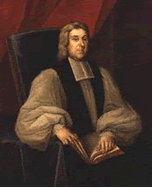
Tenison (1636-1715)
Experimental philosophers, as we have repeatedly stressed in previous posts on this blog, regarded Francis Bacon as their progenitor and promoted observation and experiment and decried speculation and the use of hypotheses and premature system building.
It is of great interest, therefore, to find elements of the method of experimental natural philosophy being applied as early as 1670 in an attack on Thomas Hobbes’ doctrine of the state of nature. The divine Thomas Tenison in his The Creed of Mr Hobbes examined, London, 1670, attacked Hobbes’ doctrine of the state of nature for being the product of Hobbes’ own imagination. Hobbes postulated in his Leviathan (1651) that before the existence of civil society all people were in a state of ‘warre, as is of every man, against every man’’ in which life is ‘solitary, poore, nasty, brutish, and short’. Here is how Tenison attacks him:
It is a very absurd and unsecure course to lay the ground-work of all civil Polity and formed Religion, upon such a supposed state of Nature, as hath no firmer support than the contrivance of your own fancy. (p. 131)
For Tenison, it is one thing for the various competing cosmological hypotheses of Ptolemy, Tycho, Copernicus and Descartes to be entertained, for, even if none of these happens to be true, ‘the interests of Men remain secure’. But it is another thing entirely to found the doctrines of civil, moral and Christian philosophy on ‘Hypotheses, framed by the imagination’. Tenison continues:
such persons who trouble the World with fancied Schemes and Models of Polity, in Oceana’s and Leviathans, ought to have in their Minds an usual saying of the most excellent Lord Bacon concerning a Philosophy advanced upon the History of Nature. That such a work is the World as God made it, and not as Men have made it: for that it hath nothing of Imagination. (pp. 131–2)
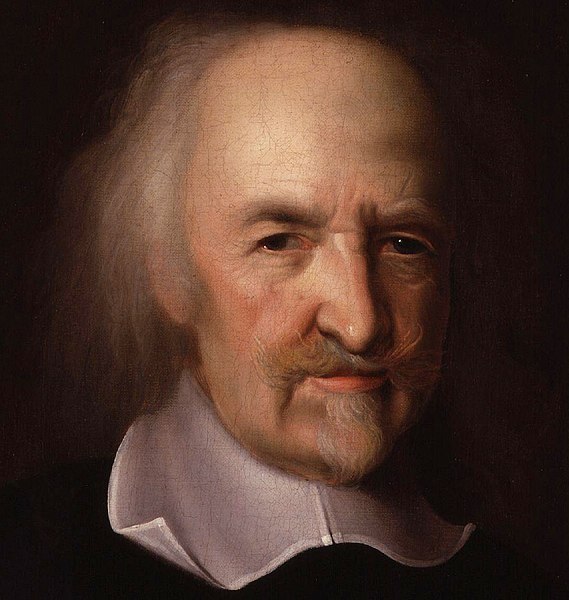
Hobbes (1588-1679)
Note the appeal to Bacon, the reference to natural history and the criticism of philosophy based upon fancies. (Note too the reference to James Harrington’s The Commonwealth of Oceana, 1656.) And yet Tenison does not appeal to observation and experiment because Hobbes’ doctrine as he conceives it is about a past state in human history. Instead he believes that civil philosophy should use ‘reason assisted with Memory touching the passed state of the World’ (p. 131).
What I would like to know is whether this the first use of aspects of the method of experimental philosophy to critique political philosophy?
Electricity: A Speculative Newtonian Experimental Science?
Kirsten Walsh writes…
In his book, Franklin and Newton, I. Bernard Cohen described Franklin’s work on electricity as an example of “Speculative Newtonian Experimental Science”. The central thesis of our project is that the most common and the most important distinction in early modern philosophy is that between Experimental and Speculative Philosophy. So ‘speculative experimental science’ sounds like a contradiction in terms. Today, I’ll consider whether this label is appropriate.
Cohen describes electricity as a Newtonian science that only took off after Newton’s death. While Newton was fascinated with electrical phenomena, he, like his contemporaries, didn’t really understand it. However, his discussions of electricity, especially the queries of the Opticks, provided a useful starting point for Franklin’s electrical research. So we can see why Cohen wants to call Franklin’s electrical research a ‘Newtonian science’.
Newton’s discussions of electrical phenomena are always found in speculative contexts, but they usually have an experimental tone. For example, Newton first mentioned electrical phenomena in 1675 in his paper on his ‘hypothesis of light’ – which is explicitly a speculative paper. He specified six hypotheses concerning light and colour. Hypothesis 1 states that “there is an æthereall Medium much of the same constitution with air, but far rarer, subtiler & more strongly Elastic”. In the discussion, he suggested that everything is made of æther. To support this suggestion, he described an experiment involving glass and little pieces of paper. Using friction, he created static electricity in the glass, and caused the paper to dance around. He concluded that: “At least the electric effluvia seem to instruct us, that there is something of an æthereall Nature condens’d in bodies.”
Moreover, at various times, Newton speculated that electricity could provide an explanation for gravity. Again, he discussed this idea in explicitly speculative contexts, and drew on experiments performed by Francis Hauksbee to support his speculations. For example, in query 31 of the Opticks he asked:
- Have not the small Particles of Bodies certain Powers, Virtues, or Forces, by which they act at a distance, not only upon the Rays of Light for reflecting, refracting, and inflecting them, but also upon one another for producing a great Part of the Phænomena of Nature?
He argued that we have observational and experimental evidence that bodies attract one another by gravity, magnetism and electricity: “and these Instances shew the Tenor and Course of Nature, and make it not improbable but that there may be more attractive Powers than these.”
Despite all this speculating, Newton displayed epistemic caution:
- For we must learn from the Phænomena of Nature what Bodies attract one another, and what are the Laws and Properties of the Attraction, before we enquire the Cause by which the Attraction is perform’d. The Attractions of Gravity, Magnetism, and Electricity, reach to very sensible distances, and so have been observed by vulgar Eyes, and there may be others which reach to so small distances as hitherto escape Observation; and perhaps electrical Attraction may reach to such small distances, even without being excited by Friction.
The final paragraph of the General Scholium of the Principia echoes these ideas:
- A few things could now be added concerning a certain very subtle spirit pervading gross bodies and lying hidden in them; by its force and actions, the particles of bodies attract one another at very small distances and cohere when they become contiguous; and electrical bodies act at greater distances, repelling as well as attracting neighbouring corpuscles… [However,] there is not a sufficient number of experiments to determine and demonstrate accurately the laws governing the actions of this spirit.
From these passages, it’s easy to see why Cohen calls Newton’s electicity ‘speculative experimental science’: Newton’s discussions of electricity are speculative in tone, and yet they can be considered experimental, since they draw on experimental and observational evidence. However, there is a sense in which this label isn’t appropriate. I have previously argued that this kind of speculation has a role within Newton’s experimental philosophy. The epistemic caution displayed by Newton suggests that he is indeed following his methodology and that these discussions of electrical phenomena are taking place within his experimental philosophy. So Newton’s electrical work shouldn’t be taken as an example of ‘speculative philosophy’. Taken in this sense, the label ‘speculative experimental’ is indeed an oxymoron.
“Empirical Philosophy” before and after Kant
Alberto Vanzo writes…
In the late 1780s, few years after the Critique of Pure Reason was published, Kant’s followers engaged in a debate with German experimental philosophers on whose system was superior. Kant’s disciples and his adversaries published tables detailing the differences and comparative advantages of Kant’s rationalism (as it was then classed) over his adversaries’ empiricism, or vice versa. An example is the page of an article by Christian Gottlieb Selle, one of Kant’s early critics,
which you can see below.
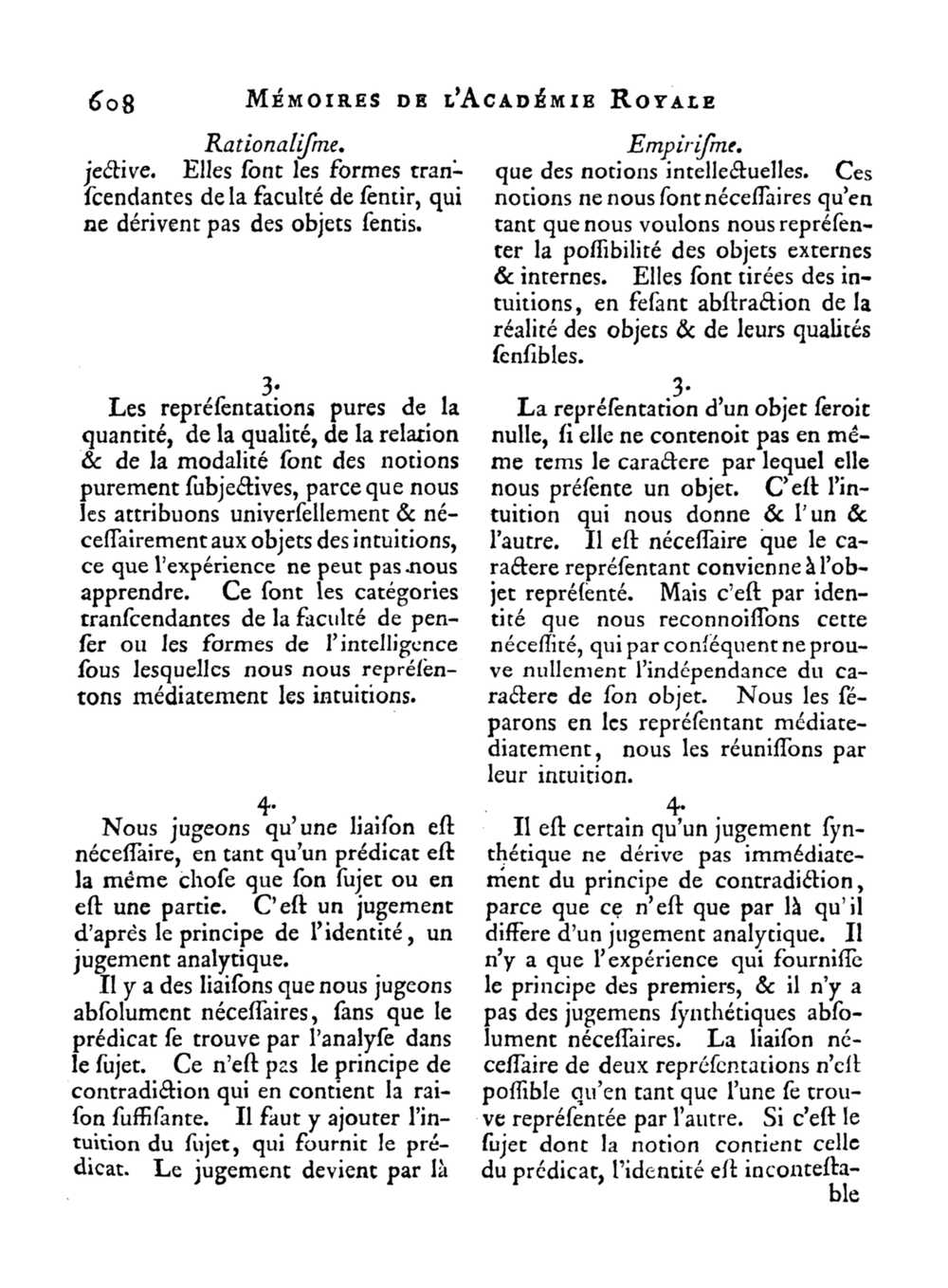
In these debates, “empiricism” and “empirical philosophy” were actors’ categories, that is, categories used to single out certain positions within the then current debates. They were used to identify the positions that we too call empiricist, that is, positions claiming that experience provides the basis for all of our knowledge, knowledge of the world, or substantive knowledge, and that there are no innate ideas or substantive a priori principles.
However, the expressions “empirical philosophy” and “empiricism” were in use well before the debates on Kant’s Critique ensued. There are many occurrences these expressions in seventeenth- and eighteenth-century texts. Can we find the now-familiar, standard meanings of “empiricism” in any of them? Let us survey three pre-Kantian uses of “empiricism” or “empirical philosophy”.
Bacon’s empirical philosophers
Francis Bacon famously classes “empirical philosophy” as one of the three kinds false philosophy, alongside the superstitious and sophistic philosophies, in the Novum Organon. However, Bacon’s empirical philosophers are quite different from our familiar empiricists. Bacon identifies empirical philosophers with William Gilbert (the author of De magnete), “the chymists and the whole pack of mechanics”. According to Bacon, these are not empirical philosophers because they reject innate ideas or defend the empirical origins of our knowledge, but because derived “experiments from experiments”, without managing to “convert and digest” them properly so as to develop true theories on their basis (Novum Organon, I, 95). This characterization hardly maps onto our familiar notion of empiricism.
Priestley’s Philosophical Empiricism
Joseph Priestley wrote a pamphlet entitled Philosophical Empiricism. Commenting on the natural-philosophical pronouncements of his unnamed opponent, he writes:
- These and suchlike long-exploded, and crude notions (so many of which I believe were never thrown together into the same compass since the age of Aristotle or Cartesius) are delivered in a manner and phrase so quaint, and a tone so solemn and authoritative, as gives me an idea that I cannot express otherwise than by the term Philosophical Empiricism.
Here, “empiricism” is used to highlight the crudeness of the opponent’s notions. “Philosophical” may allude, somewhat
ironically, to the solemn tone with which they were presented. This is hardly the sense in which Locke, Hume, or Priestley himself would be later called empiricists.
Adam, the Patriarchs, and Empirical Philosophy
If we turn to German texts, we can find yet another use of “empirical philosophy”. Historians of philosophy, like Heumann and Brucker, were embarrassed as to how they should categorize the wisdom of Jewish Patriarchs and early Greek sages. Reports of their deeds, myths, and ancient rules of political prudence show that they made use of their God-given disposition to philosophize. However, it would seem wrong to put their wisdom on a par with the more recognizably philosophical reflections of Socrates or the Pre-Socratics. German historians found a compromise by classing the reflections of the Patriarchs and early Greek thinkers as forms of empirical philosophy, as opposed to scientific, demonstrative philosophical systems which alone are philosophy in a narrow, proper sense.
The “empirical philosophy” of the Patriarchs, just like Bacon’s “empirical philosophers” and Priestley’s “philosophical empiricism”, has little to do with the current notion of philosophical empiricism. This suggests that that notion saw the light only in late eighteenth-century Germany. Or did I miss any earlier, pre-Kantian uses of that notion? If you have any
suggestions, I would love to hear them. Please leave them in the comments or get in touch.
Feijoo and his ‘Magisterio de la experiencia’ (lessons of experience)
Juan Gomez writes…
I have posted on this blog regarding early modern experimental philosophy in Spain (here and here). Contrary to the common opinion that Spain in the seventeenth and eighteenth centuries was a ‘backwards’ nation when compared to France and England, I have pointed out how many Spanish thinkers were aware of and advocated for the application of the ‘new’ science. In today’s post I want to focus on a text by the thinker who is arguably one of the most influential figures in Spanish thought, Benito Jerónimo Feijoo.
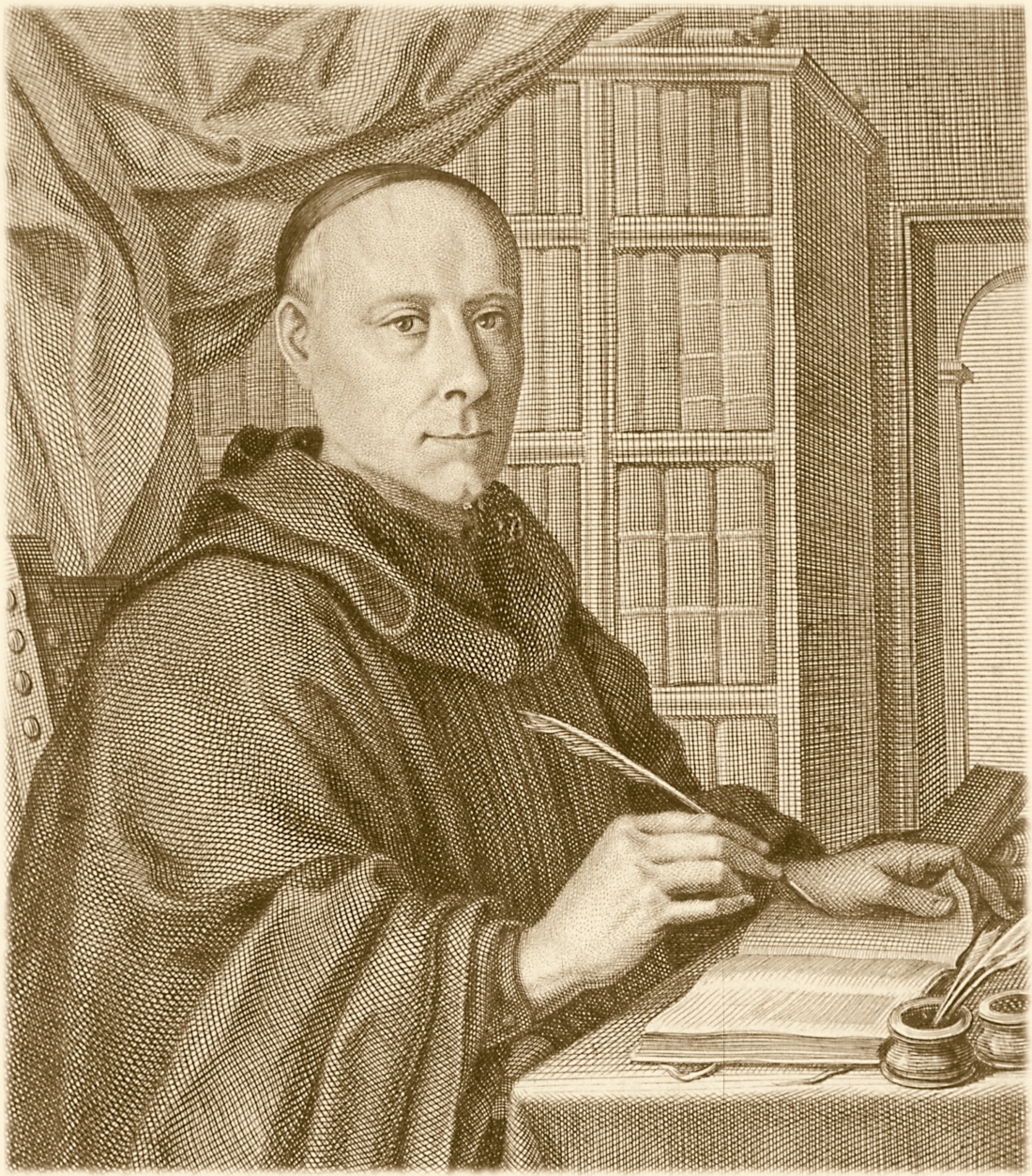
Feijoo was born in 1676 and ordained under the order of Saint Benedict in 1690 after studying in the monastery of San Vicente de Salamanca. He moved to Oviedo in 1709 where he taught and developed his philosophical work. The most influential of his texts was the Teatro Crítico Universal, a nine volume work published between 1726 and 1740. Each of the volumes contains a number of essays on a variety of topics including natural philosophy, history, medicine, women, education, transubstantiation, and religion. I want to focus on a discourse from the fifth volume (1733) titled ‘El gran magisterio de la experiencia’ (The great lessons of experience).
The piece is an essay on the danger of pure speculation (‘reason unaided by experience’) and calls for the emphasis on experience and observation in all our inquiries. Feijoo begins by recounting a fable that was read to him from a French book by a foreign traveller. The story begins with the arrival of two ladies, Solidína and Ideária, in the Kingdom of Cosmósia with the intention of taking dominion over the Kingdom. Solidína was ´wise but simple,’ and her strategy for conquering the empire was the following:
- She went from house to house, making herself acquainted with everyone, teaching with clear and common voices true and useful doctrines… since everywhere she found sensible objects that examined through the ministry of the sense became the books for her lessons. Far from inspiring an indiscreet presumption among her disciples, she told them with humbleness that what she could teach was very little compared to the infinite amount there is to learn, and that to achieve even just an average knowledge of things immense work and discipline was necessary.
Ideária on the other hand was ‘ignorant but charlatan’ and had a very different strategy:
- She tried to establish an absolute despotism over her disciples, expediting an edict so that no one would believe what their eyes saw or what their hands felt… their disciples started to believe many maxims that used to be seen as impediments to knowledge: that truth can only be known through fiction; that there is a way of knowing things that a boy can learn in four days; that there is one man, that is all man (the same goes for all species), so that if one is known, all are known; that non-sensitive and inanimate things have their appetites, ears, and loves no less than sensitive and animate things… that all living beings are composed by a considerable degree of fire, not even excluding fishes, even though they are always under water.
Ideária ruled for a long time until there was a schism among her disciples. A subject named Papyráceo separated himself and introduced new dogmas:
- That all living beings (except men) are nothing but corpses; that even in man only a small part of the body entertains the presence of the soul; that the world is infinitely extended; that the movement of sub-lunar and celestial bodies is perennial; that imaginary space is a true and real body… that in all things imagination must be believed, and never the senses; and the latter deceive in all their representations; that the swan is not white, nor the crow black, nor fire hot, nor snow cold &c.
But fortunately the story does not end with Ideária’s rule. People found out that the maxims both her and Papyráceo defended were at most probable, so they remembered Solidína and brought her back to the city:
- They established her as the magnificent of the teaching rooms, where she teaches with more and more credit each day, contributing immensely to the favour of some great heroes, especially the two princes, Galindo and Anglosio, who are very fond of Solidína.
Feijoo goes on to explain the themes and characters the story alludes to, which are not that difficult to discern. Cosmósia is the world, coming from the Greek cosmos. Solidína is experience, since it ‘explains solidly its maxims with sensible demonstrations.’ Ideária is imagination, since it ‘founds its opinions on the vain representation of its ideas.’ The triumph of this kind of philosophy is represented by Pythagoras, Plato and Aristotle, out of whom came an ‘ideal physics instead of a solid and experimental one.’ The character of Papyráceo alludes to Descartes, since the former comes from the Latin word Papyrus, which is equivalent to the French ‘Carte’. Finally,
- experimental observation, which was only used before by the farmers for the cultivation of the crops, the due care of the fields and the propagation of livestock, was recently brought back pompously by some institutions set up to examine nature in this way. Among them, the most famous being the Royal Academy of the Sciences in Paris and the Royal Society of London chartered under the Monarchs of France and England, respectively, which are alluded by the princes Galindo and Anglosio, derived from the Latin terms for those nations, Gallia and Anglia.
It is clear from this introduction to Feijoo’s essay that he is promoting this picture of the history of philosophy as a very long and detrimental period where the way of doing philosophy without consideration for experiment and observation was superseded by the new method in the seventeenth century, as it is exemplified by the Royal institutions of France and England. And this just sets the scene for the rest of what Feijoo wants to say. In my next post I will explore Feijoo’s more detailed objections to the use of pure speculation and his call for experimental observation as the foundation of all knowledge.
Laura Bassi: An Eighteenth-Century Newtonian
Kirsten Walsh writes…
Laura Bassi (1711-1778) had a remarkable career. In eighteenth-century Italy, it was rare, but not unheard of, for a woman from a wealthy family to receive a higher education, a doctorate, or even a lectureship. But what made Bassi unique was how she used her positions at the University of Bologna and the Academy of Science (which would ordinarily have been symbolic) to contribute to the scientific community of Europe.
Thony Christie over at The Renaissance Mathematicus recently wrote a very good post about Bassi’s life and career, so I will not go into those details here. Instead, today I’m interested in Bassi as an eighteenth-century Newtonian and experimental physicist.
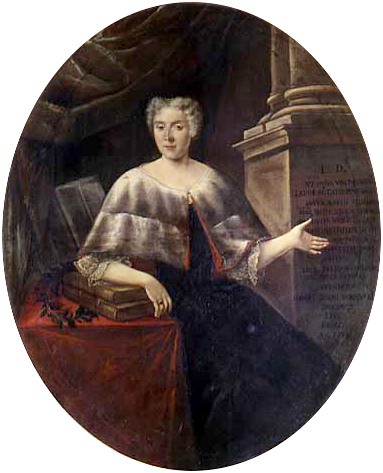 Over the course of her career (roughly 1732 to 1778), Bassi presented papers on mathematics, pneumatics, fluid dynamics, mechanics, optics and electricity. Most of these papers have been lost, but the few surviving papers display Bassi’s talent for mathematics and her commitment to the Newtonian method (as exemplified by Principia). For example, in her paper on differential calculus (“De problemate quodam mechanico”, 1757), Bassi dealt with the problem of how to determine the motion of the centre of mass of two or more bodies moving along any curved paths in a plane. In this paper, she followed the Newtonian method of avoiding metaphysical and empirical assumptions about the nature of matter.
From the 1740s onwards, Bassi and her husband Giuseppe Veratti became very interested in electrical phenomena. Here, we can identify two different Newtonian themes. Firstly, their research appears to have been heavily influenced by the later queries of the Opticks, which attempt to link phenomena such as light, heat, electricity and magnetism with biological phenomena such as muscle movement, growth of plants and phosphorescent fish. Secondly, they supported Franklin’s electrical-fluid theory, which had been systematised in a Newtonian framework by Beccaria.
In the late 1740s, Bassi began teaching privately. Bassi and Veratti had a well-equipped physics laboratory in their home, including an electricity machine. This made it possible for Bassi to teach experimental physics in their home. At the University, the philosophical curriculum was essentially scholastic, and at the Institute of Sciences, the courses on experimental physics had a physiological focus (which reflected the interests of the Bolognese scholars, most of whom had medical degrees). Bassi’s knowledge-base, which by then included advanced mathematics, mechanics, optics, and electricity, made her uniquely qualified to teach a course on Newtonian philosophy and Franklinian electricity. In a letter to Scarselli in 1755 she mentioned the popularity of her classes: “The classes have gathered such momentum that they are now attended by people of considerable education, including foreigners, rather than by youths”.
From this brief survey of Bassi’s work, she appears to have adopted many facets of Newtonianism: she accepted and built on Newton’s rational mechanics, but also followed the leads left by Newton in his optical queries. Indeed, in her own time, Bassi was a well-known Newtonian. Algarotti mentioned her several times (although not by name) in his Sir Isaac Newton’s Philosophy explain’d for the use of the Ladies and explicitly presented her as a Newtonian in ‘Non la lesboa’ – his contribution to the book of poems published in honour of Bassi’s graduation. Also, in 1744 Voltaire implicitly compared Bassi with Newton when he wrote:
- Most Honoured Lady: I would like to visit Bologna so that I might say to my fellow citizens that I have seen Signora Bassi, but, deprived of this honour, I trust that I may with justice cast at your feet this philosophical homage in reverence to the glory of her century and sex. As there is no Bassi in London I should more happily enter your Academy of Bologna than the English one, even though it may have produced a Newton.
But what can we say about Bassi’s ‘experimental physics’? The subject-matter was certainly Newtonian, but what about the methodology? On this blog, we have argued that, from the 1690s onwards, the experimental philosophy was approached in a way that emulated Newton’s mathematical-experimental method. Bassi certainly had the expertise to follow the Newtonian method, which raises the question: Should Bassi’s experimental physics be seen as another facet of her Newtonianism, or should we regard it as a more general interest in the experimental method?
Unfortunately, I haven’t been able to find the evidence to answer this question. I’m not even sure if Bassi engaged in any kind of methodological reflection. Does anyone know how I might find out?
