

Dinosaur Digs: Some History of Marlow Park
Post researched and written by David Murray, Archivist
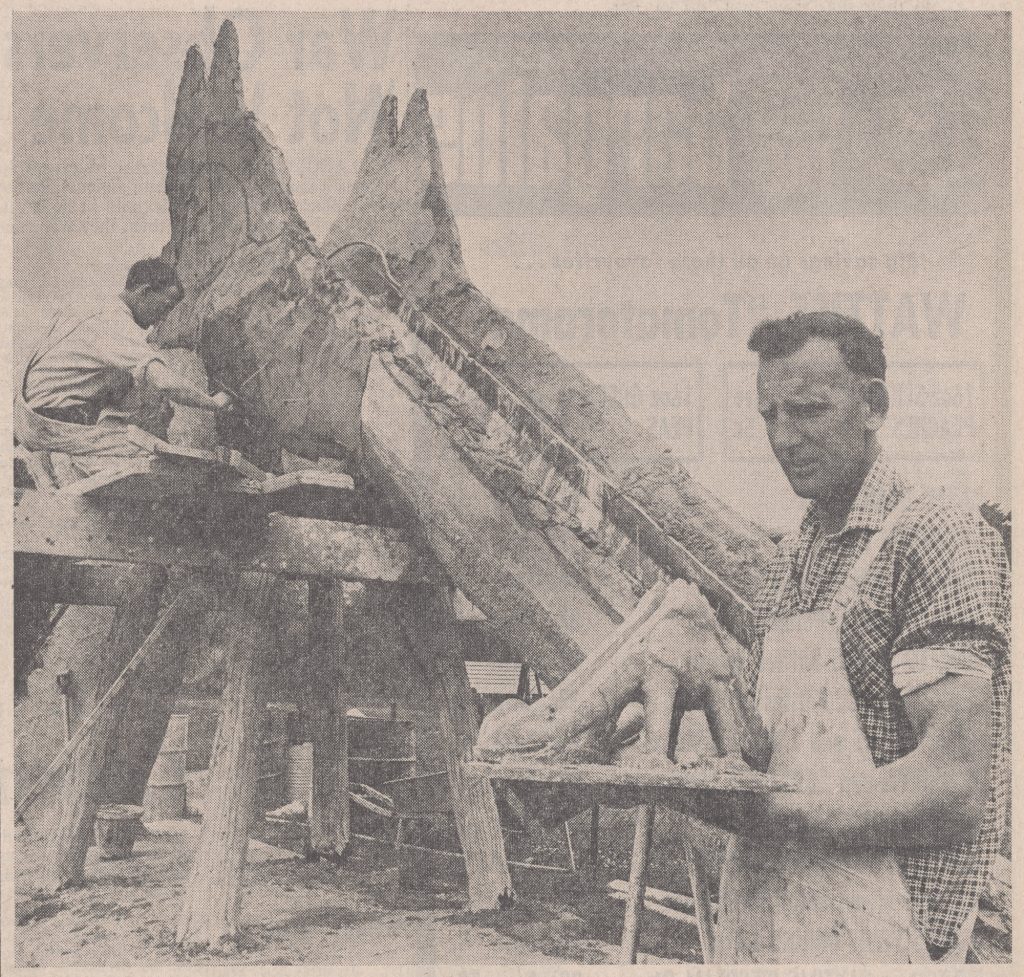
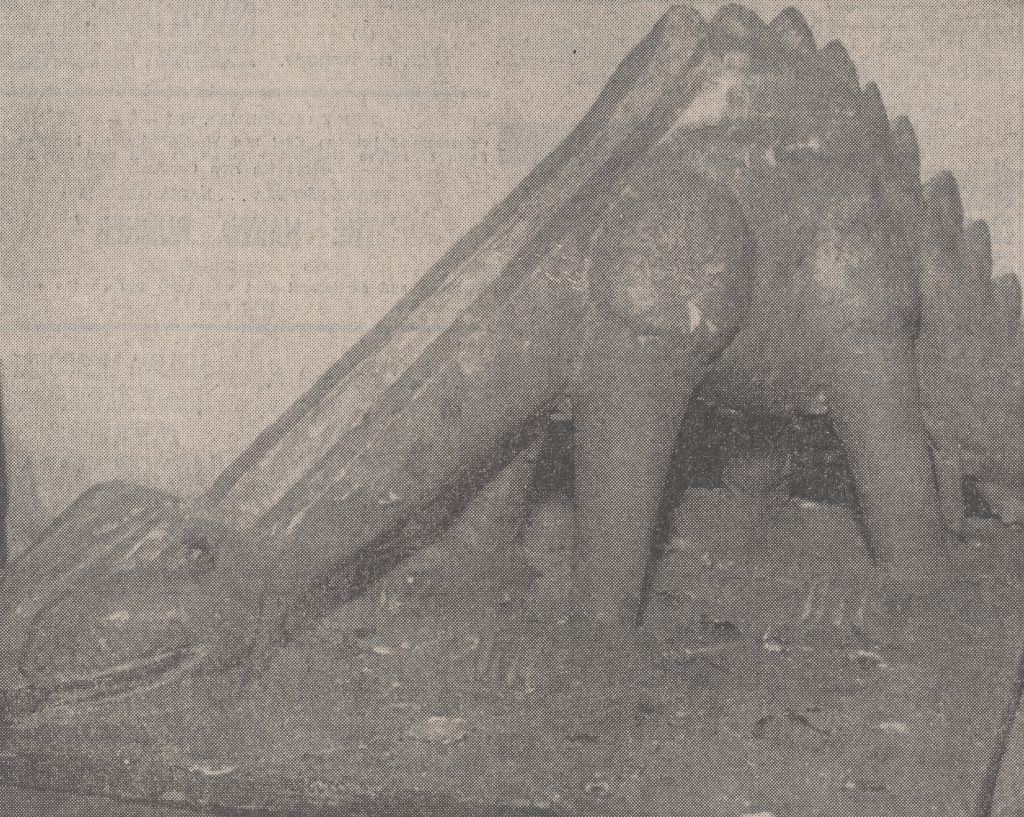
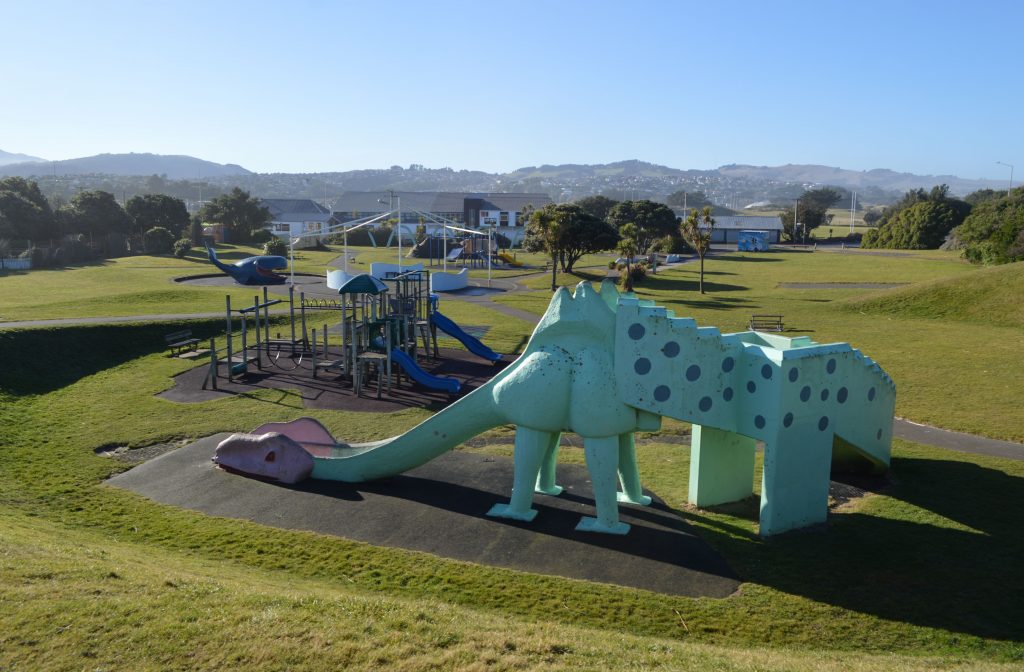
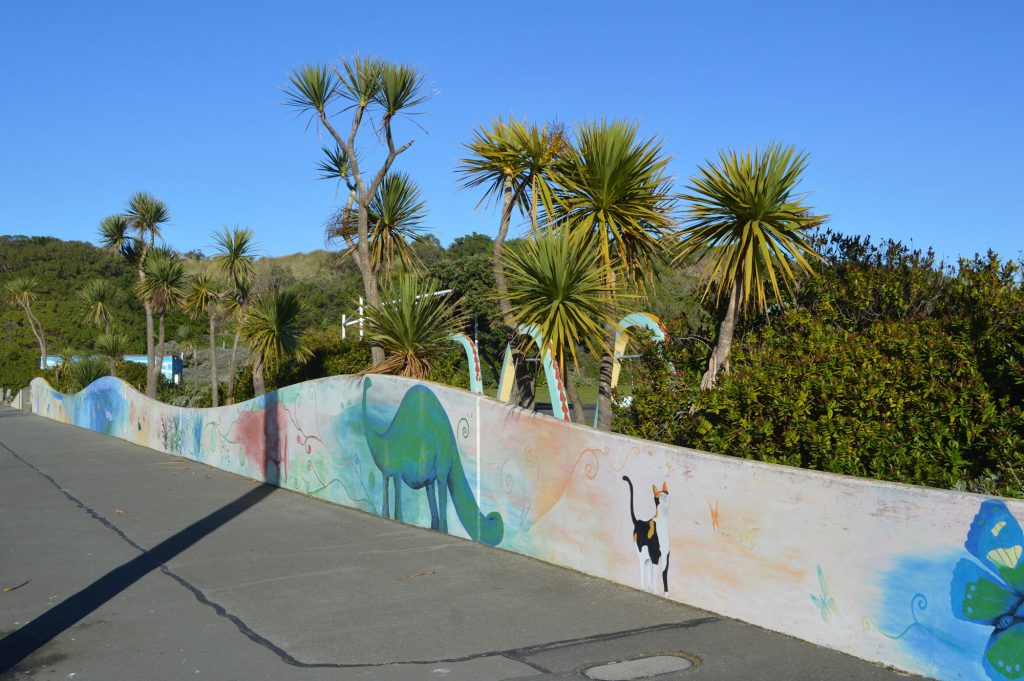
Here’s a picture, found in the Hocken newspaper collections, showing the St Kilda dinosaur slide getting built. The slide has been in the news lately as its future is being deliberated. Its home, Marlow Park Playground (a.k.a. the Dinosaur Park), is expected to be redeveloped next summer. What’s the story behind this intriguing photo, and what’s the history of the slide and its park?
Published in the Otago Daily Times on 30 October 1968, the photo caption tells us that the slide, ‘seen being plastered by Mr C. Gough yesterday, will be an added attraction at the St Kilda Playground. Mr A. Pine (foreground) holds up a scale model of the new slide’.
The Hocken Collections include useful resources for tracking people down and it turns out that one of these men. Colin Gough, now lives in Palmerston North. He was happy to chat about his experience working on the slide 58 years ago.
Allan Pine and Colin Gough both worked for the large local contracting company W.L. Tyrie Ltd, known for its expertise in plastering work. Colin was a freezing worker and did plastering work in the off season. When he arrived on the building site, the dinosaur’s welded steel frame and attached slide and ladder were already in place. It has been mentioned elsewhere that the name of local engineers J. & W. Faulkner Ltd could be seen on the steps of the ladder. Allan and Colin did all the plastering work and Allan, known as Piney, was the job foreman. Another older member from Tyrie’s sometimes rolled the mixing cart, and company manger Stan Hodge occasionally checked in on progress.
The skeleton was covered in wire netting, and Allan and Colin applied about four coats of concrete plaster over the course of two or three weeks. The only plan they had was the model, so they had artistic licence with some of the detailing. Allan modelled the head and feet, completing them after Colin left the job. The slide was in use by the first week of December 1968, when a photograph in the Evening Star showed children from Musselburgh School playing on it.
Colin’s own children later played on the slide, and it was nice to be able to say ‘Dad built it’. He later went into management in the meat industry, and this took him away from Dunedin after the Burnside works closed. On a return visit some years ago he saw that a new staircase had replaced the original tail with ladder. This staircase was built in late 2001.
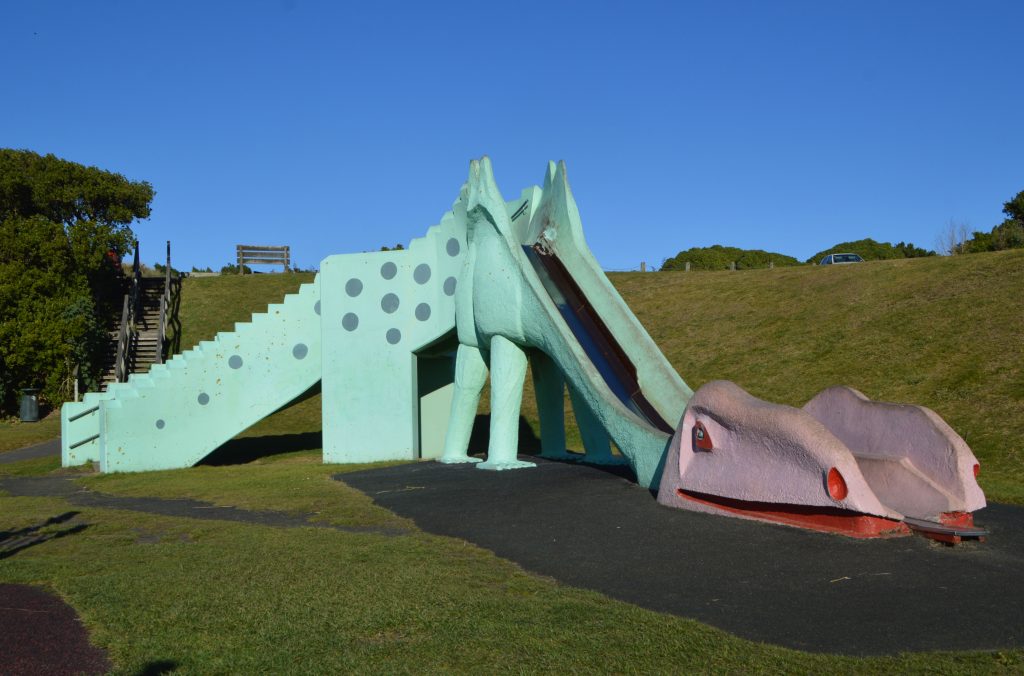
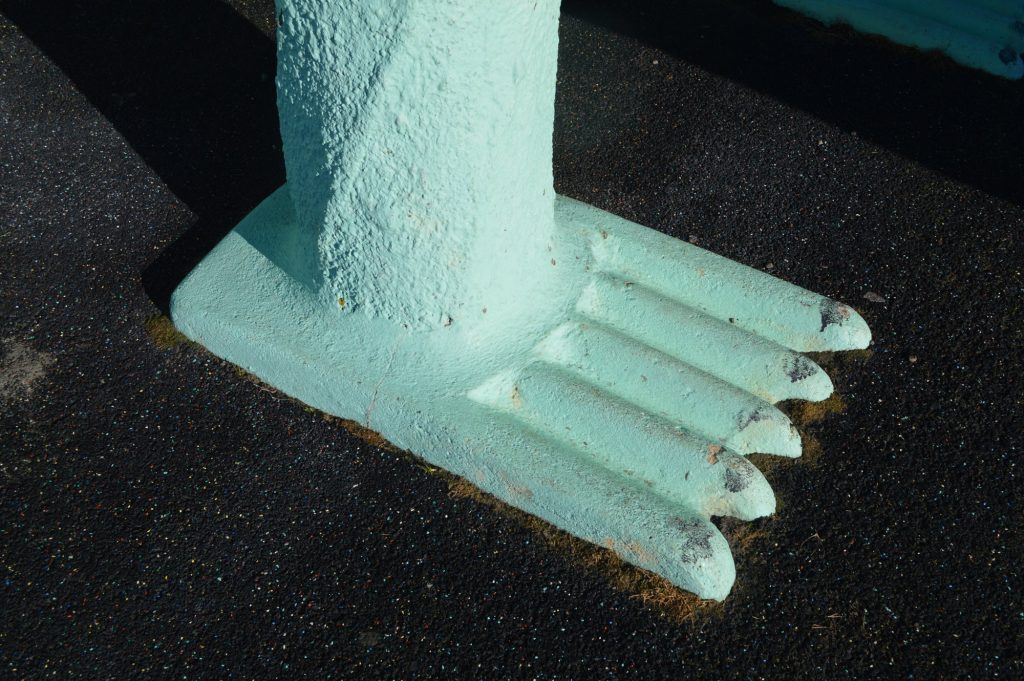
It’s years since he saw it, but Colin says although he doesn’t know its current condition it would be ‘a shame to bowl it over at this stage’. He’s glad his work has stood the test of time for so long, and for the pleasure it has given generations of children.
A delve into more history of the park reveals it has had playground equipment for nearly 100 years.
From 1892 to 1989, the site was administered by the Ocean Beach Domain Board. In 1932, the large reserve which incorporated the playground site was named Kettle Park, after the surveyor Charles Kettle.
In 1929, the St Kilda Beach Improvement Society developed the first playground. In February that year they opened a pavilion designed by architect Leslie Coombs. This included dressing rooms, a function room, accommodation for the caretaker, and a shop that sold sweets and soft drinks.
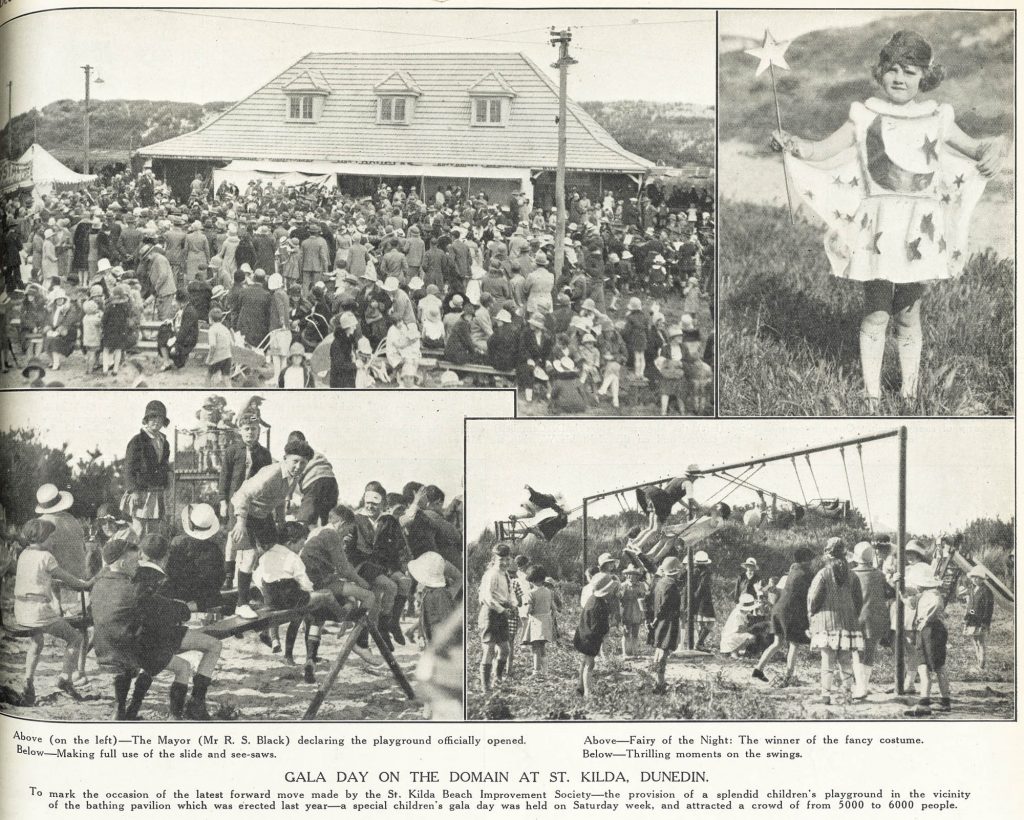
The playground opened in November 1929, with swings, seesaws, and other equipment manufactured by A. & T. Burt and assembled by volunteers. Between 5,000 and 6,000 people turned up to the Children’s Gala Day that marked the occasion. A paddling pool was installed in 1932 and adjoining tennis courts were built in 1935. The St Kilda Beach Carnival was a big attraction in these years. A newspaper report in 1949 noted plans for two new slides and a ‘rock-a-bye’.
The Rotary Club of Dunedin South led a major redevelopment in the 1960s. Ian Farquhar, in the club’s published history, records that Matheson Beaumont, convenor of the club’s Community Service committee, proposed building a new playground. Rotary co-ordinated the project, and other organisations contributed individual set pieces. Russell Buchanan drew up a plan strongly inspired by a visit to Kowhai Park in Whanganui. Harold (Jumbo) Tyrie made plaster models to present to the Domain Board. A circular in the club’s papers, held by the Hocken, states: ‘The playground will be a veritable habitat of prehistoric monsters nonetheless all very playful monsters’.
Kowhai Park’s dinosaur slide was built in 1961, and the park included a whale, mountain, serpent swings, a shoe, and other items. Colin Gough only discovered the Whanganui dinosaur after he moved to the North Island, but he thought Dunedin’s was the better looker! Another similar slide in the South Island was the Dragon Slide built for Hay’s department store in Christchurch in 1962.
The Domain Board approved the Rotary Club concept and over five years the playground was steadily developed, with most of the set pieces constructed between 1967 and 1970.
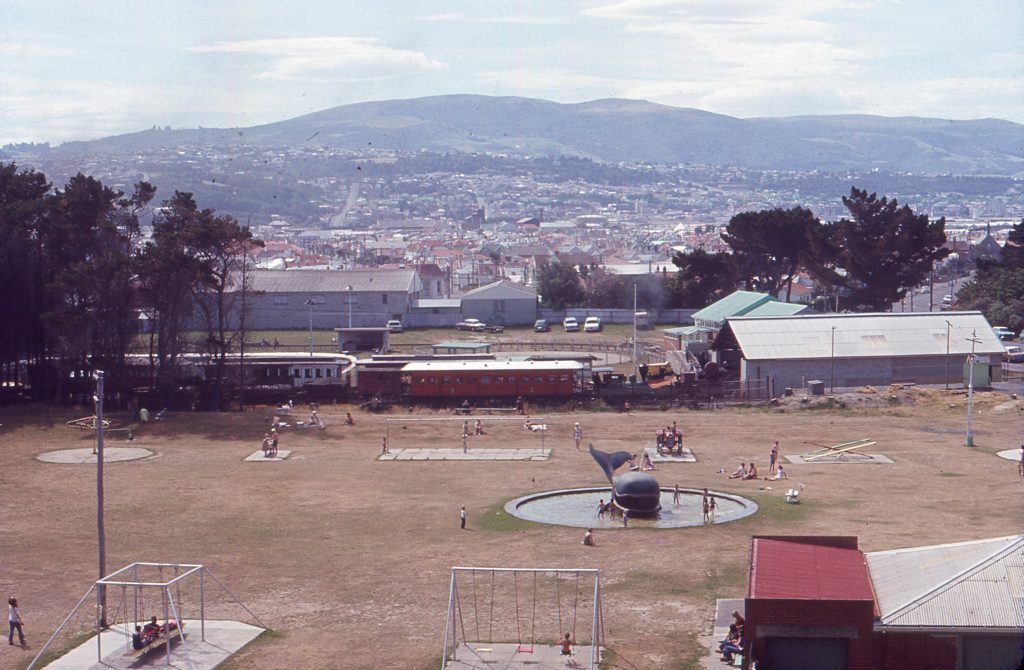
The first new feature was an adventure mound with hollowed out crawl throughs, named Saddle Hill. Rotary member Ian Dunn, who was an architect with Miller White & Dunn, designed it. Stan Hodge was project building supervisor and the hill was completed about July 1967. The dinosaur slide, funded by the Domain Board, followed in October 1968.
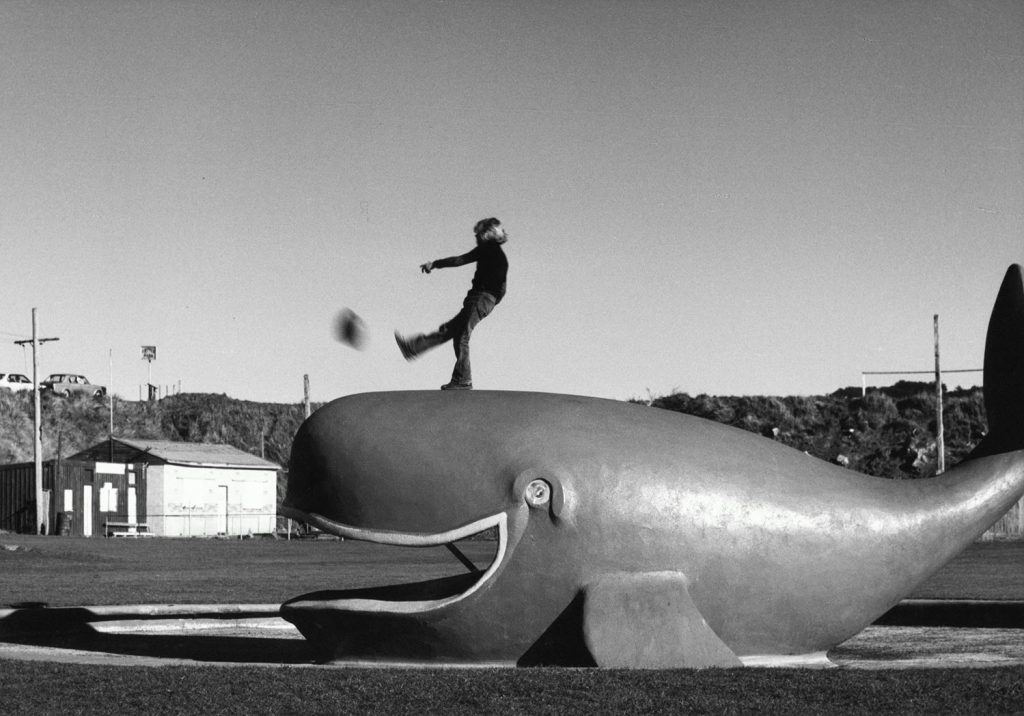
The whale was contributed by Round Table Dunedin South, which ran a drive selling shoelaces to help pay for it. Peter Souter, of Souter Displays, began construction of the whale frame in a former funeral home, we think Hope & Sons, in July 1969. It was made from steel with welded joints, and club members helped during working bees. It was moved to the playground and plastered by a private plasterer over several weeks between April and May 1970. A ‘Moby Dick Night’ social marked its completion on 23 May, although it wasn’t painted until June and the surrounding paddling pool was only completed after the installation of a filtration system about July 1971. That same month, Round Table installed an old tractor as a piece of play equipment.
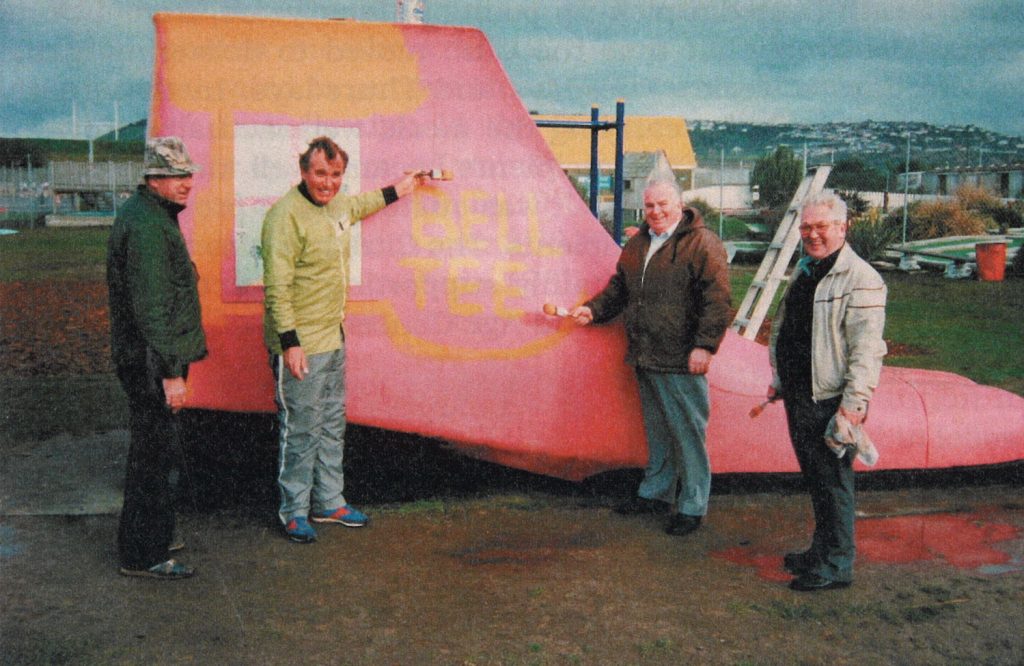
The Mother Hubbard shoe slide is a popular piece, the provenance of which has proved more elusive. Rotary provided the sea serpent swings, ready in December 1970. Another skilled plasterer who may have been involved was Charlie Irvine, another employee of Tyrie’s.
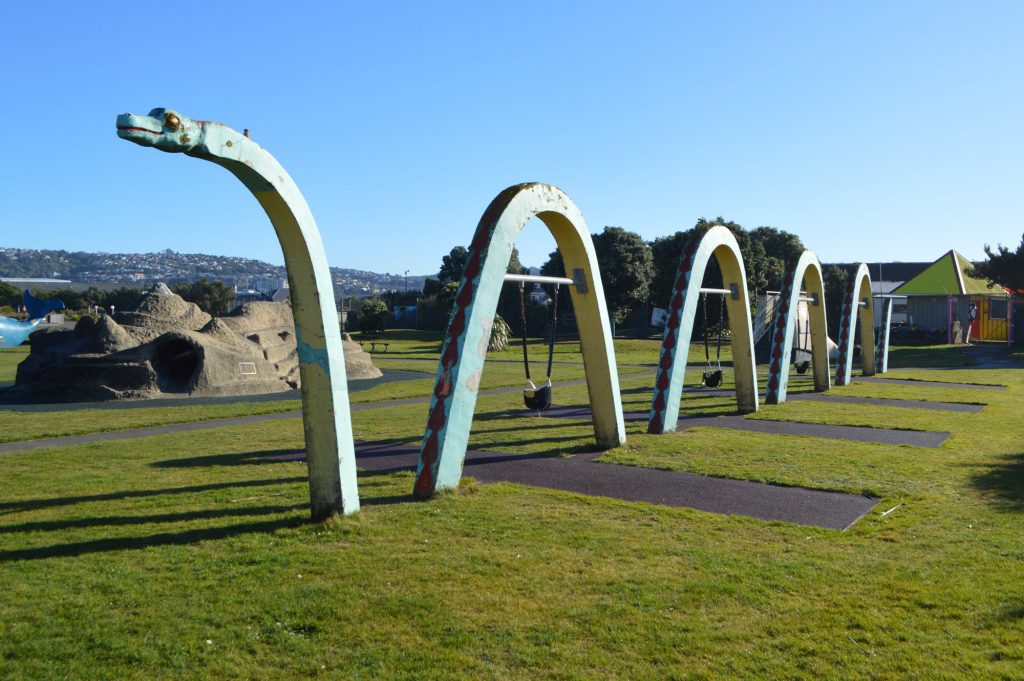
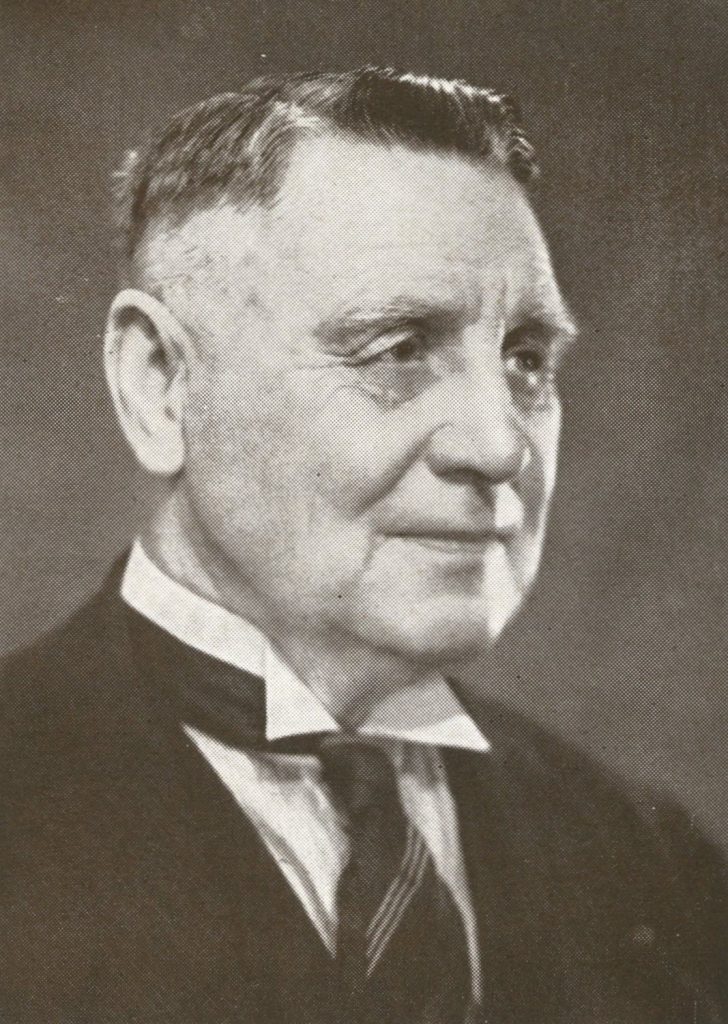
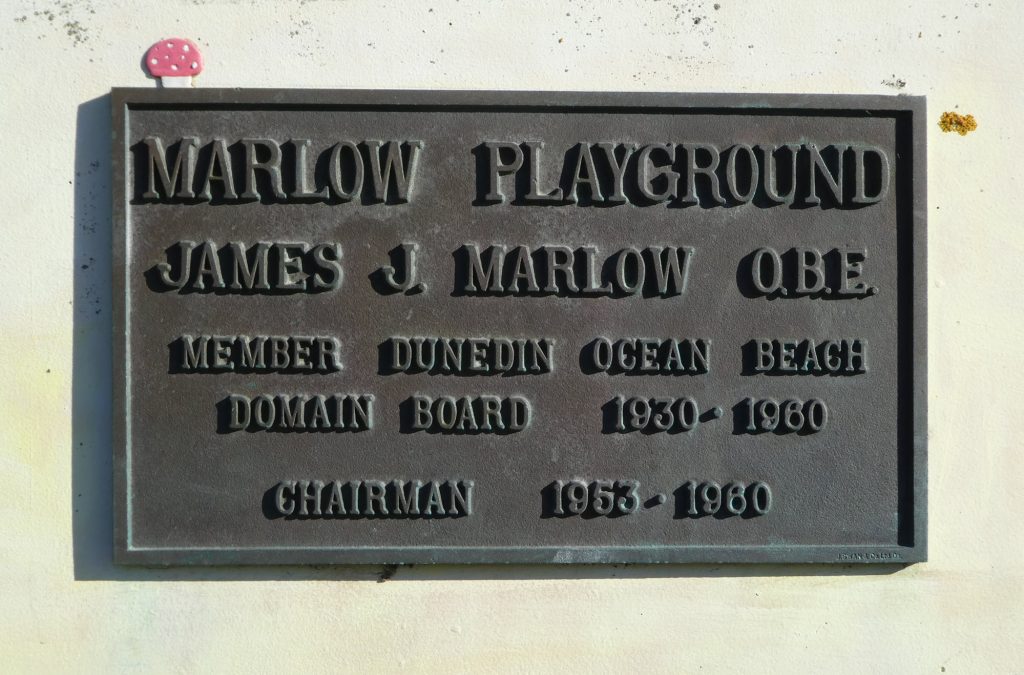
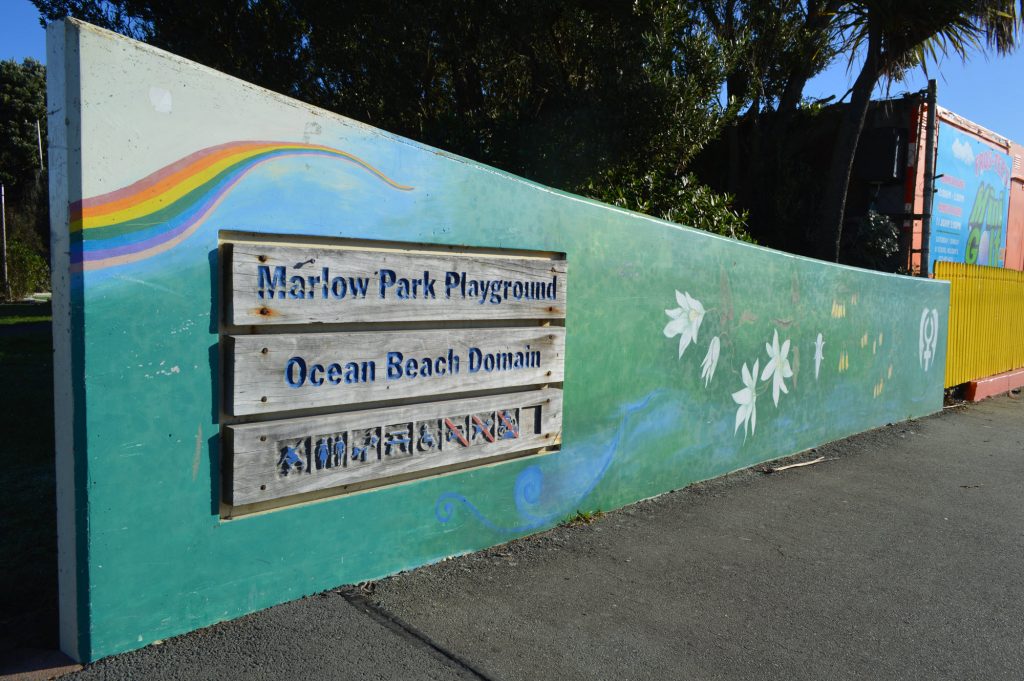
In about 1971 the playground gained the name Marlow Playground (later Marlow Park Playground). A plaque records this was in honour of James John Marlow OBE (1862-1960). ‘JJ’, as he was known, was a member of the Domain Board for nearly 30 years. A furniture maker, he was also a former Mayor of St Kilda, Dunedin City Councillor, and City Deputy Mayor. He had been an early and enthusiastic proponent of the Waipori Power Scheme. Marlow also served as patron of the St Kilda Beach Improvement Society. He was associated with the administration of King Edward Technical College, the JPs Association, various Catholic Church organisations, and was a member of tennis, bowling, and chess clubs. He could be seen out and about riding his bicycle into his late eighties. He was serving as Domain Board chairman at the age of 97, which attracted the attention of Ripley’s Believe It or Not!
The pavilion, which included a shop, was remodelled in 1985 to give it the appearance of Noah’s Ark. It featured a café style restaurant. The last lessees vacated the building in 2009 and, then in poor condition, it was demolished in 2010.
The private enterprise of the Happy Day Corporation (Kevin Crooks and Jim McConnell) saw a mini golf course and bumper boats built next door in 1986.
The Domain Board was disestablished through local government reforms in 1989. As one of its last hurrahs, the Board upgraded the playground, which had significantly deteriorated. Before handing it over to the Dunedin City Council it installed new swings, a play fort, ‘spring animals’ for toddlers, and impact absorbing material. Old equipment removed, some of it dating back to 1929, included a double swing, horse, merry-go-round, and boat-swing frame. Other items were refurbished. A survey that year found the playground to be the city’s most popular play facility.
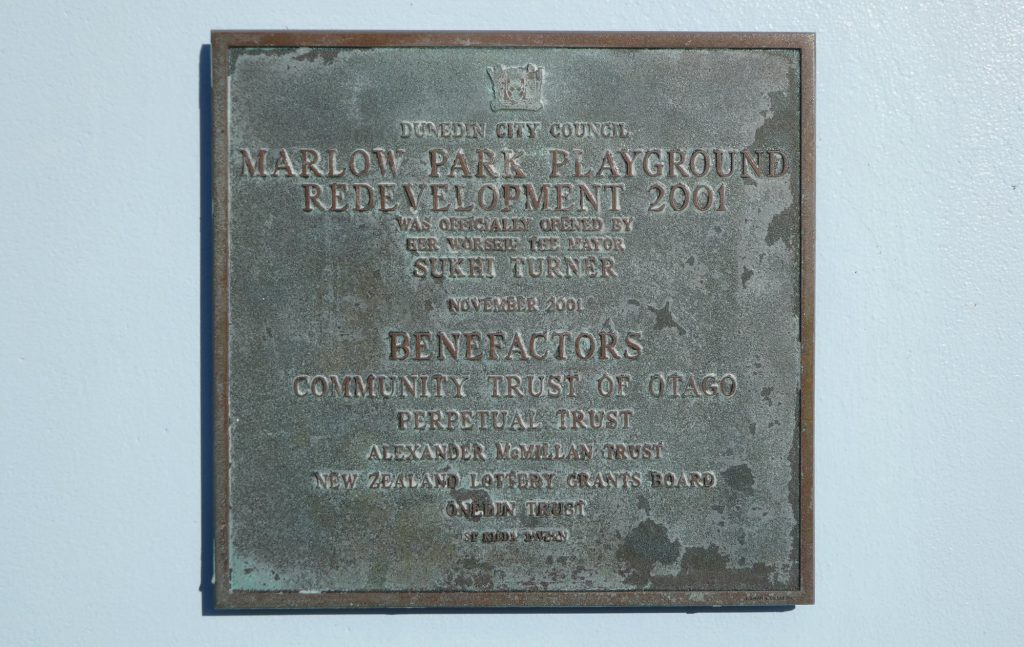
A further upgrade in 2001 saw $400,000 was spent on the park, including landscape design and new playground features. The original tail of the dinosaur slide was removed, and a new staircase tail with platform was built. An adjoining cycle training park was funded and built by Fulton Hogan in 2003, on the site of the old netball courts.
We’d love to hear more history of Marlow Park, if you have some to share. All of this description seems very incomplete without memories of the children, past and present, who have played here.
Acknowledgment:
Thanks to Allied Media for permission to reproduce the Otago Daily Times and Evening Star illustrations.
Archival sources:
‘Annual Reports’ (1957-1973). Rotary Club of Dunedin South records. AG-610-05. Hocken Collections – Uare Taoka o Hākena.
‘Weekly Bulletins’ (1966-1967), Rotary Club of Dunedin South records. AG-610-15. Hocken Collections – Uare Taoka o Hākena.
‘Minute book’ (1969-1972). Round Table Dunedin South records, AG-716/023. Hocken Collections – Uare Taoka o Hākena.
‘Papers relating to the history of the Club’ (c.1962-1986). Round Table Dunedin South records. AG-716/031. Hocken Collections – Uare Taoka o Hākena.
‘Ocean Beach Domain Board Subject File – Beach Pavilion’ (1962-1973). 7/18, Dunedin City Council Archives.
‘Ocean Beach Domain Board Works – Children’s Playground’ (1982-1989). 115/2/1, Dunedin City Council Archives.
Newspaper sources:
Otago Daily Times 4 February 1929 p.5 (‘St Kilda Improvements. Society’s Aim Achieved.’), 25 November 1929 p.7 (‘St Kilda Beach. New children’s playground.’), 5 December 1932 p.2 (paddling pool), 11 November 1949 p.10 (new equipment planned), 1 August 1967 p.12 (Saddle Hill adventure mound), 30 October 1968 p.5 (construction and model photo), 8 April 1970 p.11 (whale), 16 September 1967 p.12 (‘More models planned for park playground’), 22 December 1970 p.5 (sea serpent swings), 14 November 2009 p.4 (‘No covenant for this Ark’), 29 May 1989 p.5 ‘Playground plan approved’), 9 October 1989 (‘Playground survey no surprise to domain board’, 19 August 2003 p.4 (‘Cycle park plans on track’). Evening Star 6 August 1932 p.13 (Kettle Park), 1 July 1935 p.11 (tennis courts), 20 July 1968 p.24 (model), 6 December 1968 p.14 (photograph of children on slide). Dunedin Star Midweek 19 December 1984 p.1 (‘New ark project’). Dunedin Star Weekender 13 August 1989 p.1 (‘Facelift for Marlow Park’). The Star 26 September 2001 p.1 (‘New shapes at playground’.
Other published sources:
Conly, D.G. “J.J.’s” Dunedin: Episodes in the making of James John Marlow O.B.E. Dunedin: New Zealand Tablet Printing and Publishing Co., 1951.
Farquhar, Ian. Rotary in Action: Fifty Years of the Rotary Club of Dunedin South 1957-2007. Dunedin: Rotary Club of Dunedin Sout, 1957, pp.15-16.
Turvey, Anne. ‘Marlow, James John (1862-1960)’ in Southern People: A Dictionary of Otago Southland Biography Dunedin: Longacre, 1998, pp.328-329.
King Edward Technical College Jubilee Booklet. Dunedin: The College, 1939 [J.J. Marlow portrait].
New photographs by David Murray.