At long last, perhaps as a measure of our awareness that we’ve been a bit quiet of late, the Centre for the Book is pleased to announce that the theme of this year’s symposium is “Books and Silence.”
In today’s hurried world, noise is everywhere. Do you want the chance to have silence to contemplate, reflect, and escape, with your best friend: the book?
It is time to pen your paper on “Books and Silence.”
“Books and Silence” might suggest an exploration of deep reading, the value of uninterrupted contemplation in environments of disruption and hyper-connection, or the political or cultural implications of censorship. The theme can cover everything from the quiet sanctuary of traditional libraries to the amplification of marginalized voices. Presentations might consider:
The literary and psychological experience of books and reading
Exploring the lost art of uninterrupted reading and how stepping away from digital distractions restores cognitive focus.
Questioning how audio books do or do not fit within such a paradigm of reading.
Analysing how authors utilize ‘silence’—what characters leave unsaid or what is omitted from the narrative—to build suspense, express complex grief, and reveal hidden truths.
Focusing on silent (wordless or visual) picture books and how they transcend language and cultural barriers to spark communication.
The cultural and social roles of books and libraries
The examination of the traditional no-talk ‘shoosh’ library to the modern hub of books and bean bags and social spaces. The changing nature of these sanctuaries.
Censorship and anti-censorship: the silencing or amplification of ideas and thoughts; the fight against book bans and the suppression of marginalized or controversial ideas.
The philosophy of books and how readers interact with them
Combatting noise, anxiety and constant over-stimulation of the wired life, with mindfulness and quiet engagement with words and ideas.
The value of physical books and un-networked experience
How the physical, deliberate silence around reading cultivates an active resistance against machine culture – social, institutional, political, commercial and ideological.
We would welcome interdisciplinary contributions from e.g., Music, Psychology, Theology, Education, or other disciplines.
Suggestions for panels are also welcome.
Deadline
Please send through your abstract of 250 words by 1 September 2026, by email to: books@otago.ac.nz
All day symposium: Friday 27 November – University of Otago (Arts Building, Burns 2 lecture theatre)
Selection of the papers for the Symposium programme will start after 1 September, and authors will be informed of their successful inclusion mid-September.
The conference will be free to attend, though registration will be required to ensure adequate catering for afternoon tea. The Friday conference presentations will be recorded and made available afterward for viewing by those who register for access, but there will be no livestream or interactive connections on the day of the symposium.
Please contact any of us if you have any further queries:
For many people, the annual 24-hour Regent Theatre book sale, now in its 44th year, is Dunedin’s premier, unmissable literary event.
The Otago Centre for the Book is hosting an informal and convivial occasion, for you to show off and talk about what books of interest — any kind of interest — you acquired at this year’s Regent Theatre Book Sale. (If you bought dozens or 100’s, you might just bring your top 10.)
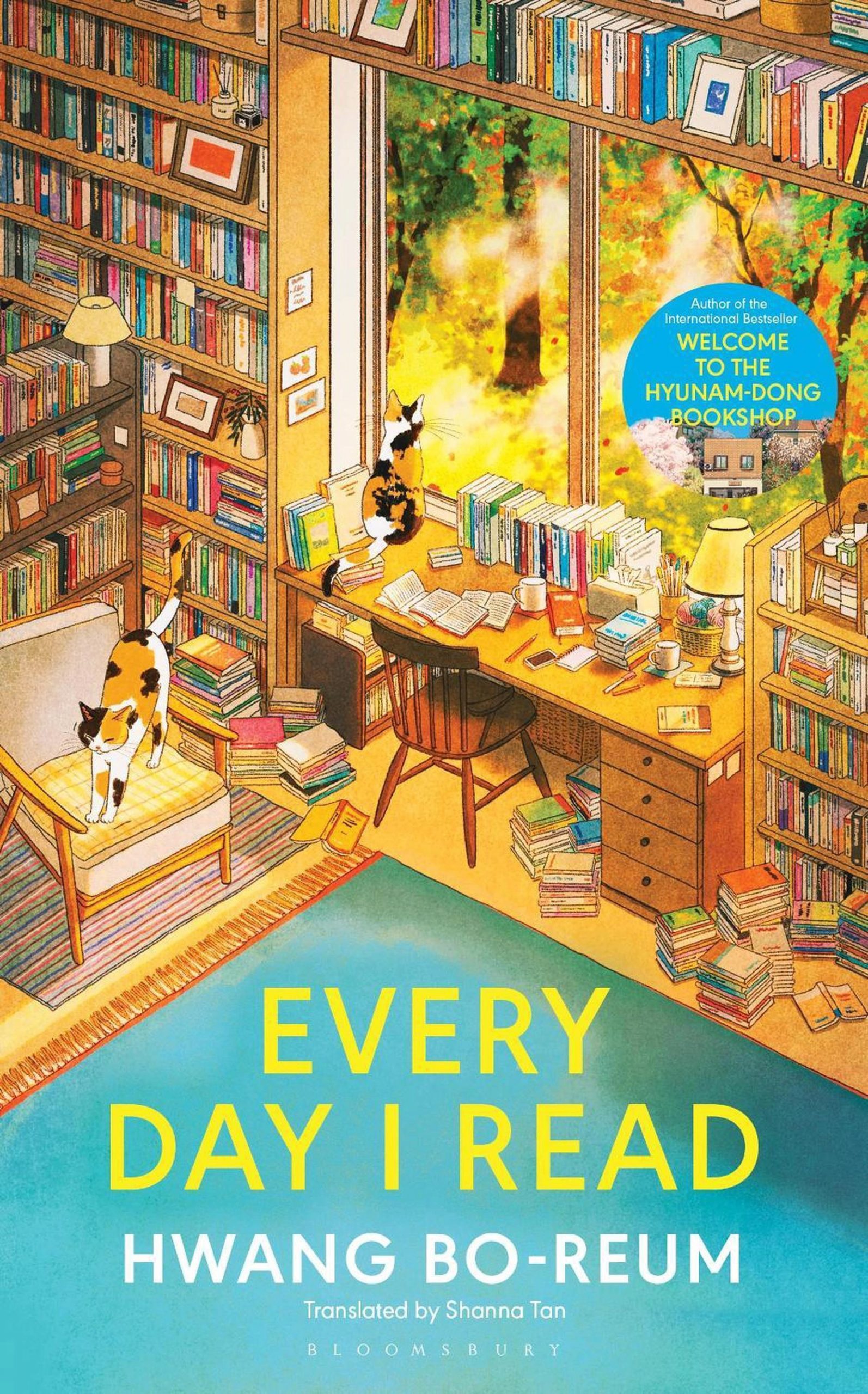
Our very own Paul Tankard has been busy reviewing a collection of essay for the ODT. The book, Every Day I Read by Hwang Bo-Reum, offers an array of angles into how readers engage with books, one of the necessary steps in how books work in the world. Sample Paul’s review and if you then decide to read the book, let us know what you think by posting a comment.
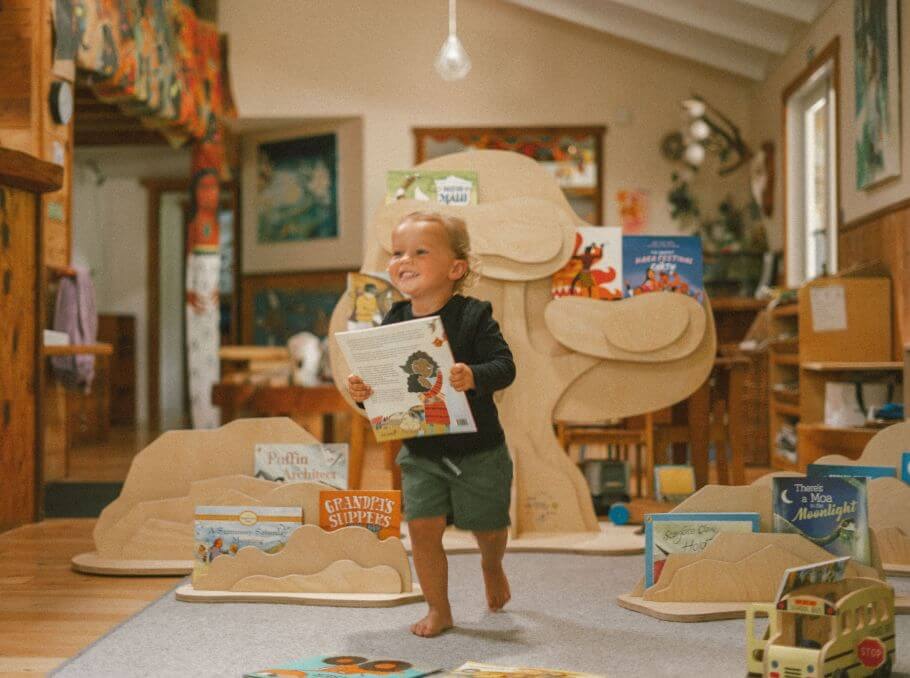
A NZ initiative to improve literacy and life prospects for young children is now available through a charitable program called “Little Libraries” that provides attractive, child-height book stands in the shapes of bushes, trees and rocks. Making the books available at eye level for children, in upright positions that make the different titles easy to see, results in a lot more casual engagement than books in a basket or on a shelf, where the narrow spines do not give a lot away. Little Libraries has recently begun seeking supporters to be “Library Legends” by providing support for a title in 80 early childhood centres at $10/book. To find out more, you can visit their website (www.littlelibraries.co.nz) or download a leaflet. Just another example of the power of books in the world.
The 2026 World Book Day lecture will be one week from today, on Thursday, 5 March. Ian Ferguson will speak at 5:30 pm in Burns 2, with a dinner at Ombrellos to follow. See the Centre’s blog for full details of the lecture and dinner menu information. If you’d like to join us for the meal, please send an email to books@otago.ac.nz with your name and number of places required. Paul Tankard is wrapping up a set of raffles, each with its own background story for some lucky winners at the dinner.
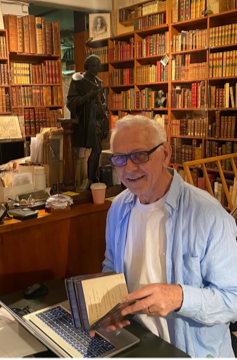
Photo courtesy of Anah Dunsheath’s Rare Books, where Ian occasionally helps out.
The Centre for the Book is delighted to welcome Dr. Ian Ferguson to deliver the 2026 World Book Day Lecture on “Western Eyes on New and Old Worlds.”
Explorers and voyagers, missionaries, traders, soldiers, government officials, settlers, and itinerant visitors all felt the urge to write of their experiences in the wider world. China caught the attention of such authors over four centuries ago, while accounts of New Zealand emerge in the nineteenth century. Although describing two very different countries and societies, these books also reveal intriguing connections.
Amongst the records of the past, books are unique in providing a composite picture of personal connections and developing societies. They track political developments, and provide a platform for theories on immigration, missions, and culture. They record (from their own perspectives) cultural and political clashes with indigenous peoples and competing societies. This lecture examines why early travellers to China and NZ wrote and published, how such works might contribute to our sense of nation, whether we have a canon of works we should preserve, and what effects digitisation has on the reading and availability of these works. These works also document changing printing and publication methods and respond to varying reading habits and desires.
Dr. Ferguson is a retired scientist who collects and writes about rare books on NZ and China, volumes which are important in the understanding of our history and our nationhood. He has also had a long research career as a leading NZ and international plant scientist, and roles as a CRI Chief scientist and Government Science advisor. He is a Fellow of the Royal Society Te Apārangi, and for more than 20 years, a Visiting Professor at Zhejiang University, Hangzhou, China. He is a member of the NZ Order of Merit, and been awarded a National Friendship Award by the Chinese Government.
The lecture will be followed by a dinner at Ombrello’s; menu attached with two price points depending on your appetite. If you wish to join us, please email books@otago.ac.nz with your name and how many seats you wish to reserve. We can accomodate up c 24 people.
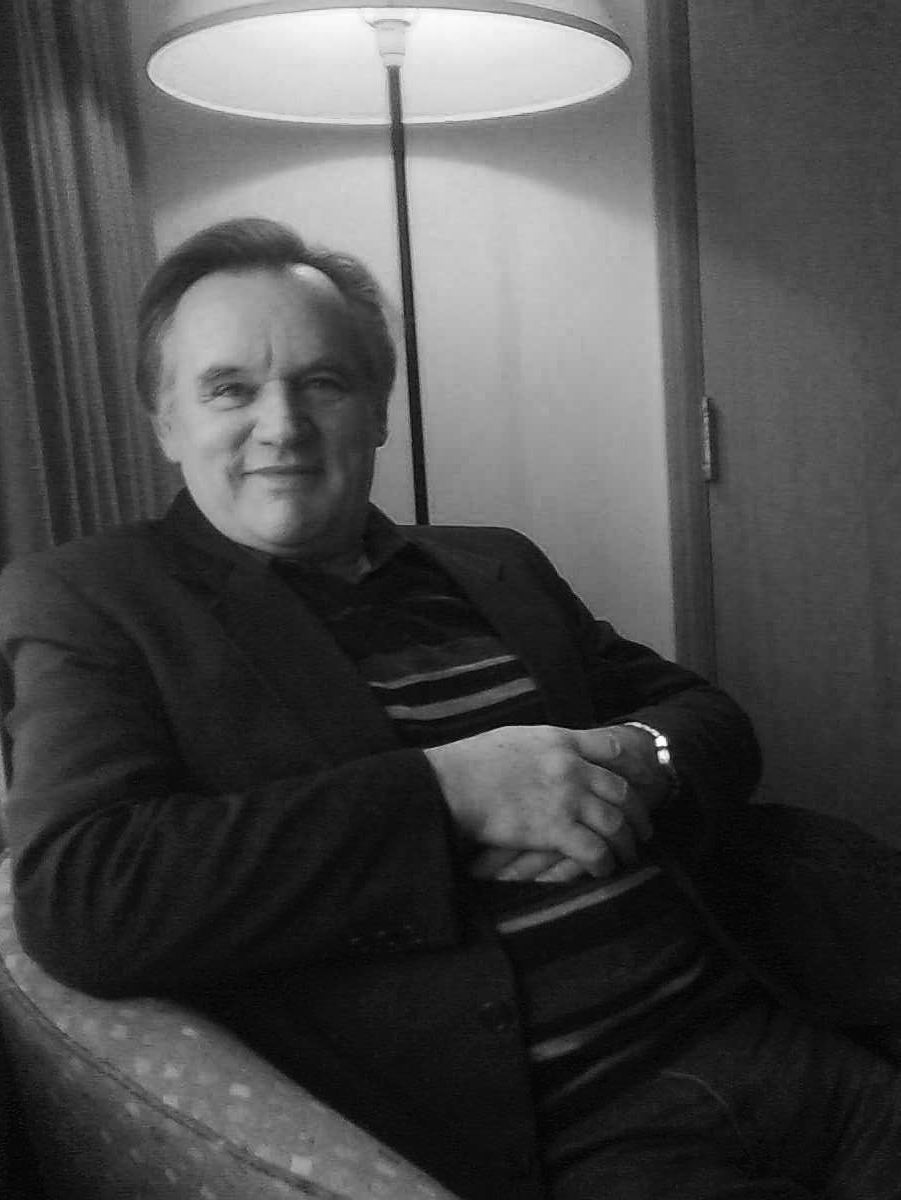
Iain James Sharp (24 April 1953 – 24 January 2026)
Librarian, Poet, Bookman
Never one to gripe or complain, Iain James Sharp battled courageously, quietly and stoically with a cancer, which he succumbed to on 24 January 2026. With Joy, his wife, he had made Nelson his home, enjoying a peaceful life and involving himself in the local Probus group, playing pétanque (of which he was deemed a natural), and visiting local spots such as Rabbit (Moturoa) Island. He was 72.
Glasgow-born, he arrived in New Zealand in 1961, age seven. Academically sharp, he passed through Penrose High to the University of Auckland, reading English. In 1979, he enrolled at library school at Victoria University Wellington and mixed with classmates such as Philip Rainer, former deputy chief librarian at the Alexander Turnbull Library, and Gordon Maitland, former curator of pictorial collections at the Auckland War Memorial Museum Library. After qualifying, he returned to Auckland and spent some years working at the Sylvia Ashton-Warner Library at the Auckland College of Education. He also did some part-time work as a rare books assistant at the Grey Collection, Auckland Public Library. In 1982, he completed a PhD through Auckland University entitled Wit at several weapons: a critical edition (1982), based on the 17th century comedy by the Jacobean playwright and poet Thomas Middleton (1580-1627) and William Rowley (c.1585–1626).
Part-time work sat well with Iain. It enabled him to concentrate on what he loved: words and the craftmanship of them. Iain was a poet, producing poetry volumes such as Why Mammals Shiver (1981), She Is Trying to Kidnap the Blind Person (1985), The Pierrot Variations (1985), and The Singing Harp (2004). Like many in the late 70s and early 80s, he was often seen reading his material at the Globe Tavern, along with contemporaries Dave Mitchell and David Eggleton. On one other such occasion in Christchurch – where he was billed as a comedian – he played the kazoo, which greatly enhanced his poetic pyrotechnics.
He was also a well-respected book reviewer and columnist for numerous New Zealand periodicals: North & South, Metro, Pacific Way, the New Zealand Listener magazine, and the Sunday-Star Times. He had a critical eye and yet adopted a sensible, pragmatic approach to what he was reading. Always fair and remarkably honest, his turns of phrase were often spot-on, many of them revealing a strong sense of humour and wit. In 1999, he was named Reviewer of the Year at the Montana New Zealand Book Awards. His trenchant attack on book reviewing and asking the question of where (and who) the good and honest book reviewers were in New Zealand is an acknowledged classic. This topic was first aired at a Slightly Foxed meeting, a gathering of Auckland book collectors to which he belonged. He gained a solid reputation in literary journalism and in the field as a literary critic.
A lover of words and puzzles, he regularly tackled crossword puzzles, wordle, sudoku. He had an ability to remember weird facts and details on the strangest things. Indeed, his knowledge was encyclopaedic, and he was a very welcome team member on pub quiz nights. One fact needs mention: he was not showy, pompous, or arrogant with his learning. He was modest and quiet to the nth degree, exhibiting a demure reserve. Importantly, he was encouraging to others entering the literary world. New, younger poets, or older writers who wanted feedback on their works were met with the same patience and understanding and fairness.
In the 2000s, Iain was back at the Sir George Grey Special Collections, Auckland City Library, as manuscripts librarian. He loved the work, which gave him time to fossick in the numerous collections and of course help others with their research. Because of his academic standing, he was tasked with completing a treasures book for the Auckland City Libraries: Real Gold (2007). This work gave him further time to discover the range and diversity of the riches in the named collections such as Grey, Shaw, Reed, Mackelvie, and the many other items such as the maps, manuscripts and photographs. It is a work that bristles with his enthusiasm for these materials.
The second and last items that feature in Real Gold concern Charles Heaphy (1820–1881), soldier, painter and colonial surveyor: ‘Plan of the town of Auckland’ (1851) and a pen and washing drawing of ‘Neche Cove, Nengone Loyalty Islands’ (c.1850). Heaphy obviously appealed to Iain’s sensibilities because in 2008 his Heaphy appeared, published by Auckland University Press. It is a superb biography that reflects his scholarship and his usual demand for accuracy in tracking down obscure facts about his subject. It is a very readable book. He must have been pleased with it.
Contemporaries in the world of letters in New Zealand have already remarked on this very sad occasion, the loss of such a good man: clever, witty, unassuming, never loud, and very kind. He was a consummate gentleman. His family will miss him greatly: Joy, his wife; Marion, his sister and her children Kyle and Rhiyen; and Don, Andrew and Tim, to whom Iain was a much-loved step-father. Vale.
Save the date—Thursday 5 March 2026 will be the annual World Book Day Lecture at 5:30 pm, followed by a dinner. More details to follow in the new year.
It’s not too late to decide to join us for the 2025 BSANZ conference here in Dunedin. The full details and programme are available online at bsanz2025.wordpress.com. Or you might just wish to access the recordings afterward–for $25 you can see them all a few weeks after the conference concludes.
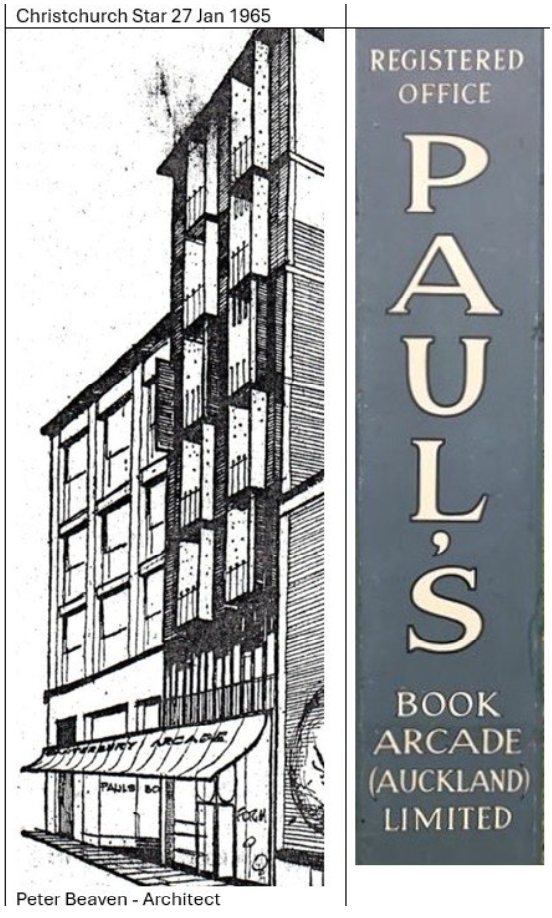
A group of enthusiasts is organising the Paul’s Book Arcade 125th Anniversary on Saturday 7th March 2026. It is a celebration of the iconic Hamilton and Auckland bookshops, William Paul family, and Blackwood & Janet Paul publishing.
The main event from 10am to 4.30pm is for staff, families, customers, friends, published authors and artists, readers, researchers,
historians, architects and anyone with memories or connections.
Venue: The Link Community Centre, St Andrew’s Presbyterian Church
4 Te Aroha St,
Hamilton East (on the corner of River Rd and Te Aroha St).
Pre-paid registrations are required – now open, closing 7 Feb 2026
The cost is $50 per person. Attendance is limited to 100.


 At long last, perhaps as a measure of our awareness that we’ve been a bit quiet of late, the Centre for the Book is pleased to announce that the theme of this year’s symposium is “Books and Silence.”