
A Century of Anzac Avenue and its Trees
Post researched and written by David Murray, Archivist
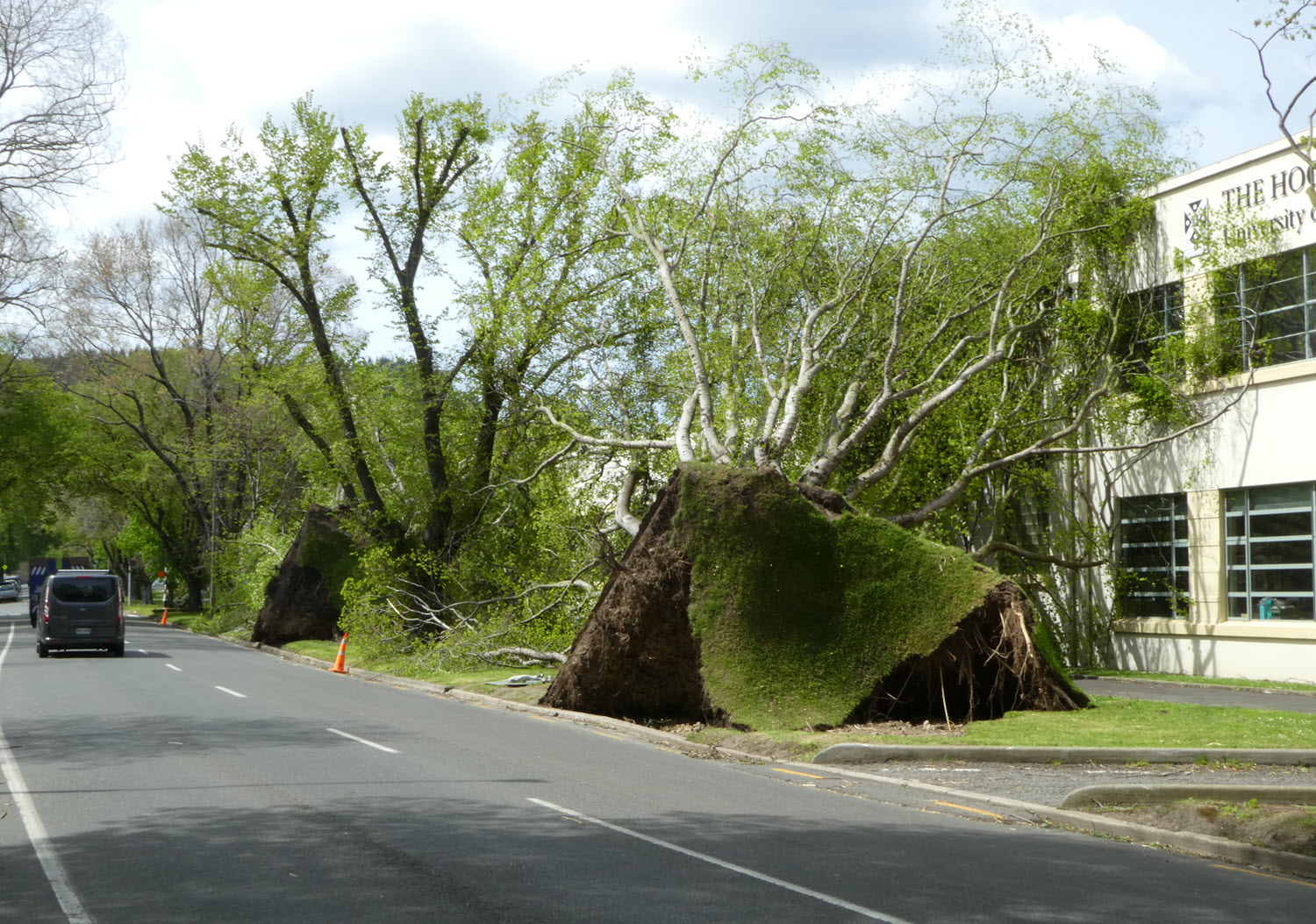
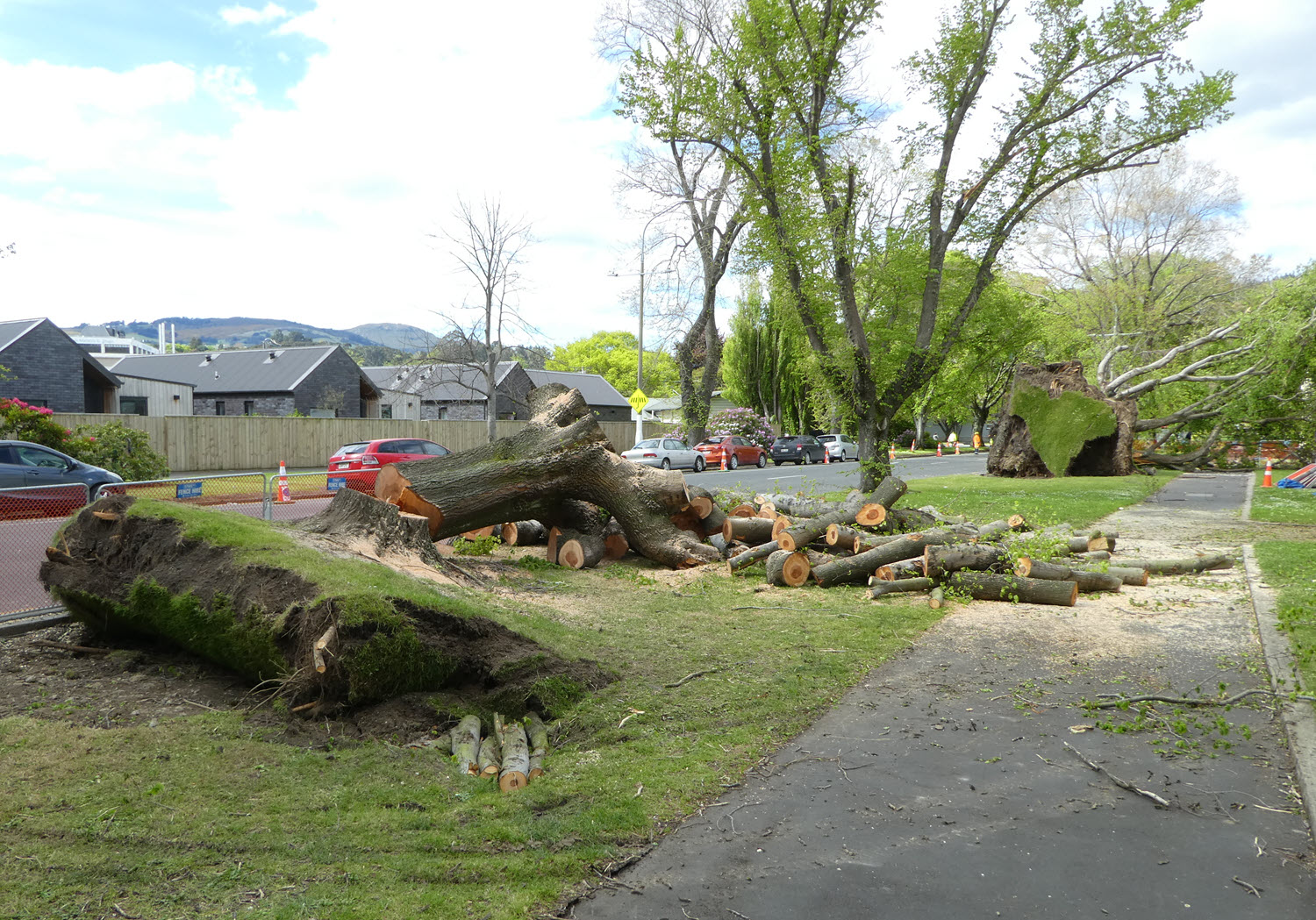
Last month, a wind storm saw the dramatic toppling of two of the big old elm trees next to our building on Anzac Avenue. Fortunately nobody was hurt, and our building was undamaged, but we were sad to lose the trees. It seems timely to look at the history of Anzac Avenue and its trees, especially as the avenue opened one hundred years ago today, on 17 November 1925.
When it opened, Anzac Avenue linked the Dunedin Railway Station with the New Zealand and South Seas Exhibition at the newly reclaimed Lake Logan. The Exhibition combined international trade fair, funfair, and festival on a grand scale. It was the largest event of its kind held in the country up to that time. The site was selected two and a half years before the event and required much preparation.
The reclamation of Lake Logan had been begun by the Otago Harbour Board in the early 1910s. There was some opposition, as it had been a popular and sheltered place for recreational boating. The slow pace of reclamation was accelerated once the Exhibition site was confirmed.
The roadway was planned even before the Exhibition was thought of. Proposals for the lake site had included sports grounds and residential housing. The construction of the road was a condition of the Harbour Board when it agreed to handed over the reserve to the City Council for the Exhibition, and later recreation grounds.
The City raised an £80,000 loan to carry out the road building works, which adjusted for inflation is about $10 million today. This was authorised by a vote from the ratepayers. Work began on 5 January 1925. All-night shifts were put in place to ensure completion in time for the Exhibition. The work was overseen by the City Engineer and carried out by City Corporation staff. Road formation used over 21,000 cubic metres of fill. The work included the purchase and removal of old houses and other buildings at the southern end, and the construction of a concrete bridge over Ōwheo, the Water of Leith. The bridge still stands, although it was extended to double its original length in 1936, when a new channel was built as part of flood protection works.
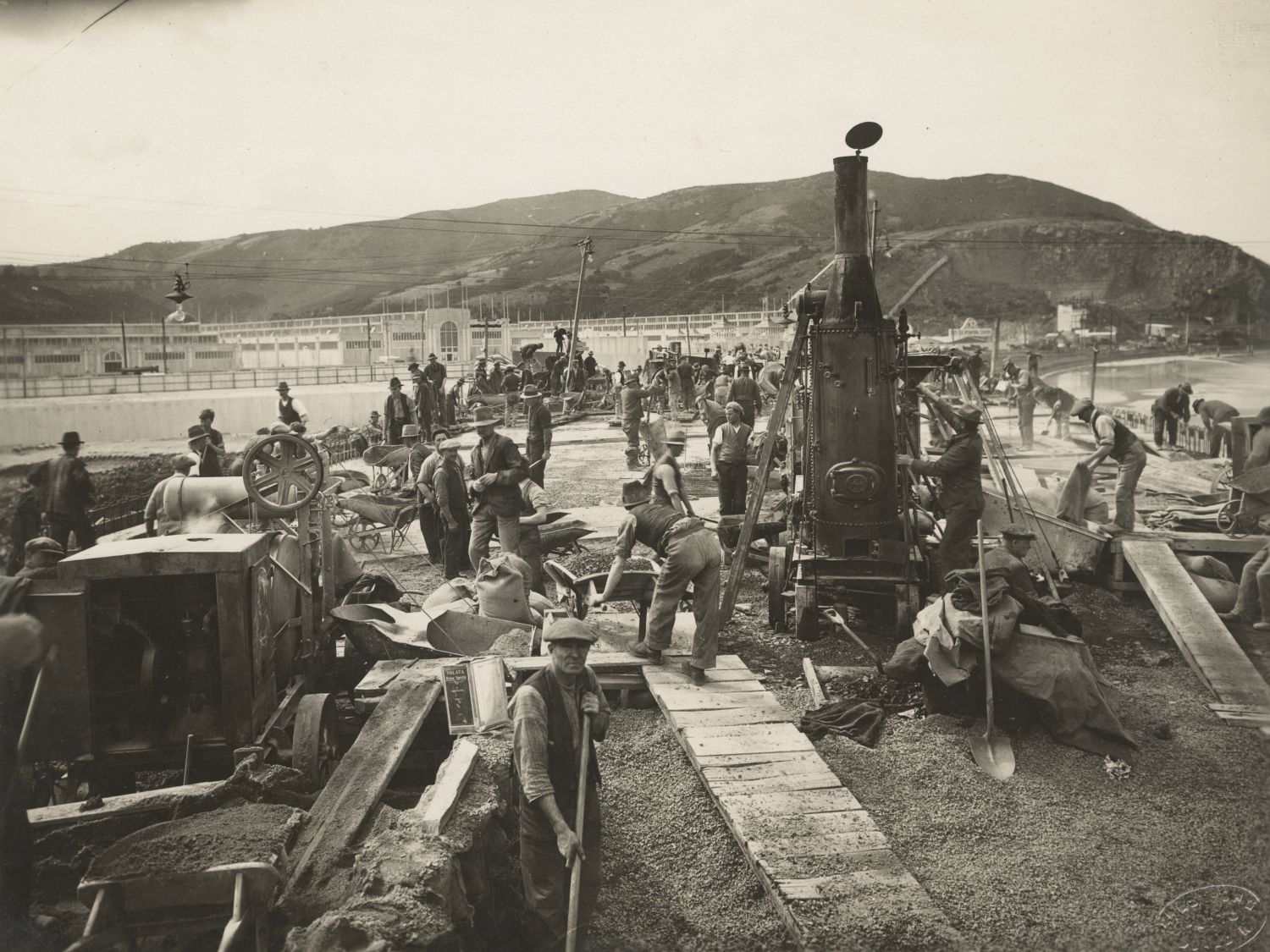
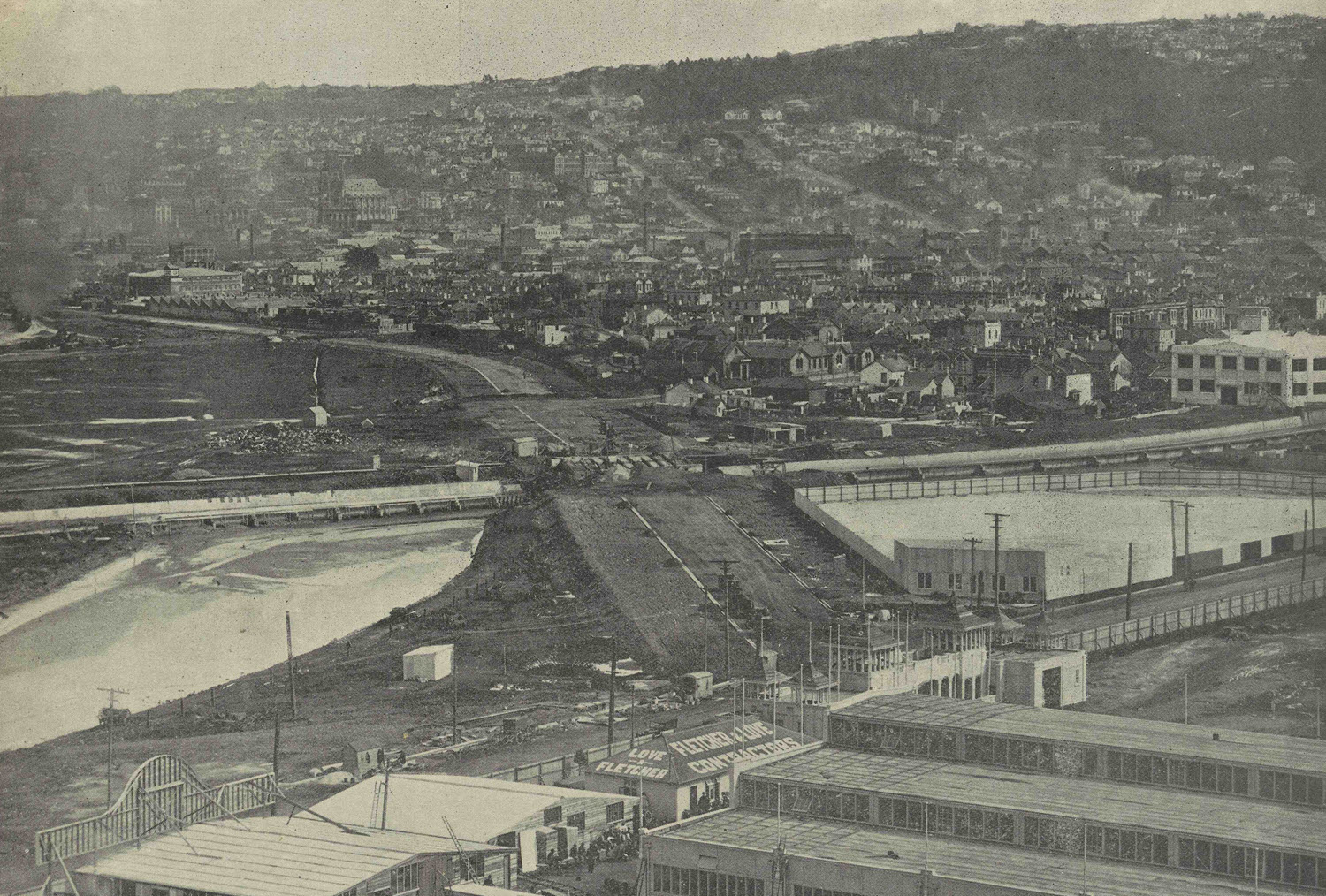
The road was at first referred to as the Exhibition Highway, and this name remained in popular use even after the name Anzac Avenue was officially bestowed by the Dunedin City Council in November 1925. Anzac Square, at the railway station end, had already been named in 1916.
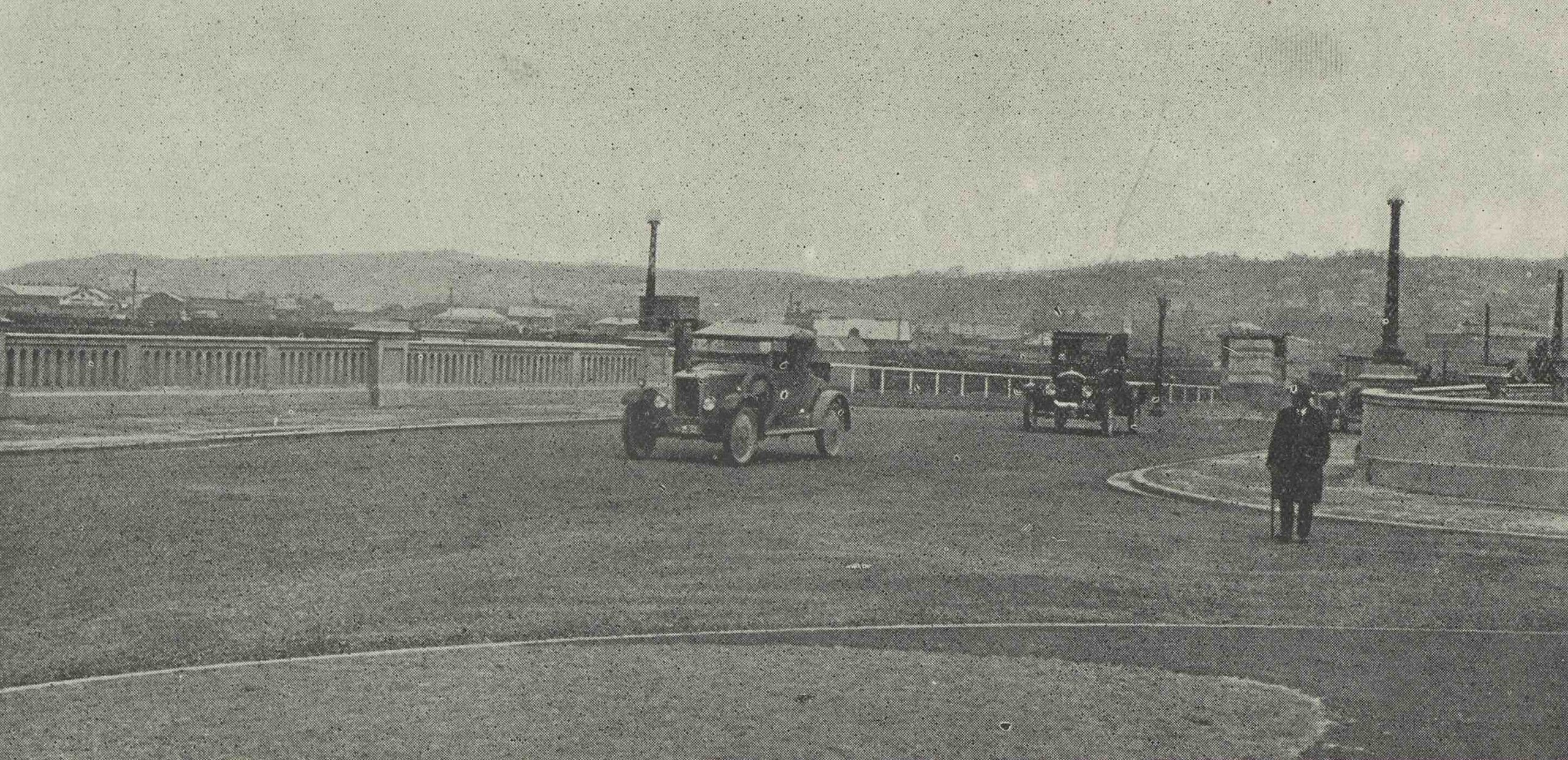
The official opening took place on the same day as the Exhibition itself. Dunedin Mayor Harold Tapley performed the honours and declared the new name. The avenue was described as a ‘memorial’, although unlike the memorial oaks in North Otago, the names of particular soldiers were not associated with particular trees. Tapley said it would be a ‘lasting tribute to the memory of the gallant deeds of our citizen-soldiers who had made the name “Anzac” immortal’. The Evening Star reported that within a few minutes of the mayor’s declaration, ‘motor cars and motor lorries where whizzing by on their busy errands to the Exhibition’.
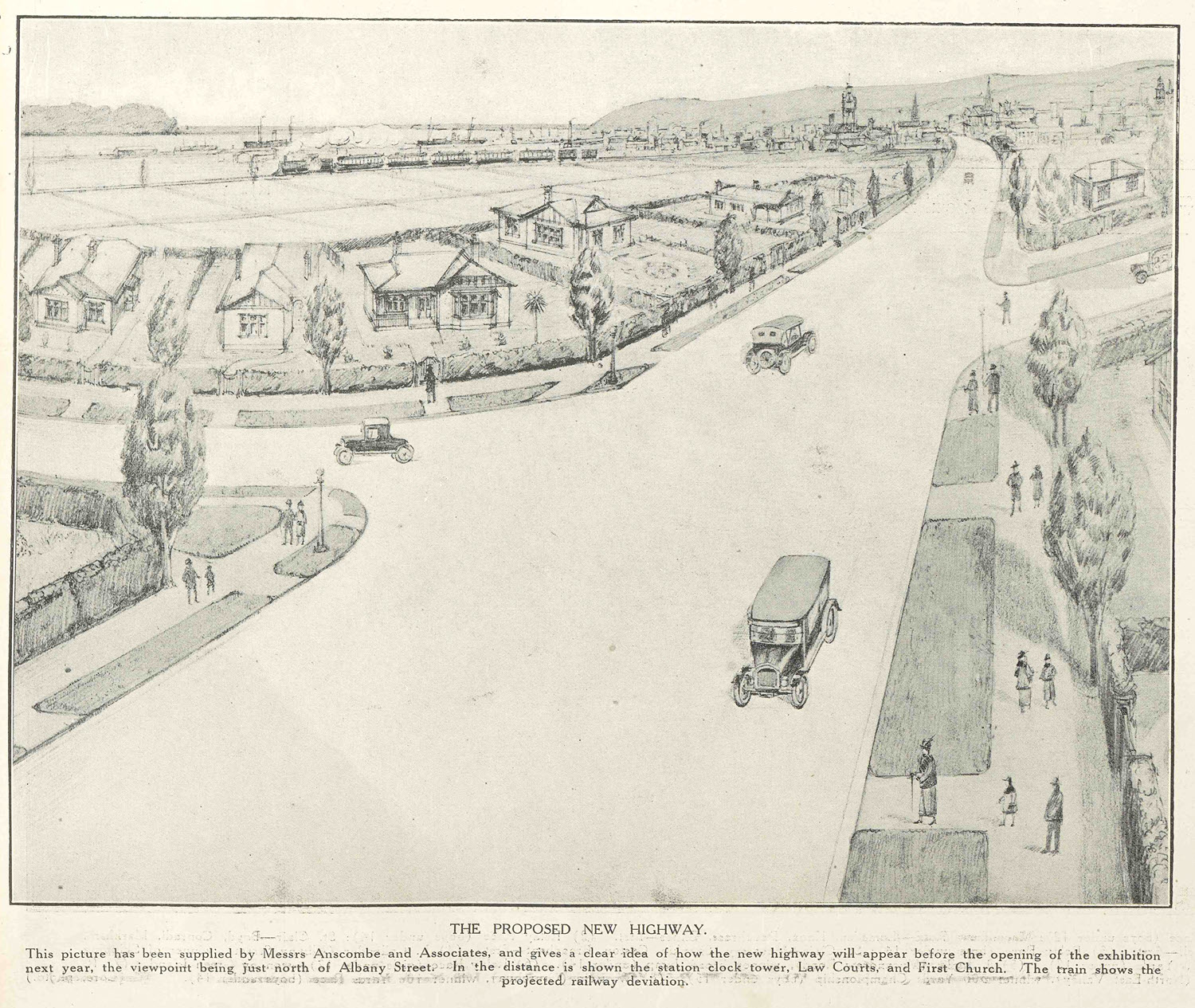
Grass and small elm trees lined the avenue, along with 250 incandescent electric lamps mounted on columns instead of the usual wooden poles. The trees had been planned before any memorial aspect was decided, and can be seen in a 1924 illustration from the office of the Exhibition Architect, Edmund Anscombe.
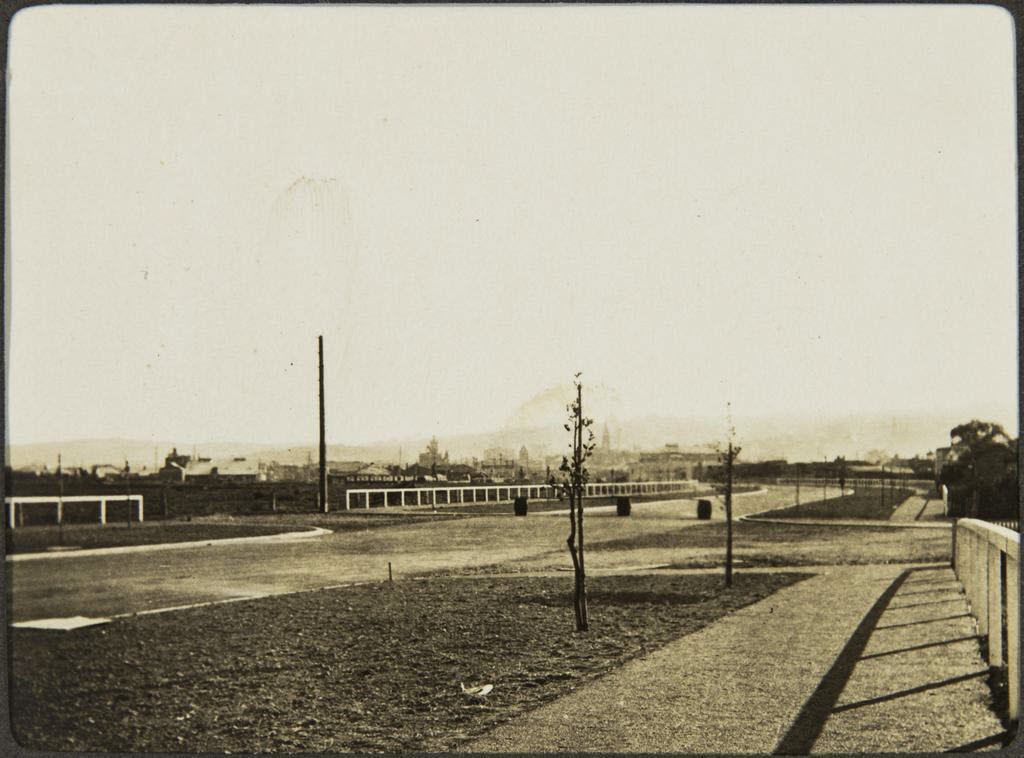
Elms were not the only trees along the street, although it is not clear how many types were close to the carriageway. It was reported in early November 1925 that ‘The poplars, oaks, elders, and elms planted beside the highway are doing very well, and so far not a single one of them has been lost’. Many other trees, both exotic and native, were planted in or near the Exhibition grounds at the same time. As part of the Exhibition works, the Council’s Reserves Department under the direction of Superintendent David Tannock planted approximately 2,500 trees and 120,000 herbaceous and bedding plants.
Curiously, the Exhibition Directors each planted a tree on the Union Street frontage of the Exhibition, and a map was reportedly prepared recording which tree was planted by which councillor.
The Dunedin Amenities Society provided what the Exhibition Official Record describes as ‘groups of deciduous trees along the Exhibition Highway’. The society was responsible for many associated plantings outside the Exhibition grounds, including flower beds at Anzac Square and native beeches along the ground adjacent to the railway between Hanover Street and Ravensbourne. The Dunedin Returned Soldiers’ Association used Poppy Day funds and the labour of returned soldiers to make improvements ‘in the north end of the city’, but it is unclear what these were.
While many of the trees on Anzac Avenue have stood for a century, even some of the large ones are not that old. The Amenities Society complained in 1934 that ‘trees in Anzac Avenue ware not being given much of a chance as during the week-ends, draught horses are allowed to wander about and damage same. Until this practice has been stopped, it is useless filling the gaps in the trees’. Some other trees were maliciously damaged. The Amenities Society’s president, Crosby Morris, was of the view that the ‘value of the avenue depended largely on keeping the trees there as uniform as possible’. Speaking more generally, he noted that there had been controversy as to the planting of native or exotic trees, ‘and they had on their committee supporters of each kind’. Personally, ‘he thought there was room for both. In areas suitable to each the two types of trees should be planted; he did not think they should be mixed’.
Soon the stock problem was under control and blank spaces were filled. Many trees were planted by school children as part of Arbor Day activities. Children from the Normal School planted six elms in August 1934, and Dunedin North Intermediate School planted 25 ribbonwoods and 25 pittosporums ‘alongside the avenue’. At that time the intermediate school was located on the corner of Albany Street and Anzac Avenue. Most of the buildings are still there. Its pupils planted six elms on Arbor Day 1936, and an unspecified number in 1937 and 1938. The Amenities Society also planted lime trees near the Hanover Street corner.
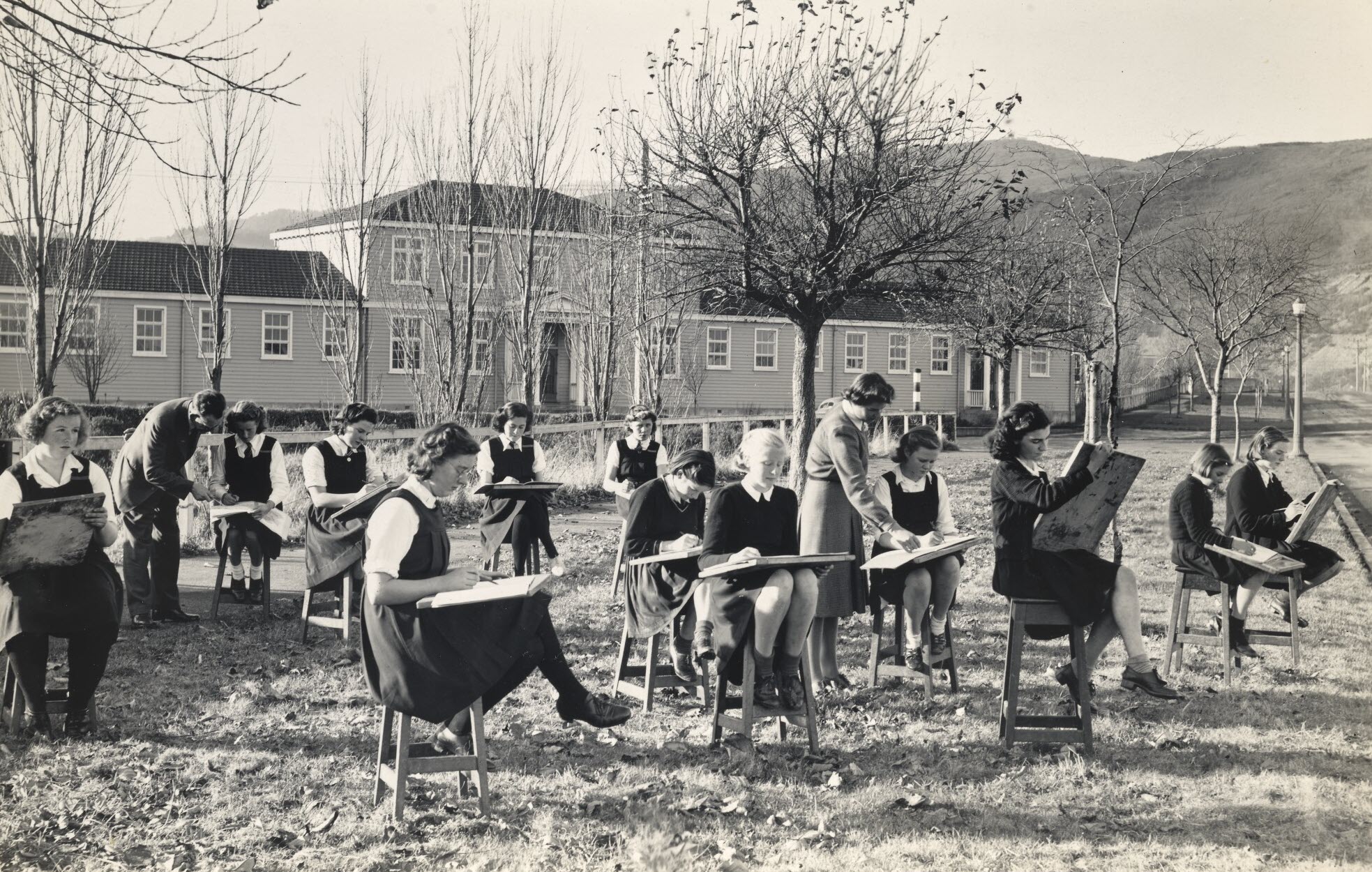
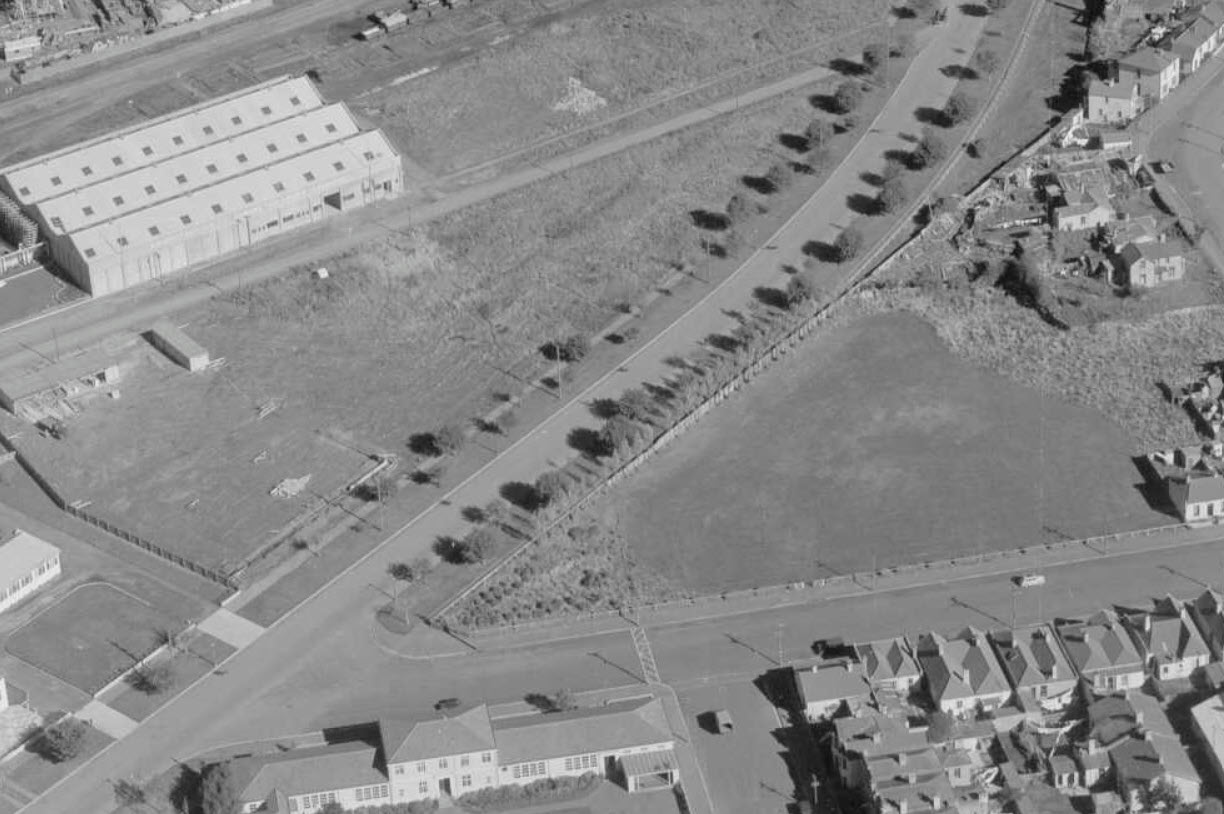
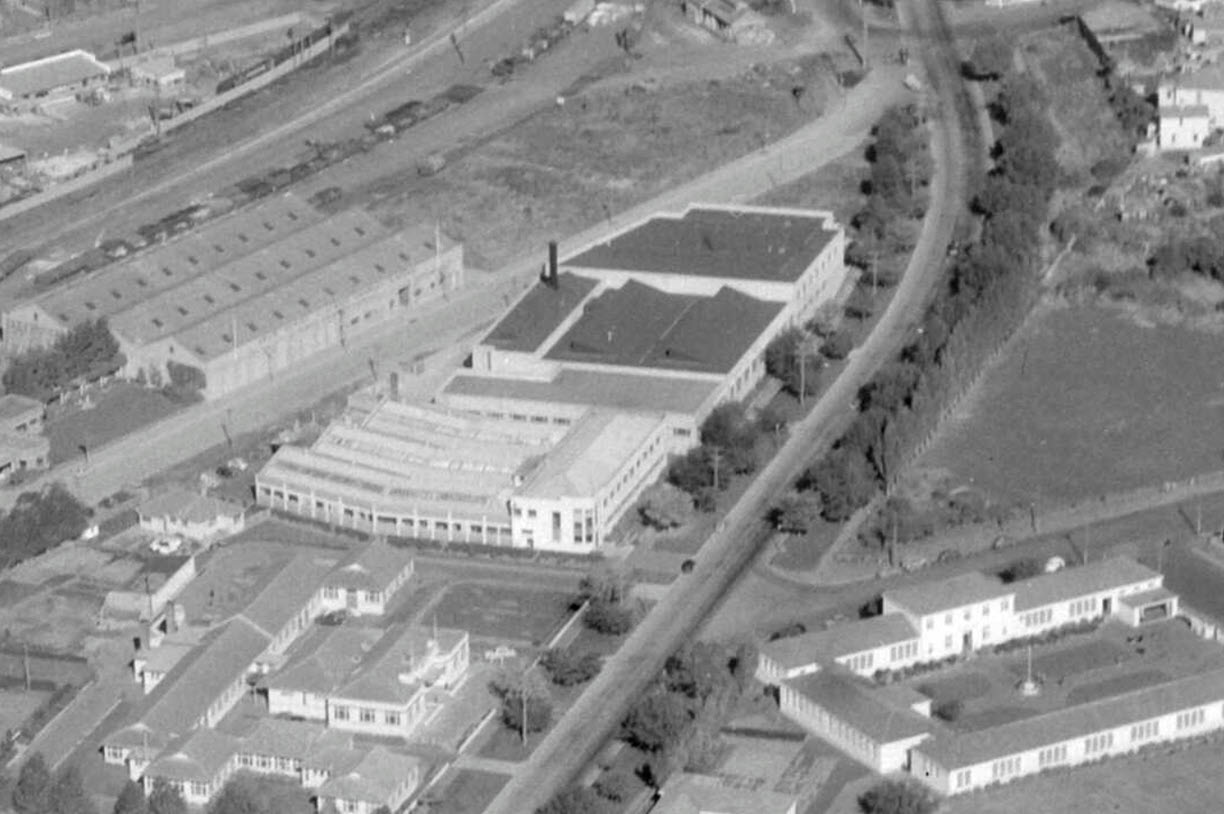
So it would seem that many of the older elm trees date not from the 1920s, but the 1930s. Looking at Whites Aviation aerial photographs of the 1940s and 50s, it is unclear if the lost trees next to the Hocken Library building were earlier or later ones. Either way, they will be missed by many. The Dunedin City Council has salvaged some of the wood for public use.
References:
City of Dunedin Department Reports.
Thompson, G.E. Official Record of the New Zealand and South Seas Exhibition Dunedin 1925-1926. Dunedin: The Exhibition Company, [1927], pp.18-19.
Otago Daily Times 18 July 1925 p.10 (‘The Value of Appearances’), 7 November 1925 p.3 (‘At Their Best: Round the City Reserves’). 16 May 1939 p.6 (lime trees).
Evening Star 17 November 1925 p.6 (‘The Highway’), 23 March 1926 p.2 (‘Amenities Society: The Annual Report’), 28 March 1934 p.2 (‘Amenities Society: Useful Work Accomplished’), 2 August 1934 p.13 (‘Arbor Day: Observance in Schools), 5 August 1936 p.14 (‘Arbor Day: Twenty-four Schools Take Part’), 9 August 1937 p.11 (‘Arbor Day: Ceremonies on Wednesday); 10 August 1938 p.15 (Arbor Day: Tree Planting Ceremonies for Schools).
Dunedin Amenities Society minutes, 16 May 1934. Hocken Collections – Uare Taoka o Hākena, MS-0606/002.