Experiment and Hypothesis, Theory and Observation: Wolff vs Newton
Alberto Vanzo writes…
Looking for sources for knowledge of experimental philosophy in eighteenth century Germany, I found some interesting texts by relatively unknown authors (at least beyond the circle of specialists). Christian Wolff is one of them. He was the most famous German philosopher in the first half of the eighteenth century. His philosophy was taught in many universities and his works were very popular. For instance, his German Logic knew no less than 14 editions during Wolff’s life.
Wolff knew several British experimental philosophers. He cited works by Robert Boyle and Robert Hooke, he was the Locke reviewer for an important journal (the Acta eruditorum), and he polemized with the Newtonian John Keill on the existence of the vacuum. He is a good example of the fact that German thinkers were acquainted with the works and the methodological views of British experimental philosophers in the first half of the eighteenth century.
A number of Wolff’s statements might make us think that he was himself an adherent to the early modern version of x-phi. Like British experimental philosophers, Wolff criticizes Descartes’ attempt to explain a great variety of natural phenomena in the light of few general principles that he established a priori. Like Hume and Hutcheson, Wolff is eager to extend the dominion of experimental philosophy beyond the boundaries of physics. He projects the disciplines of experimental cosmology, experimental teleology, experimental theology, experimental politics, and even experimental ontology. For his philosophical system as a whole, he chooses the name of “universal experimental philosophy” (philosophia experimentalis universalis). How could Wolff have been a more enthusiastic adherent to the program of experimental philosophy?
Yet contrary to the appearances, Wolff’s views were quite different from those of his British counterparts. This can be seen by comparing him with Newton. Newton, like virtually every other early modern experimental philosopher, claimed that he did not feign any hypothesis (his famous hypotheses non fingo). Wolff rebuts that Newton
- indulges in hypotheses in those very areas in which they think he abstained from employing them […] In fact, what else is universal attraction or gravity, which is represented by a measure of attraction, if not a hypothesis which is assumed because of certain phenomena and then is extended to all matter?
According to Wolff, not only did Newton feign hypotheses, but he did well to do so. This is because natural philosophers must proceed like astronomers:
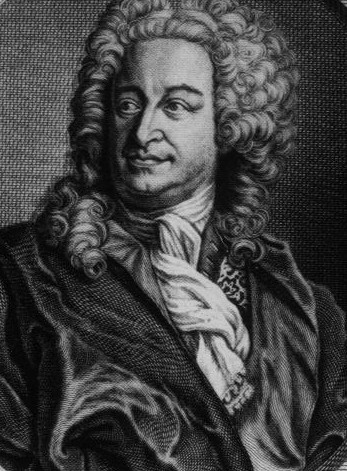
Christian Wolff
From some present events, they infer what they have to assume, in order for [the events] to follow [from it], and they posit that their hypothesis applies to all [similar] events […] To determine whether they did well to assume the hypothesis, they infer what follows from it on the basis of a correct reasoning, in order to compare it with the remaining events that they have either observed, or that they derive from observations. [They do this] in order to see whether what has been observed agrees with the hypothesis. If they find that [observations and hypothesis] are in contrast with one another, then they improve the hypothesis, and in this way they constantly move closer to the truth.
Wolff holds that there is a circular relationship between observation or experiment on the one hand, and theory on the other hand. He stresses
- how much theory owes to observations and how much, on the other hand, observations owe to theory, since observations perfect theory and theory in turn continuously perfects observations. He who is ignorant of any theory and does not have much ability to use the faculty of knowing will only discover obvious and mostly imprecise [truths] on the basis of observations. There would not be much progress, unless one could presuppose some theory; and the more [a theory] is developed, the more discoveries one will make by means of observation[s].
Unlike Newton, Wolff was no great scientist. However, the quotes above suggest that his methodology of science is worth a serious reading. His acknowledgments of the interaction between theory and observation sound modern. They sketch a version of the hypothetico-deductive method that might provide an interesting alternative to Newton’s strict inductivism.
In summary, Wolff is a good example of the Germans’ knowledge of British experimental philosophy in the first half of the eighteenth century. His views are also interesting in their own right. So are Johann Nicolaus Tetens’ comments on observational vs speculative philosophy or Johann Heinrich Lambert’s distinction between theory-testing experiments and experiments that have a life of their own – two hundred years before Ian Hacking. More on this another time.
In the next post, Kirsten will discuss Newton’s method, in particular his rejection of hypotheses and his use of queries. See you next Monday!
Newton’s Mathematical Method
Kirsten Walsh writes…
My PhD is on Isaac Newton. Working within the experimental/speculative framework of our project, I am taking a fresh look the development of Newton’s method of natural philosophy. I am addressing the following research questions:
- What does Newton’s method amount to?
- What were the key innovations in Newton’s method of natural philosophy?
- To what extent was Newton’s method influenced by the Baconian method of natural history?
- Where does Newton’s method fit in the experimental/speculative framework?
I am developing a clearer account of the ‘mathematical revolution’ in natural philosophy that began with Newton.

Newton, Opticks, 4th edition. Experiment demonstrating the separation of rays of different 'refrangibility'.
At the moment I am examining Newton’s famous first optical paper, read to the Royal Society in February 1672. Newton’s new theory of light and colours sparked controversy. He had to defend his views against the objections of some important natural philosophers: Hooke, Pardies and Huygens. The debate forced Newton to clarify his views on scientific method. I hope that closer analysis of this controversy will give us a clearer idea of Newton’s early views on method, hypotheses, queries, and experiment.
My work is at an early stage, and I’d love to hear your comments.
