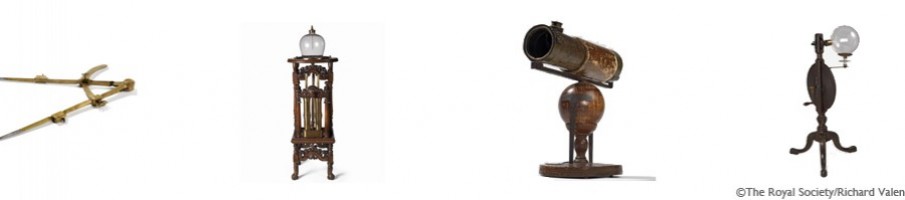
Explicating Newton’s Natural Philosophical Methodology: Part I
Steffen Ducheyne writes …
The research team at Otago has kindly invited me to discuss some of the central ideas of my recent monograph “The main Business of Natural Philosophy”: Isaac Newton’s Natural-Philosophical Methodology. My aim in this and next week’s guest post is not to give a complete overview of my book, but rather to bring some salient features of Newton’s methodology to the fore insofar as they are relevant for the speculative-experimental distinction.
Newton sought to separate hypotheses from demonstrations from within natural or experimental philosophy. This, in my view, adds an interesting dimension to the speculative-experimental distinction, for it shows how the distinction was transformed and introduced in the realm of natural philosophy. Newton’s preoccupation with methodological rigour and his distaste of hypotheses led him to explicate the conditions under which our conclusions about the physical world are to be considered as truthful. In this process, he would develop a highly sophisticated methodological position the kind of which had never been seen before.
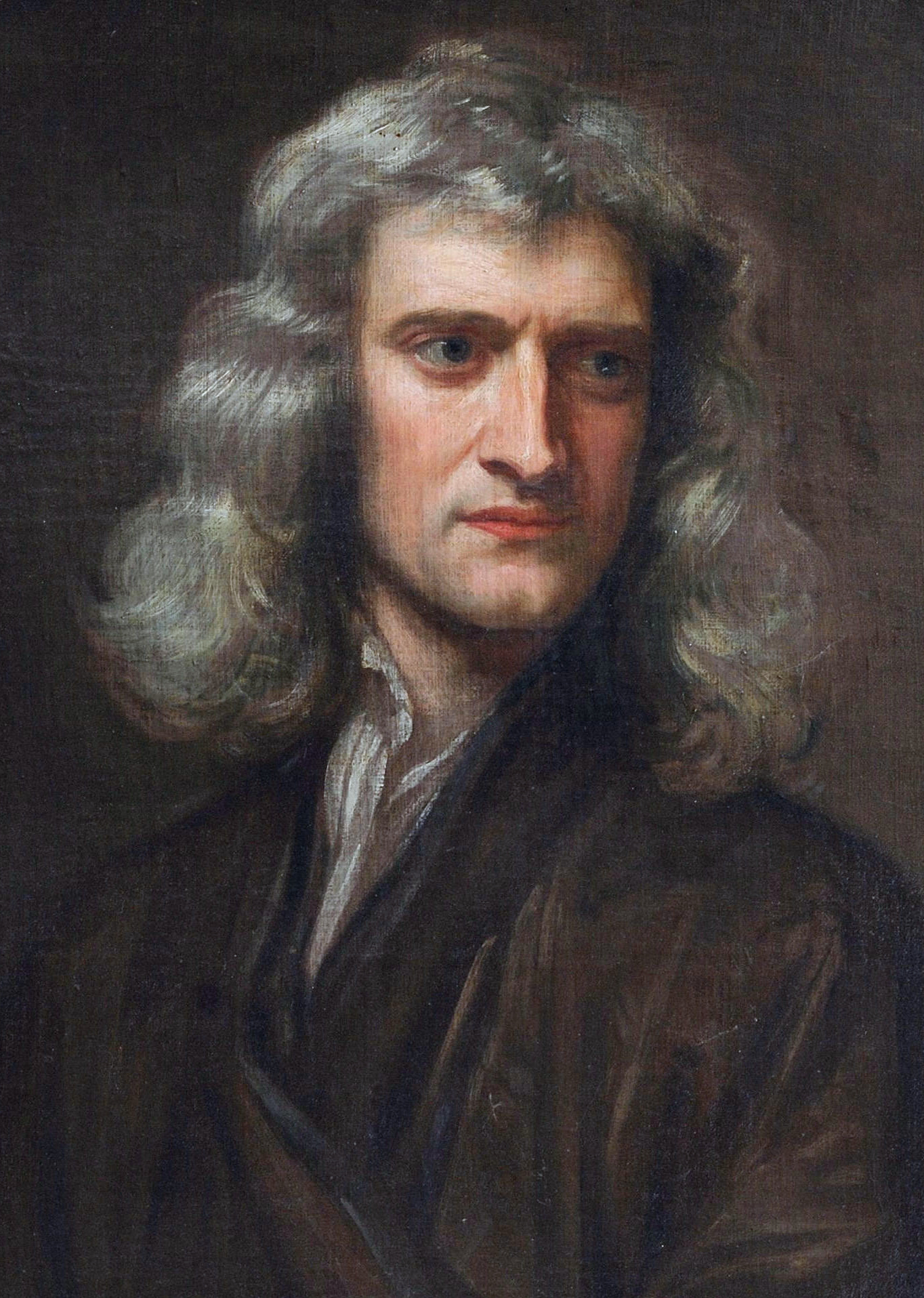
Portrait of Isaac Newton (1689)
Before turning to a discussion of Newton’s methodology proper, however, I would like to say something on how I have approached Newton’s methodology. Oftentimes, Newton’s methodology has been approached as if it was a stable given that remained fixed throughout his natural-philosophical career. In my book I have argued that Newton’s methodological views developed alongside with his natural-philosophical research. In Chapter 5, moreover, I distinguish between four distinct phases in the development of Newton’s methodological thought. Furthermore, although Newton clearly favoured his Principia-style methodology, which sets out to physico-mathematically ‘deduce’ causes from their effects, and considered it as the one to be followed ideally, Newton also relied on different methodologies. For instance, in the demonstrative parts of the Opticks he made use of a mixed mathematics treatment and in its speculative parts he proposed hypotheses to be investigated further. In my monograph I have called attention to important diachronic and synchronic differences in Newton’s methodological thought.
Newton’s first optical paper (1671/2) was not only a scientific debut, he also introduced a new methodological ideal on how knowledge about the empirical world is to be established. That ideal consisted in deducing causes from phenomena with demonstrative certainty. In the unedited version of his first optical paper, Newton stated the following on his theory of the heterogeneity of white light: “For what I shall tell concerning them [i.e. colours] is not a Hypothesis but most rigid consequence, not conjectured by barely inferring ’tis thus because not otherwise or because it satisfies all phænomena […] but evinced by ye mediation of experiments concluding directly & without any suspicion of doubt.” In the same period, he criticized the use of hypotheses in natural philosophy. At this point, important features of Newton’s methodological views were in place: his rejection of hypotheses, his ideal of deducing causes from phenomena, his conviction that by injecting mathematics into natural philosophy the latter could partake in the certainty of the former, his endeavour to draw conclusions from experiments, and his desire to treat of light ‘abstractly’, i.e. without making statements on the nature of light. Yet, as I argue in detail in Chapter 4, Newton’s methodological position was at that point still lacking elaboration and justification. That Newton did not provide much detail on how the heterogeneity of white light is derived from the experimentum crucis illustrates the lack of elaboration that characterized Newton’s early methodological views. In next week’s post I will summarize just how Newton’s methodological views developed from the publication of the first edition of the Principia in 1687.
Hypotheses and Newton’s Rings
Kirsten Walsh writes…
In Ian Lawson’s recent post, he mentioned Hooke’s work on colours in thin films. In this post, I’ll look at how Newton used his hypotheses on light to build on Hooke’s work in some interesting and important ways.
In his optical work of the early 1670s, while Newton prefers theories to hypotheses, he thinks that hypotheses are acceptable, even useful, for two purposes:
- To ‘illustrate’ (i.e. provide an intuitively plausible explanation of) the theory; and
- To ‘suggest’ experiments.
However, he insists that hypotheses should always be removed from the final version of the theory. Recall Newton’s claim from his 1672 paper: “I shall not mingle conjectures with certainties”.
In December 1675, Newton wrote his paper, “An hypothesis explaining the Properties of Light”. Here, he published his hypotheses on the nature of light for the first time. To summarise them briefly:
- There is an ‘aethereal medium’;
- Aether vibrates, carrying sounds, smells and light;
- Aether penetrates and passes through the pores of solid substances;
- Light is neither the aether itself, nor the vibrations, but a substance that is propagated from ‘lucid’ bodies and travels through the aether;
- Light warms the aether and the aether refracts the light; and
- The rays (or bodies) of which light consists differ from one another physically.
In this paper, Newton claims that he is only discussing these hypotheses for the purposes of ‘illuminating’ his theory. Moreover, he does not assert that these hypotheses are true, and emphatically does not use them to support his theory. For example, when he discusses hypothesis (4), Newton is careful not to push too forcefully for any particular account of light. He says one might suppose light to be “an aggregate of various peripatetic qualities”, or “unimaginably small and swift” corpuscles of various sizes, or “any other corporeal emanation or impulse or motion of any other medium diffused through the body of the aether”:
- Onely whatever Light be, I would suppose, it consists of Successive rayes differing from one another in contingent circumstances, as bignes, forme or vigour… And further I would suppose it divers from the vibrations of the aether.
In this paper, there is a notable emphasis on experiment. For example, when Newton discusses hypothesis (1), he gives an account of a new electrical experiment which seems to support his claim. And when he discusses hypothesis (3), he discusses the implications for Boyle’s tadpole experiments. But the most important experiments in this paper are his investigations on the colours that appear between two glass surfaces.
Alan Shapiro notes that Newton began these investigations while he was reading Hooke’s Micrographia. But his experiments and mathematical descriptions quickly developed into something well beyond the scope of Hooke’s investigations. Hooke described the colours that appear when two thin sheets of glass are placed one on top of the other. When he made the thin film of air between the two sheets thicker or thinner by pressing the two sheets together with greater or lesser force, the colours changed. He observed that different colours appeared at different thicknesses, but he was unable to quantify this observation as he was unable to measure accurately the thickness of the film at any given point. Newton had the idea of placing a convex lens on top of a flat sheet of glass. This enabled him to easily calculate the thickness of the film of air, and the colours appeared as a set of concentric coloured circles centred at the point of contact between the two surfaces. These concentric circles are now known as ‘Newton’s Rings’.
-

Opticks, Book 2, Figure 3
Next Newton considered his hypotheses. According to hypothesis (2) the vibrations of the aether vary in size, according to hypothesis (3) aether passes through the pores of solid substances, and according to hypothesis (6) rays of different colours will cause aethereal vibrations of different sizes. If these hypotheses were correct, he argued, then light of a particular colour would be reflected either when the length of the vibration, or some multiple of the length of the vibration, matched the thickness of the film, and transmitted otherwise. So he predicted that:
- if the Glasses in this posture be looked upon, there ought to appear at A [the centre], the contact of the Glasses, a black spott, & about that many concentric circles of light & darknesse, the squares of whose semidiameters are to sense in arithmetical progression.
Newton’s “Hypothesis” paper provides a good example of his method of hypotheses. He remains carefully detached from his own hypothesis, using it only to ‘illustrate’ his theory and to suggest further experiments. Newton was also careful to keep his hypotheses well separate from his theory; the paper ends with a series of ‘Observations’ that contain no reference to his hypotheses at all!
The Aims of Newton’s Natural Philosophy
Kirsten Walsh writes…
In a previous post I discussed the aim of absolute certainty in Newton’s early optical papers. I argued that this aim provides the link between Newton’s mathematical and experimental methods. This quest for certainty is an enduring feature of Newton’s natural philosophy, leading to a modest natural philosophical agenda. For example, in the General Scholium to the Principia (1713), Newton writes:
- “I have not as yet been able to discover the reason for these properties of gravity from phenomena, and I do not feign hypotheses … And it is enough that gravity really exists and acts according to the laws that we have set forth and is sufficient to explain all the motions of the heavenly bodies and of our sea.”
But is this really enough, for Newton? Apparently it’s not. In the very next paragraph, Newton begins to speculate on the “subtle spirit” that permeates bodies and might be operative in various phenomena. It looks like he is proposing a causal explanation of universal gravitation. However, these speculations end before they really begin, when Newton concludes that “there is not a sufficient number of experiments to determine and demonstrate accurately the laws governing the actions of this spirit.”
This is the final line of Principia. And, for such a controversial book, this is a rather inauspicious ending. But I think we can glean something about the aims of Newton’s natural philosophy from this.
To begin, we need to distinguish between what Newton wants to achieve, and what he thinks he can achieve. Newton wants to give a complete, true theory of the world – including an account of the motions of the planets, the cause of gravity, and even God’s relation to the natural world. But, in the trade-off between completeness and truth, Newton sides with truth. For, as he writes in an unpublished Preface to Principia (mid-1710s), “still it is better to add something to our knowledge day by day than to fill up men’s minds in advance with the preconceptions of hypotheses.”
Newton’s modesty and restraint should not be misinterpreted as lack of epistemic ambition. The surest way to achieve absolute certainty would be to keep his domain of inquiry as narrow as possible. But Newton doesn’t do this. Instead, he pushes at the boundaries of what can be known with certainty. This is demonstrated by his use of Baconian Induction to make increasingly general claims about gravity. Newton ambitiously generalises from pendulums, to terrestrial bodies, to all bodies. In an unpublished Preface to Principia, he writes:
- “But it has also been shown in the Principia that the precession of the equinoxes and the ebb and flow of the sea and the unequal motions of the moon and the orbits of comets and the perturbation of the orbit of Saturn by its gravity toward Jupiter follow from the same principles and what follows from these principles plainly agrees with the phenomena.”
So what do those final two paragraphs of the General Scholium tell us about the aims of Newton’s natural philosophy? I. Bernard Cohen says that the General Scholium is similar to the discussions that are found in scientific papers today: Newton is discussing the implications of his results and suggesting areas of further research. On this reading, Newton is saying that there are two jobs ahead:
- To give a causal explanation of gravity; and
- To apply the theory of gravity to other phenomena in order to solve other problems.
Importantly, Newton thinks that we can begin on (2) without waiting to complete (1). This is why Newton says it is enough that he has established that gravity exists and acts according to certain laws.
Related Posts: Newton on Certainty, Newton’s 4th Rule for Natural Philosophy.
Newton and the Case of the Missing Calculus
Kirsten Walsh writes…
The case of the missing calculus is well-known. Newton (co-)invented calculus in the late 1660s, and he wrote Principia in the late 1680s. It would be natural to expect that Newton used the calculus in Principia. But it seems that he didn’t. Instead, Newton wrote Principia in the style of Euclid’s Elements, that is, using Classical Greek geometry. This is surprising indeed, given the powerful new tool he had at his disposal. What should we make of this?
Almost thirty years after the publication of Principia, Newton explained that he had used algebraic calculus to discover the propositions of Principia, but used classical geometry to demonstrate them:
- “By the help of the new Analysis [i.e. algebraic calculus] Mr. Newton found out most of the Propositions in his Principia Philosophiae: but because the Ancients for making things certain admitted nothing into Geometry before it was demonstrated synthetically, he demonstrated the Propositions synthetically, that the System of the Heavens might be founded upon good Geometry. And this makes it now difficult for unskilful men to see the Analysis by which those Propositions were found out.”
But Newton was lying. Scholars have found no evidence that he wrote or developed Principia in any other way than the published form. Moreover, few, if any, of the propositions in Principia can even be presented in the form of algebraic calculus.
This raises two questions:
- Why did Newton lie?
- Why did Newton eschew modern algebraic calculus in favour of classical geometry?
These questions have been discussed by numerous scholars including A. Rupert Hall and I. Bernard Cohen. The answer to (1) can be found in Newton’s priority dispute with Leibniz. The answer to (2) was summarised neatly by Thony Christie last year:
- “Put simply Newton had serious doubts about the reliability of the new analytical mathematics and that is why he didn’t use it for his magnum opus.”
But what caused these doubts?
In 1714, Newton wrote that the algebraic calculus is “arithmetic applied to geometrical matters… Its operations are complicated and excessively susceptible to errors, and can be understood by the learned in algebra alone”. Whereas geometry “may be appreciated by the great majority and thus most impress the mind with [its] clarity”. One might wonder why Newton bothered to invent algebraic calculus at all!
Well it seems that Newton wasn’t always so anti-algebra, nor was he always so interested in classical geometry. In fact, as an undergraduate, Newton didn’t read the ancients. Rather, he read a few modern summaries of the ancient texts, building his own mathematics on the algebraic work of mathematicians such as Descartes, Wallis and Barrow.
Newton seems to have become interested in classical geometry in the late 1670s, after re-reading Descartes’ La Géométrie. La Géométrie was an attempt to unite algebra and geometry – Descartes aimed to show how symbolic algebra could be applied to the study of plane curves. Guiccardini writes:
- “[Descartes’] tract could be read as a deliberate proof of the superiority of the new analytical method, uniting symbolic algebra and geometry, over the purely geometrical ones of the ancients.”
Newton was very critical of Descartes’ text, writing comments such as “error” and “I hardly approve” in the margins. He even drafted a paper entitled ‘Errors in Descartes’ Geometry’. To find support for his position, Newton began to read the ancient texts, including Pappus.
Newton wrote:
- “To be sure, [the ancients’] method is more elegant by far than the Cartesian one. For [Descartes] achieved the result by an algebraic calculus which, when transposed into words (following the practice of the Ancients in their writings), would prove to be so tedious and entangled as to provoke nausea, nor might it be understood. But they accomplished it by certain simple propositions, judging that nothing written in a different style was worthy to be read, and in consequence concealing the analysis by which they found their constructions.”
Newton was neither the first, nor the only, philosopher to equate algebra and geometry with the ancient methods of analysis and synthesis respectively. But he was the first to reject modern algebraic calculus in favour of ancient geometry. (If only because he was the first to invent it!) Does Newton’s rejection of algebraic calculus stem from his anti-Cartesian stance? What if Newton had never re-read Descartes’ Géométrie? Could his priority dispute with Leibniz have been avoided?
Newton’s Method in Three Minutes
Kirsten Walsh writes…
Last week I competed in the Otago University Three-Minute Thesis Competition. I had to explain my PhD thesis in no longer than three minutes. It was challenging indeed, in such a short length of time, to describe my research, communicate its significance and impart my enthusiasm for it – while pitching it at the level of an intelligent non-expert. Fortunately, I had great material to work with. There are so many interesting stories about Newton! Unfortunately, it’s often difficult to figure out which stories are true.
I opted to begin with the ‘approximately true’ story of Newton’s anni mirabilis, or miraculous years. The general thrust of the story is true, even if some of the particulars are false: the plague years mark a significant turning point in Newton’s scientific work. As Whiteside pointed out over forty years ago, we may
- “salute this first creative outburst – whether or not contained in one single marvelous year – of a man who twenty years afterwards was to construct a scientific Weltanschauung which is, in its essentials, still ours.”
So, with apologies to those of you with ‘historically sensitive’ ears, here is my script for the three-minute thesis competition:
It’s 1665. Cambridge has been struck by Plague, and Newton has been sent home from University. Summer is stretching out before him. Nice! What will he do on his extended summer holiday? Well, he did what I imagine most Scarifies* do on their summer holidays: he invented calculus, discovered the composition of light, and (after watching an apple fall from a tree) conceived the laws of universal gravitation… Okay, so perhaps Newton wasn’t quite your typical undergraduate student. The story about the apple is controversial, but everyone agrees about the discoveries. Scholars have called those years the ‘years of miracles’.
Why were they ‘miraculous’? Well, these were revolutionary discoveries – and there were so many of them. They provided the basic material for Newton’s Principia, and his Opticks. Enough material for a lifetime of publications! And real publications. Not just those ‘puff pieces’ that fill our journals nowadays. All in just 2 years!
Furthermore, these discoveries seemed to come out of nowhere. Newton was able to invent, discover and conceive things no one else could, because seemingly he had invented an entirely new scientific method. He had come up with a whole new way of mathematising physics, and claimed to have achieved mathematical certainty! Philosophers and scientists tried to emulate his method. But no one was as successful as Newton. Whatever Newton was doing, he was doing it right. But what was he doing?
This is the central question of my PhD, and it’s a question that dominates discussions of scientific method even now, 300 years later. But scholars still barely understand what Newton’s method was. Did Newton really think his scientific theories were as certain as mathematical proofs? Why did he think his theory of gravity was true, when he couldn’t even say for certain what gravity is? And, at the centre of it all, the question that’s been keeping me up at nights (as it has kept up generations of Newton-scholars before me): what did Newton mean when he wrote that enigmatic sentence at the end of Principia: ‘Hypotheses non fingo’; ‘I do not feign hypotheses’?
I do not feign hypotheses. What an odd thing to say. What does it even mean? ‘I haven’t invented these hypotheses’? ‘I didn’t prove them’? This sentence lies at the heart of my thesis. Unlike other Newton scholars, I think it describes a crucial aspect of Newton’s method. What it tells us is that Newton made a distinction. On the one hand, theories: mathematical, certain, experimentally confirmed. On the other hand, hypotheses: non-mathematical, uncertain, non-experimental, and speculative. This distinction is a crucial feature of Newton’s spectacularly successful scientific method. And I think it’s this distinction that explains Newton’s years of miracles.
The idea of anni mirabiles seems closely-related to the notion of a scientific revolution, which has been much discussed since Kuhn published The Structure of Scientific Revolutions in 1962. Philosophers of science disagree philosophically over the importance of revolutions to science, and historically over the occurrence of any genuine scientific revolutions. However, it is interesting to note that historians have recognised several anni mirabiles in the history of science. For example, 1543, the year that Vesalius published De Humani Corporis Fabrica and Copernicus published De Revolutionibus Orbium Coelestium. And 1905, the year that Einstein published his three ground-breaking papers in the Annalen der Physik. What role have these anni mirabiles played in the history of science? What do they tell us about scientific progress? Norwood R Hanson once said:
- “It is possible both to be driven by intuition and at the same time to reason carefully. Most scientific discoveries, indeed, result from just such an intertwining of headwork and guesswork.”
What do you think?
*Otago Undergraduate Students
Newton’s 4th Rule for Natural Philosophy
Kirsten Walsh writes…
In book three of the 3rd edition of Principia, Newton added a fourth rule for the study of natural philosophy:
- In experimental philosophy, propositions gathered from phenomena by induction should be considered either exactly or very nearly true notwithstanding any contrary hypotheses, until yet other phenomena make such propositions either more exact or liable to exceptions.
- This rule should be followed so that arguments based on induction be not be nullified by hypotheses.
Arguably this is the most important of Newton’s four rules, and it certainly sparked a lot of discussion at our departmental seminar last week. Let us see what insights we can glean from it.
Rule 4 breaks down neatly into three parts. I shall address each part in turn.
1. Propositions (acquired from the phenomena by induction) should be regarded as true or very nearly true.
While the term ‘phenomenon’ usually refers to a single occurrence or fact, Newton uses the term to refer to a generalisation from observed physical properties. For example, Phenomenon 1, Book 3:
- The circumjovial planets [or satellites of Jupiter], by radii drawn to the centre of Jupiter; describe areas proportional to the times, and their periodic times – the fixed stars being at rest – are as the 3/2 powers of their distances from that centre.
- This is established from astronomical observations…
Newton uses the term ‘proposition’ in a mathematical sense to mean a formal statement of a theorem or an operation to be completed. Thus, he further identifies propositions as either theorems or problems. Propositions are distinguished from axioms in that propositions are not self-evident. Rather, they are deduced from phenomena (with the help of definitions and axioms) and are demonstrated by experiment. For example, Proposition 1, Theorem 1, Book 3:
- The forces by which the circumjovial planets [or satellites of Jupiter] are continually drawn away from rectilinear motions and are maintained in their respective orbits are directed to the centre of Jupiter and are inversely as the squares of the distances of their places from that centre.
- The first part of the proposition is evident from phen. 1 and from prop. 2 or prop. 3 of book 1, and the second part from phen. 1 and from corol. 6 to prop. 4 of book 1.
Newton appears to be using ‘induction’ in a very loose sense to mean any kind of argument that goes beyond what is stated in the premises. As I noted above, his phenomena are generalisations from a limited number of observed cases, so his natural philosophical reasoning is inductive from the bottom up. Newton recognises that this necessary inductive step introduces the same uncertainty that accompanies any inductive generalisation: the possibility that there is a refuting instance that hasn’t been observed yet.
Despite this necessary uncertainty, in the absence of refuting instances, Newton tells us to regard these propositions as true or very nearly true. It is important to note that he is not telling us that these propositions are true, simply that we should act as though they are. Newton is simply saying that if our best theory fits the available data, then we should regard it as true until proven otherwise.
2. Hypotheses cannot refute or alter those propositions.
In a previous post I argued that, in his early optical papers, Newton was working with a clear distinction between theory and hypothesis. In Principia Newton is working with a similar distinction between propositions and hypotheses. Propositions make claims about observable, measurable physical properties, whereas hypotheses make claims about unobservable, unmeasurable causes or natures of things. Thus, propositions are on epistemically surer footing than hypotheses, because they are grounded on what we can directly experience. When faced with a disagreement between a hypothesis and a proposition, we should modify the hypothesis to fit the proposition, and not vice versa. Newton explains this idea in a letter to Cotes:
- But to admitt of such Hypotheses in opposition to rational Propositions founded upon Phaenomena by Induction is to destroy all arguments taken from Phaenomena by Induction & all Principles founded upon such arguments.
3. New phenomena may refute those propositions by contradicting them, or alter those propositions by making them more precise.
This final point highlights the a posteriori justification of Newton’s theories. In Principia, two methods of testing can be seen. The first involves straightforward prediction-testing. The second is a more sophisticated method, which involves accounting for discrepancies between ideal and actual motions by a series of steps that increase the complexity of the model.
In short, Rule 4 tells us to prioritise propositions over hypotheses, and experiment over speculation. These are familiar and enduring themes in Newton’s work, which reflect his commitment to experimental philosophy. Rule 4 echoes the remarks made by Newton in a letter to Oldenburg almost 54 years earlier, when he wrote:
- …I could wish all objections were suspended, taken from Hypotheses or any other Heads then these two; Of showing the insufficiency of experiments to determin these Queries or prove any other parts of my Theory, by assigning the flaws & defects in my Conclusions drawn from them; Or of producing other Experiments wch directly contradict me…
Early modern x-phi: a genre free zone
Peter Anstey writes…
One feature of early modern experimental philosophy that has been brought home to us as we have prepared the exhibition entitled ‘Experimental Philosophy: Old and New’ (soon to appear online) is the broad range of disciplinary domains in which the experimental philosophy was applied in the 17th and 18th centuries. Some of the works on display are books from what we now call the history of science, some are works in the history of medicine, some are works of literature, others are works in moral philosophy, and yet they all have the unifying thread of being related in some way to the experimental philosophy.
Two lessons can be drawn from this. First – and this is a simple point that may not be immediately obvious – there is no distinct genre of experimental philosophical writing. Senac’s Treatise on the Structure of the Heart is just as much a work of experimental philosophy as Newton’s Principia or Hume’s Enquiry concerning the Principles of Morals. To be sure, if one turns to the works from the 1660s to the 1690s written after the method of Baconian natural history, one can find a fairly well-defined genre. But, as we have already argued on this blog, this approach to the experimental philosophy was short-lived and by no means exhausts the works from those decades that employed the new experimental method.
Second, disciplinary boundaries in the 17th and 18th centuries were quite different from those of today. The experimental philosophy emerged in natural philosophy in the 1650s and early 1660s and was quickly applied to medicine, which was widely regarded as continuous with natural philosophy. By the 1670s it was being applied to the study of the understanding in France by Jean-Baptiste du Hamel and later by John Locke. Then from the 1720s and ’30s it began to be applied in moral philosophy and aesthetics. But the salient point here is that in the early modern period there was no clear demarcation between natural philosophy and philosophy as there is today between science and philosophy. Thus Robert Boyle was called ‘the English Philosopher’ and yet today he is remembered as a great scientist. This is one of the most important differences between early modern x-phi and the contemporary phenomenon: early modern x-phi was endorsed and applied across a broad range of disciplines, whereas contemporary x-phi is a methodological stance within philosophy itself.
What is it then that makes an early modern book a work of experimental philosophy? There are at least three qualities each of which is sufficient to qualify a book as a work of experimental philosophy:
- an explicit endorsement of the experimental philosophy and its salient doctrines (such as an emphasis on the acquisition of knowledge by observation and experiment, opposition to speculative philosophy);
- an explicit application of the general method of the experimental philosophy;
- acknowledgment by others that a book is a work of experimental philosophy.
Now, some of the books in the exhibition are precursors to the emergence of the experimental philosophy (such as Bacon’s Sylva sylvarum). Some of them are comments on the experimental philosophy by sympathetic observers (Sprat’s History of the Royal Society), and others poke fun at the new experimental approach (Swift’s Gulliver’s Travels). But this still leaves a large number of very diverse works, which qualify as works of experimental philosophy. Early modern x-phi is a genre free zone.
Keith Hutchison on ‘De Gravitatione’ and Newton’s Mathematical Method
Keith Hutchison writes…
The core of Kirsten Walsh’s paper is a defence of her proposal that Newton’s De Gravitatione was composed after the publication of the new theory of colours (in 1672-3). Kirsten compares the methodology of the optical writings with that of De Grav. and notes that despite the similarity there are significant differences. Yet the methodology of De Grav. is effectively identical to that of the Principia, so is plausibly interpreted as the one preferred by Newton. So Newton would have displayed this methodology in the optical writings, Kirsten concludes, had De Grav. already been composed.
Isaac Newton, 1642-1727
Though I am (tentatively) happy with Kirsten’s observation that it is uncontroversial to see Newton’s Principia as deploying the methodology of De Grav., part of the reason for this is surely the fact that the discussion of methodology in De Grav. is so brief, and hardly exemplified in the actual science that Newton so fleetingly displays in his text. The little that we find in De Grav. does indeed seem concordant with much that happens in the Principia, but it is easy – too easy – to find agreement between a pair of texts if one of them is vague enough. Given that the identity between the two methodologies is so important to Kirsten’s case, she needs to find some way of sharpening this step of the argument.
She could, for instance, identify far more thoroughly the small differences between the methodology of the optical writings and that of De Grav. If each of these differences could be consistently found in the Principia as well, Kirsten would have a much better case, as long as there were not something about the optical investigations that required the alternative approach. Kirsten notes indeed, that Cohen has suggested that the Principia is primarily a mathematical investigation, but the optical work is overwhelmingly experimental. Cohen seems to be significantly wrong here, for investigations of the context of Newton’s treatment of chromatic aberration show that Newton originally dreamt of creating a mathematical science of colours – until he found that refraction was puzzlingly idiosyncratic, and so unlike the extremely orderly gravitational interaction that provided much of the mathematics of the Principia. But it remains true that the optical work is saturated with experiment, and it could be this that allows an earlier (?) De Grav. to seem more like the Principia.
From Experimental Philosophy to Empiricism: 20 Theses for Discussion
Before our recent symposium, we decided to imitate our early modern heroes by preparing a set of queries or articles of inquiry. They are a list of 20 claims that we are sharing with you below. They summarize what we take to be our main claims and findings so far in our study of early modern experimental philosophy and the genesis of empiricism.
After many posts on rather specific points, hopefully our 20 theses will give you an idea of the big picture within which all the topics we blog about fit together, from Baconian natural histories and optical experiments to moral inquiries or long-forgotten historians of philosophy.
Most importantly, we’d love to hear your thoughts! Do you find any of our claims unconvincing, inaccurate, or plainly wrong? Do let us know in the comments!
Is there some important piece of evidence that you’d like to point our attention to? Please get in touch!
Are you working on any of these areas and you’d like to share your thoughts? We’d like to hear from you (our contacts are listed here).
Would you like to know more on some of our 20 claims? Please tell us, we might write a post on that (or see if there’s anything hidden in the archives that may satisfy your curiosity).
Here are our articles, divided into six handy categories:
General
1. The distinction between experimental and speculative philosophy (ESD) provided the most widespread terms of reference for philosophy from the 1660s until Kant.
2. The ESD emerged in England in the late 1650s, and while a practical/speculative distinction in philosophy can be traced back to Aristotle, the ESD cannot be found in the late Renaissance or the early seventeenth century.
3. The main way in which the experimental philosophy was practised from the 1660s until the 1690s was according to the Baconian method of natural history.
4. The Baconian method of natural history fell into serious decline in the 1690s and is all but absent in the eighteenth century. The Baconian method of natural history was superseded by an approach to natural philosophy that emulated Newton’s mathematical experimental philosophy.
Newton
5. The ESD is operative in Newton’s early optical papers.
6. In his early optical papers, Newton’s use of queries represents both a Baconian influence and (conversely) a break with Baconian experimental philosophy.
7. While Newton’s anti-hypothetical stance was typical of Fellows of the early Royal Society and consistent with their methodology, his mathematisation of optics and claims to absolute certainty were not.
8. The development of Newton’s method from 1672 to 1687 appears to display a shift in emphasis from experiment to mathematics.
Scotland
9. Unlike natural philosophy, where a Baconian methodology was supplanted by a Newtonian one, moral philosophers borrowed their methods from both traditions. This is revealed in the range of different approaches to moral philosophy in the Scottish Enlightenment, approaches that were all unified under the banner of experimental philosophy.
10. Two distinctive features of the texts on moral philosophy in the Scottish Enlightenment are: first, the appeal to the experimental method; and second, the explicit rejection of conjectures and unfounded hypotheses.
11. Experimental philosophy provided learned societies (like the Aberdeen Philosophical Society and the Philosophical Society of Edinburgh) with an approach to knowledge that placed an emphasis on the practical outcomes of science.
France
12. The ESD is prominent in the methodological writings of the French philosophes associated with Diderot’s Encyclopédie project, including the writings of Condillac, d’Alembert, Helvétius and Diderot himself.
Germany
13. German philosophers in the first decades of the eighteenth century knew the main works of British experimental philosophers, including Boyle, Hooke, other members of the Royal Society, Locke, Newton, and the Newtonians.
14. Christian Wolff emphasized the importance of experiments and placed limitations on the use of hypotheses. Yet unlike British experimental philosophers, Wolff held that data collection and theory building are simultaneous and interdependent and he stressed the importance of a priori principles for natural philosophy.
15. Most German philosophers between 1770 and 1790 regarded themselves as experimental philosophers (in their terms, “observational philosophers”). They regarded experimental philosophy as a tradition initiated by Bacon, extended to the study of the mind by Locke, and developed by Hume and Reid.
16. Friends and foes of Kantian and post-Kantian philosophies in the 1780s and 1790s saw them as examples of speculative philosophy, in competition with the experimental tradition.
From Experimental Philosophy to Empiricism
17. Kant coined the now-standard epistemological definitions of empiricism and rationalism, but he did not regard them as purely epistemological positions. He saw them as comprehensive philosophical options, with a core rooted in epistemology and philosophy of mind and consequences for natural philosophy, metaphysics, and ethics.
18. Karl Leonhard Reinhold was the first philosopher to outline a schema for the interpretation of early modern philosophy based (a) on the opposition between Lockean empiricism (leading to Humean scepticism) and Leibnizian rationalism, and (b) Kant’s Critical synthesis of empiricism and rationalism.
19. Wilhelm Gottlieb Tennemann was the first historian to craft a detailed, historically accurate, and methodologically sophisticated history of early modern philosophy based on Reinhold’s schema. [Possibly with the exception of Johann Gottlieb Buhle.]
20. Tennemann’s direct and indirect influence is partially responsible for the popularity of the standard narratives of early modern philosophy based on the conflict between empiricism and rationalism.
That’s it for now. Come back next Monday for Gideon Manning‘s comments on the origins of the experimental-speculative distinction.
Should we call Newton a ‘Structural Realist’?
Kirsten Walsh writes…
At our symposium last week, someone wondered if we can characterise Newton as a ‘structural realist’. It is certainly anachronistic to attempt to interpret Newton’s epistemic stance in light of the present-day scientific realism debate. But the sin of anachronism may be forgiven, if it advances our understanding. So let us see what advantages this interpretation may provide.
Briefly, structural realism is the view that epistemically, a scientist should only commit herself to the mathematical or structural content of her theories, and remain sceptical about the unobservable entities posited by those theories.
To characterise Newton as a structural realist, one might make the following argument:
- P1. Newton is a realist about his theories, but not about his hypotheses.
P2. Newton’s theories make claims about theoretical structures, whereas his hypotheses make claims about unobservable theoretical entities.
C. Therefore, Newton is a realist about theoretical structures, but not about unobservable theoretical entities.
Firstly, consider Newton’s hypothesis/theory distinction. In a previous post I argued that Newton claims that his doctrine of light and colours is a theory, not a hypothesis, for three reasons:
- T1. It is certainly true, because it is supported by (or deduced from) experiment;
T2. It concerns the physical properties of light, rather than the nature of light; and
T3. It has testable consequences.
In contrast, he attaches no special epistemic merit to his corpuscular hypothesis because:
- H1. It is not certainly true, because it is not supported by experiment;
H2. It concerns the nature of light; and
H3. It has no testable consequences.
T1 and H1 support P1. They tell us that Newton is a realist about theories because they can be shown to be true on the basis of experiment. Moreover, he is not a realist about hypotheses because they cannot be shown to be true on the basis of experiment. This highlights an important feature of Newton’s methodology: Newton is only epistemically committed to those things that are demonstrated experimentally.
T2 and H2 appear to support P2, but only if the ‘entity/structure’ distinction maps onto Newton’s ‘nature/physical properties’ distinction. Prima facie, it does. While Newton probably wouldn’t have been comfortable with the entity/structure distinction, the structural realist debate is often framed in terms of the nature/physical properties distinction. For example, here’s how the Stanford Encyclopedia of Philosophy describes the structural realist position:
- Structural realism is often characterised as the view that scientific theories tell us only about the form or structure of the unobservable world and not about its nature. This leaves open the question as to whether the natures of things are posited to be unknowable for some reason or eliminated altogether.
So it looks like the argument for characterising Newton as a structural realist is well-supported by Newton’s distinction between theory and hypothesis. But what do we gain by characterising Newton in this way?
Chris Smeenk recently pointed out to me in an email that the structural realist label identifies a distinctive feature of Newton’s methodology. Namely, that he is epistemically committed to his abstract mathematical structures. He is not an instrumentalist about his theories, but neither is he a realist about the nature of the phenomena they describe. This might shed some light on the optical debate of the early 1670s, for unlike his contemporaries, Newton does not think there is a contradiction in believing that his theory of light is true, while not committing himself to any particular doctrine regarding the nature of light.
Is this a large enough pay-off to warrant the offence of anachronism? What do you think?
In this brief post, I have only considered Newton’s attitudes to his own theories. There are other questions to be raised in connection with structural realism, for example, is Newton a structural realist about the history of science? In other words, what is Newton’s epistemic commitment to the theories of his predecessors? I shall leave this question for another time.
On another note, we were very pleased with how last week’s symposium went. We look forward to telling you all about it next Monday.
