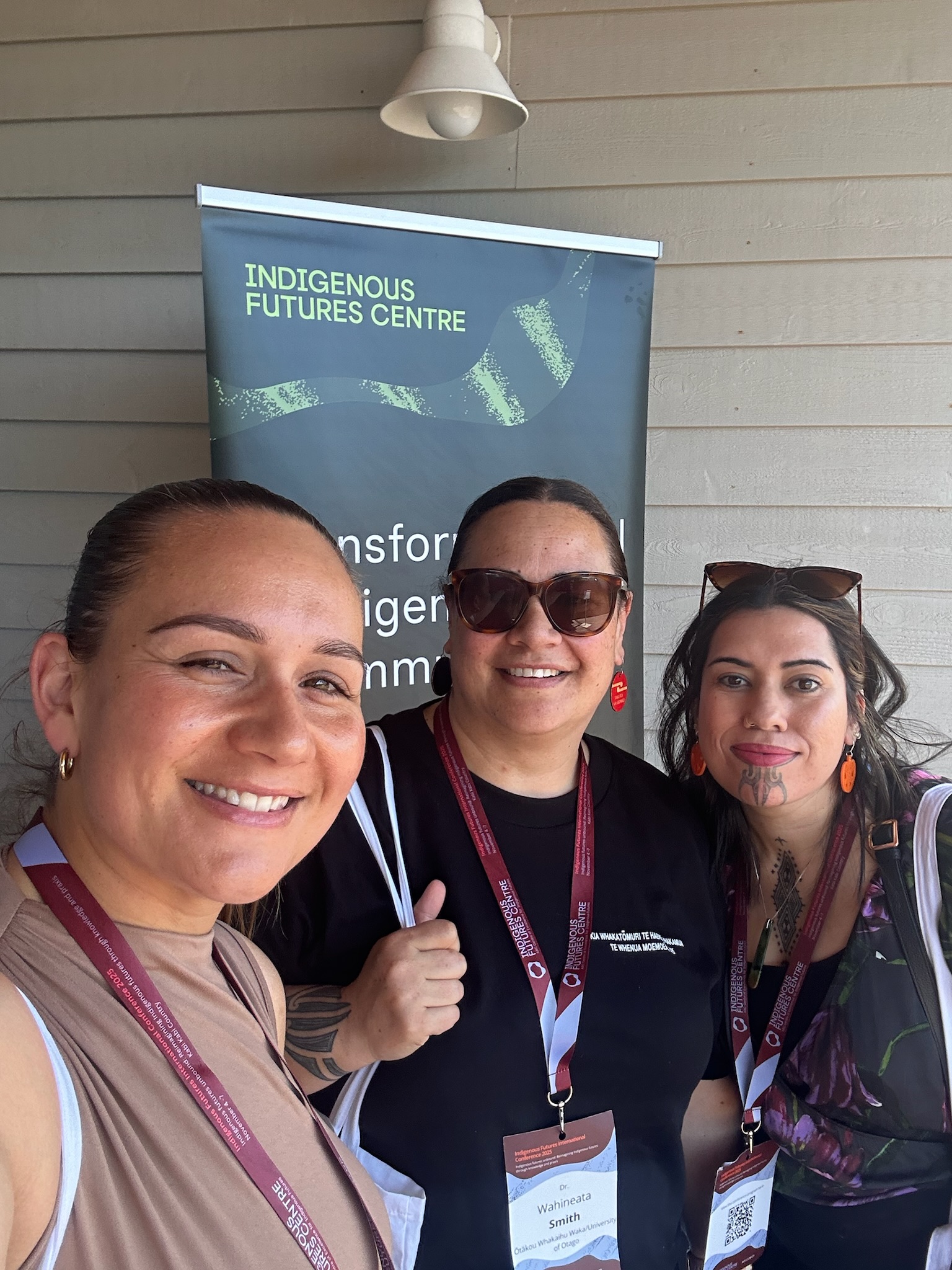
In early November, Te Tumu Māori Studies academic Wahineata Smith travelled to the Indigenous Futures International Conference 2025, taking with her two Māmā that had been part of her research which focuses on parenting practices in dual heritage Māori and Tongan families. Their reflections on the event are published here.
Wahineata Smith
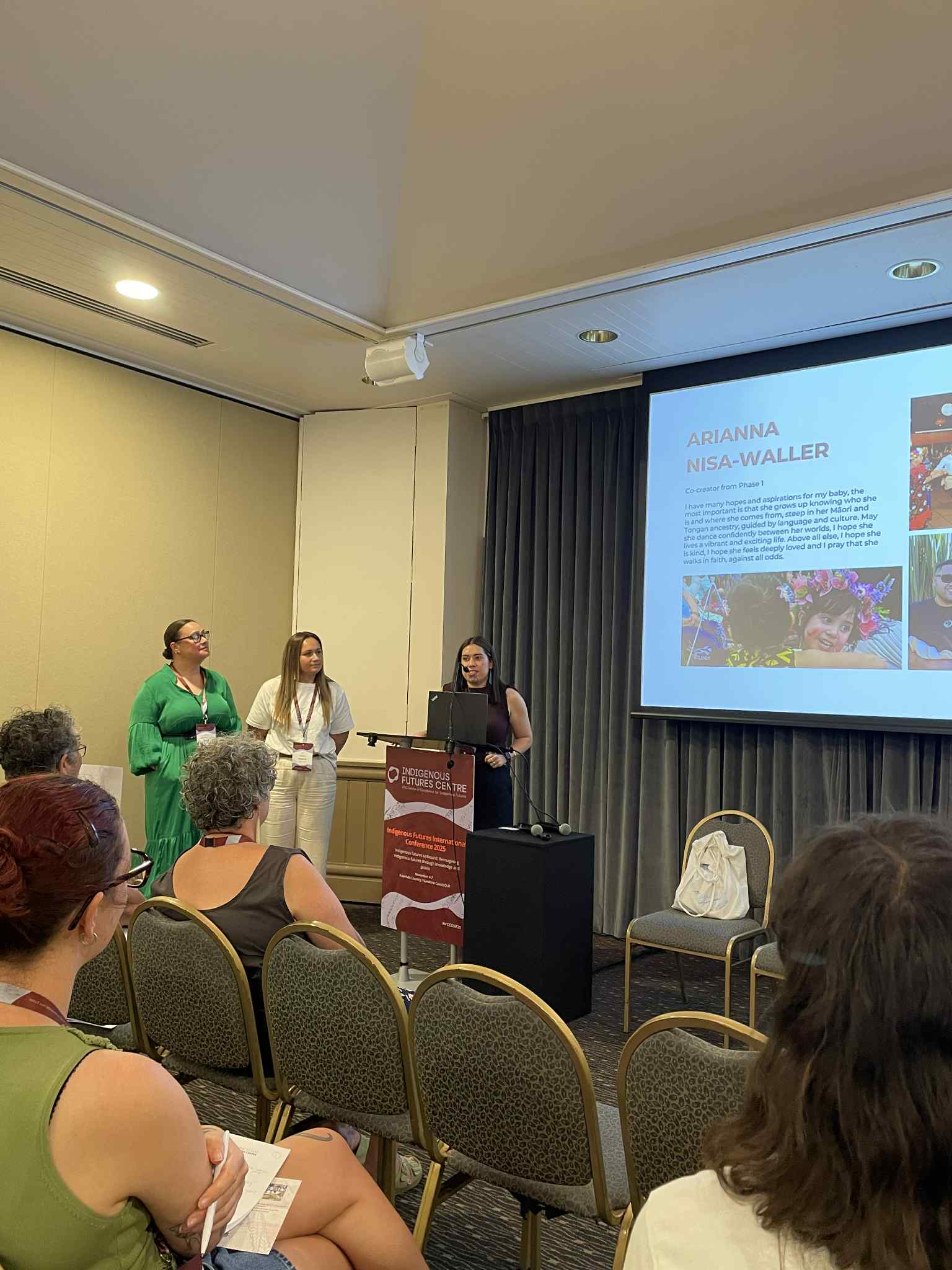
A call for abstracts to an Indigenous conference landed in my inbox and I was immediately interested. I had been thinking about how to bring some people from my research along with me as a way to acknowledge and give voice to the whānau or co-creators of my rangahau that explores how parents and caregivers actively shape their children’s cultural identity across geographic, linguistic, and social boundaries. As the number of Māori and Pacific families with multi-ethnic whakapapa grows, so too does the need to understand how identity, wellbeing, and belonging are nurtured in diverse whānau contexts. Research related funds were sought and I was able to invite two Māmā as representatives of the two phases of my rangahau, giving them the opportunity to co-present on their experiences of raising tamariki who have both Māori and Tongan whakapapa. Titled “Navigating layered identities: Co-creating knowledge with Māori and Tongan whānau in Aotearoa”, our presentation drew on kōrero from wānanga held with Māori-Tongan families in Ōtepoti Dunedin, Phase One and Kirikiriroa Hamilton, Phase Two.
Attending the conference was a meaningful and enriching experience, both personally and professionally. Hosted on beautiful Kabi Kabi country in Sunshine Coast, Australia, the gathering brought together more than 300 Indigenous scholars, researchers, and community leaders from across the region and beyond. While the conference theme spoke to “Indigenous futures,” many of the presentations carried a deep emotional weight. The kōrero reflected ongoing experiences of mamae, resilience, and reclamation, clear reminders that the work of decolonisation and self-determination continues to be deeply felt amongst Indigenous communities. It was powerful, yet at times heavy, as we collectively navigated the tension between inherited trauma and imagined possibility.
Hei whakakapi ake, e mihi tonu ana ki ōku hoa haere me ō rāua whai wā, ō rāua tautoko anō hoki ki te tohatoha ō rāua ake wheako. E mihi tonu ana ki Te Tumu, ki Ōtākou Whakaihu Waka anō hoki, mō te pūtea tautoko me te tirohanga whānui kia tutuki ai tētehi mahi pēnei, te kōrero ngātahi te kairangahau me ngā whānau kua rangahautia. Ko te whāinga matua, ko te whakatupu tamariki kia whīkoi poho kererū ai i roto i ō rātou ake whakapapa, i ō rātou ake ahurea, i ō rātou ake tuakiritanga anō hoki.
Arianna Nisa-Waller
I firstly wanted to express my gratitude to Wahineata for moving beyond traditional and Western research parametres and daring to ensure whānau voices, through her rangahau, are honoured, not just by way of doing research but in the dissemination of the rangahau and taking participating whānau with her to these indigenous hui. I know this challenges the idea of investment in rangahau within tertiary institutions being an individual pursuit that only sees and values the researcher. Wahineata has created an example located in collective indigenous realities to create new horizons where whānau voice becomes an enduring legacy enriching the outcomes of ao Māori driven rangahau, no longer are whānau just there in the recruitment phase and data collection, but they are integrated all the way through.
I think this is a model to consider in future investments for kairangahau Māori because this collective voice mahi is not a new concept to us but we could also think about how we push this as the norm in the institution. In the lead up to the conference, we had all met together on zoom to ensure we could co-create the presentation taking Wahineata’s lead. We were prepared for the time given to our session to go quickly but when we got into it, given the talks before us in our concurrent session went over time, our time was cut shorter. Despite this, Wahineata delivered an impressive and inspiring presentation on her kaupapa rangahau about ensuring the continued legacy of encouraging the dualities of Māori and Tongan identity for our tamariki.
This is the heartbeat of what we each have in common and what had compelled us to travel across the ocean to share kōrero with this indigenous audience. In a time of global unrest where vast losses are occuring and a thick political divide is erupting, this kaupapa of language and identity revitalisation pertinent to our tamariki bought a lightness and transformative power to the space. We sadly ran out of time to cover the full length and breadth of what we had planned however, the lasting message in my perspective was delivered by Wahineata. There was much interest in the rangahau and I think just enough was laid out for people to know this is a rangahau journey that Wahineata will continue as a longitudinal study with the further research funding she has been awarded.
Erana Severne-Takataka
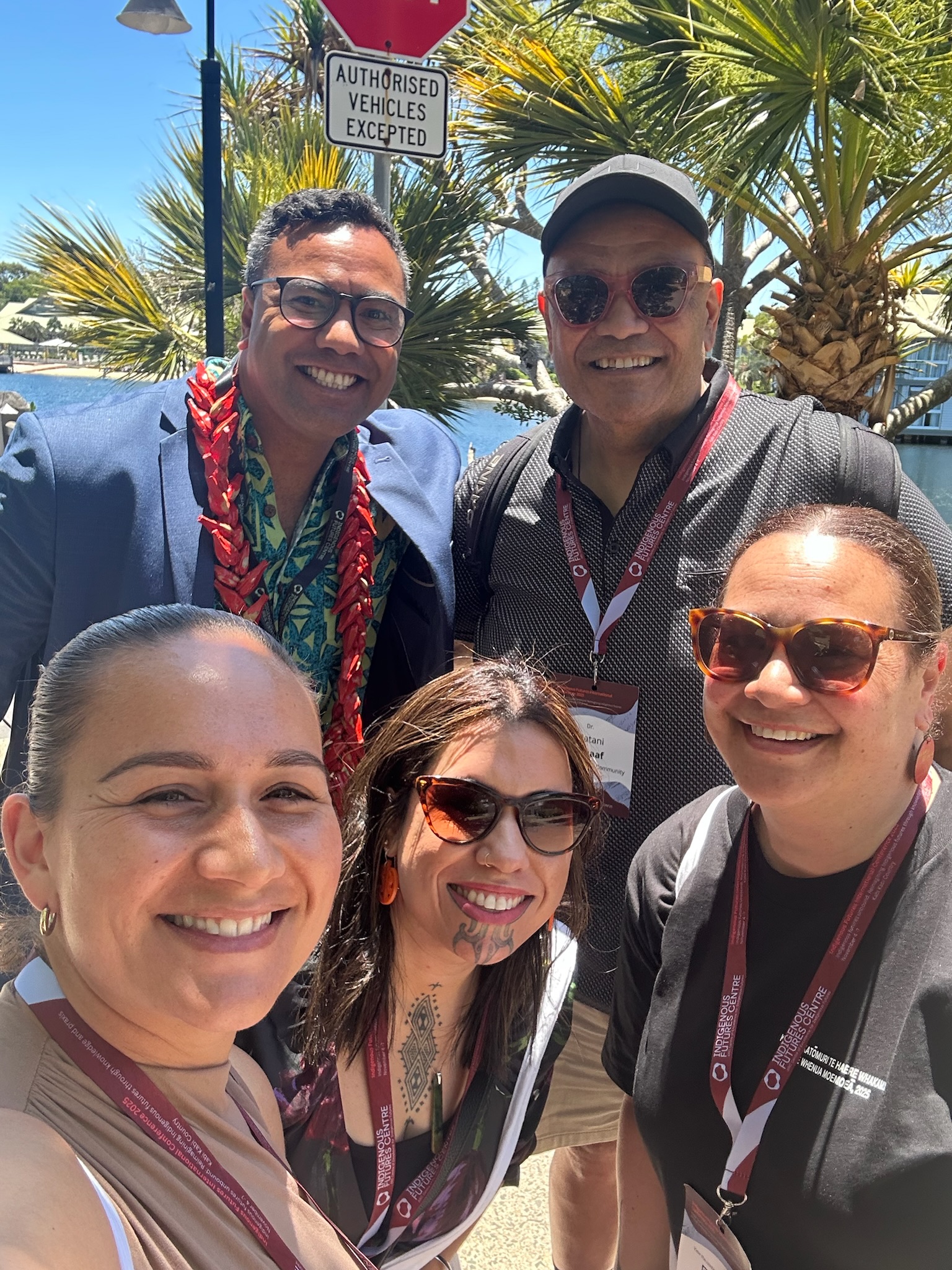
This is such important mahi and very close to my heart. We are going to see more blends of Tongan and Māori children, and I know first-hand some of the complexities that come with raising strong, confident, vibrant children in multiple ahurea (cultures). Reflections I have a deep appreciation for how far Māori has come, even though there are still many ongoing challenges in Aotearoa. I could feel the anger and almost rage from our brothers and sisters in Australia. There is so much mamae there, and a lot of complexity. While this is true for Māori as well, I found myself thinking about how each of us could have stood up and done our presentation entirely in te reo Māori. After one of the sessions, a young Aboriginal wāhine made a comment saying, “You all stand so confidently, knowing who you are and where you come from.” That wasn’t something we had really thought about, but for others whose loss of reo and connection to culture feels so distant, it can seem aspirational. I hadn’t really heard of identity fraud before, but it came up a lot at the conference as a challenge they’re facing in Australia. In a discussion with the girls, we wondered how that might play out in New Zealand. We felt that at a small level you might get away with it, but in a larger forum our country is so small that someone would definitely call it out.
I’m not from the education field, but one thing I noticed was the style of presentations. Many were pre-written, often delivered by very intelligent people with amazing kaupapa, yet I rarely saw truly engaging presenters. Sometimes the tone was so clinical that it was hard to stay focused, especially with complex topics delivered in the same way throughout. It reminded me how important storytelling is. How do we bring people along on the journey and make complex or difficult topics easy to understand? How do we clearly explain our context to those who may not know our world? How do we use pitch, tone, and pace to support our message and thinking? It made me wonder how we could present ideas differently so they connect more deeply with people.
