Te Tumu Pacific Studies academic Jess Pasisi’s recent collaborations with Niue community are advancing Niue knowledge and pushing the boundaries of how this knowledge is recognised in scholarly spaces. Alongside Niue Palmerston North Community (NPNC) representatives Sunlou Liuvaie, Sontel Liuvaie, Alister Patali Lavini (Tali), and Randy Liuvaie, Wellington-based Inangaro Vakaafi, and Auckland-based Shimpal Lelisi and Ioane Aleke Fa‘avae, Jess facilitated a roundtable session at the Niue Research Symposium 2025, held 6-7 November in Auckland and hosted by Te Poutoko Ora a Kiwa at the University of Auckland.
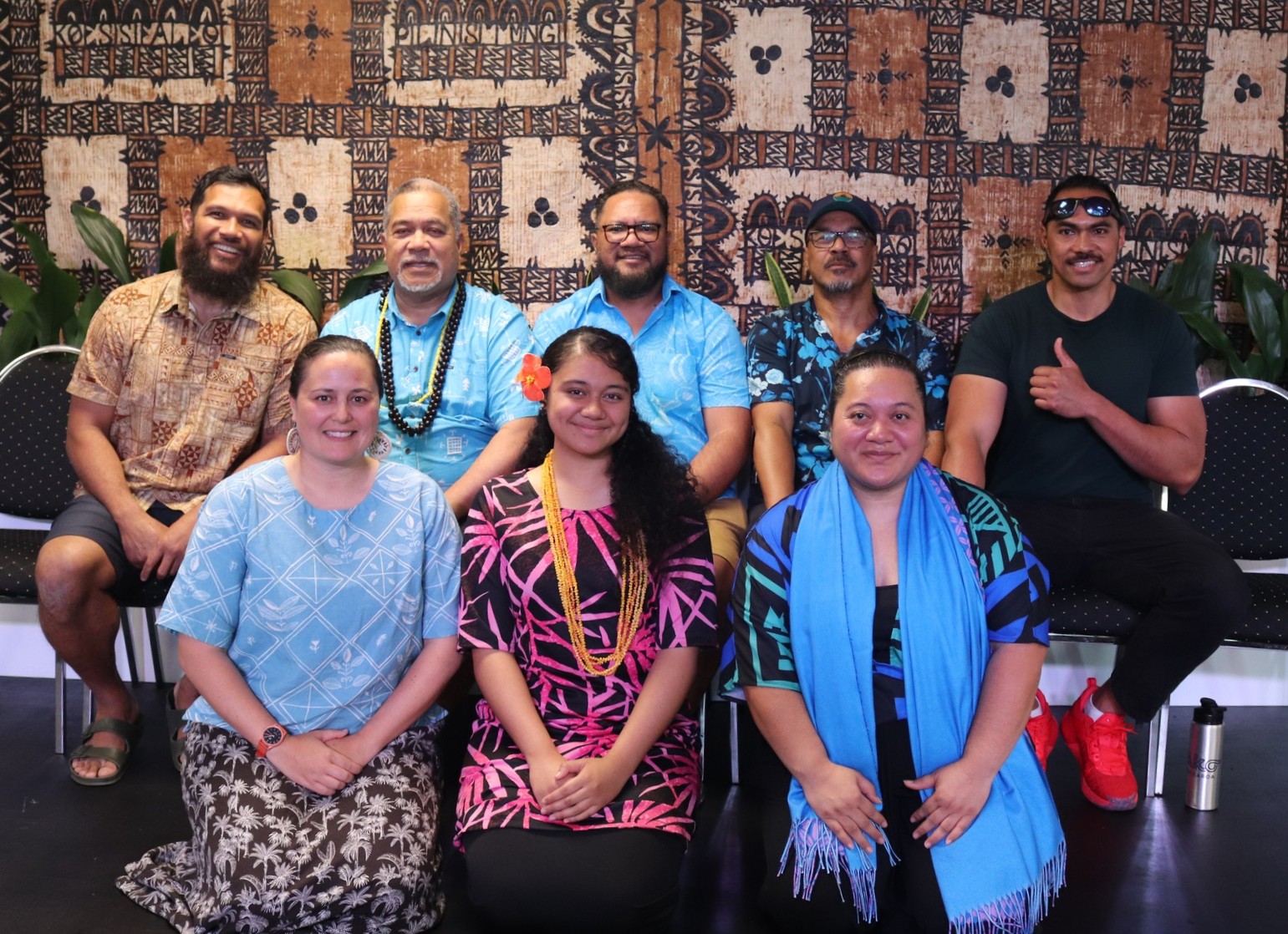
Photo caption: Niue researchers from back L-R: Randy Liuvaie, Sunlou Liuvaie, Ioane Aleke Fa‘avae, Shimpal Lelisi, Alister Patali Lavini; front L-R: Jess Pasisi, Sontel Liuvaie, Inangaro Vakafi. Photo credit: Toliain Makaola
As the largest roundtable of the Symposium, the group that delved into serious questions about how tertiary institutions can be held to account by community, specifically in how these institutions engage lotomatala Niue, Niue knowledge in research. The youngest presenter of the entire event, Sontel, showcased some of her work using Niue knowledge and design in contemporary art as well as strong perspectives on her experiences growing up tagata Niue in Te Papaioea Palmerston North. Community leaders Sunlou, Randy and Tali shared experiences of growing communities of successful Niue learners, championing multi-generational events and spaces for sharing knowledge, and ways of nurturing the values of Niue culture and language with family and in aspects of life. Discussion about the recognition of Niue knowledge holders in creative work was reflected on by Inangaro and Shimpal who had collaborated to the recently released documentary “Being Niuean” documentary series. Ioane’s reflection complemented earlier points he had raised in a “Niue knowledge in research” webinar, also facilitated by Jess, in how Niue knowledge needs more careful consideration in how people treat, understand and use it, both in and beyond the academy.
The session centred questions about how Niue knowledge is constructed, understood and engaged, how to build strong communities of Niue learners, how to adapt Niue knowledge appropriately in different environments and for different purposes, and how to uphold Niue principles and values in the myriad ways we come to research. Being in conversation enabled collective reflection and attended to the specificities of Niue experience (with particular focus on experiences outside of Auckland) that can be expressed in different forms which include storytelling, creativity, practice, relationality, recording and repositing knowledge, intergenerational knowledge sharing and lived experiences.
Jess strongly advocates for the inclusion of community in academic spaces and pushes for greater recognition of the way Niue knowledge in research is not the domain of any singular institution or body. Blurring the boundaries between “academic” and “community” enable deeper discussions about how lotomatala enriches both spaces and has the ability to overcome some of the barriers and shortfalls of institutions as they increasingly seek Indigenous knowledge and knowledge holders to stay relevant and progress.
Jess also belongs to the Matala he Toume collective alongside Ioane, Inangaro, Lisimoni Birtha Togahai, Cora-Allan Lafaiki Twiss and Rennie Atfield-Douglas, that hosted the first Niue knowledge Symposium in 2022 followed by a Niue Knowledge Conference in Niue in 2024. The next Matala he Toume conference is scheduled for 2026.
