New Biography on Richard Seddon
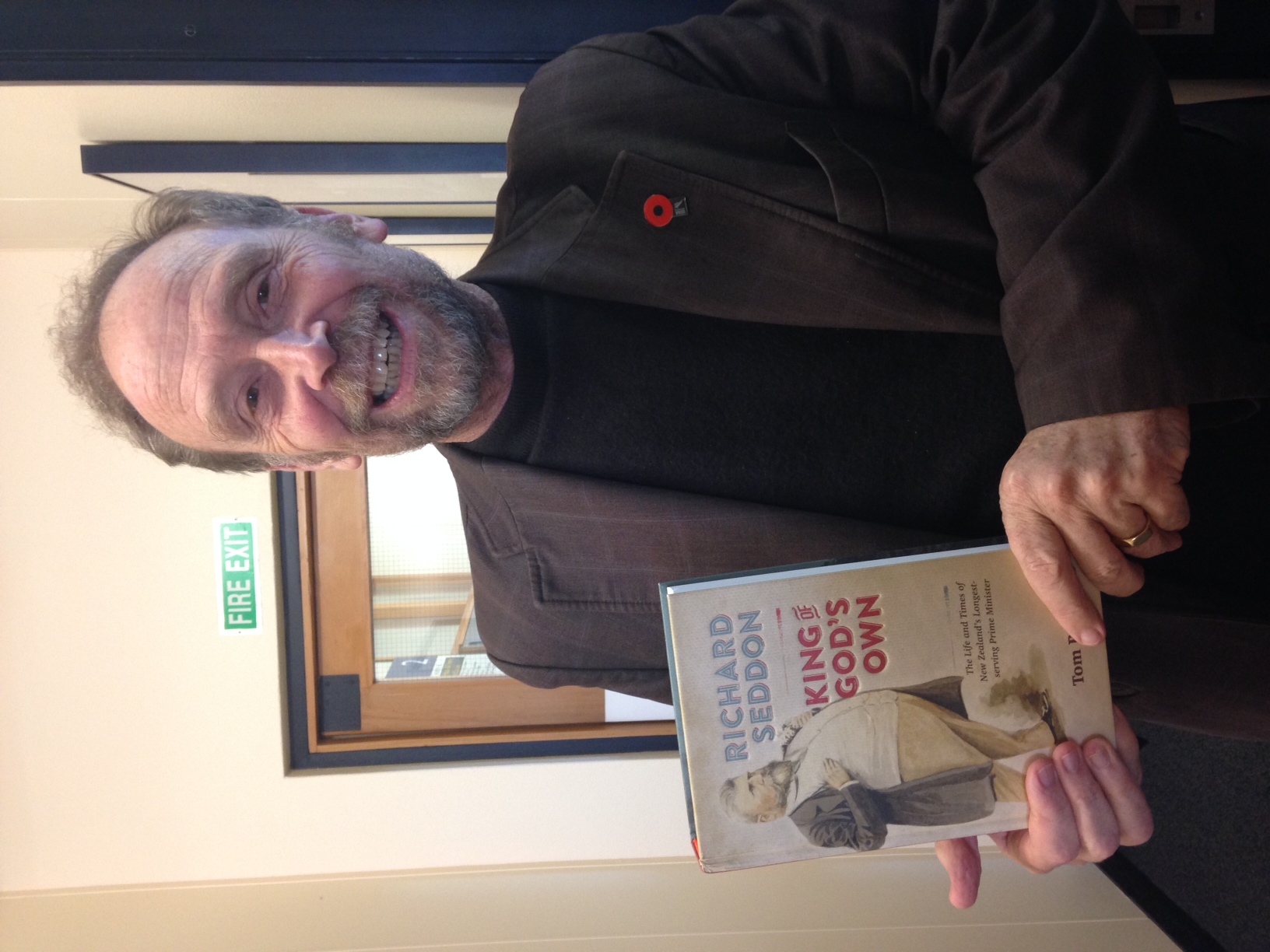 Richard Seddon was a colossal figure in New Zealand politics up to his death in 1906. His Liberal Party was New Zealand’s first modern political party; his government introduced old age pensions and votes for women, as well as an industrial conciliation and arbitration system. Seddon was able, for much of his time as Prime Minister, to gain the support from a wide range of the political spectrum, at the same time that the rest of the world marvelled at the country’s “socialist” experiments.
It has been almost 60 years since an authoritative biography of Seddon has appeared, R.M. Burdon’s King Dick. Until now! CROCC member, Professor Tom Brooking’s latest book Richard Seddon: King of God’s Own has just been published by Penguin Books, and gives us fresh insights into “the Life and Times of New Zealand’s Longest-serving Prime Minister”. Congratulations, Tom.
Dr Angela Wanhalla wins Ernest Scott Prize
At the Australian Historical Association conference in Brisbane last night, 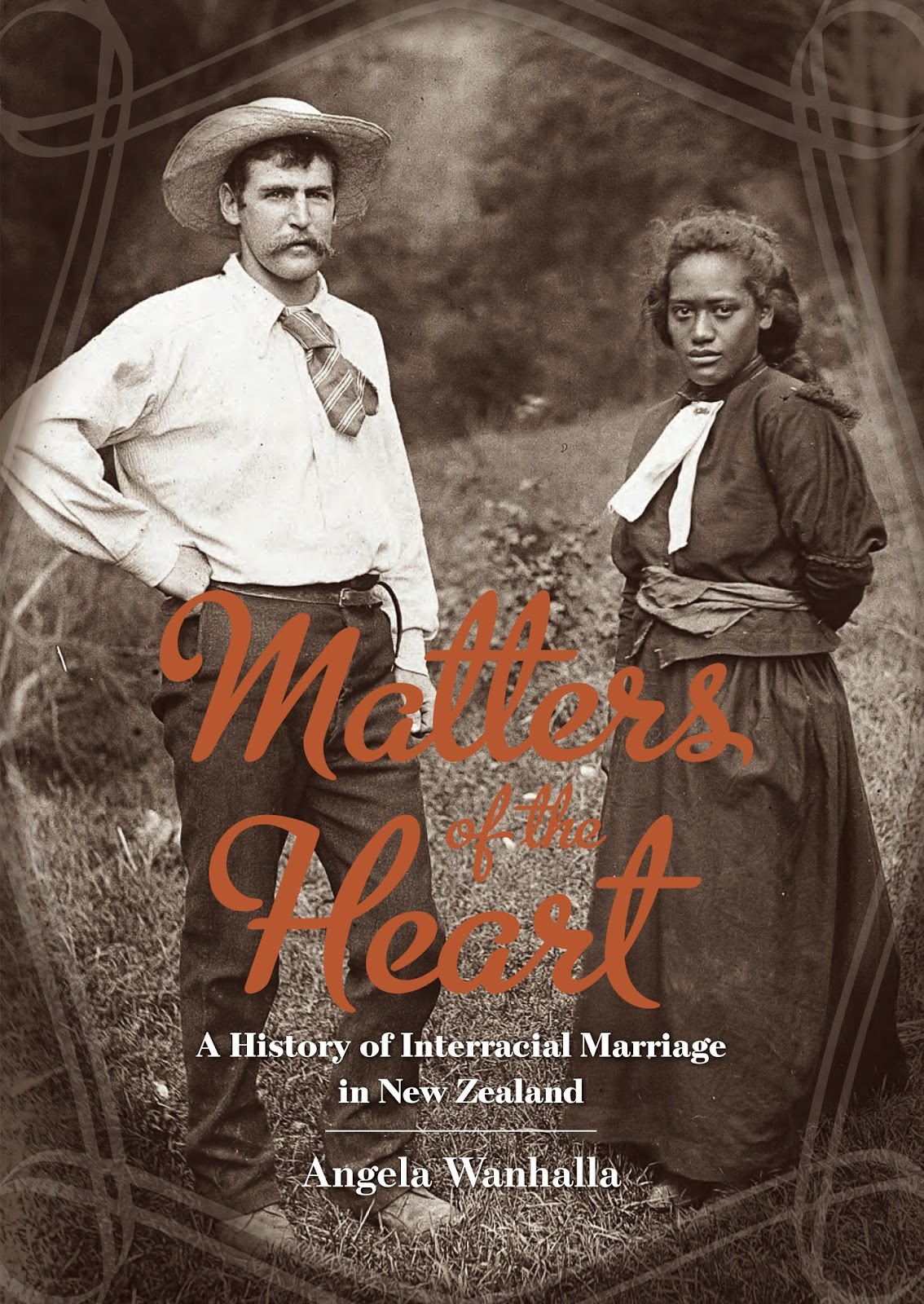 CROCC member Dr Angela Wanhalla was awarded the Ernest Scott Prize for History. This prize is awarded annually to the book judged to be the most distinguished contribution to the History of Australia or New Zealand or to the history of colonization published in the previous year.
Matters of the Heart: A History of Interracial Marriage in New Zealand was published by Auckland University Press.
As the judges commented “Angela Wanhalla’s ground breaking history of interracial relationships in New Zealand across two hundred years utilises not only the usual range of church and state records but also personal papers, family and local histories to track the lives of couples whose relationship was sustained over a period of time. While Maori women left little trace for the historian, Wanhalla uses analysis of images, particularly photography, to overcome some of the gaps and silences in the record. She takes a broad view of coupling which incorporates common law relationships, Maori ceremonies and Christian marriages sanctioned by the State and also takes account of various debates and legislative action in relation to marriage over time.
“Wanhalla draws on the recent work by anthropologists and historians such as Ann Laura Stoler to explore the history of emotion and sentiment as central to these encounters. She historicises the specific context in which these are expressed and how they changed over time in relation to the society and demographics. She notes that interracial relationships in New Zealand have often been used as evidence of ‘gentle colonialism’ but while her study of intimacy makes an important contribution to overturning simplistic paradigms of race relations on the frontier and beyond, Wanhalla still emphasises the framework of gendered and racial power struggles within which these relationships operated.”
Congratulations to Angela for her ongoing success!
W.H. Oliver Lecture at Palmerston North
Our Centre Director, Professor Tony Ballantyne, will be giving the W.H. Oliver Lecture for 2014. This event is held annually at Massey University, Palmerston North in honour of the eminent New Zealand historian, Professor Bill Oliver. Click here for further details of this public lecture.
Successful symposium on Indigenous Textual Cultures
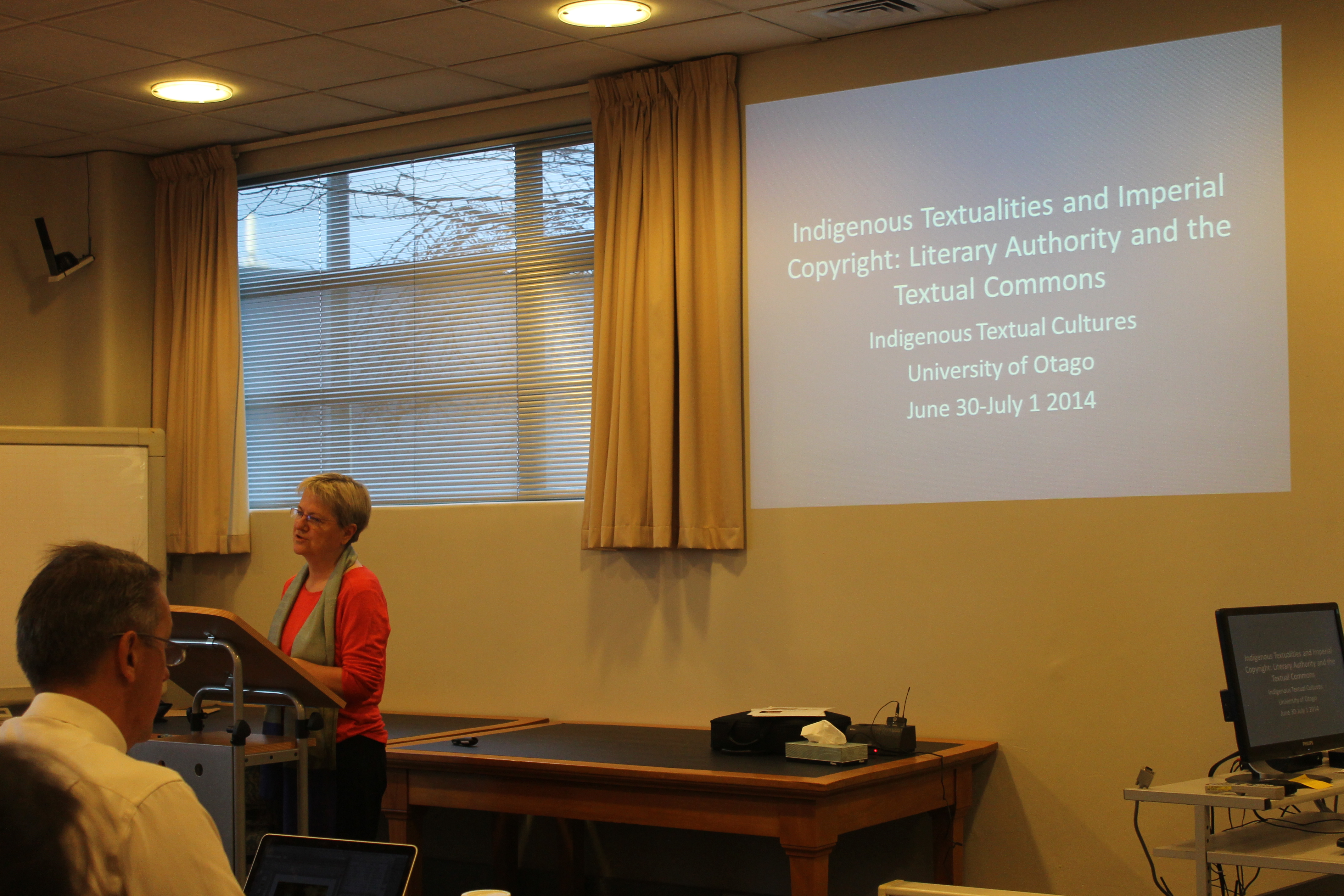
Isabel Hofmeyr
The Centre was pleased to hold the Indigenous Textual Cultures symposium this week, an event that attracted a number of scholars from around the world interested in the history of indigenous peoples’ engagement with texts, and textual culture. Mark Brunton, Research Manager Māori gave a mihi whakatau (welcome) to open the event, which was held at the wonderful Hocken Collections, one of New Zealand’s premier research libraries and archives. A full hour was assigned for each presentation, allowing for depth of discussion within a focused event.
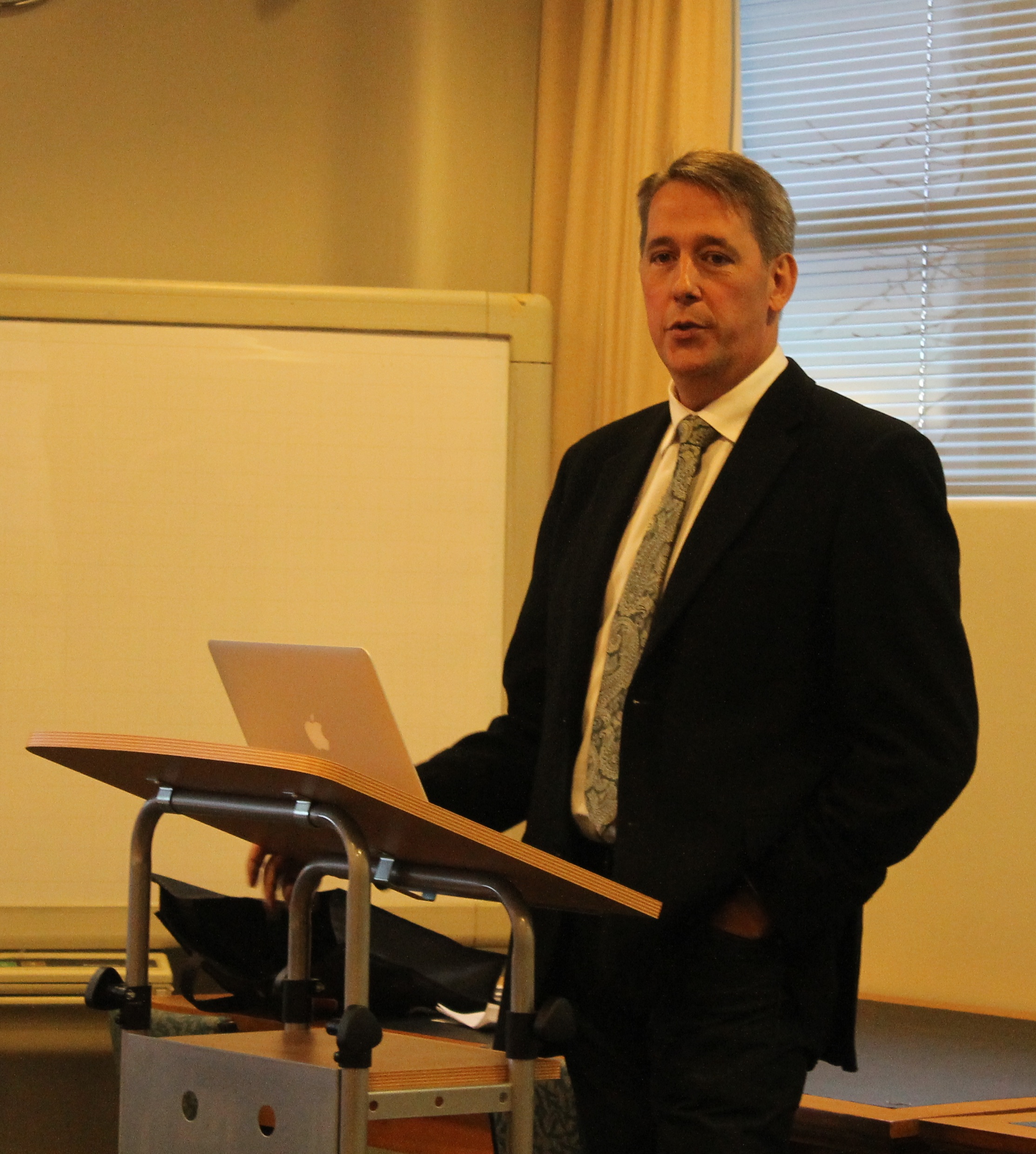
Keith Thor Carlson
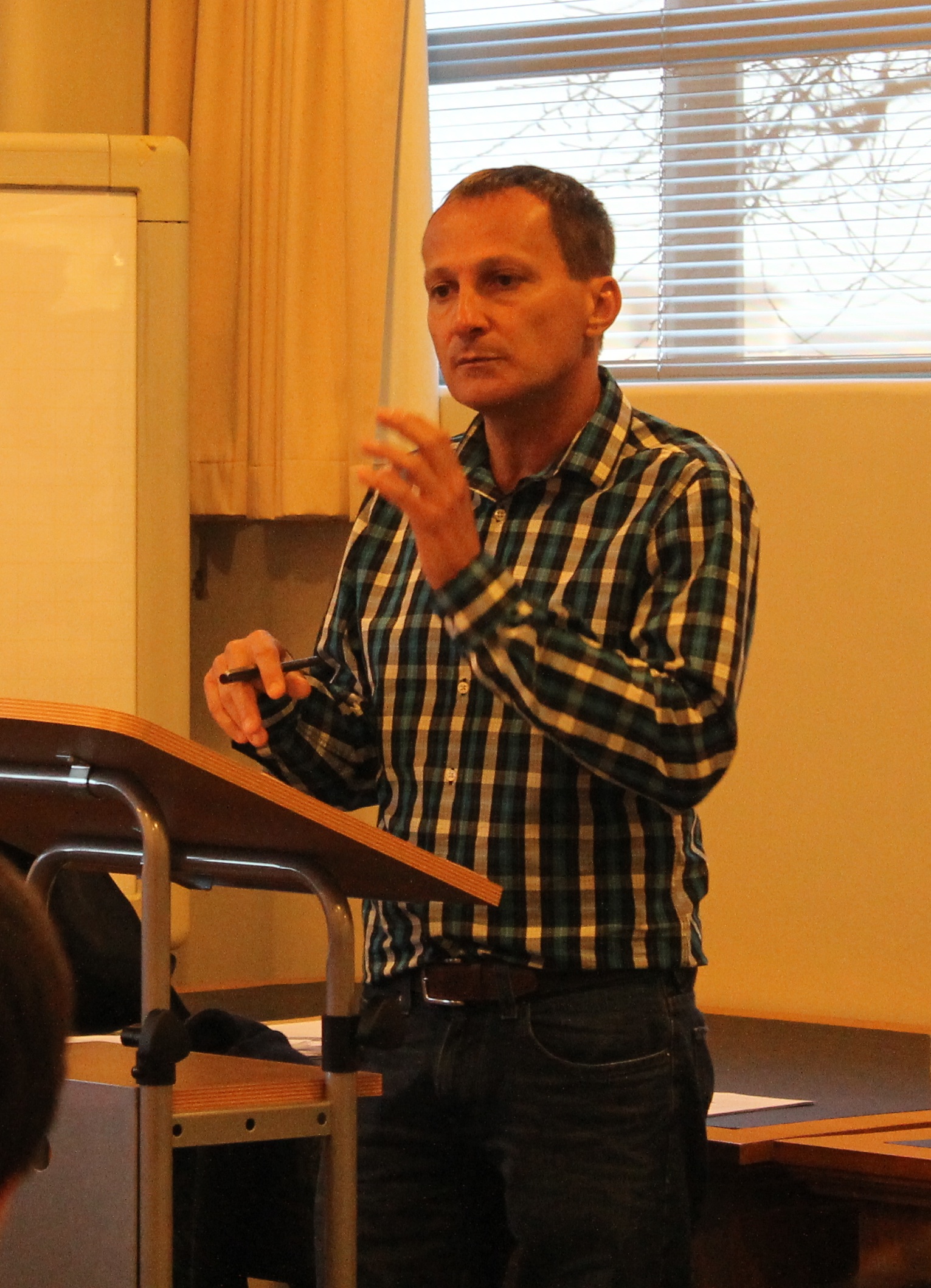
Bruno Saura
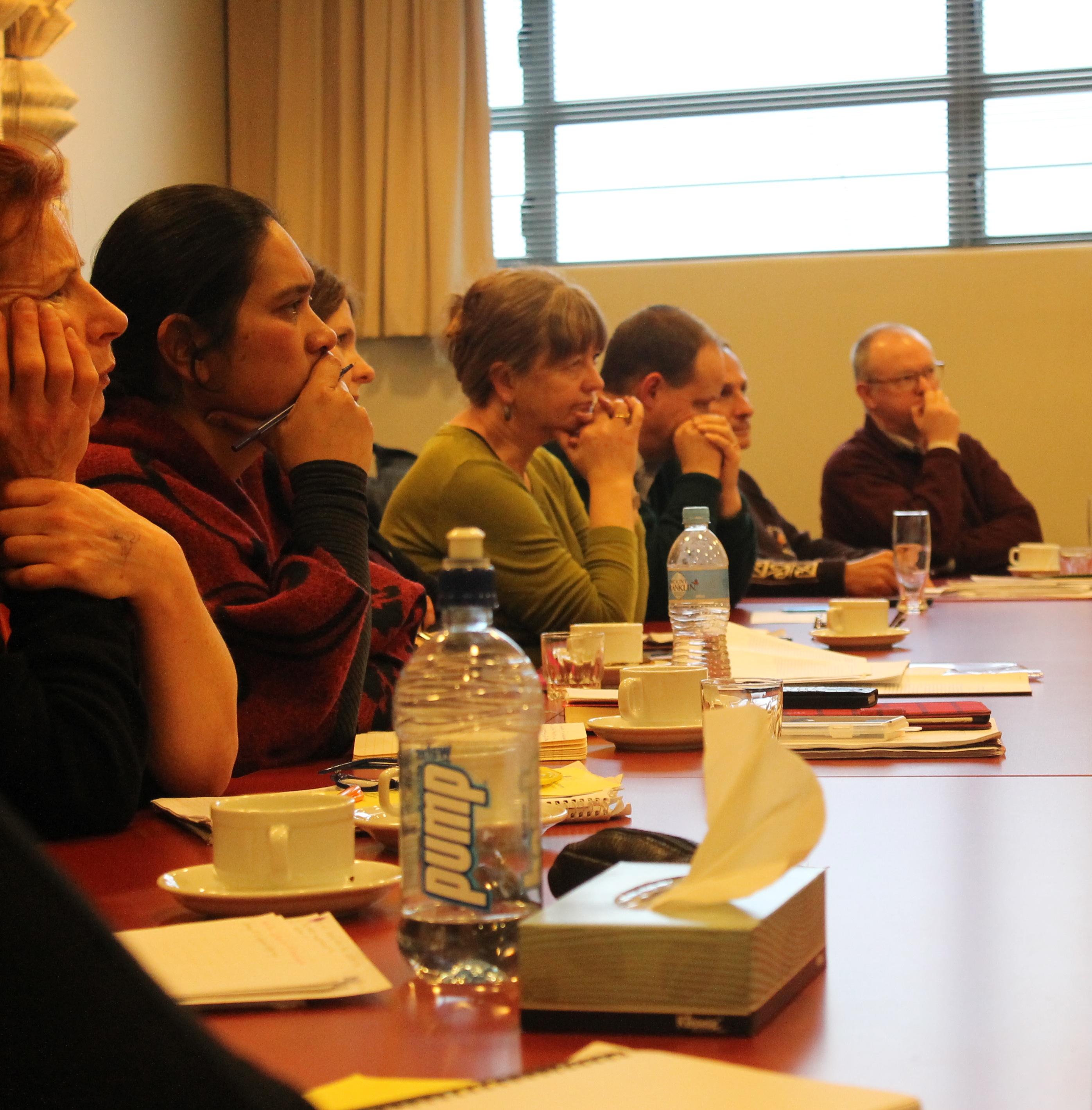
Focusing on the content…
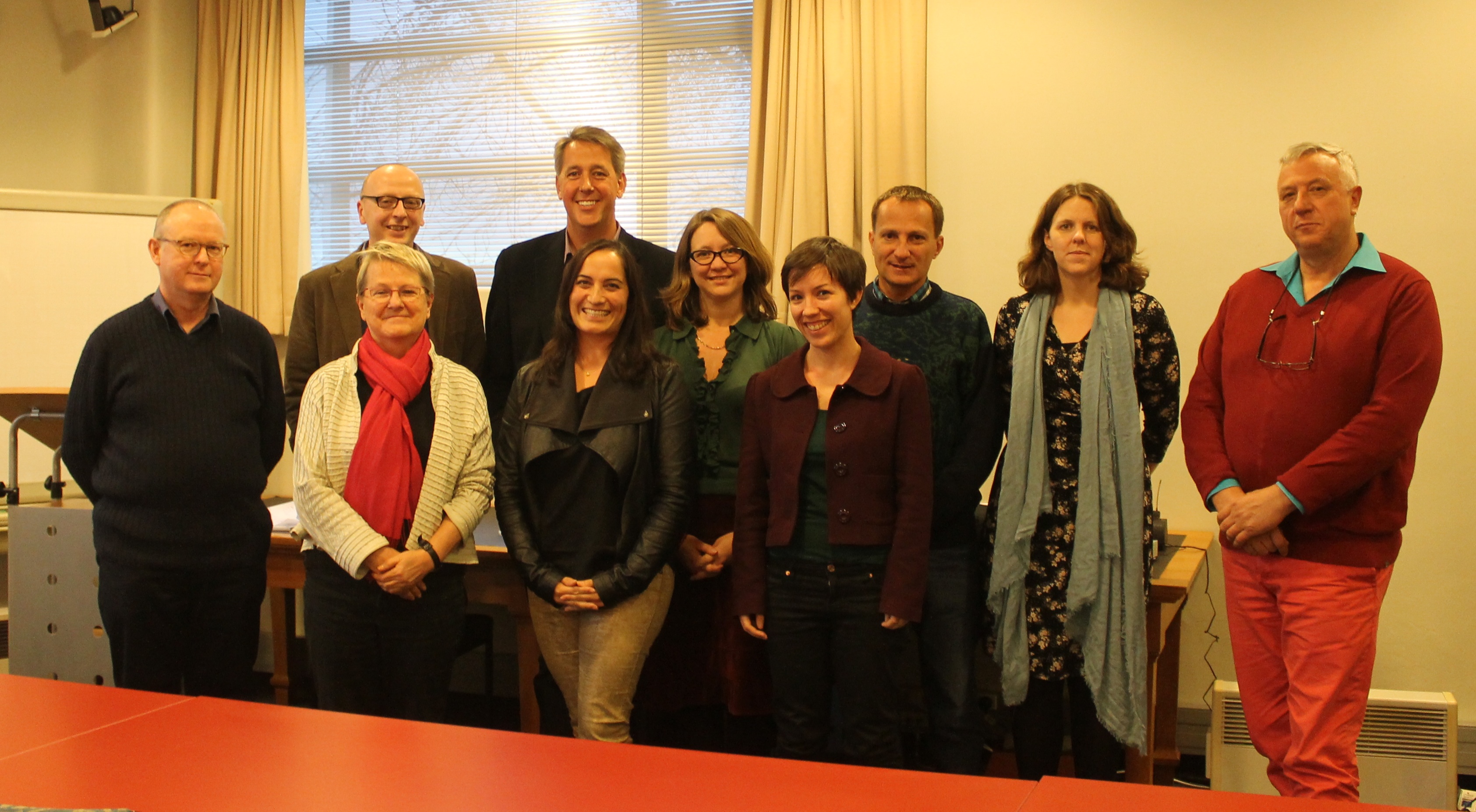
Presenters from left: Michael Reilly (Otago); Isabel Hofmeyr (Witswaterand); Tony Ballantyne (Otago); Keith Thor Carlson (Saskatchewan); Ārini Loader (VUW); ; Anna Johnston (Tasmania); Laura Rademaker (ANU); Bruno Saura (Polynésie Française); Emma Hunter (Cambridge); Lachy Paterson (Otago). Absent: Noelani Arista (Hawai’i)
See programme for full details and abstracts.
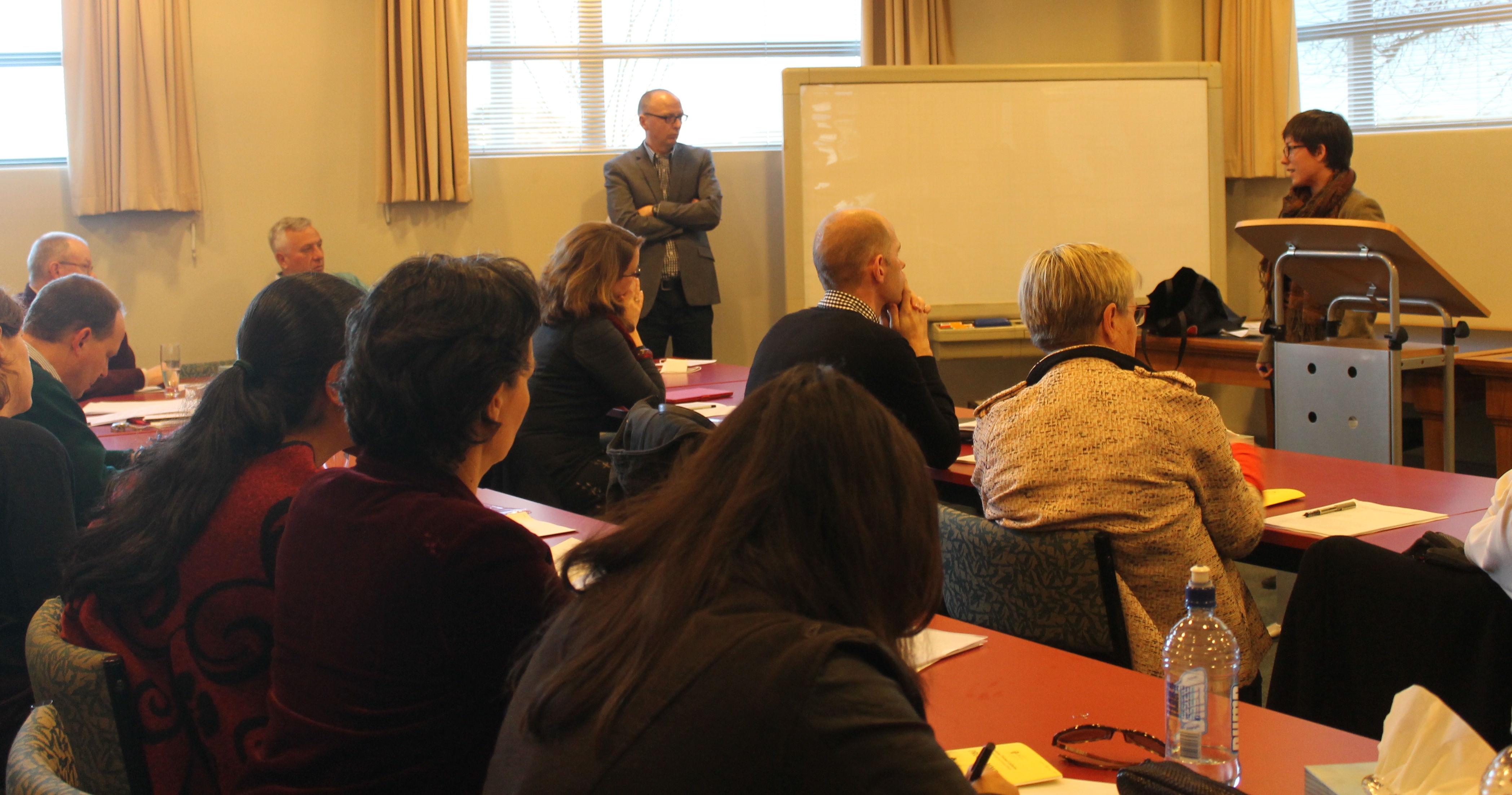
Laura Rademaker responding to a question from Tony Ballantyne.
Although there are of course specific differences in how indigenous peoples of various localities and time periods engaged with literacy and texts, the symposium was extremely valuable in generating conversation, and a publication is planned from research presented. We would like to thank the locals who came along to listen, as well as several from the North Island. In particular we would like to thank Julie Gough for the amazing poster image, and the Hocken Collections for all their support.
CRoCC member shortlisted for prestigious book prize
Congratulations to Angela Wanhalla, member of CRoCC and the University of Otago’s History Department, for the shortlisting of her recent book, Matters of the Heart: A History of Interracial Marriage in New Zealand, for the Ernest Scott Prize for History for 2014. This prize, given annually to the book judged to be the most distinguished contribution to the history of Australia or New Zealand or to the history of colonization, will be awarded at the upcoming Australian Historical Association Conference in Brisbane in July. Angela’s book was published by Auckland University Press.
Forthcoming Conference
Migrant Cross-Cultural Encounters: A Multidisciplinary Conference
24-26 November 2014
University of Otago, Dunedin, New Zealand
Historical and contemporary global migration involves a range of cross-cultural encounters, but how are these interactions discussed, debated, and defined? This three-day multidisciplinary conference seeks to examine past and present migrant encounters with other peoples in a diverse range of locations. Papers from various disciplinary angles are welcome from a variety of themes and from any historical period or region.
Themes may include but are not limited to:
- Race, ethnicity and citizenship
- War, migration and cross-cultural contact
- Labour, migration and cross-cultural encounters
- Empire, contact and mobility
- Gender, migration, and cross-cultural encounters
Please provide:
- a title
- a 250-word abstract of your paper
- brief biographical information (including institutional affiliation and contact details).
All proposals will be assessed after the deadline of Friday 11 July 2014. If you require an earlier acceptance please advise us.
Proposals or requests for further information should be sent to: migrants@otago.ac.nz
The conference is sponsored by four key multidisciplinary research hubs in the Division of Humanities at the University of Otago:
- Centre for Irish and Scottish Studies
- Centre for Research on Colonial Culture
- Asian Migrations Research Theme
- Comparative and Cross-Cultural Studies Research Theme
For further information see the website (click the highlighted text).
Indigenous Textual Cultures Symposium
Tēnā rā koutou.
On 30 June and 1 July the Indigenous Textual Cultures Symposium will be held in the Seminar Room at the Hocken Collections. The Centre is excited to host this event, with leading academics from South Africa, North America, Australia, New Zealand and the Pacific presenting research looking at how indigenous peoples interacted with literacy and texts during the colonial period.
Check out the programme and the presenters’ Abstracts.
All interested staff, students and members of the public are most welcome to attend. There is no fee for attendance but please RSVP to lachy.paterson@otago.ac.nz so that we have some idea about numbers for catering.

Poster, featuring work of Tasmanian Aboriginal artist and historian, Julie Gough.
Environmental History Symposium
 Paper proposals are now being invited for an upcoming CRoCC event, an environmental history symposium at the Hocken Collections, University of Otago, Dunedin. It will be held on 31 October, and feature an address by Associate Professor Grace Karskens (University of New South Wales), author of The Colony.
If you are interested in presenting a paper or you want to attend the event please contact Professor Tom Brooking (tom.brooking@otago.ac.nz).
“Objects book” progress
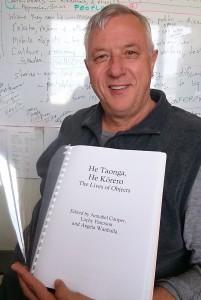
Manuscript ready for sending to Conal.
In February 2013 CROCC held its inaugural conference on “colonial objects”. This was a successful event attracting academics, librarians, archivists, heritage professionals, and others. It was always our intention to publish a collection of essays coming out of the conference presentations. The editors, Annabel Cooper, Lachy Paterson and Angela Wanhalla still have some loose ends to tie up (ably assisted by their RA, Katie Cooper) but are happy to report that our draft is almost ready. It has now been sent to Conal McCarthy at VUW to read and add a final reflective essay. Then it will be off to Otago University Press to perform their magic. Expect it in the bookshops in 2015. A big thank you to all involved.
New Zealand’s Victorians Uncool?
The New Zealand Herald has just published its list of the “Coolest 50 Kiwis Ever“. The paper admits that its list is subjective. It has a reasonable percentage of women and Māori but, like many of these kinds of lists, individuals from the present and near present predominate, and coolness is seen to fade as time passes. What is quite incredible is that it appears that no one cool flourished in the nineteenth century. This is of course the “coolest Kiwis ever”, and New Zealanders in the nineteenth century probably didn’t consider themselves as “kiwi”, or think that “coolness” related to anything other than temperature. Yes, New Zealand’s population was much fewer in the nineteenth century, but surely there were one or two individuals in the colonial period who were well known, widely admired, and who captured the public imagination (while still retaining the classic New Zealand humility) or perhaps even a few gay blades and gals whose ascetic stood out from the crowd.
