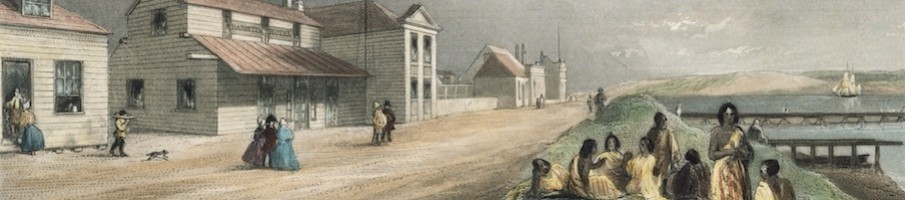
Elemental Histories
Professor Tom Brooking’s symposium ‘The Colonial World: Elemental Histories’, which will be held at the Hocken Collections on 31 October, has attracted a great line up of speakers. Featured on the programme are Associate Professor Grace Karskens (UNSW) who will open and close the day’s proceedings, and there will be presentations by James Beattie (Waikato), Mike Roche (Massey), Eric Pawson (Canterbury), Katie Pickles (Canterbury), Peter Holland (Otago), Rachael Egerton (Environment Southland), Lucy Mackintosh (Auckland), Tom Brooking (Otago), Andre Brett (Melbourne) and Michael Davis (Sydney). The symposium will end with the launch of James Beattie’s latest book, Climate, Science and Colonisation in Australasia (Palgrave Macmillan), co-edited with Emily O’Gorman and Matt Henry.
There is no cost to go this event but if you wish to attend this one-day symposium please register your interest with Prof. Tom Brooking (tom.brooking@otago.ac.nz). Further details about the programme will appear on this blog in October.
Professor Henry Reynolds in Dunedin
 On Monday 22 September prominent Australian historian, prize-winning author and public intellectual, Professor Henry Reynolds (University of Tasmania), will deliver the inaugural Archibald Baxter Memorial Peace Lecture.
This public lecture has been established by the University of Otago’s National Centre for Peace and Conflict Studies. The lecture is titled ‘Discovering Archibald Baxter and the thoughts on war which followed’ and will take place in Archway 1 at 5pm. This is a free event and is open to the public.
CFP: Colonial Christian missions and their legacies, @University of Copenhagen
This may be of interest…
CALL FOR PAPERS: Colonial Christian missions and their legacies
An international conference to be held at the University of Copenhagen, 27-29 April 2015
Confirmed speakers: Laura Stevens (University of Tulsa), Julie Evans (University of Melbourne), Kirsten Thisted (University of Copenhagen), Alan Lester (University of Sussex), Rebekka Habermas, (University of Göttingen)
Over the past decade the entanglement of mission work and colonialism has become central to representations of Christian missions and their legacies. Indeed, discussions over the role and legacy of both Catholic and Protestant missions are currently taking place both in the global historiography on European missions, and in more localized discussions of missions in a diverse range of post-colonial, and not-yet-post-colonial contexts. Despite disagreement on the precise nature of missions’ legacy, most commentators seem to agree that in social, religious, linguistic and educational terms, histories of Christian missions still have a significant impact on post- and not-yet-post- colonial societies today. This conference aims to take a global look at these histories, their legacies and representations. How are colonial Christian missions remembered or memorialised in different contexts and spaces? How are they forgotten? What voice do indigenous people (Christian and non-Christian) have in these representations? And how can we, as academics, artists, museum directors and educators, move towards representing them in more multifaceted, nuanced, and thought-provoking ways? Any types of representations may be considered including historical, artistic, literary, musical, sculptural, filmic, and papers comparing two or more contexts, or taking a global or transnational approach, are welcomed.
Possible topics include, but are not limited to: the history and legacy of relationships between Christian missions and colonial states; the influence of different aspects of colonial rule (economic, social, intimate, etc), on the ways in which Christian mission was articulated; the legacy of Christian missions for past and continuing relationships between indigenous and non-indigenous Christians within social, cultural and religious institutions; the legacy of Christian missions’ constructions of gender; the legacy of Christian missions’ influence on language and translation practices; the influence of Christian missions on indigenous political or artistic expressions; continuities of ideas, discourses, or emotions associated with mission, from the colonial era until now; efforts to reclaim / rewrite / re-represent mission histories by indigenous or non-indigenous peoples and their reception; issues around dramatization or fictionalization in representations of mission histories; vested interests in the representation of Christian missions.
Please send an abstract of 300 words, along with a short biography (max. 200 words) and CV to Claire McLisky at cmclisky@hum.ku.dk by 31 October 2014.
Launch of “Richard Seddon: King of God’s Own”

A great crowd filled the Hocken.
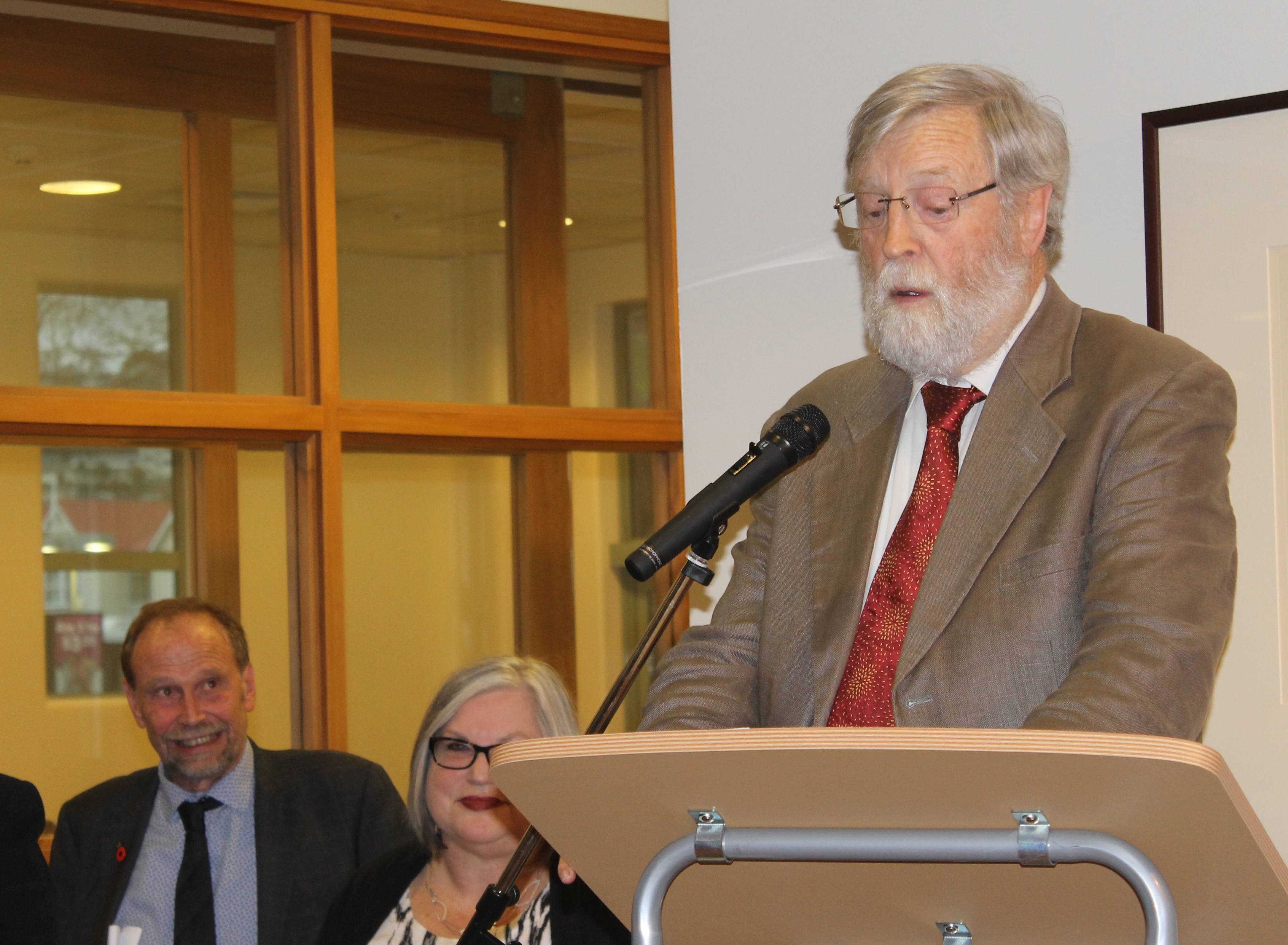
Erik Olssen, with by Sharon Dell and Tom Brooking [left], launch the new book on Richard Seddon.
Hocken Librarian, Sharon Dell, introduced the event, and was followed by Emeritus Professor Erik Olssen who formally launched the book. As Erik pointed out, there had not been a comprehensive biography since R.M. Burdon’s 1955 biography on New Zealand’s most successful Premier perhaps due to the the giant shadow that Seddon cast. Tom’s biography opens up considerable new perspectives and information on the man.
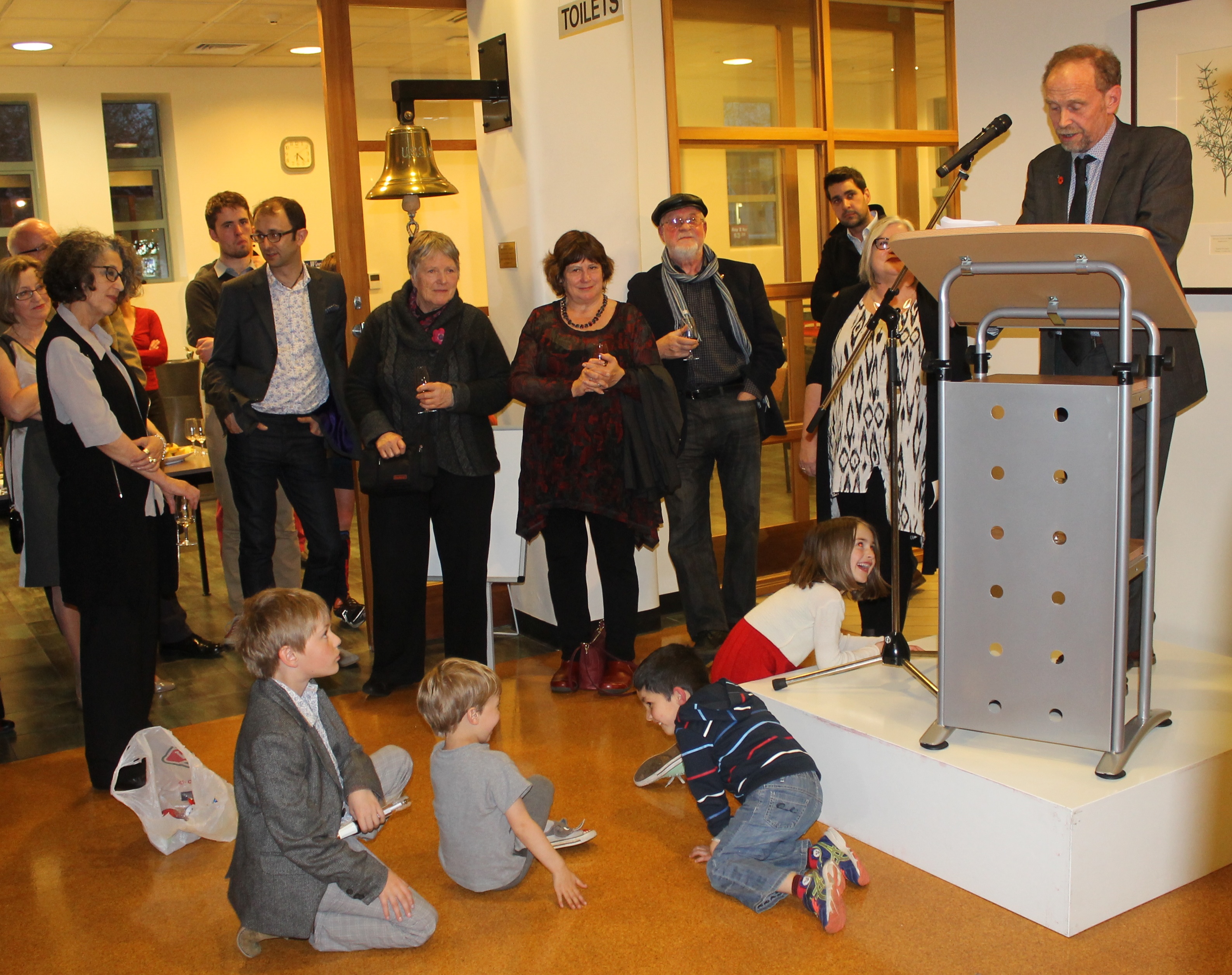
Budding new historians listening to the master.
Tom Brooking then discussed the topic of his research, recounting Seddon’s many achievements and his ability to connect with Māori, with workers, and the general public. However he was also a man of his own times, and his imperialist jingoism and anti-Chinese sentiment would not meet with such popular acclaim today.
At 584 pages this is a substantial book, but also one destined to be a classic within New Zealand historiography.
Quick News: Overseas Invitations
Two of CROCC’s members are currently in Australia, having been invited to give presentations at universities there. CROCC Director is at the University of Brisbane, and gave a talk last night on “Colonial Knowledge Making” to the Centre for the History of European Discourses.
Angela Wanhalla will be presenting today on the Mothers Darlings Project, at the University of Melbourne, as part of the “Writing the Pacific: Re-writing Australia” symposium.
Liam McIlvanney wins Ngaio Marsh Award
Great news about CROCC member, Professor Liam McIlvanney.
Press Release by Craig Sisterson: craigsisterson@hotmail.com
An exceptional thriller entwined with national and workplace politics, sectarian warfare, and the changing face and influence of the newspaper industry has won University of Otago Professor of Scottish Studies Liam McIlvanney the prestigious Ngaio Marsh Award for Best Crime Novel.
Dunedin-based McIlvanney was announced as the winner, for his “fascinating, brilliant, and challenging” novel WHERE THE DEAD MEN GO, before a packed house at the conclusion of the lively Great New Zealand Crime Debate event at the WORD Christchurch Writers & Readers Festival on Saturday 30 August. “In a year where we had our strongest, deepest, and most diverse long list ever, and four truly fantastic finalists, WHERE THE DEAD MEN GO got the nod for its terrific, page-turning storytelling powered by superb prose, fascinating characters, and an evocative sense of place,” said Judging Convenor Craig Sisterson. “It’s the kind of book that lingers in your mind beyond the final page.”
In WHERE THE DEAD MEN GO, Glasgow stands on the precipice: of the Commonwealth Games, a national vote on Scottish independence, and an explosive rekindling of a brutal gangland war. Gerry Conway is a jaded, jobbing journo, the golden child fallen, clinging to the coat-tails of his former protégé, Martin Moir. When Moir’s body is discovered as a big story breaks, Conway steps into his shoes; a very dangerous place, as gangsters, politicians, and other predators swirl around.
The judging panel, consisting of crime fiction experts from New Zealand, Australia, and the United States, called WHERE THE DEAD MEN GO “a thought-provoking novel with very real characters and a fascinating, complex plot”. McIlvanney puts a lot into this book: the state of the news media, what it takes to be a good reporter, politics, family life, and even a New Zealand connection, said one judge. “Excellent writing makes it all fit together very nicely indeed.” Conway was described by the judges as “an unlikely hero perhaps, as the mainstream media around the world are going down the gurgler… he keeps digging away like a real reporter should, even when his bosses are less than supportive.”
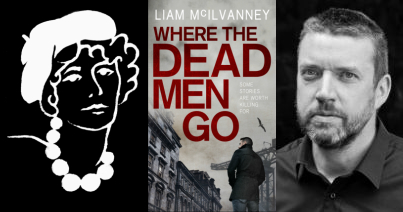
The Ngaio Marsh Award for Best Crime Novel, established in 2010, is named for Dame Ngaio Marsh, who is renowned worldwide as one of the four Queens of Crime of the Golden Age of Detective Fiction. Dame Ngaio published 32 novels featuring Inspector Roderick Alleyn between 1934 and her death in 1982. With sales in the millions, and her books still in print to this day, Dame Ngaio is one of New Zealand’s most globally successful authors. Dame Ngaio’s closest living relative, John Dacres-Manning, gave his blessing for the New Zealand crime writing award to be named in her honour, saying that “I know that Dame Ngaio would be so proud… to know that her name is associated with the award”.
In addition to the award itself, McIlvanney, who is the son of famed Scottish novelist and poet William McIlvanney, wins a set of Dame Ngaio’s novels, courtesy of HarperCollins, and a cheque for $1,000 from the Christchurch Writers’ Festival Trust.
Working Lives Book Launch

Dave Cull, the Mayor of Dunedin, launched Erik Olssen’s new book, Working Lives c1900.
A good crowd came to the Hocken Library for the launch of Erik Olssen’s new book, Working Lives c.1900: A Photographic Essay. Erik, an Emeritus Professor of the Department of History and Art History, is a particularly engaged member of the Centre. This book came out of his research for An Accidental Utopia?: Social Mobility & the Foundations of an Egalitarian Society, 1880–1940, a book he published with Clyde Griffen and Frank Jones in 2009, also with Otago University Press.
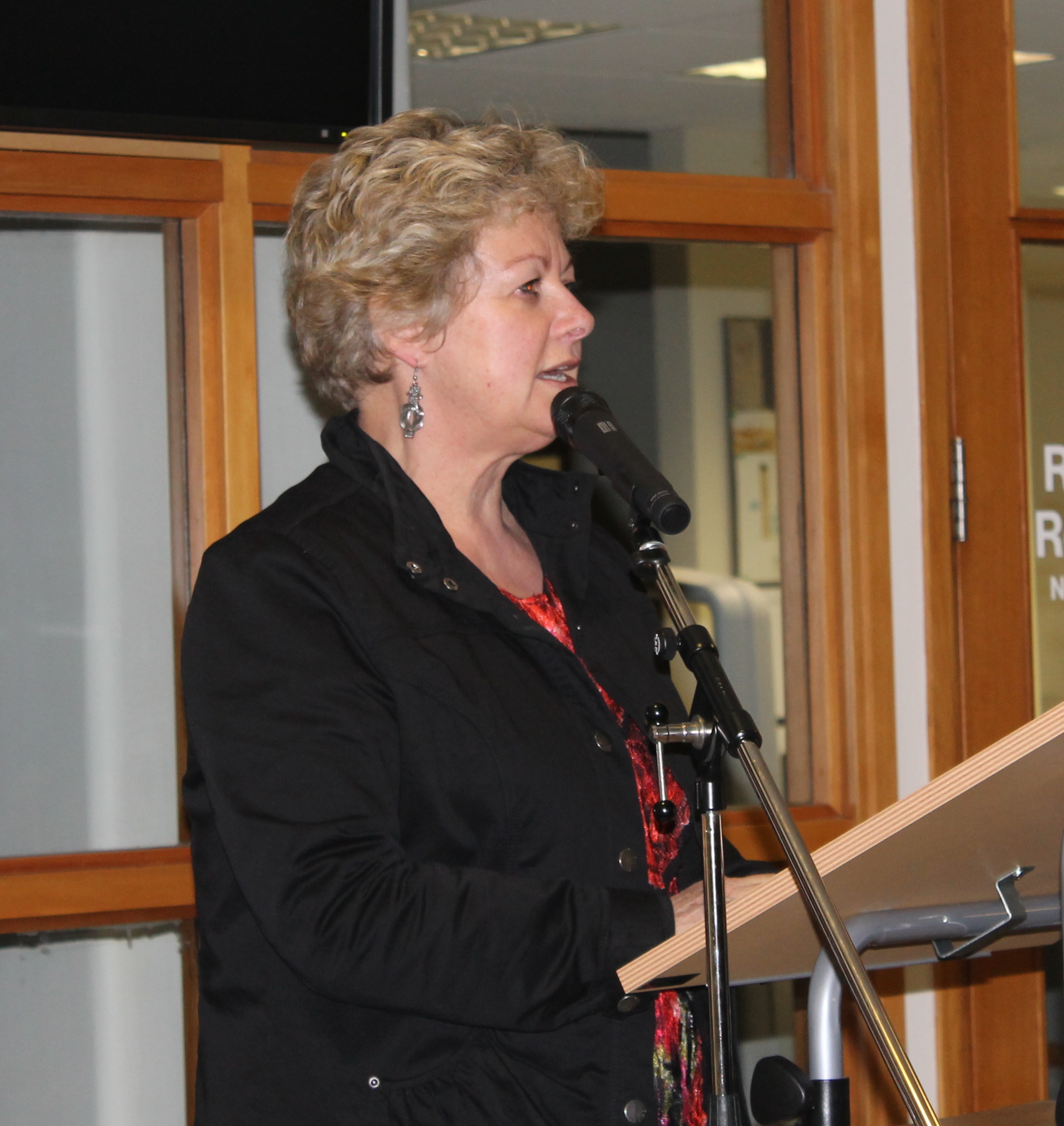
Rachel Scott, the Otago University Press Publisher addressed the crowd to begin the formal part of the evening

Erik gave an entertaining speech to those who came to the Hocken Library to help him launch his new book.
Erik encountered a lot of photographs that he was unable to include in An Accidental Utopia, and it was on the advice of the previous Otago University Press publisher, Wendy Harrex, that he went on to produce this wonderful volume.
Erik Olssen’s Working Lives, National Radio review
Gyles Beckford reviewed Erik Olssen’s Working Lives c. 1900 a photographic essay today on National Radio’s Nine to Noon programme with Kathryn Ryan. They described this as “a great book”. Emeritus Professor Erik Olssen is a treasured member of CROCC. Click here to listen to the review. (Length 4′ 44″.)
Born of Conflict video now available on Youtube
The video documentary, Born of Conflict: Children of the Pacific War is a major outcome of a Marsden-funded project, the Mothers’ Darlings Project, led by Judy Bennett and Angela Wanhalla (History) that investigates the lives of children born of US servicemen and indigenous women of New Zealand and the Pacific during World War Two. The documentary, a shorter version of which played on Maori TV this year as part of their ANZAC Day programming, looks at three case studies from the research. It also features Judy and Angela, both members of the Centre for Research on Colonial Culture, along with Louise Mataia (graduate of Otago and researcher on the Mothers’ Darlings Project).

US servicemen and locals, Aitutaki, Cook Islands.
The video was produced by Steven Talley, Peggy Holter and Judy Bennett, with funding support from University of Otago. Click here for free viewing.
Click here for more information on the work of the Mothers’ Darlings Project.
“A World History of Bluff”
Dr Michael Stevens.
Last year CROCC member, Dr Michael Stevens won a Fast Start Marsden Award to research how the Southland port of Bluff connected with the rest of the world, and how this impacted on the town (and vice-versa), in particular the local Kāi Tahu people. As the Royal Society stated, “As a “Bluffie” of Kai Tahu descent, Dr Stevens is ideally placed to carry out a research project that is meaningful to both academics and the local inhabitants.” In order to share his on-going research, Michael has created a new website “A World History of Bluff” with an associated Facebook Page.
