Held in Trust: Curiosity in Things Conference
Call for Papers
HELD IN TRUST: CURIOSITY IN THINGS
A conference co-sponsored by Otago Museum and the Centre for Research on Colonial Culture, University of Otago
24-25 January 2019
Barclay Theatre, Otago Museum
The history of museums has largely been framed under the rubric of colonial domination or building cathedrals of science. But what are the bigger stories that motivated the creation of the collections?
Objects have the capacity to tell stories of lives and communities that are interconnected over space and time. Objects are the tangible material world of scientific endeavour and during the nineteenth century trade in them boomed, yet accounts of the political context surrounding their discovery and translocation are overlooked.
Looking beyond object biographies, tales of eccentric collectors, acquisition and institutional histories, this conference foregrounds the global context of commercial trade and exchange networks that contributed to the patterns of knowledge discovery and creation. What then are the bigger stories of culture, economics and politics that formed our colonial museums?
We invite contributions that address the broad theme of knowledge production in the colonial museum.
Keynote speakers:
- Professor Tony Ballantyne FRSNZ Co-director Centre for Research on Colonial Culture and Pro-Vice Chancellor Humanities, University of Otago.
- Professor Simon Ville, Senior Professor of Economic and Business History, School of Humanities and Social Inquiry in the Faculty of Law, Humanities and Arts, University of Woollongong.
- Associate Professor Conal McCarthy, Director of the Museum and Heritage Studies programme at Victoria University of Wellington.
Please send your abstract (max. 250 words) and one-page CV to crocc@otago.ac.nz by September 15th, 2018.
For further information, please contact Rosi Crane (Rosi.Crane@otagomuseum.nz).
Angela Wanhalla keynote speaker at Law & History Conference
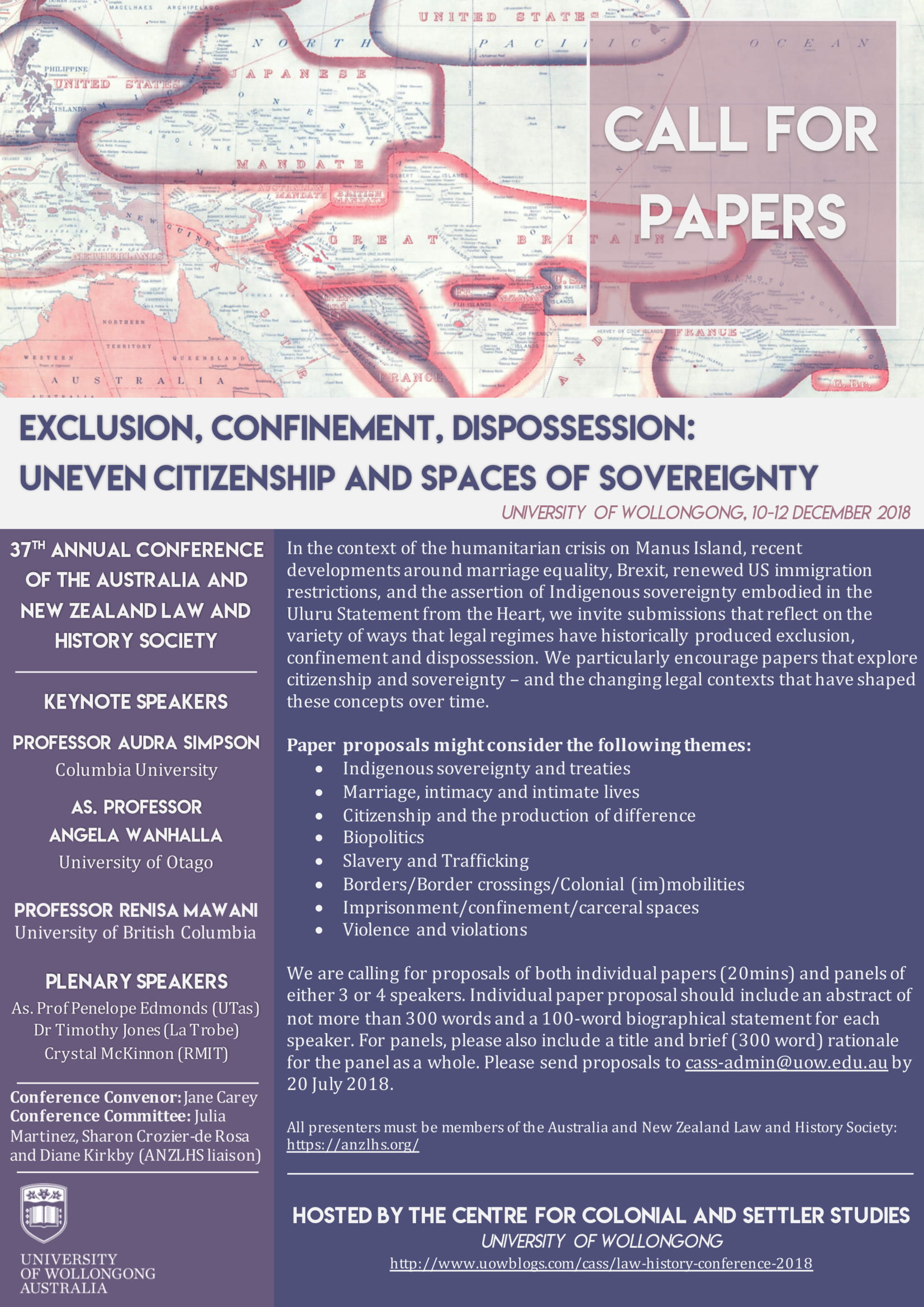
The next Australia and New Zealand Law and History Society conference is meeting at the University of Wollongong in December hosted by that university’s Centre for Colonial and Settler Studies. Its theme is “Exclusion, Confinement, Dispossession: Uneven Citizenship and Spaces of Sovereignty”, with the call for papers closing on 20 July. It’s great news that Angela Wanhalla, CROCC co-director, will be a keynote speaker at this conference, drawing on her Rutherford Fellowship research on marriage in conjunction with the conference themes.
Click on image to enlarge.
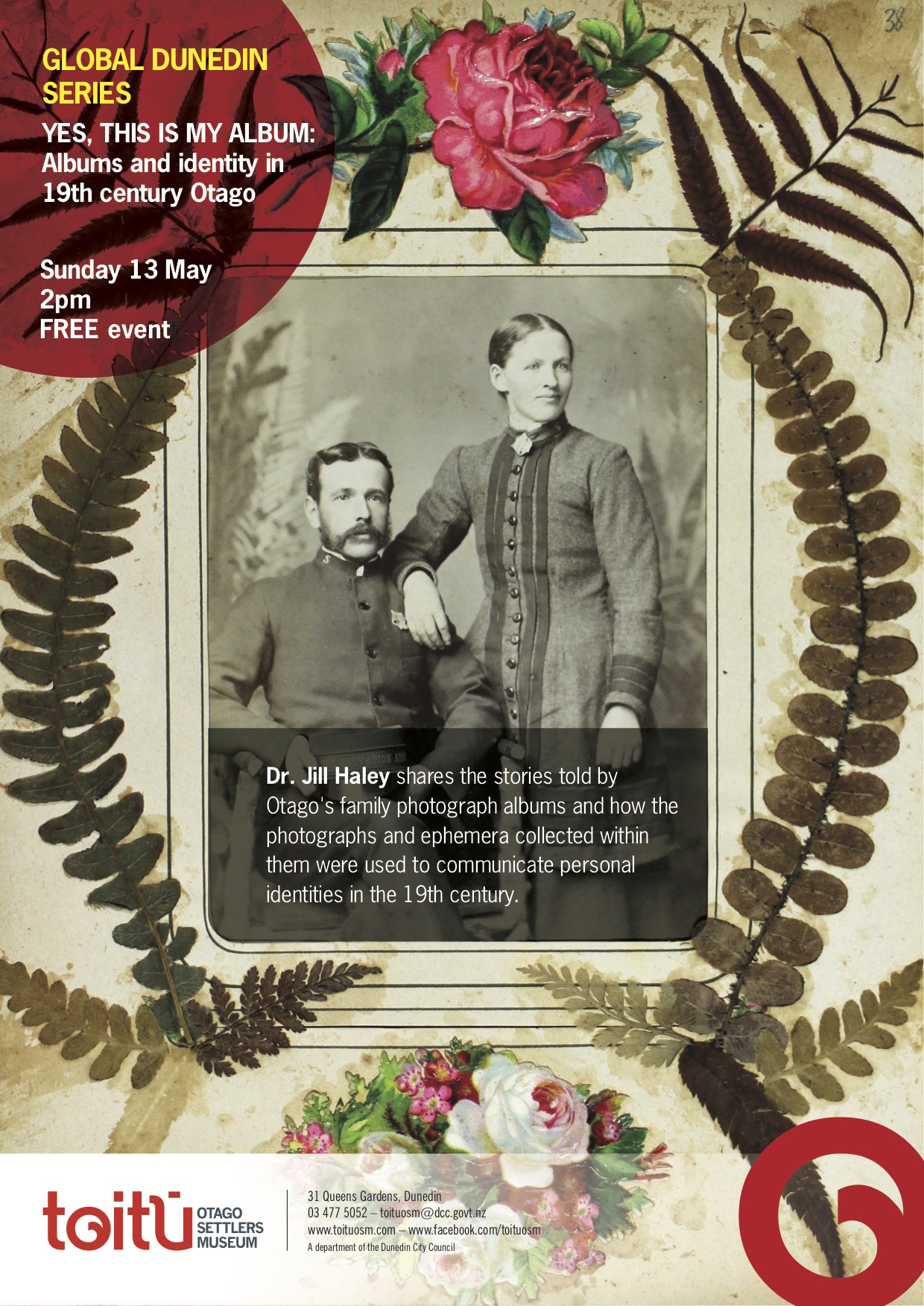
Photography, Family Albums and the Making of Identity
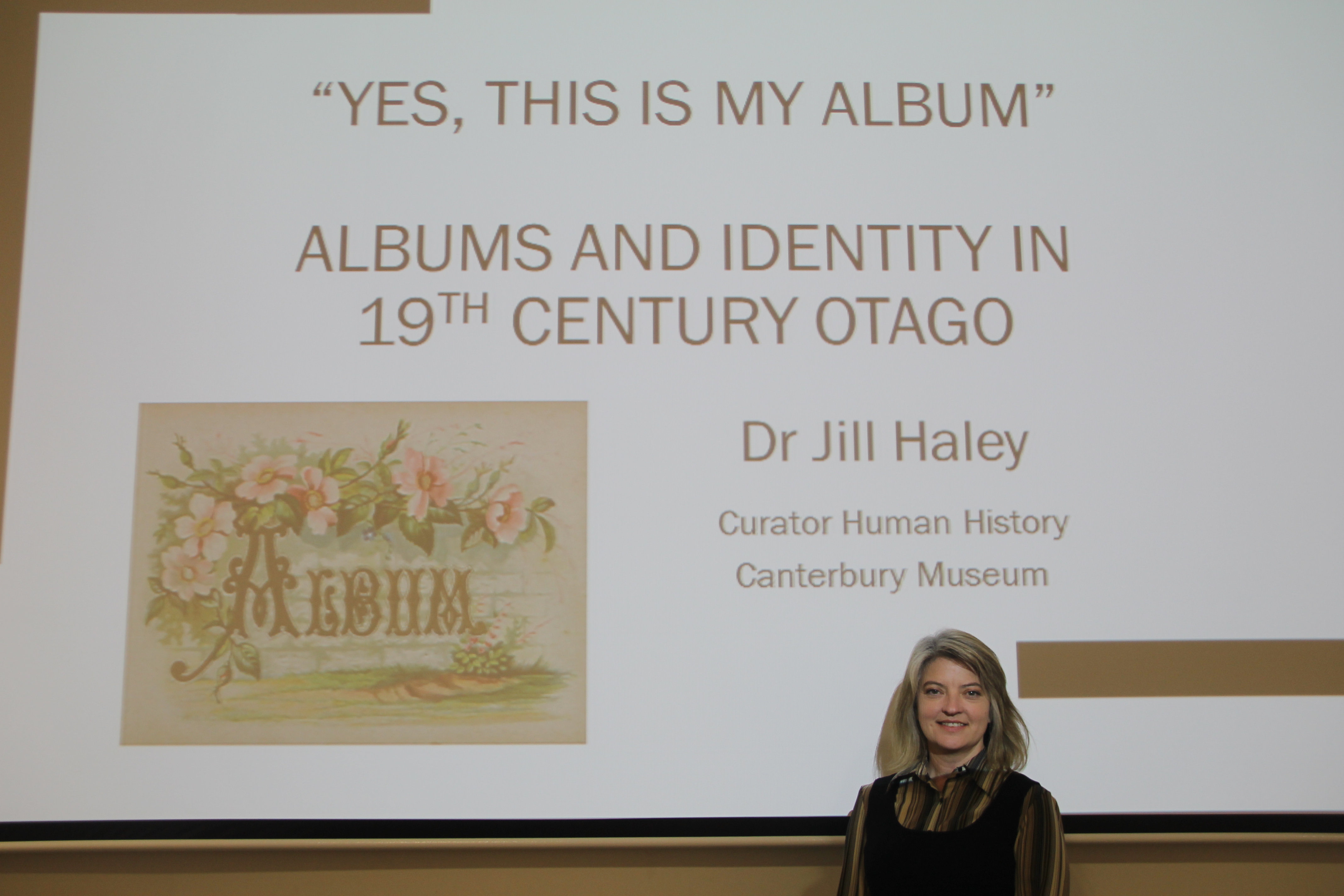
In conjunction with Toitū Otago Settlers Museum, the Centre hosted the third lecture in the Global Dunedin Speaker Series on Sunday 13 May. Dr. Jill Haley, Curator Human History at Canterbury Museum, and a former archivist at Toitū, spoke to an attentive audience about album culture in colonial Otago and how engagement in this practice helped forge personal identity. In a richly illustrated talk, Jill discussed some the findings from her recent doctorate titled The Colonial Family Album: photography and identity in Otago, 1848-1890 (which can be downloaded from the University of Otago’s library here), which examined over 50 albums from Toitū’s collection. Although it might be assumed that albums were used by migrants to remember family and to assert familial connections to their former homes (whether Scotland, England or Ireland), instead the majority of album makers collected and displayed photographs that asserted their connections to their new home in the Otago colony. But album makers also included photographs that illuminated the global dimensions of their personal connections, including Priscilla Scott’s, which included images relating to places she visited with family, notably Peru, Hawaii and the United States. Increasingly, album makers also purchased photographs of local and international celebrities, as well as the the British Royal Family, for their collection.
Many thanks to Jill for a fantastic and illuminating talk that provided an insight into how the global practices of photography and album culture were shaped by local conditions and utilised to narrate personal identity.
Photography and Global Dunedin
The Centre’s monthly Global Dunedin Lecture Series resumes on Sunday 13 May with a talk by Dr. Jill Haley (Canterbury Museum), who will discuss the role of colonial photography and album-making in shaping the identities of Otago’s 19th century settlers. Jill’s talk will take place at Toitū’s Auditorium, starting at 2pm. All welcome!
Public Talk: Frequencies for Listening
On Wednesday 18 April, visiting scholar Prof. Pamela Klassen (University of Toronto) will give a public lecture co-hosted by the Religion Programme and the Centre for Research on Colonial Culture in Archway 2 starting at 5.15. Title and abstract are below:
Frequencies for Listening: Telling Stories of Missionary Colonialism in the Wake of Canada’s Truth and Reconciliation Commission on Indian Residential Schools
The 2015 report of Canada’s Truth and Reconciliation Commission (TRC) gave settlers an opportunity to listen to Indigenous people tell their stories of surviving the abuses of the Canadian residential school system. An alliance of church and state which forcibly took Indigenous children from their families in order to assimilate them to Christianity, the English language, and acceptance of the sovereignty of the Dominion of Canada, residential schools were, to use the language of the TRC, a form of cultural genocide with ongoing intergenerational effects.
This lecture approaches the complicated spiritual politics of storytelling in the wake of the TRC by reflecting on the life of an early-twentieth-century missionary in the Pacific Northwest who participated in Christian colonial settlement on Indigenous land, while also condemning residential schools. Along the way, Anglican Archbishop Frederick Du Vernet came to think that telepathy—what he called radio mind—was the solution to everything from class warfare to religious divisions. Attuned to various frequencies for listening through which he tried to heed the spirit and the people around him, Du Vernet came to an unorthodox metaphysics shaped by the land on which he lived.
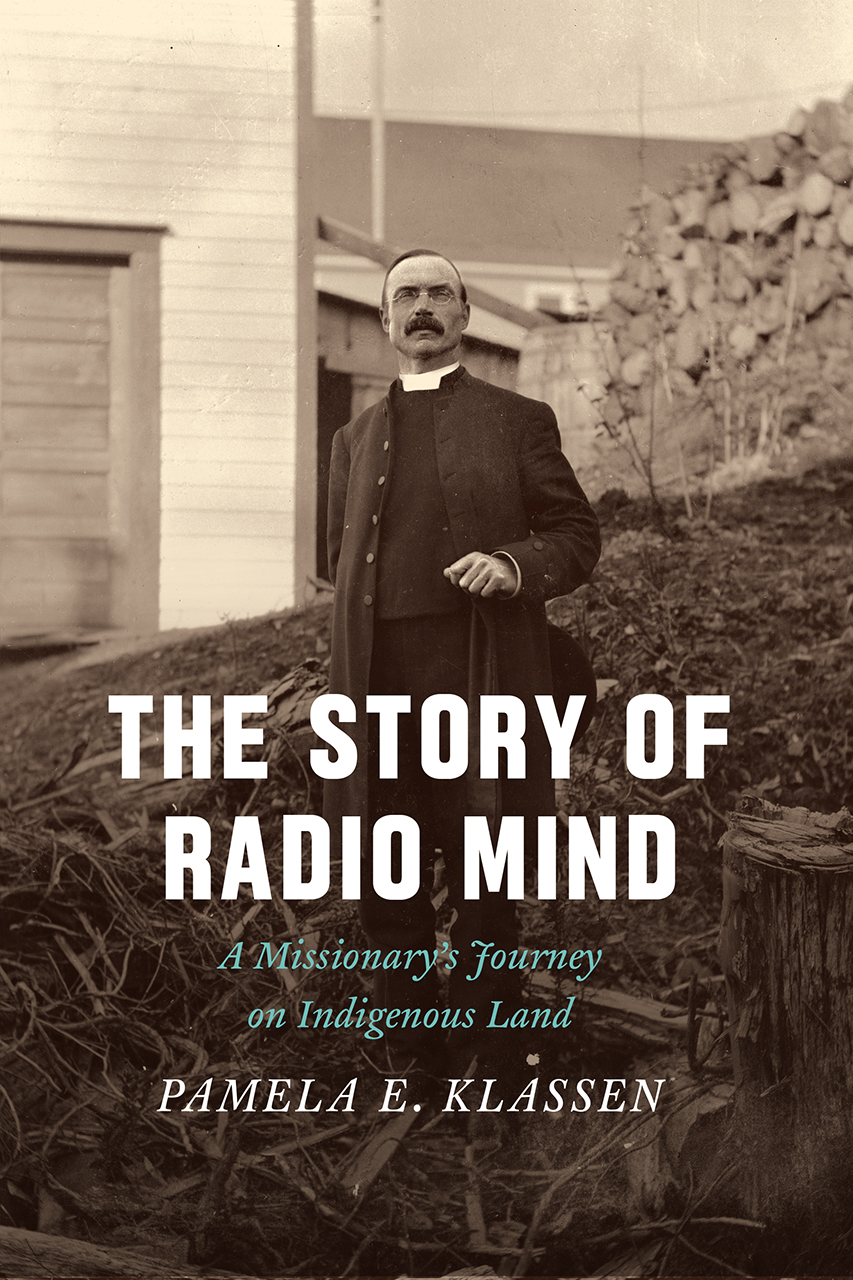
In this talk Prof. Klassen will draw upon her recently published book The Story of Radio Mind: A Missionary’s Journey on Indigenous Land (University of Chicago Press, 2018).
All are welcome!
Visiting Scholar: Prof. Pamela Klassen
With Religious Studies the Centre is co-hosting a visiting scholar, Pamela Klassen, Professor in the Department for the Study of Religion at the University of Toronto, where she is also Vice-Dean, Undergraduate & International in the Faculty of Arts & Science. The author of many books and articles, her most recent publications are The Story of Radio Mind: A Missionary’s Journey on Indigenous Land (U of Chicago Press, 2018) and Ekklesia: Three Inquiries in Church and State (U of Chicago Press, 2018), co-authored with Paul Christopher Johnson and Winnifred Fallers Sullivan. She currently holds the Anneliese Maier Research Award from the Humboldt Foundation in support of a five-year collaborative project entitled “Religion and Public Memory in Multicultural Societies,” undertaken together with Prof. Dr. Monique Scheer of the University of Tübingen. For more information, see http://projects.chass.utoronto.ca/pklassen/
While in Dunedin Prof. Klassen will give several public talks. The first is a research seminar in the Department of History and Art History, Wednesday 11 April, 3.30pm, in Burns 5, ground floor Arts Building (95 Albany Street) on the topic “Photography, Resistance, and Re-mediation on Manidoo Ziibi”.
In this presentation, Prof. Klassen will consider the significance for studies of missionary colonialism of what scholars call the “photographic event,” focusing on a diary written by an Anglican missionary-journalist, Frederick Du Vernet, during his 1898 trip to visit the Ojibwe of Rainy River in Treaty 3 territory (also known in Canada as northwestern Ontario). Du Vernet recorded both Ojibwe resistance to and requests for his picture-taking. His stories reveal how the event of taking photographs marked his own longing to capture spiritual stories and presences and provoked a variety of Ojibwe responses to such forms of visual capture. The talk will also introduce a new visual/textual/audio remediation of the diary in the form of a digital storytelling website being developed with a team of students in consultation with the Kay-Nah-Chi-Wah-Nung Historical Centre of the Rainy River First Nations.
Two further public talks are planned:
“Frequencies for Listening: Telling Stories of Missionary Colonialism in the Wake of Canada’s Truth and Reconciliation Commission on Indian Residential Schools”, Public Lecture co-sponsored by the Centre for Research on Colonial Culture, 18 April.
“Treaty people and the spiritual vulnerability of colonial settlement”, a research presentation hosted by the Department of Theology and Religion, 20 April.
Further details about these events will be advertised in the near future.
“Redcoat and Rifle” at Toitū
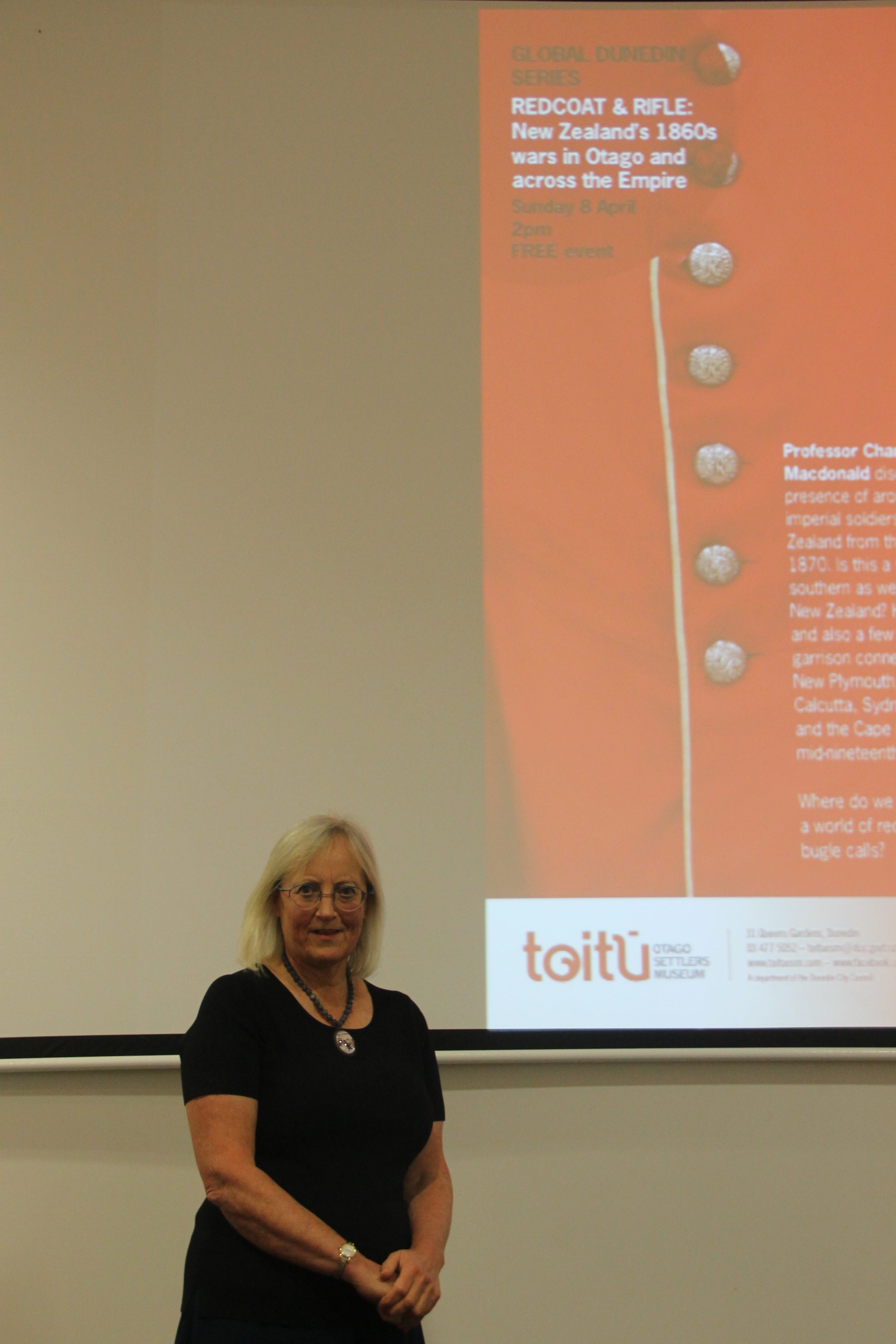 Professor Charlotte Macdonald from Victoria University drew a large crowd to the Centre’s second Global Dunedin lecture at Toitū Settlers Museum today. Charlotte brought Dunedin into the larger picture of the global circulation of soldiers and their belongings that stretched between Britain, India and the rest of the Empire. Her wide-ranging talk included the 70th Regiment who were transferred from India (where they had fought during the Indian Rebellion) to Auckland in 1861. While some stayed in the North Island and fought in the Waikato campaign, one contingent was transferred to Dunedin where they established themselves on what eventually became the Arthur St School. Soon after gold had been discovered in Central Otago, the contingent helped keep the peace and good order until they left in 1863. Charlotte’s research comes out of her Marsden-funded project, Soliders of Empire: Garrison and Empire in the 19th Century. The talk was followed by a lively question time. Many thanks to Charlotte for her rich and engaging lecture.
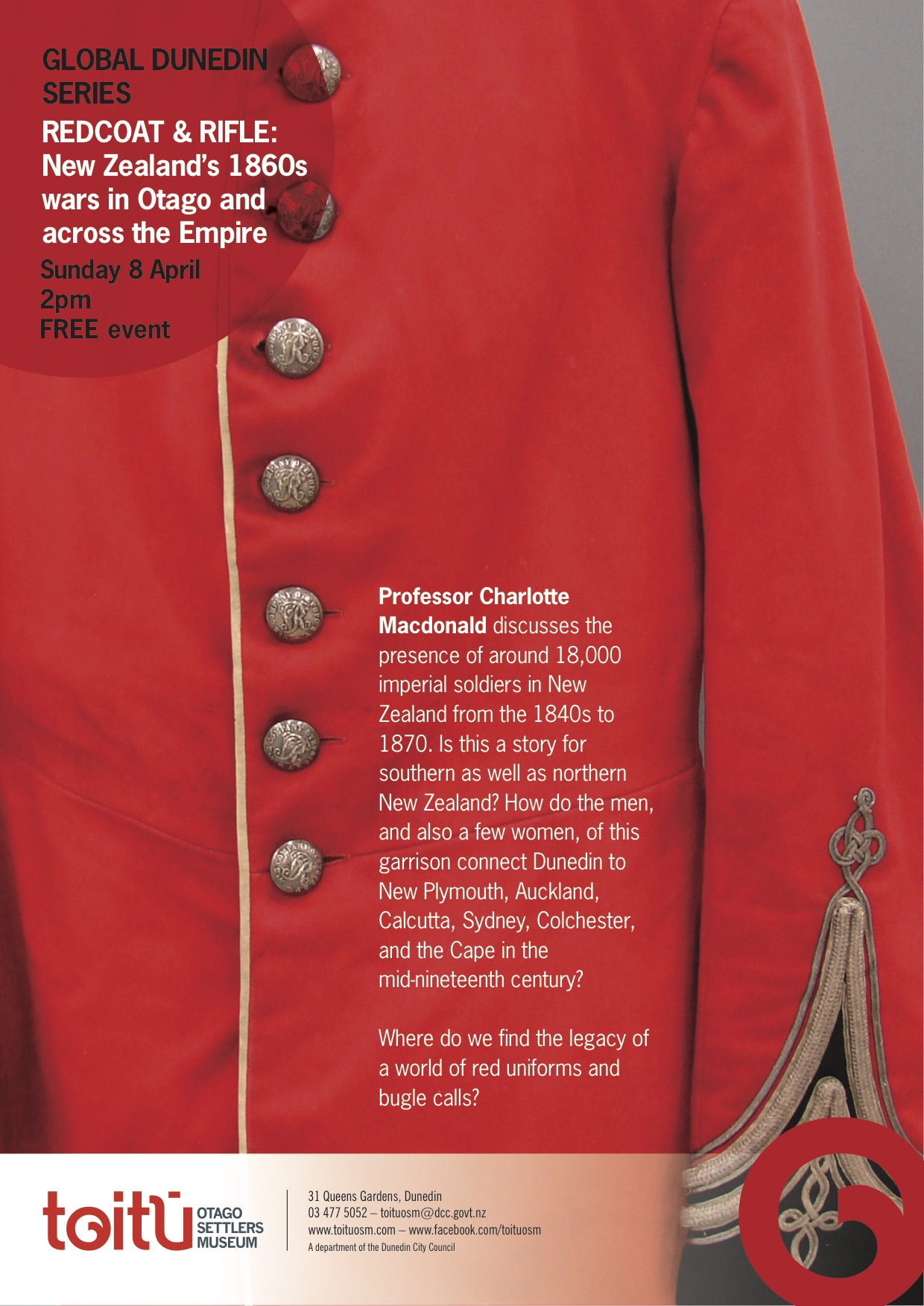
Redcoat and Rifle
On Sunday 8 April the Centre is hosting a Global Dunedin Lecture at Toitū’s Auditorium. Our speaker is Charlotte Macdonald (Victoria University of Wellington) who will discuss her Soldiers of Empire project, which is tracking the histories and legacies of the 18,000 men who served with imperial regiments in New Zealand during the 1860s. In this talk Charlotte will speak about Otago’s connections to this story with an emphasis on the wider imperial context, particularly with respect to social history and material culture. This is a free lecture and all are welcome.
Successful Start to Global Dunedin
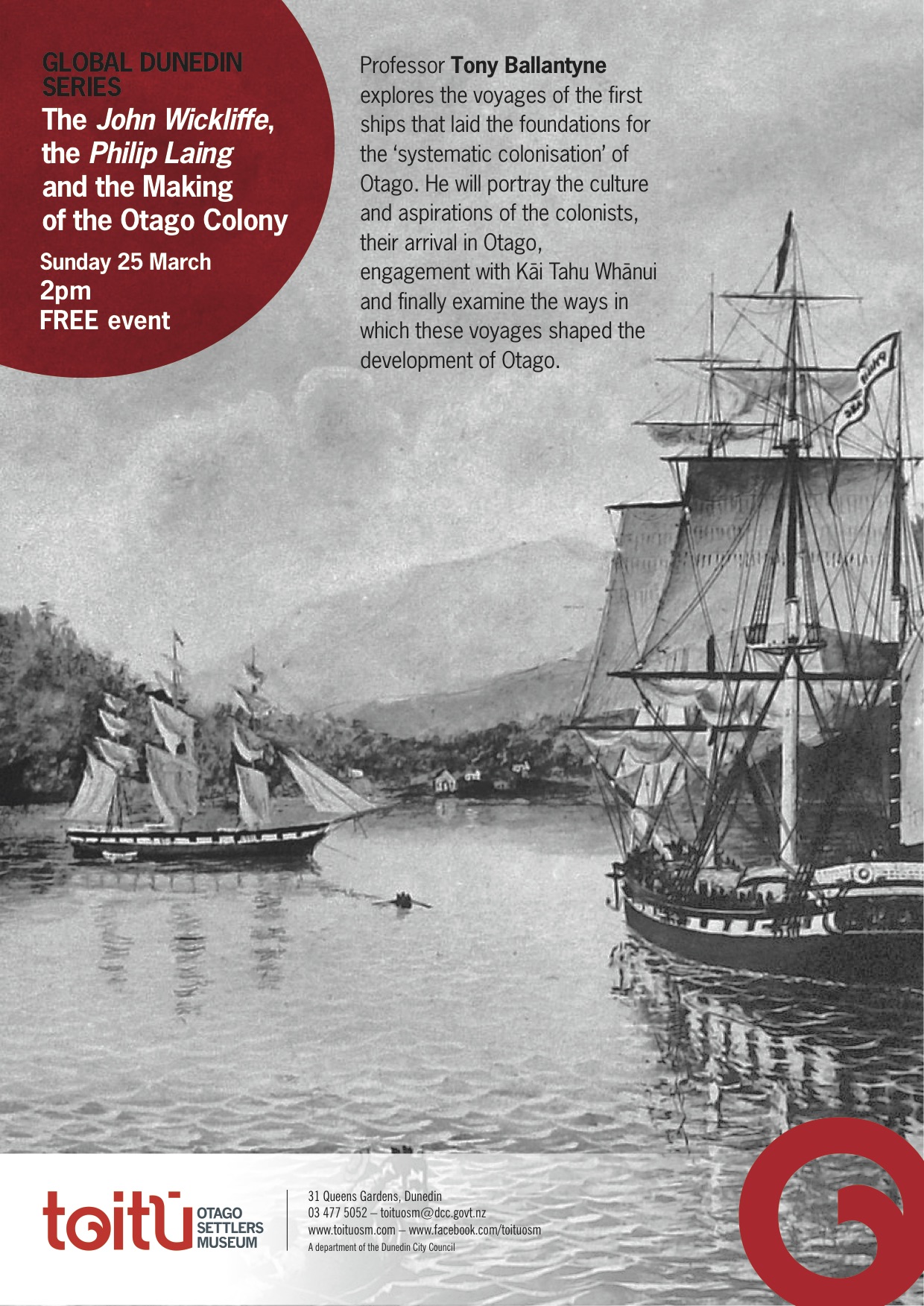
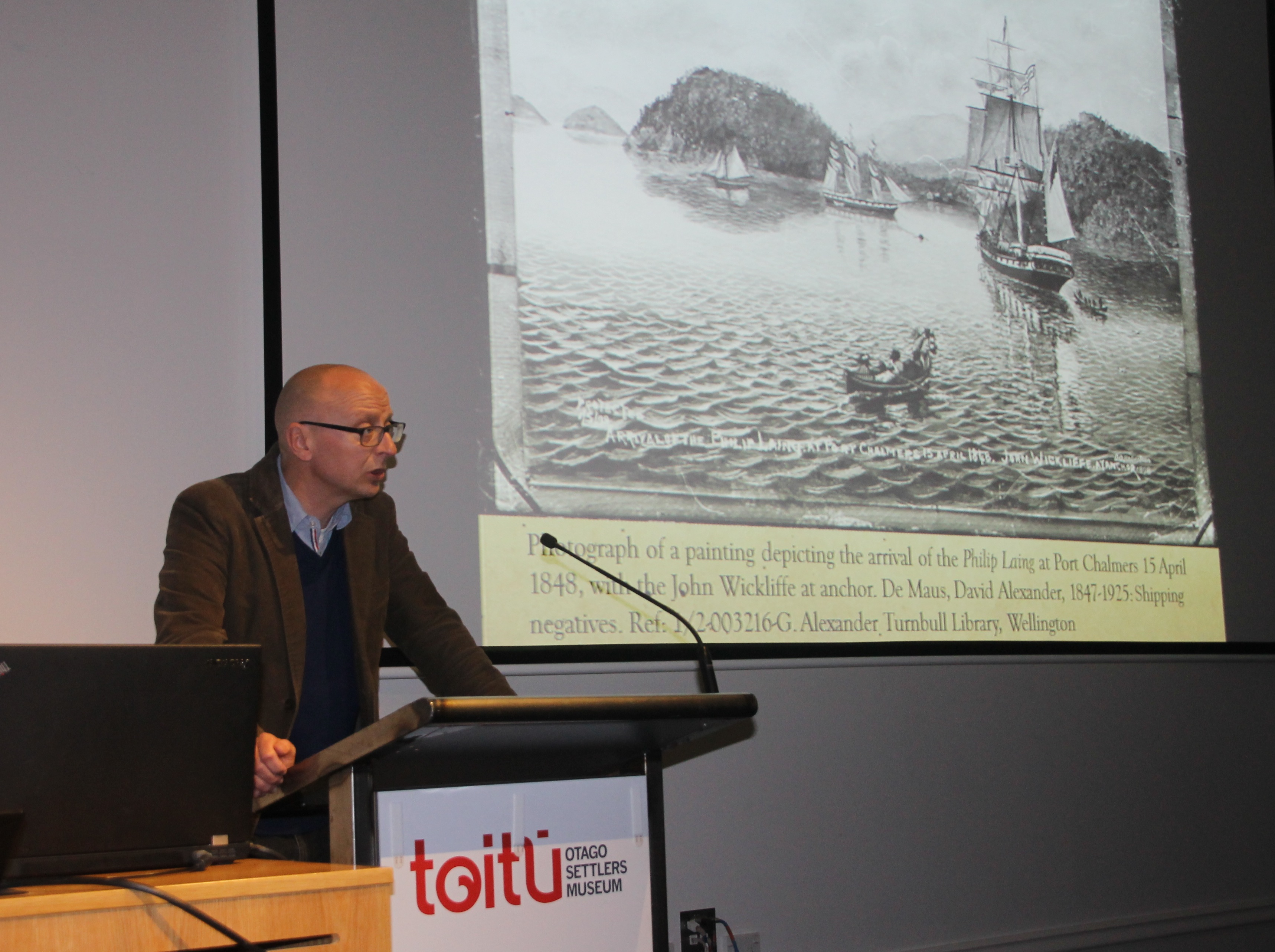 The first Global Dunedin programme at Toitū Otago Settlers Museum began with Centre Co-Director, Professor Tony Ballantyne, presenting on “The John Wickliffe, the Philip Laing and the Making of the Otago Colony”. Tony’s lecture was wide-ranging, taking us from the initial landing of the Free Church settlers, and their interactions with Kāi Tahu, right through to the 50th anniversary, where the the debate centred on who truly deserved to be included into the category of “early” settler.
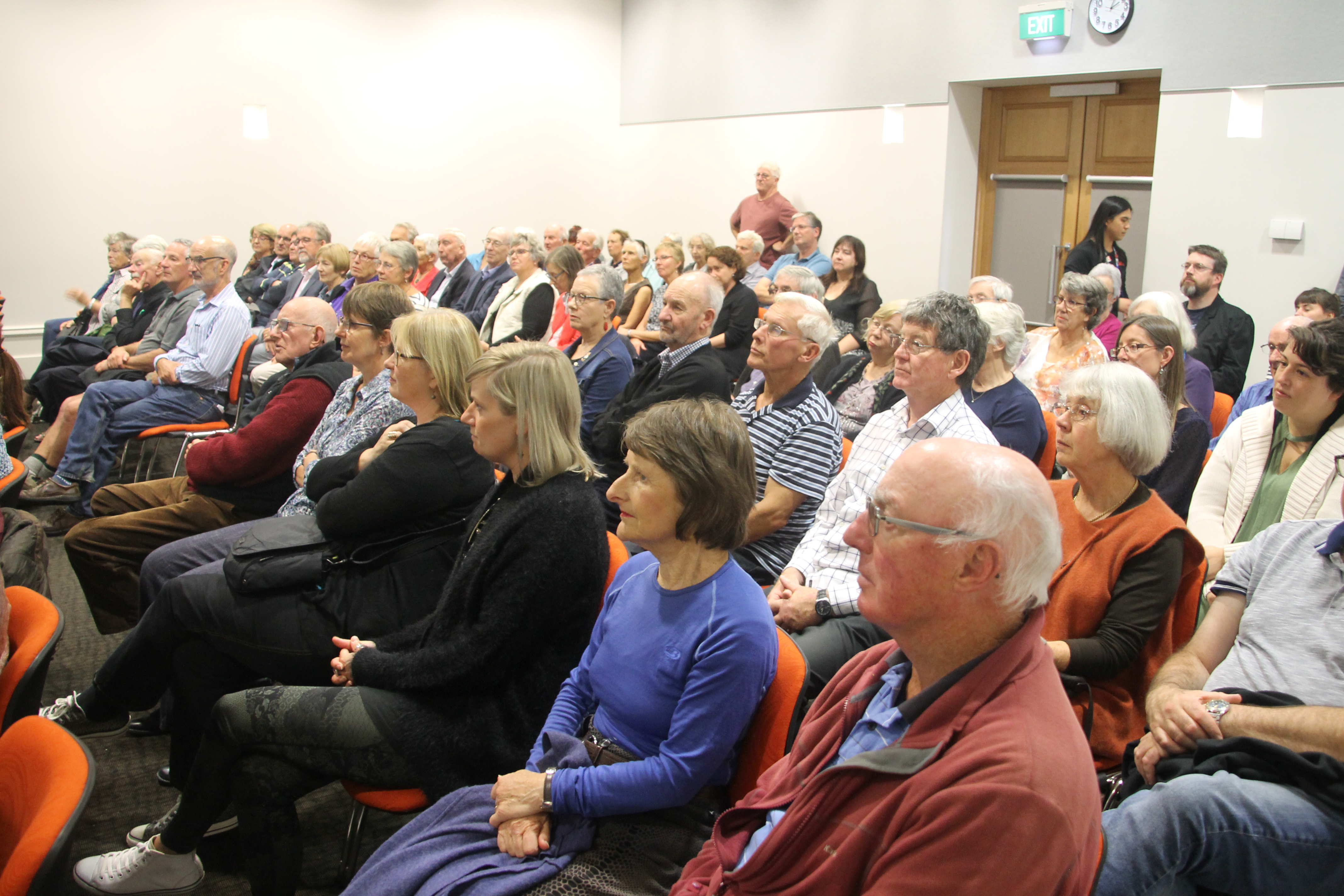 The Centre’s Global Otago programme brings engaging speakers to Toitū, who can place Dunedin in a global context, whether in the past, present or future. This lecture was a resounding success, with more seats having to be brought in to accommodate the crowd. Professor Charlotte Macdonald will be delivering the April lecture; details will be posted soon.
Global Dunedin Speaker Series 2018
This year the Centre is excited to be collaborating with Toitū on a Global Dunedin Speaker Series. It runs on a monthly basis, on a Sunday afternoon, and all talks take place at the museum Auditorium. This years series will feature local, national and international speakers, including Charlotte Macdonald (Victoria University of Wellington), Jill Haley (Canterbury Museum), Kate Bagnall (University of Wollongong), Rosi Crane (Otago Museum), Lea Doughty (Otago) and Ben Schrader (Wellington). We’ll be posting regular updates about this series throughout the year.
Tony Ballantyne will kick off the series on March 25th (see poster). We hope to see you there.