Placing the Personal Essay
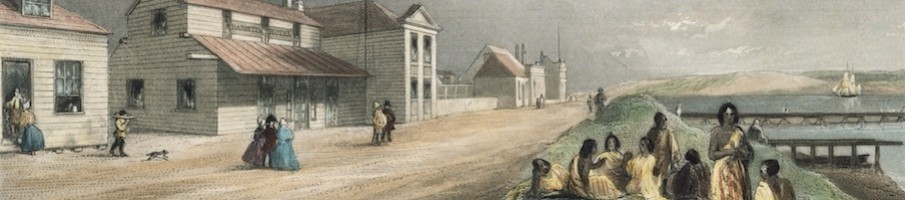
Last week CROCC participated in the ‘Placing the Personal Essay Colloquium’, held at Puke Ahu in Wellington, aka the Massey Wellington campus. Convenors Ingrid Horrocks and Cherie Lacey put together academics and creative writers, and asked them to talk about place and the form of the personal essay. This was an invitation to migrate across borders, and many of the speakers did. From the academic side Lydia Wevers talked about ‘dirty books’, her dirty five-year experience of working at Brancepeth Station as she researched Reading on the Farm, Tony Ballantyne’s fish and chip shop (chop suey pattie for $1.60) anchored his argument for attention to the local, and Sally Blundell offered an insider’s account of what home means after the Christchurch quakes. The ‘creatives’ for their part got fairly theoretical: Martin Edmond’s keynote on ‘Riding the Ghost Train’ initiated a writing-as-ghostly metaphor which ran through the colloquium. (Alex Calder got spooked in Southland; Annabel Cooper revisited some old haunts.) Lynn Jenner brought place and the personal together in confessing to a childhood in a small red or pink painted room in imagined Vienna, before going on to make a plea for greater freedom in prose forms. Ian Wedde was surprised to be the first to point out that we all live now in a kind of Middle-Earth Truman Show, and Jack Ross and Harry Ricketts also took up elements of this theme, and Giovanni Tiso’s remarkable concluding account of what happened when he uploaded images suggests this is just the kind of world that Google Plus is taking us to. Alice Te Punga Somerville, both an ‘academic’ and a ‘creative’, countered such hyper-reality by pointing out that far below us in the concrete pipes which now channel an ancient stream under Puke Ahu, eels gathered, as they have for a very long time, a story of the persistence rather than the ephemerality of place. Even the eels, though, migrated to Twitter in the course of the day.
Congratulations to Cherie and Ingrid for putting such a diverse group of speakers together, and posing us the dilemma of talking about place, the personal and the essay form. The challenge produced a very lively day. The venue had to be changed to accommodate all the people who wanted to attend, and the tea breaks fizzed with conversation.
‘Placing the Personal Essay’ was held under the auspices of the W.H. Oliver Humanities Research Academy of Massey University, the Stout Research Centre of Victoria University of Wellington, and the Centre for Research on Colonial Culture, University of Otago. Tony Ballantyne and Annabel Cooper represented CROCC at the event.
Annabel Cooper
Visiting Fellow
Dr. Kristyn Harman
Aboriginal Convicts
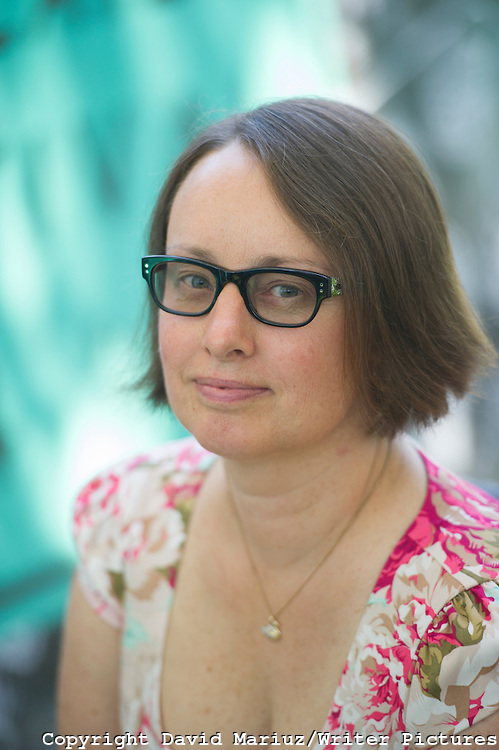
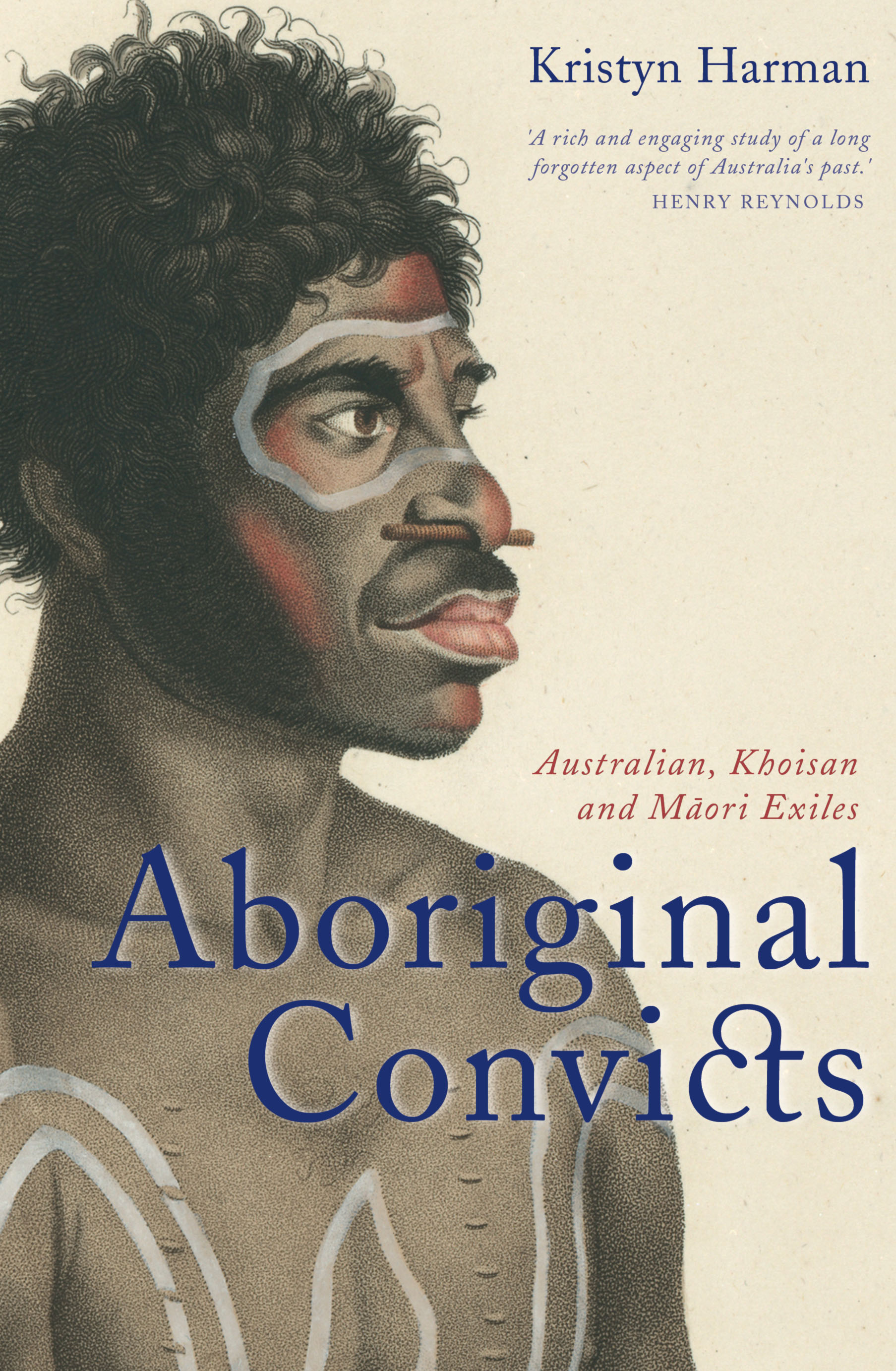
This week the Centre for Research on Colonial Culture welcomes Dr. Kristyn Harman (University of Tasmania) as a visiting research fellow to the centre. Kristyn lectures in Aboriginal Studies and has published widely on Aboriginal history, race relations, warfare, and colonialism in significant international journals like Journal of Colonialism and Colonial History and the Journal of Imperial and Commonwealth History. Her first book, Aboriginal Convicts: Australian, Khoisan, and Maori Exiles (UNSW Press, 2012) was awarded the prestigious Kay Daniels prize in 2014 by the Australian Historical Association. Kristyn is visiting for two weeks, where she will be based in an office in the Department of History and Art History and during her time here will present her research at a CRoCC symposium on Indigenous mobilities in history, as well as discuss a new project on PoWs at Featherston during WWII at the Migrant Cross-Cultural Encounters conference (24-26 November).
Scots and Indigenous Peoples
We are delighted to announce that Professor Ann Curthoys is giving a free public lecture entitled “Scots and Indigenous Peoples in the Australian Colonies” on Monday 24 November in Castle Lecture Theatre 1 at 3.30. Professor Curthoy’s lecture also doubles as the opening keynote address for the Migrant Cross-Cultural Encounters Conference (24-26 November) being co-convened by the Centre for Research on Colonial Culture, the Centre for Irish and Scottish Studies, the Asian Migrations research theme, and the Cross-Cultural Comparative Studies research theme.
Professor Curthoys is one of Australia’s most respected historians. She is an Honorary Professor at the University of Sydney, and a member of the Australian Academy of the Humanities and the Academy of Social Sciences in Australia. In 2013, she was awarded the History Council of New South Wales Annual History Citation that recognises and honours an individual who has made a significant and lifelong contribution to the profession and practice of history. She was formerly an Australian Research Council Professorial Fellow at the University of Sydney (2008-13) and Manning Clark Professor of History at the Australian National University (1996-2008). She has written widely on questions of Aboriginal history, genocide theory, and race relations in colonial and modern Australia. Her current research focuses on Indigenous-settler relations in the Australian colonies. As part of her ongoing research on the British Empire, settler self-government, and Indigenous peoples, she has a particular interest in Scottish-Indigenous relations in the mid nineteenth century, and it is this aspect of her research that she will detail in her public lecture.
She has provided the following abstract:
We can tell the history of Scottish migration to colonial Australia in several very different ways. We might emphasise a generally positive history of struggle and achievement as Scots migrated from one end of the world to another. Or we might narrate a tragic history of Aboriginal dispossession, displacement and replacement in the face of European settlement, a story of violence and great loss of life, and sometimes the destruction of whole societies as settlers fought to secure their hold on the land. Though these two stories are usually told separately, they are, of course, connected – Scots and Aboriginal people encountered one another constantly, and Scottish upward mobility was built on Aboriginal dispossession. Though the task is challenging and difficult, it is worth considering both Scottish diaspora and Indigenous histories together, for when we do, we can better understand some of the complexities of empire and colonisation in the nineteenth century. A focus on Scots can help us deconstruct the categories ‘British’ and ‘settler’, and foreground in new ways the connections between immigrants’ origins and background (in political, cultural, economic, and social terms) and their cross-cultural interactions in the colonies.
In this paper, I discuss the cross-cultural encounters between Scots and Aboriginal people in Australia from the mid 1830s to the mid 1870s. This was the period when a set of struggling British colonies – mostly dependent on convict labour, covering relatively small regions of settlement, and under direct British rule – were transforming into free self-governing democratic colonies dominating vast regions of the continent. While some areas were still experiencing intense frontier conflict and violence, in others the violence had largely ended and a post-frontier society, involving new settler-Indigenous relationships, was emerging. The Scots I consider included both pastoralists and their critics, such as journalists, politicians, amateur ethnographers, and men of the church, and the Indigenous peoples they met are those whose country lay in the two Australian colonies named after Queen Victoria – Victoria and Queensland.
Conference Registration Open
Registration for the Migrant Cross-Cultural Encounters Conference (24-26 November) is now open. This multi-disciplinary conference brings together four major research hubs in the Division of Humanities at the University of Otago, including the Centre for Research on Colonial Culture, the Centre for Irish and Scottish Studies, the Asian Migration research theme, and the Cross-Cultural Comparative Studies research theme and has attracted four great keynote speakers: Brenda Yeoh (NUS), Ann Curthoys (Sydney), Regina Ganter (Griffith) and Ian Smith (Otago). Clicking on the highlighted text will take you to the conference website where you can view a draft programme and also register. Do note that registration closes at 5pm on November 10th. We do hope that you will join us for what promises to be a fantastic conference!
Elemental Histories Programme
Colonial Worlds, Elemental Histories Symposium Programme,
Hocken Collections Seminar Room, Friday 31 October
To register email Tom Brooking (tom.brooking@otago.ac.nz)
9-10: Associate Professor Grace Karskens, University of New South Wales, ‘Colonial worlds, elemental histories.’
Session 1: 10-11.15
Professor Tom Brooking, University of Otago, “Yeotopia Gained: New Zealand 1840-1914’.
Associate Professor Katie Pickles, University of Canterbury, ‘Elementally United: The Case of Canterbury’s Nor’west Wind’.
Dr Michael Davis, Honorary Research Fellow, University of Sydney, ‘Entangled Knowledges: Indigenous and Environmental Histories across the Tasman’.
11.15-11.30: morning tea
Session 2: 11.30-12.20
Emeritus Professor Holland, University of Otago, ‘Getting to Know You: People and Rabbits in Southern New Zealand’.
Dr. Vaughan Wood, University of Canterbury, ‘Mapping the network of a nineteenth century Canterbury farm’.
12.20-1.20: Lunch
Session 3: 1.20-2.35
Professor Michael Roche, Massey University, ‘The Forest as an Elemental Natural Resource in Colonial New Zealand and the First Failure of Scientific State Forestry 1874 to 1877.’
Dr André Brett, University of Melbourne, ‘Forests and Provincial Abolition: Did Conservation Kill the Provinces?’.
Dr James Beattie, University of Waikato, ‘Expanding the Horizons of Chinese Environmental History: Cantonese gold-miners in colonial New Zealand, 1860s-1920s.’
2.35-3.00 afternoon tea
Session 4: 3.00-4.15
Lucy Mackintosh, PhD candidate, University of Auckland, ‘Shifting Grounds: Narratives of Identity in Auckland Landscapes’.
Dr. Joanna Cobley, University of Canterbury, ‘The Nineteenth Century Landscape: economics, heritage and national identity.’
Professor Eric Pawson, University of Canterbury, ‘Writing environmental history’.
4.15-5.00: Grace Karskens wrap up and general discussion
5.15: Book launch of James Beattie, Matthew Henry and Emily O’Gorman (eds)., Climate, Science, and Colonization: Histories from Australia and New Zealand, Palgrave MacMillan, London, 2014.
Placing the Personal Essay Colloquium
On 2 & 3 December 2014, the Placing the Personal Essay Colloquium will be held at Massey University, Wellington. This event is co-convened by the W.H. Oliver Humanities Research Academy at Massey University, the Centre for Research on Colonial Culture at the University of Otago, and the Stout Research Centre for New Zealand Studies at Victoria University and brings together writers, historians, literary critics, cultural theorists and interested others for a discussion about new ways of writing about place in contemporary New Zealand. Featured participants include: Sally Blundell, Alex Calder, Tim Corballis, Martin Edmond, Ingrid Horrocks, Lynn Jenner, Cherie Lacey, Tina Makereti, Harry Ricketts, Jack Ross, Alice Te Punga Somerville, Giovanni Tiso, and Lydia Wevers as well as two members of CRoCC, Tony Ballantyne and Annabel Cooper.
If you want to know more about the colloquium and how to register, go to the Placing the Personal Essay website by clicking on the highlighted text.
Elemental Histories
Professor Tom Brooking’s symposium ‘The Colonial World: Elemental Histories’, which will be held at the Hocken Collections on 31 October, has attracted a great line up of speakers. Featured on the programme are Associate Professor Grace Karskens (UNSW) who will open and close the day’s proceedings, and there will be presentations by James Beattie (Waikato), Mike Roche (Massey), Eric Pawson (Canterbury), Katie Pickles (Canterbury), Peter Holland (Otago), Rachael Egerton (Environment Southland), Lucy Mackintosh (Auckland), Tom Brooking (Otago), Andre Brett (Melbourne) and Michael Davis (Sydney). The symposium will end with the launch of James Beattie’s latest book, Climate, Science and Colonisation in Australasia (Palgrave Macmillan), co-edited with Emily O’Gorman and Matt Henry.
There is no cost to go this event but if you wish to attend this one-day symposium please register your interest with Prof. Tom Brooking (tom.brooking@otago.ac.nz). Further details about the programme will appear on this blog in October.
Professor Henry Reynolds in Dunedin
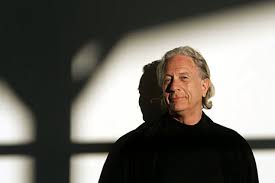 On Monday 22 September prominent Australian historian, prize-winning author and public intellectual, Professor Henry Reynolds (University of Tasmania), will deliver the inaugural Archibald Baxter Memorial Peace Lecture.
This public lecture has been established by the University of Otago’s National Centre for Peace and Conflict Studies. The lecture is titled ‘Discovering Archibald Baxter and the thoughts on war which followed’ and will take place in Archway 1 at 5pm. This is a free event and is open to the public.
Forthcoming Conference
Migrant Cross-Cultural Encounters: A Multidisciplinary Conference
24-26 November 2014
University of Otago, Dunedin, New Zealand
Historical and contemporary global migration involves a range of cross-cultural encounters, but how are these interactions discussed, debated, and defined? This three-day multidisciplinary conference seeks to examine past and present migrant encounters with other peoples in a diverse range of locations. Papers from various disciplinary angles are welcome from a variety of themes and from any historical period or region.
Themes may include but are not limited to:
- Race, ethnicity and citizenship
- War, migration and cross-cultural contact
- Labour, migration and cross-cultural encounters
- Empire, contact and mobility
- Gender, migration, and cross-cultural encounters
Please provide:
- a title
- a 250-word abstract of your paper
- brief biographical information (including institutional affiliation and contact details).
All proposals will be assessed after the deadline of Friday 11 July 2014. If you require an earlier acceptance please advise us.
Proposals or requests for further information should be sent to: migrants@otago.ac.nz
The conference is sponsored by four key multidisciplinary research hubs in the Division of Humanities at the University of Otago:
- Centre for Irish and Scottish Studies
- Centre for Research on Colonial Culture
- Asian Migrations Research Theme
- Comparative and Cross-Cultural Studies Research Theme
For further information see the website (click the highlighted text).
Environmental History Symposium
 Paper proposals are now being invited for an upcoming CRoCC event, an environmental history symposium at the Hocken Collections, University of Otago, Dunedin. It will be held on 31 October, and feature an address by Associate Professor Grace Karskens (University of New South Wales), author of The Colony.
If you are interested in presenting a paper or you want to attend the event please contact Professor Tom Brooking (tom.brooking@otago.ac.nz).
