

A new review on dietary fats: Putting its findings in context

Tuesday, March 18th, 2014 | Kate Sloane | 18 Comments

Lisa Te Morenga, Jim Mann, Murray Skeaff, Rod Jackson, Tony Blakely, Nick Wilson, Rachael McLean

Bowl of almondsThis blog considers a newly published review on the evidence around dietary fat intakes and coronary heart disease. We have concerns about some aspects of this review, in particular the lack of context around the totality of the evidence. Hence we suggest that the best evidence for national guidelines is still that which encourages the replacement of saturated fats with polyunsaturated fats – with the latter ideally being long-chain omega-3 fatty acids (as found in fish, flax seed and nuts).

Continue reading

Should NZ spend relatively more health resources on improving men’s health?

Thursday, March 13th, 2014 | Nick Wilson | 2 Comments

Associate Professor Nick Wilson

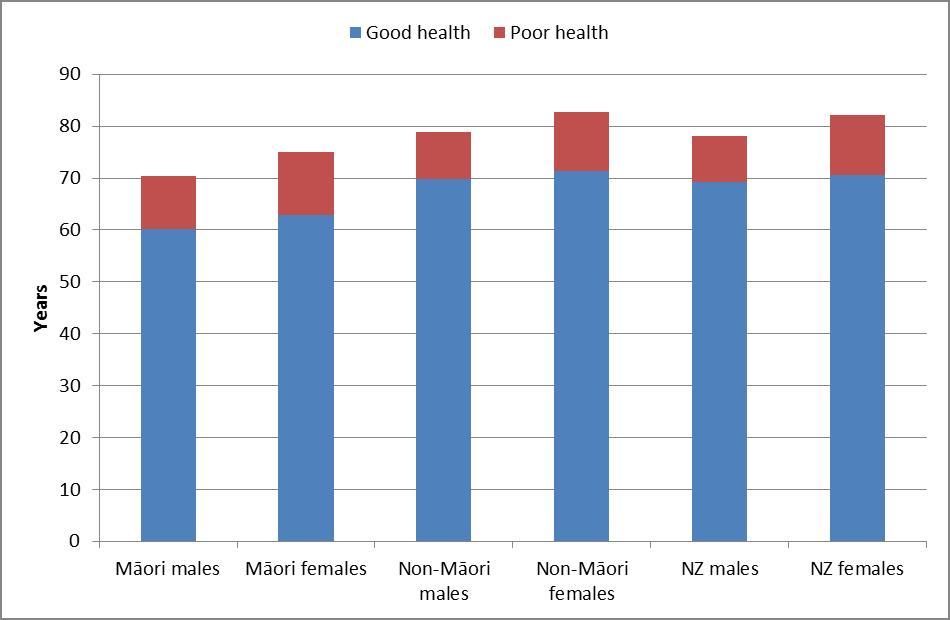
There is no doubt that NZ needs to keep addressing ethnic inequalities in health as an important priority. Nevertheless, gender inequalities may also be worth some consideration given that NZ men have lower life expectancy than women by four years. This blog summarises key data and considers the major risk factors determining poorer male health. It then discusses if there is a plausible case for shifting more of the available health resources towards improving male health.

Good and poor health graphFigure: Years of life lived in good and poor health (based on data in: Ministry of Health 2013)

Continue reading

6 teaspoons of sugar a day helps the diseases stay down, in a most challenging way

Friday, March 7th, 2014 | Nick Wilson | 11 Comments

Tony Blakely, Nick Wilson

Here comes the next big battle in nutrition: SUGAR. Yesterday, the World Health Organization put out their widely anticipated guidelines on sugar intake for consultation. In this blog, we review some of the underlying evidence on the health sugar pileharm of sugar, and then pull back to consider the diet in total. There are many other aspects to the “sugar wars” that we do not cover here, such as sugar industry lobbying of politicians that the UK press – in particular the Guardian – has been repeatedly profiling. Instead, we try to focus on the science of the science.

Continue reading

Action needed to halt New Zealand’s obesity epidemic: Themes from Big Food Symposium

Wednesday, February 19th, 2014 | Kate Sloane | 1 Comment

Associate Professor Louise Signal

International and national public health experts and delegates met on Monday this week to consider how to address New Zealand’s (NZ’s) increasing obesity epidemic. While they welcome the new Healthy Families NZ community-based initiative recently announced by the Minister of Health, they stress the critical need to focus on upstream policies to prevent obesity as well. Evidence-based policy options identified include: banning junk food marketing to children, introducing a tax on fizzy drinks, introducing easy to understand nutrition labels on foods, and ensuring families can afford to eat a healthy diet. Without supplementing community action with such upstream policy action, the experts at this Big Food Symposium believe obesity rates will stay high and possibly continue to climb. This blog explores some of these issues in more detail. Continue reading

Taxes on fizzy drinks in NZ: preventing premature deaths and raising funds for health

Thursday, February 13th, 2014 | | 4 Comments

   Tony Blakely, Cliona Ni Mhurchu  and Nick Wilson

A task of public health research is to quantify the health impact of interventions that are upstream and are political.  In the food environment, we strongly suspect that regulation of the food industry, food reformulation, marketing and price (i.e. taxes and subsidies) will be some of the most effective interventions to address obesity and poor nutrition.  Indeed, much international research supports this (e.g. [1]).  Today some of us have published research in the NZ Medical Journal that finds that about 67 premature deaths a year might be prevented by a 20% tax on fizzy drinks. And that there might be up to $40 million of revenue raised by such a tax.  (Also see TVNZ interview of Ni Mhurchu and Radio NZ interview of Blakely on this research.) In this blog we overview the uncertainty about these findings, the role of researchers in generating such findings, and possible policy implications.fizzy drink tax Continue reading