

Following the Trail of the Pakakohi and Parihaka Prisoners: Without the stories, the land stays silent
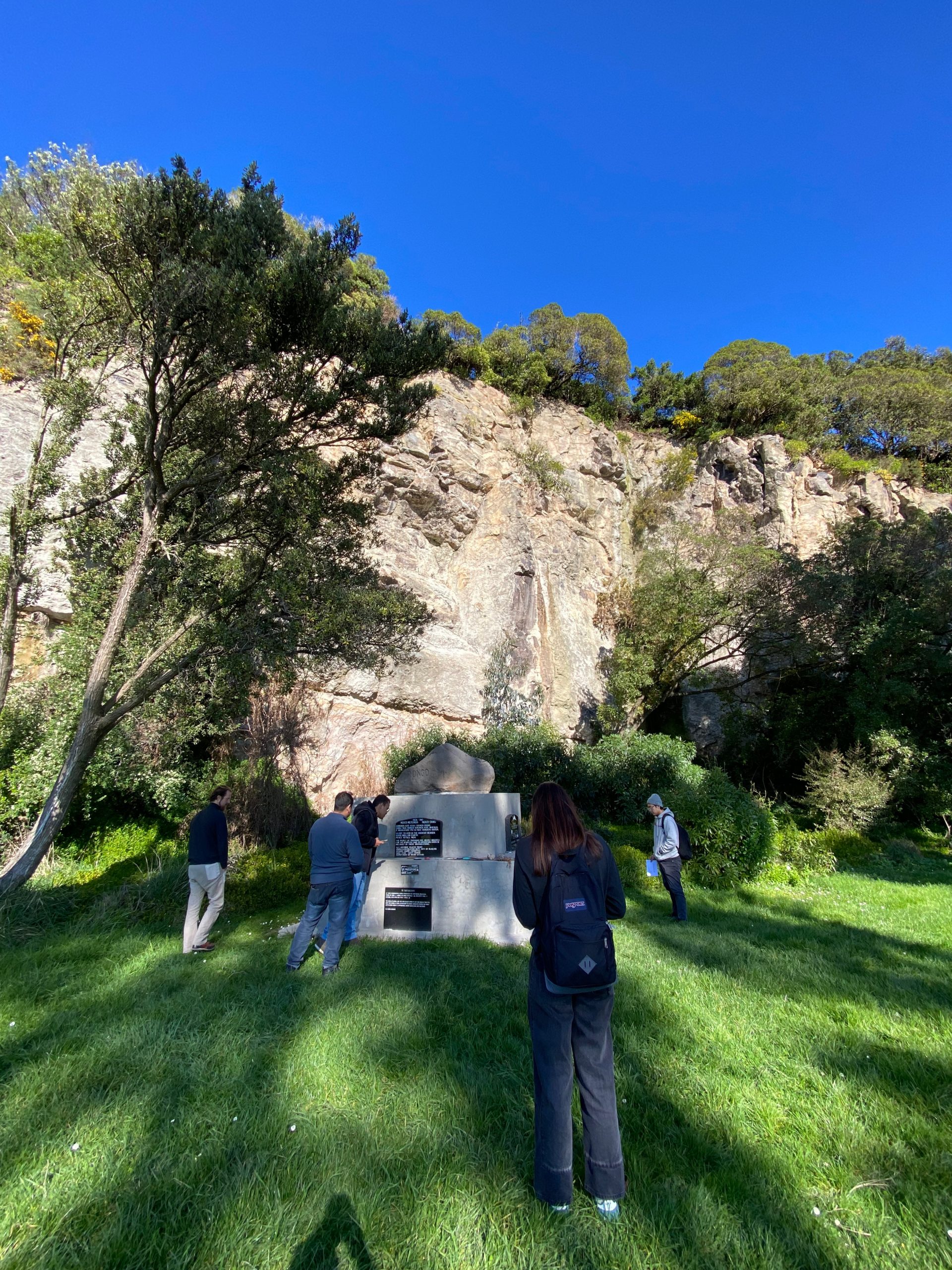 In the late 1800s, hundreds of Taranaki men were taken from their homelands and imprisoned without trial in the deep south. Yet that history remains largely invisible, as Te Āwhina-Pounamu-Waikaramihi found when she retraced the footsteps of those sent to Ōtepoti (Dunedin).
In August, under a warm winter sun, my class set out on a hīkoi through Ōtepoti, Dunedin. We were university students in the Indigenous Approaches to Peacemaking and Reconciliation option paper in the Peace and Conflict Studies programme, and this wasn’t your average field trip. We were retracing the footsteps of the Pakakohi and Parihaka prisoners who were brought here in the late 1800s — tāne Māori taken from their homelands in Taranaki and forced into hard labour in the deep south.
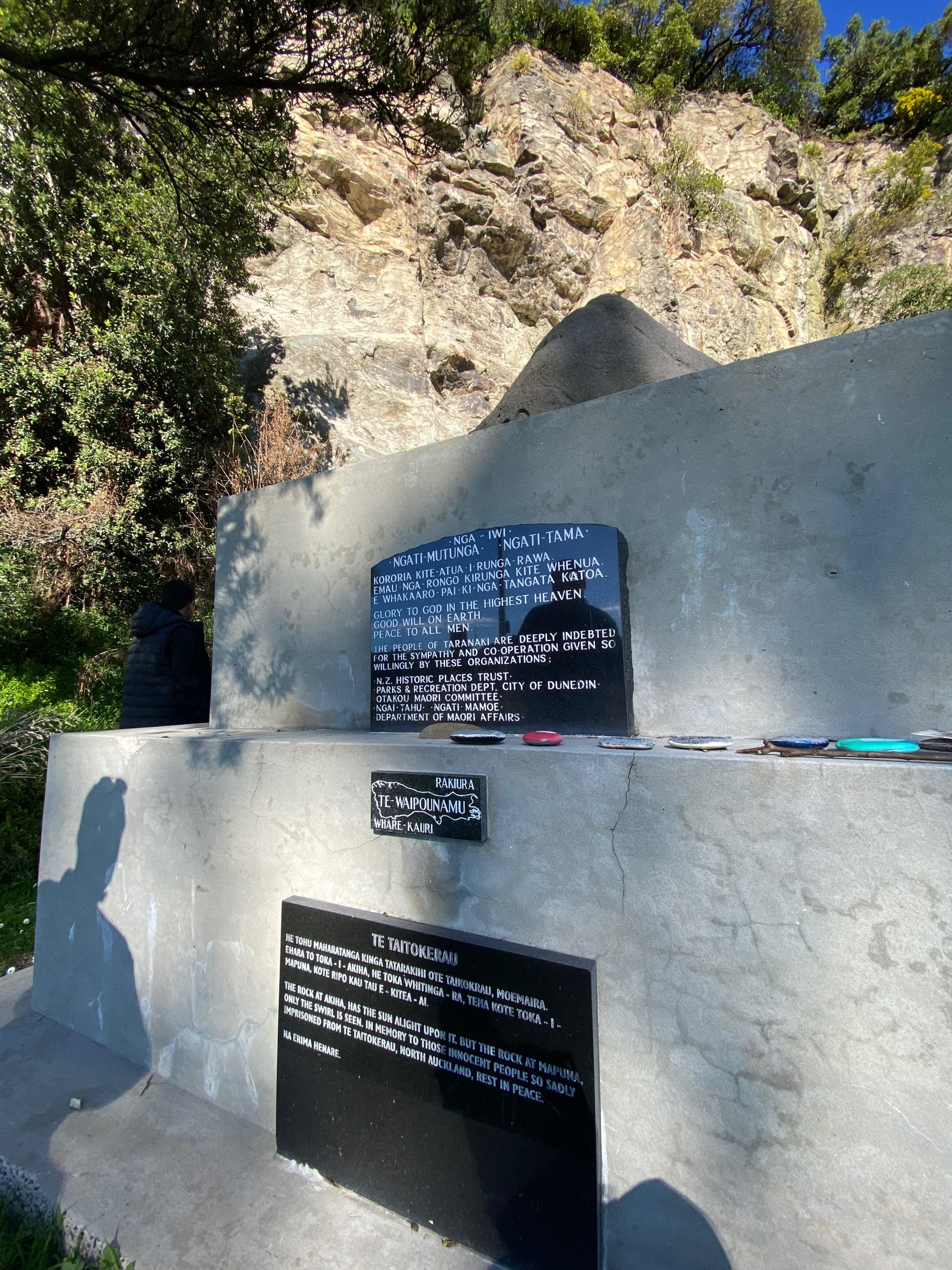
Before our haereka, we learned about the history of the Pakakohi and Parihaka prisoners in class. Through wānaka-style discussions, our class cohort – comprising largely international students – was introduced to the dark and often hidden histories of the city we were studying in. For me, this wasn’t entirely new; I had first encountered these stories through oral histories shared by whānau and Kāi Tahu iwi members committed to bringing this painful past into the light. Growing up on Te Ika-ā-Māui (the North Island), the realities of the Pakakohi and Parihaka prisoners were never taught to me at school. But once I learned them, they became part of a much larger narrative: one of land theft, mistreatment, and colonisation – themes so often ignored in our country’s telling of its own history. Without the dedication of those who continue to hold and share these stories, these important histories would remain unseen too easily.
As a Kāi Tahu descendant, walking this whenua with the kōrero of my tūpuna echoing in my mind was both deeply moving and unsettling.
In 1869, around 74 Pakakohi men were captured in South Taranaki after conflicts around the Pātea area. They were held without trial and transported all the way to Dunedin, where they built roads and worked in the harbour and other parts of the city under brutal conditions.
A decade later came the Parihaka prisoners — men arrested not for violence, but for acts of protest inspired by Te Whiti o Rongomai and Tohu Kākahi, who called for peaceful resistance against land confiscations. Their “crimes” were ploughing confiscated land and putting up fences as acts of nonviolent protest.
After the invasion of Parihaka on November 5, 1881, hundreds more tāne Māori were taken south to Otago and other parts of Te Waipounamu.
Here in Dunedin, both groups endured backbreaking labour, harsh imprisonment, and most likely mistreatment. Some never made it home and were buried in unmarked graves. And yet, the records say they sang waiata as they worked, holding on to their dignity and mana even in captivity.
Eventually, most of these tāne were released and returned to Taranaki, but their time in Ōtepoti remains a poignant reminder of both colonial injustice and Māori resilience.
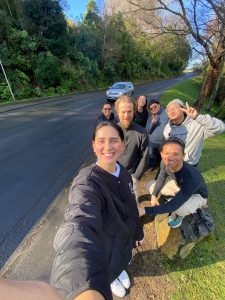
Our hīkoi took us to the Rongo monument and cave at Andersons Bay, Māori Road, the Northern Cemetery, and finally the Southern Cemetery.
What struck me most was how invisible the history is. These sites sit quietly in the city, but unless you already know their stories, you’d never guess the trauma buried here.
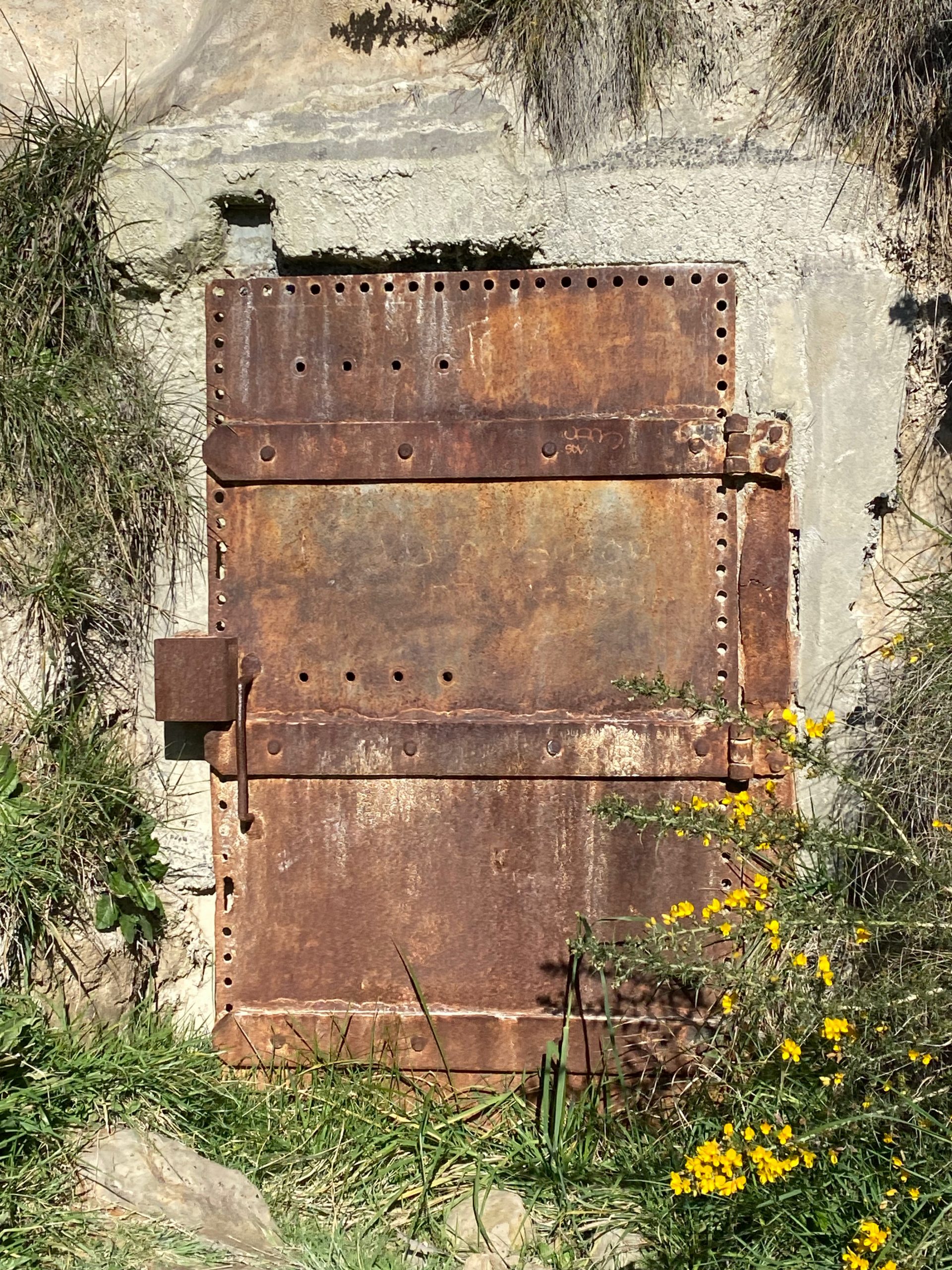
At the caves, for example, men were once imprisoned in pitch-black, freezing conditions. Today, they’re unmarked and inaccessible, and the absence of signage or narrative denies the public an opportunity to confront this colonial violence.
These were all points raised in our class during our post-haereka discussions. In contrast to these whakaaro, Kāi Tahu iwi members, such as Matua Edward Ellison, have spoken about the efforts to bring these men’s stories to light. There is nuance in this history, and our haereka was an attempt to walk the trail of this story – following the tracks of what is known and visible.
Among our group, some suggested that perhaps the more real and raw realities of these men are kept hidden and honoured to protect and preserve their dignity. The cave they were kept in, for example, may be closed to uphold Māori concepts of mana and tapu. Given that my classmates are largely foreigners, it was beautiful to hear these considerations bouncing around during our trip. It was, however, collectively agreed that the history of the Pakakohi and Parihaka prisoners still feels tucked away with intent.
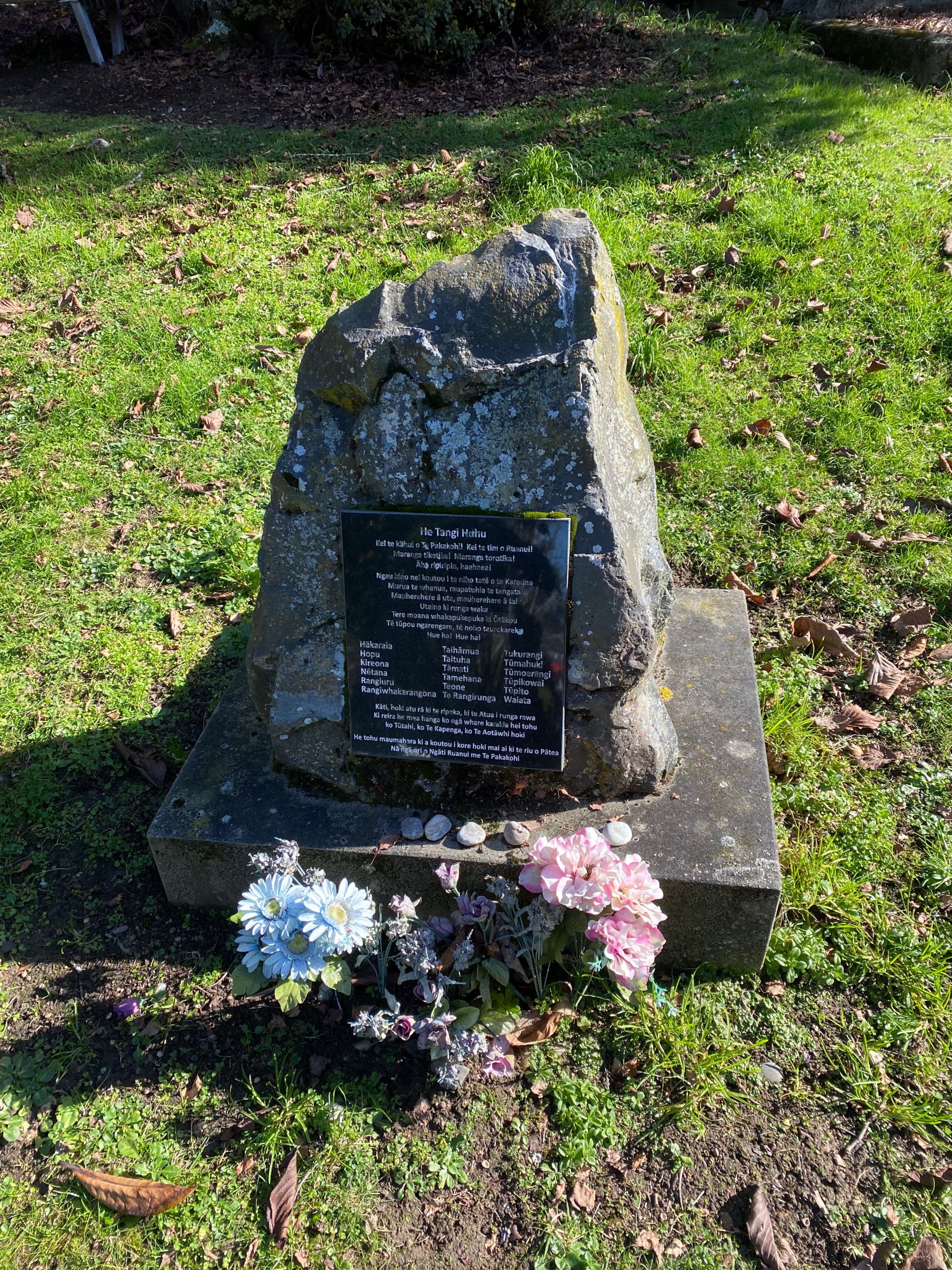
At the Southern Cemetery, 18 Pakakohi men lie buried. There’s a small plaque with their names, along with a mihi in te reo Māori. Reading those names aloud with my classmates gave me chills. It felt like calling out to their spirits — not just to honour them, but also to pull their memory back into the present. It was a privilege for me to translate the carved plaque and share its message with my peers.
Below is an excerpt from the toka maumahara (memorial stone) at the Southern Cemetery:
| Translation shared with the class on the day | |
|---|---|
| Te Reo Māori | Te Reo Pākehā |
| Kei te kāhui o Te Pakakohi! Kei te tini o Ruanui! | To the people of Te Pakakohi! To the multitudes of Ruanui! |
| Maranga tiketike! Maranga torotika! | Rise with dignity! Rise upright! |
| Āha ripiripia, haehaea! | Ah! Slashed and torn apart! |
| Ngau kino nei koutou i te niho tetē o te Karauna | Bitten terribly by the sharp, cutting teeth of the Crown |
| Murua te whenua, raupatuhia te tangata | Your land was seized, your people plundered |
| Mauherehere ā uta, mauherehere ā tai | Imprisoned inland, imprisoned at the coast |
| Utaina ki runga waka | Loaded onto ships |
| Tere moana whakapukepuke ki Ōtākou | Across the rough and surging seas, carried down to Ōtākou |
| Tē tūpou ngarengare, tē noho taurekareka | Forced into submitting without resistance, made to live as slaves |
| Hue ha! Hue ha! | Let it be known! Let it be known! |
So, why are these stories so hard to find?
Ōtākou kaumātua Edward Ellison has pointed out that takata whenua contributions — and the injustices suffered — are often pushed to the margins. Public memory still leans heavily on the settler version of “peace and progress.”
Over generations, this “public memory” has been preserved through school curriculum, commemorations, and local histories that centre colonial resilience while glossing over Māori resistance. Tourist brochures, museum displays, and even civic plaques often frame Dunedin’s development as a triumph of industrial settlement, with little mention of the forced labour that literally built parts of the city that our community here still benefits from today. Early twentieth-century histories by Pākehā scholars, widely circulated newspapers, and council records all helped entrench a narrative of peaceful progress, leaving the violence, imprisonment, and dispossession of takata whenua either footnoted or omitted entirely. This is the version many people still grow up with, because it is the easiest to access – and the least confronting.
As we walked, I kept thinking of an essay by Tricia Toso and her colleagues, Walking with a Ghost River, where they talk about “walking with ghosts.” Toso writes within a Pacific Indigenous studies context, drawing on work grounded in Turtle Island and the Pacific Northwest. Her notion of “walking with ghosts” emerges from a landscape marked by colonial extraction and displacement, where waterways carry the memory of harm. While it is not a Kāi Tahu or Aotearoa framework, her work resonates because it speaks to the ways Indigenous peoples everywhere remain in relationship with their lands, their ancestors, and their histories – even when those histories have been suppressed. Using her essay as a touchstone helped me see our haereka as a part of a wider Indigenous practice of listening to what the whenua is still trying to tell us. That’s exactly what it felt like. The wairua was heavy, especially at the cave. You could almost hear whispers in the dark. And yet, these ghosts are hidden — maybe deliberately.
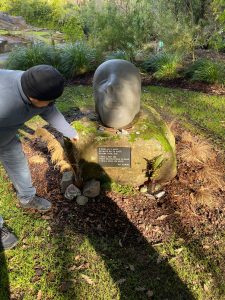
In Ōtepoti, this history has often been hidden through silence rather than outright denial. For decades, the stories of the Pakakohi and Parihaka prisoners were absent from public memory. For some time, the cave itself was left unmarked, unnamed, and unacknowledged – a physical sight that people passed by daily without ever knowing what happened there. This kind of invisibility is a hallmark of colonial forgetting: painful events are tucked away, archives are incomplete, and uncomfortable truths are reframed as peripheral. The effect is that the ghosts remain present, but out of sight.
Our class revisited that question after our trip: Should they remain hidden, or should we make their presence impossible to ignore? For me, an unhidden history would interrupt the everyday, where you cannot cross that causeway or visit the coast without encountering the full story of who laboured there, who suffered, and who resisted. This could look like interpretive signage designed with mana whenua, integrated school resources, public art installations near the cave, or annual commemorations led by local iwi – whichever they felt most appropriate. Effective storytelling would centre the voices of descendants, locate the events within their broader whakapapa, and use both digital and place-based mediums so people engage with the history of these sites. It’s about making the presence of these tīpuna undeniable, not by sensationalizing their pain, but by restoring their mana and amplifying their voices and their stories, kia kore ai e karo.
Raukawa researcher Naomi Simmonds reminds us that walking isn’t just about moving through space — it’s a way of reconnecting with whakapapa and whenua. But for that reconnection to take root, the truth must be told. Without the stories, the land stays silent.
This hīkoi wasn’t just about remembering history. It was a reminder that the past is never really past. The legacy of the Pakakohi and Parihaka prisoners still lives in the whenua, in the intergenerational mamae, and in today’s struggles for justice.
For me, it felt like both a walk of remembrance and a call to action. If future generations are to walk these same paths, I hope they’ll do so with eyes wide open — not just to the beauty of the day, but to the truth beneath their feet.
Hoki wairua atu koutou ki ō wā kāinga; ki ō whenua taurikura, okioki ai.
Te Āwhina-Pounamu-Waikaramihi is of Māori (Ngāpuhi, Ngāti Kahu, Ngāti Hine, Te Hikutū, Te Whānau-ā-Apanui, Ngāti Porou, Kāi Tahu, Waitaha, Kāti Māmoe) and Austrian descent. She holds a Bachelor of Arts and Commerce majoring in Management and Pacific Islands Studies from Ōtākou Whakaihu Waka, the University of Otago. She is currently pursuing a Master of Peace and Conflict Studies with Te Ao o Rongomaraeroa — National Centre for Peace and Conflict Studies and works part-time at He Waka Kōtuia Trust in Ōtepoti, Dunedin.