

Colonial Shadows in Plain Sight: A Continuing Struggle for Peace
When I arrived in Aotearoa New Zealand, I was surprised when my fellow Manaaki scholars spoke about the countries they came from, especially those from Oceania. As a child, I used to memorize national flags and their capitals, yet I had never even heard of Niue, Solomon Islands, or Tuvalu. It says a lot that I grew up far more familiar with European countries than with our Pacific neighbors.
That awareness stayed with me and, in a quiet way, led me to look again at the coat of arms of the Philippines. It had always been there in the background of classrooms, government offices, and ceremonies. I knew it existed, but only now did I truly examine it.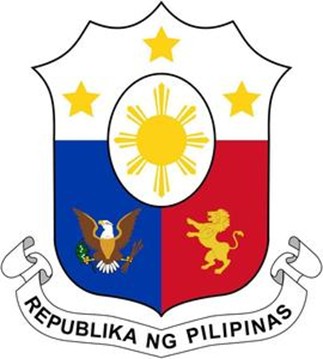
And it was there all along.
We have been waving this symbol since our people celebrated our supposed “independence” and “full sovereignty” in 1946. The coat of arms carries the eight-rayed sun, each ray representing the eight provinces that led the Philippine Revolution, and the three stars representing Luzon, Visayas, and Mindanao. But beside these are two glaring reminders of colonial rule: the North American bald eagle of the United States and the lion rampant of the Kingdom of León of Spain.
Imagine that. Even within the very emblem meant to symbolize our nationhood, colonial powers remain permanently embedded. WHAT. ON. EARTH.
This tension between symbolism and history also appears in everyday life. Growing up, speaking English was treated as a measure of intelligence. In elementary school, I was even tasked by teachers to list classmates who spoke in the vernacular or local language, with every tally mark costing them a peso. Looking back now, it feels absurd. Back home, poor grammar is often equated with poor education, as if struggling with English means one has not read or learned enough. Fluency commands admiration and acceptance, leaving people in awe of those who speak English effortlessly. Because of this, many young parents now raise their children primarily in English, believing it offers a better future, yet many of these children grow up struggling to understand or speak their own local language.
And do not even get me started on the Filipino obsession with becoming, quite literally, white. For many, whiteness is still equated with beauty, status, and desirability. Dark skin is often mocked or looked down upon, with people subjected to cruel jokes and insults. As a result, whitening products flood everyday life, from soaps and lotions to pills and glutathione drips. Many dream of marrying white foreigners, imagining blue-eyed, fair-skinned children as some kind of achievement, a future Miss Universe in the making.
These patterns are not isolated. Long after the colonizers left our lands, their shadow continues to linger in everyday language, shaping how we see ourselves and how we are seen. There is a need of a critical way of speaking that allows us to clearly identify and describe how empire has profoundly influenced our lives. I realize there are words that exist only because of colonial histories—terms like “Third World,” “expat,” and “exotic,” each quietly carrying a hierarchy beneath their surface. Who decided the world order that labels my country as “Third World”? My country is abundant in resources, shaped by diverse land and water forms, all the while exploited from that of the “First World”. Why is it that when foreigners choose to retire in my country, they are called “expats,” but when my people move elsewhere, they are called “immigrants,” always met with suspicion and the threat of deportation? Our faces, our food, our ways of living are called “exotic,” while the white people are the ones which are acceptable and refined.
In today’s global climate, it is often noted that New Zealand, along with other Pacific Islands, is considered one of the safest regions in the event of a nuclear conflict, largely due to its geographic isolation from major centers of geopolitical tension. As a result, wealthy individuals from around the world have increasingly secured properties in these areas, sometimes referred to as “apocalypse insurance”. What does it mean when safety itself becomes a commodity? Once again, lands deeply tied to Indigenous histories and identities risk being reframed as strategic assets for the security of the few. Time and time again, Indigenous-connected spaces are drawn into global systems of extraction and privilege.
My own country would have virtually no defense in the event of a nuclear attack, and the same vulnerability is shared by many across Oceania. We are bound by the same ocean, yet that shared space also carries a shared burden: our lands and waters are often treated as strategic outposts, testing grounds, or military bases by larger and more powerful nations. However, there are few alternatives for small islands that seek rules over power.
Without directly addressing these structures of domination, peace remains an elusive ideal rather than a tangible reality. We have tried the Western brand of peace; it is time that we go back to our roots which embodies justice and sustainability for genuine peace.
What might I want history to do to me? I might want history to reduce my historical antagonist—and increase me. I might ask it to urgently remind me why I’m moving forward, away from history. Or speak to me always of our intimate relation, of the ties that bind—and indelibly link—my history and me. (Smith 2020)
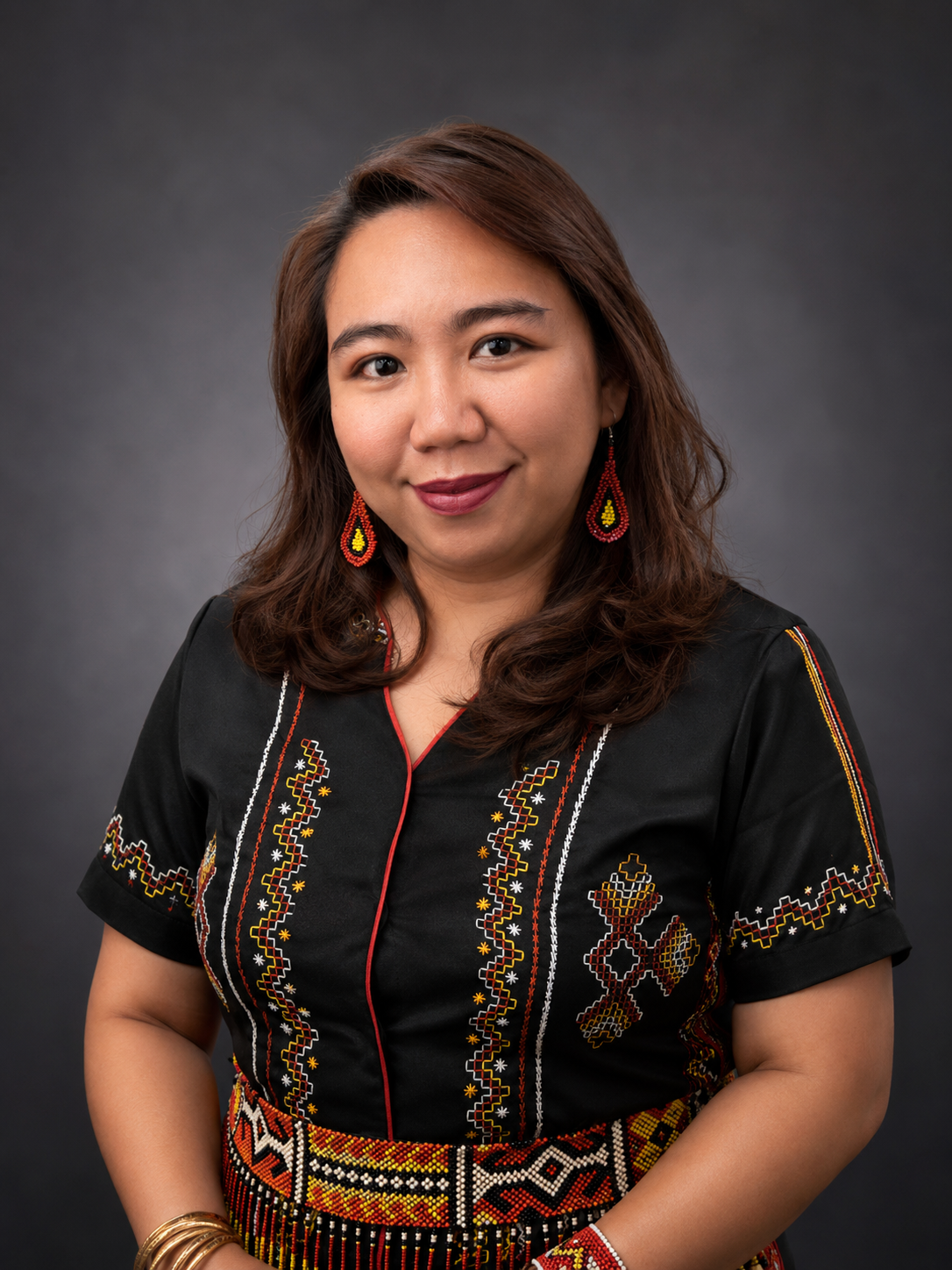
Fritzie Lynne Costanilla Sumando is from Agusan del Sur, Caraga, Philippines. She holds a Bachelor of Science in Management Accounting from Ateneo de Davao University and a Juris Doctor degree from St. Thomas More College of Law. She is currently the Regional Legal Officer of the National Commission on Indigenous Peoples Caraga. As a Manaaki Scholar, she is now pursuing a Master of Peace and Conflict Studies with Te Ao o Rongomaraeroa | The National Centre for Peace and Conflict Studies to deepen her understanding of peacebuilding and strengthen her work in empowering Indigenous Cultural Communities and Indigenous Peoples in the Philippines.