This excerpt is from an article originally published on the university Te Tumu Research at Otago in Māori, Pacific and Indigenous Studies blog. Kōrero by Leighton Williams, Senior Teaching Fellow.
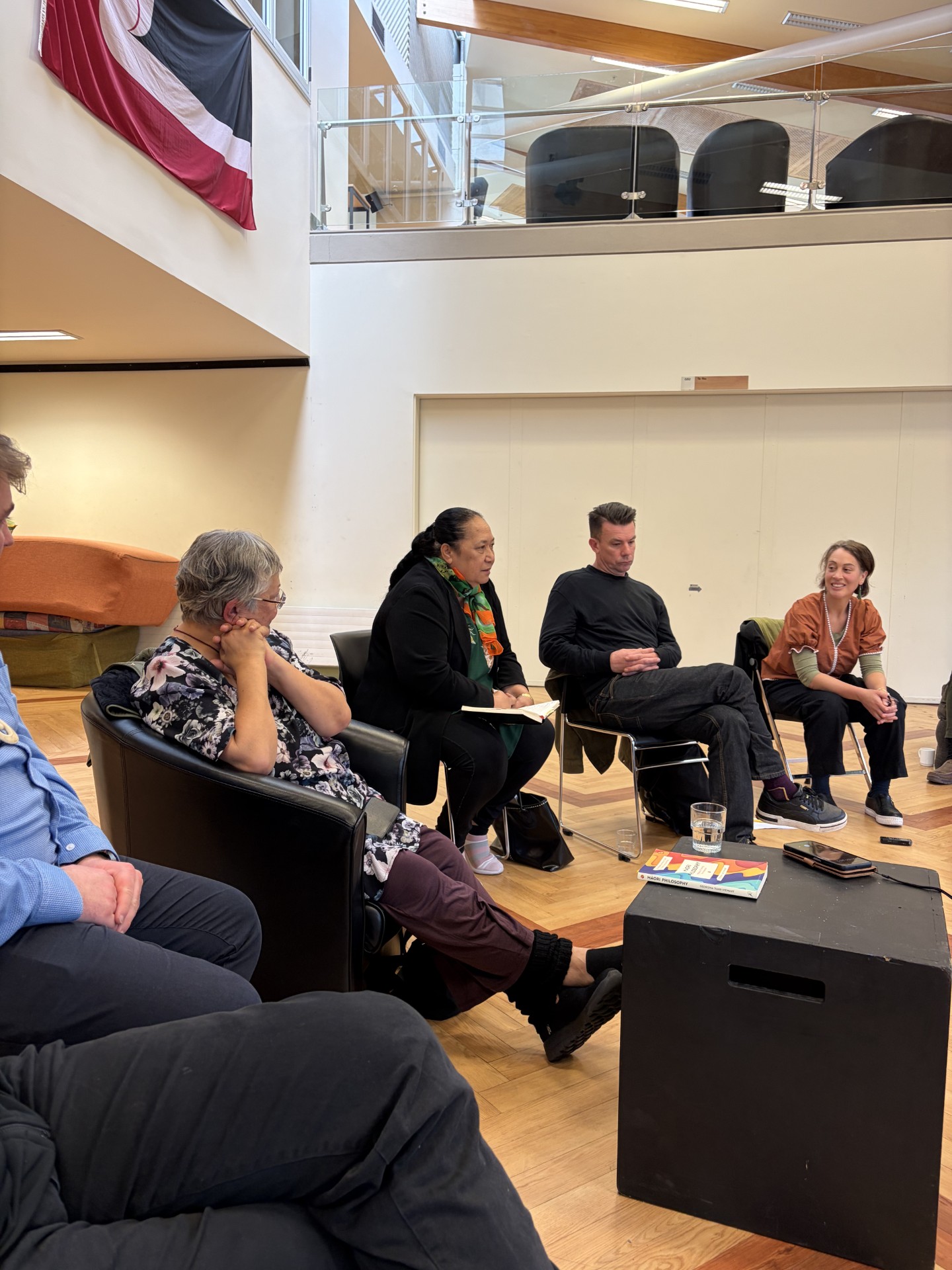
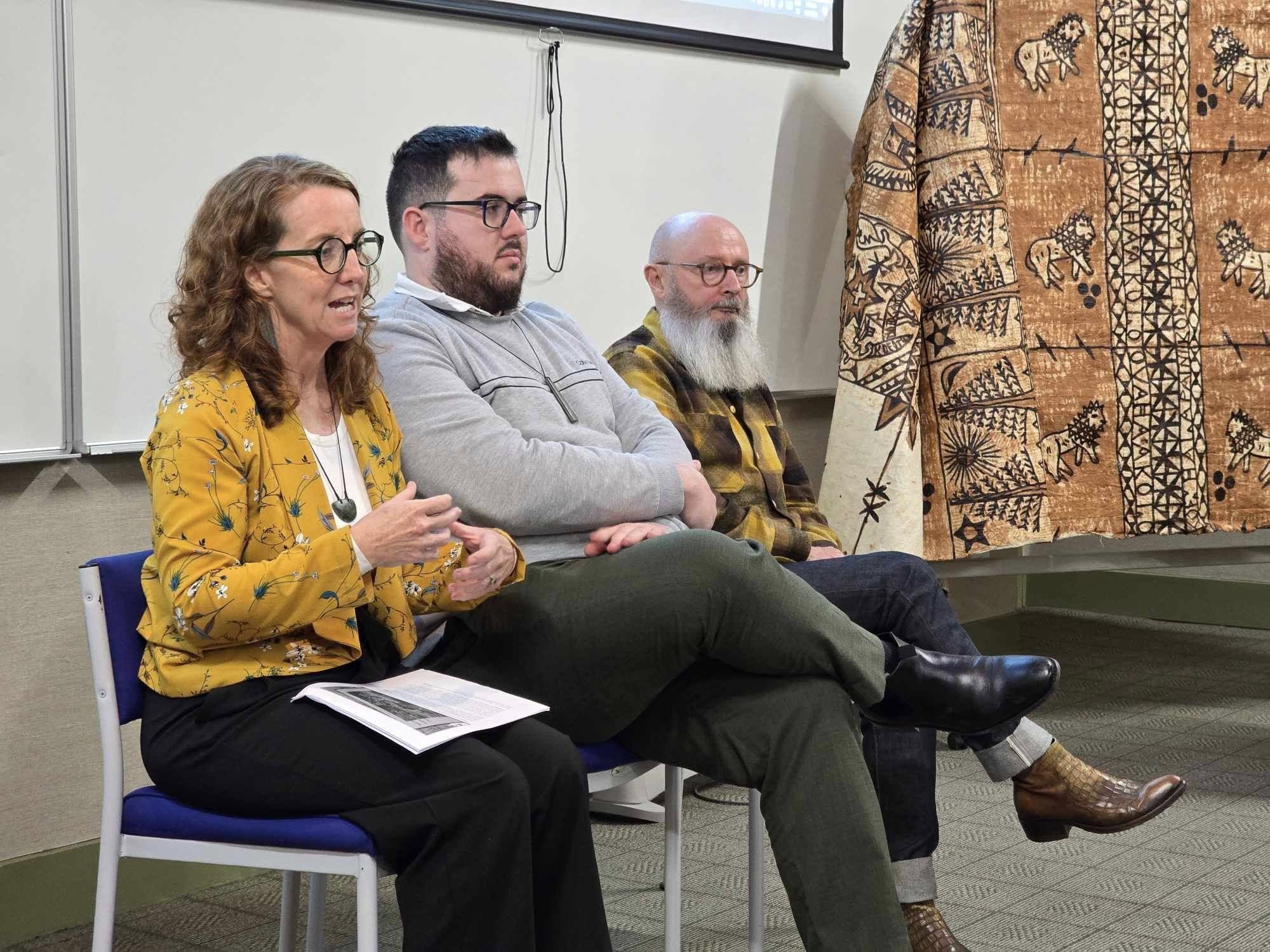
Earlier in May, Te Tumu hosted Professor Georgina Tuari Stewart (Ngāpuhi, Ngāti Maru ki Tainui) from AUT for a special wānanga on peace, organised by Associate Professor Liana MacDonald. The wānanga was well attended by Te Tumu staff, postgraduate students, and friends from across the university, all of whom came to share rich stories about how they related to peace in varying ways. Centring Māori and Pacific notions of peace, the session explored what these perspectives might reveal about the limits of how violence, conflict, and peace are currently imagined. Read more…
When I arrived in Aotearoa New Zealand, I was surprised when my fellow Manaaki scholars spoke about the countries they came from, especially those from Oceania. As a child, I used to memorize national flags and their capitals, yet I had never even heard of Niue, Solomon Islands, or Tuvalu. It says a lot that I grew up far more familiar with European countries than with our Pacific neighbors.
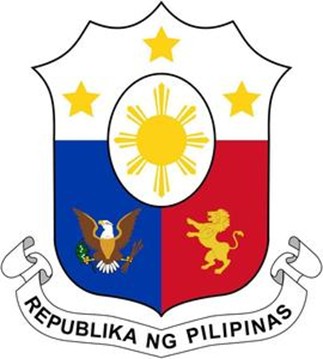
That awareness stayed with me and, in a quiet way, led me to look again at the coat of arms of the Philippines. It had always been there in the background of classrooms, government offices, and ceremonies. I knew it existed, but only now did I truly examine it.
And it was there all along.
We have been waving this symbol since our people celebrated our supposed “independence” and “full sovereignty” in 1946. The coat of arms carries the eight-rayed sun, each ray representing the eight provinces that led the Philippine Revolution, and the three stars representing Luzon, Visayas, and Mindanao. But beside these are two glaring reminders of colonial rule: the North American bald eagle of the United States and the lion rampant of the Kingdom of León of Spain.
Imagine that. Even within the very emblem meant to symbolize our nationhood, colonial powers remain permanently embedded. WHAT. ON. EARTH.
This tension between symbolism and history also appears in everyday life. Growing up, speaking English was treated as a measure of intelligence. In elementary school, I was even tasked by teachers to list classmates who spoke in the vernacular or local language, with every tally mark costing them a peso. Looking back now, it feels absurd. Back home, poor grammar is often equated with poor education, as if struggling with English means one has not read or learned enough. Fluency commands admiration and acceptance, leaving people in awe of those who speak English effortlessly. Because of this, many young parents now raise their children primarily in English, believing it offers a better future, yet many of these children grow up struggling to understand or speak their own local language.
And do not even get me started on the Filipino obsession with becoming, quite literally, white. For many, whiteness is still equated with beauty, status, and desirability. Dark skin is often mocked or looked down upon, with people subjected to cruel jokes and insults. As a result, whitening products flood everyday life, from soaps and lotions to pills and glutathione drips. Many dream of marrying white foreigners, imagining blue-eyed, fair-skinned children as some kind of achievement, a future Miss Universe in the making.
These patterns are not isolated. Long after the colonizers left our lands, their shadow continues to linger in everyday language, shaping how we see ourselves and how we are seen. There is a need of a critical way of speaking that allows us to clearly identify and describe how empire has profoundly influenced our lives. I realize there are words that exist only because of colonial histories—terms like “Third World,” “expat,” and “exotic,” each quietly carrying a hierarchy beneath their surface. Who decided the world order that labels my country as “Third World”? My country is abundant in resources, shaped by diverse land and water forms, all the while exploited from that of the “First World”. Why is it that when foreigners choose to retire in my country, they are called “expats,” but when my people move elsewhere, they are called “immigrants,” always met with suspicion and the threat of deportation? Our faces, our food, our ways of living are called “exotic,” while the white people are the ones which are acceptable and refined.
In today’s global climate, it is often noted that New Zealand, along with other Pacific Islands, is considered one of the safest regions in the event of a nuclear conflict, largely due to its geographic isolation from major centers of geopolitical tension. As a result, wealthy individuals from around the world have increasingly secured properties in these areas, sometimes referred to as “apocalypse insurance”. What does it mean when safety itself becomes a commodity? Once again, lands deeply tied to Indigenous histories and identities risk being reframed as strategic assets for the security of the few. Time and time again, Indigenous-connected spaces are drawn into global systems of extraction and privilege.
My own country would have virtually no defense in the event of a nuclear attack, and the same vulnerability is shared by many across Oceania. We are bound by the same ocean, yet that shared space also carries a shared burden: our lands and waters are often treated as strategic outposts, testing grounds, or military bases by larger and more powerful nations. However, there are few alternatives for small islands that seek rules over power.
Without directly addressing these structures of domination, peace remains an elusive ideal rather than a tangible reality. We have tried the Western brand of peace; it is time that we go back to our roots which embodies justice and sustainability for genuine peace.
What might I want history to do to me? I might want history to reduce my historical antagonist—and increase me. I might ask it to urgently remind me why I’m moving forward, away from history. Or speak to me always of our intimate relation, of the ties that bind—and indelibly link—my history and me. (Smith 2020)
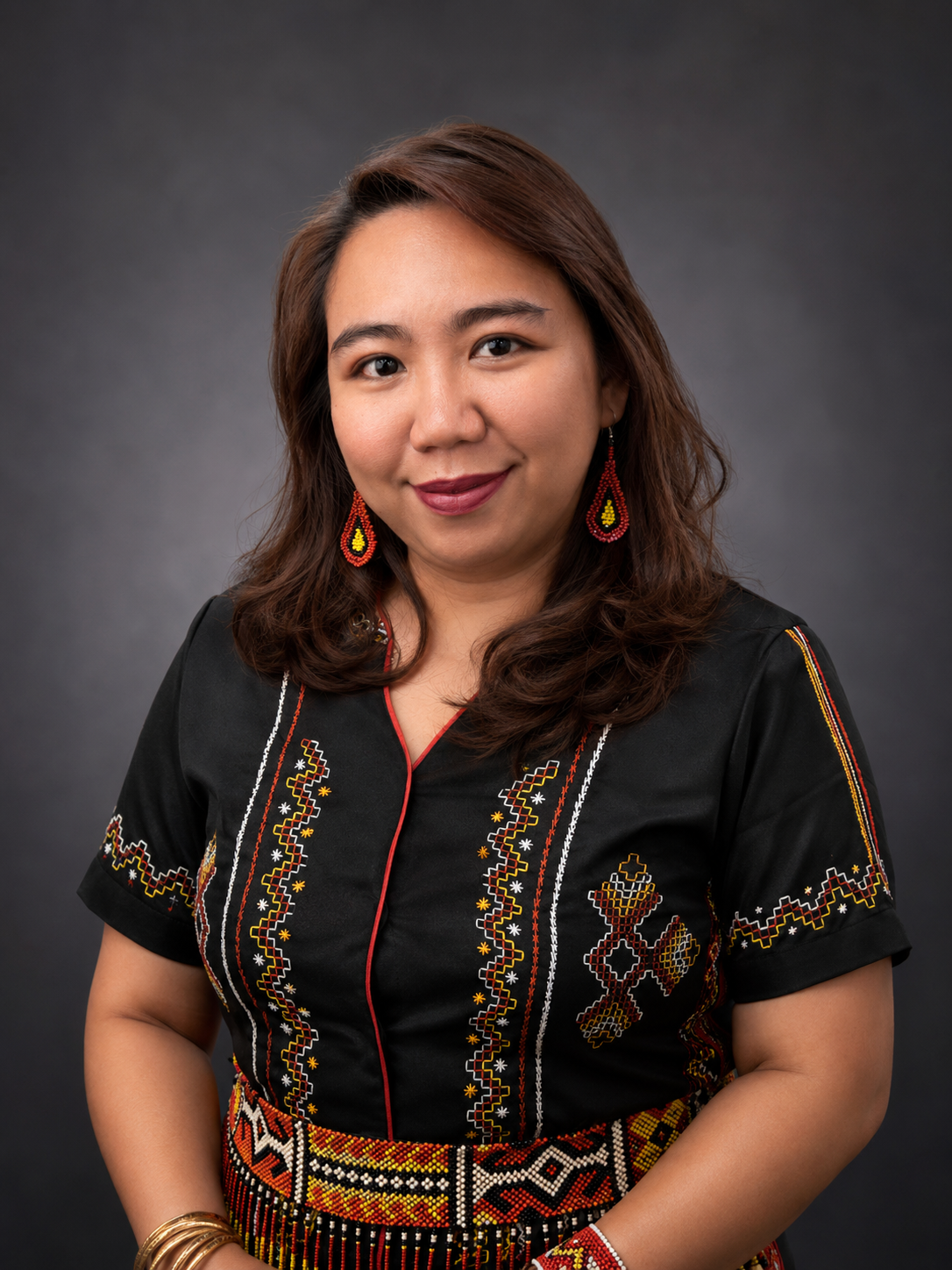
Fritzie Lynne Costanilla Sumando is from Agusan del Sur, Caraga, Philippines. She holds a Bachelor of Science in Management Accounting from Ateneo de Davao University and a Juris Doctor degree from St. Thomas More College of Law. She is currently the Regional Legal Officer of the National Commission on Indigenous Peoples Caraga. As a Manaaki Scholar, she is now pursuing a Master of Peace and Conflict Studies with Te Ao o Rongomaraeroa | The National Centre for Peace and Conflict Studies to deepen her understanding of peacebuilding and strengthen her work in empowering Indigenous Cultural Communities and Indigenous Peoples in the Philippines.
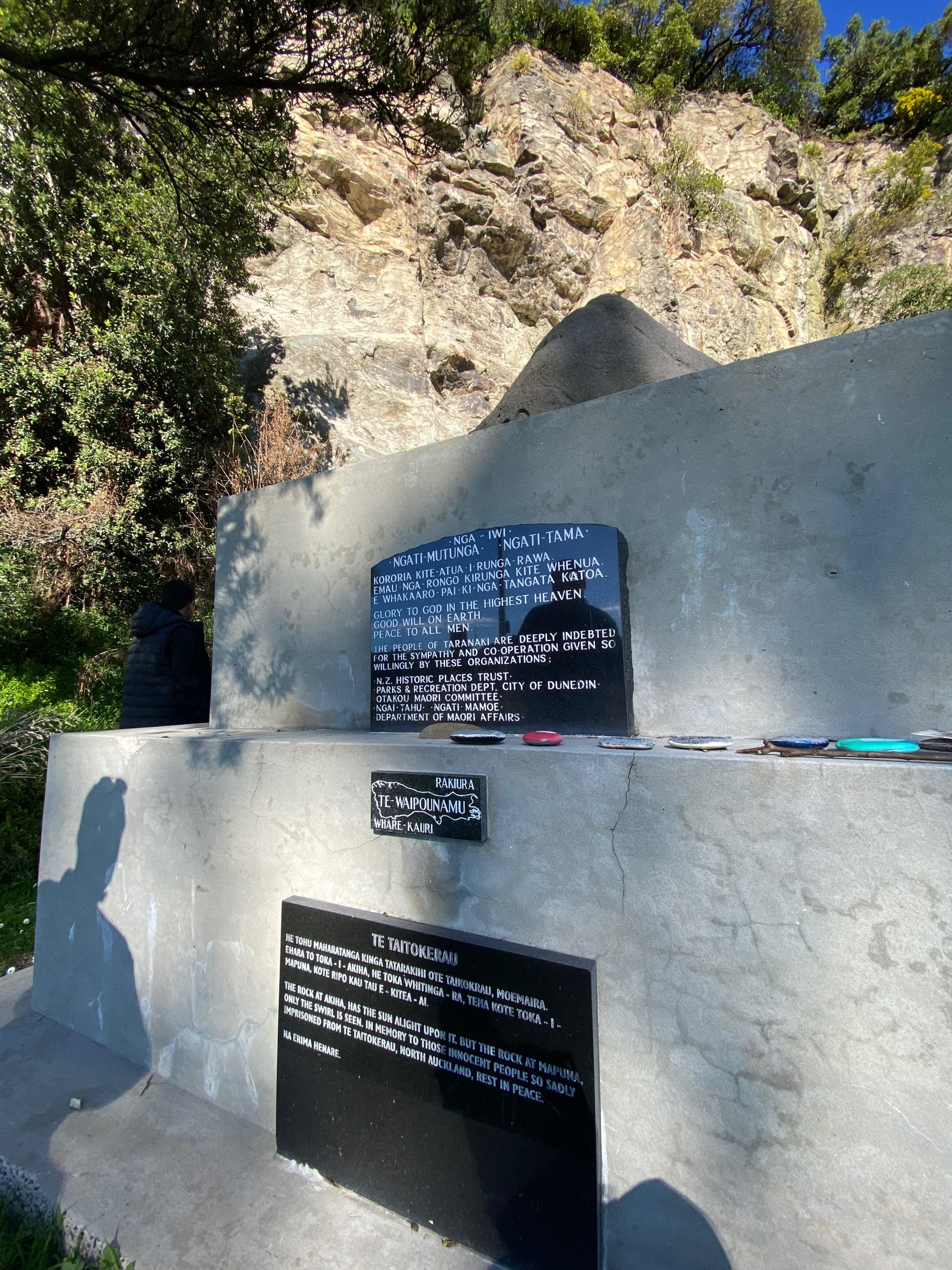
In the late 1800s, hundreds of Taranaki men were taken from their homelands and imprisoned without trial in the deep south. Yet that history remains largely invisible, as Te Āwhina-Pounamu-Waikaramihi found when she retraced the footsteps of those sent to Ōtepoti (Dunedin).
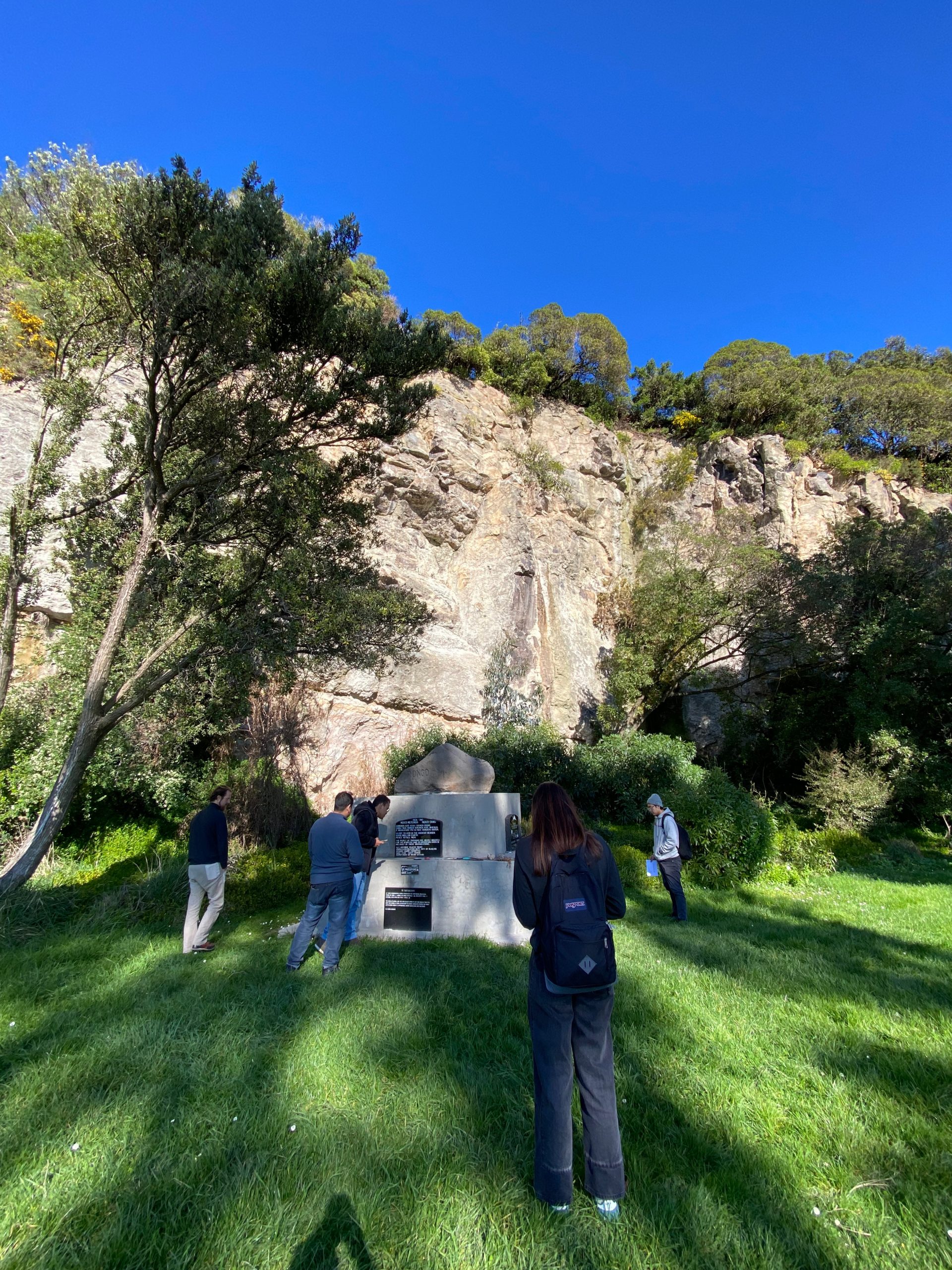
In August, under a warm winter sun, my class set out on a hīkoi through Ōtepoti, Dunedin. We were university students in the Indigenous Approaches to Peacemaking and Reconciliation option paper in the Peace and Conflict Studies programme, and this wasn’t your average field trip. We were retracing the footsteps of the Pakakohi and Parihaka prisoners who were brought here in the late 1800s — tāne Māori taken from their homelands in Taranaki and forced into hard labour in the deep south.
Before our haereka, we learned about the history of the Pakakohi and Parihaka prisoners in class. Through wānaka-style discussions, our class cohort – comprising largely international students – was introduced to the dark and often hidden histories of the city we were studying in. For me, this wasn’t entirely new; I had first encountered these stories through oral histories shared by whānau and Kāi Tahu iwi members committed to bringing this painful past into the light. Growing up on Te Ika-ā-Māui (the North Island), the realities of the Pakakohi and Parihaka prisoners were never taught to me at school. But once I learned them, they became part of a much larger narrative: one of land theft, mistreatment, and colonisation – themes so often ignored in our country’s telling of its own history. Without the dedication of those who continue to hold and share these stories, these important histories would remain unseen too easily.
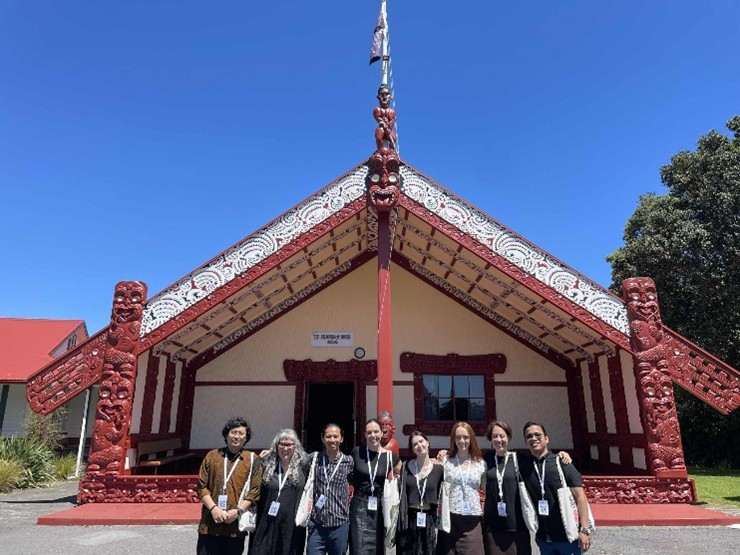
This photo was taken during the visit to the Owae Marae, which signalled the official start of the conference.
Seven students from the TAOR Masters student cohort, with Richard and Liana, journeyed to New Plymouth, Taranaki in order to attend the International Peace Research Association (IPRA) conference, from 3 – 10 November. What follows are some informal reflections about the trip by student attendees:
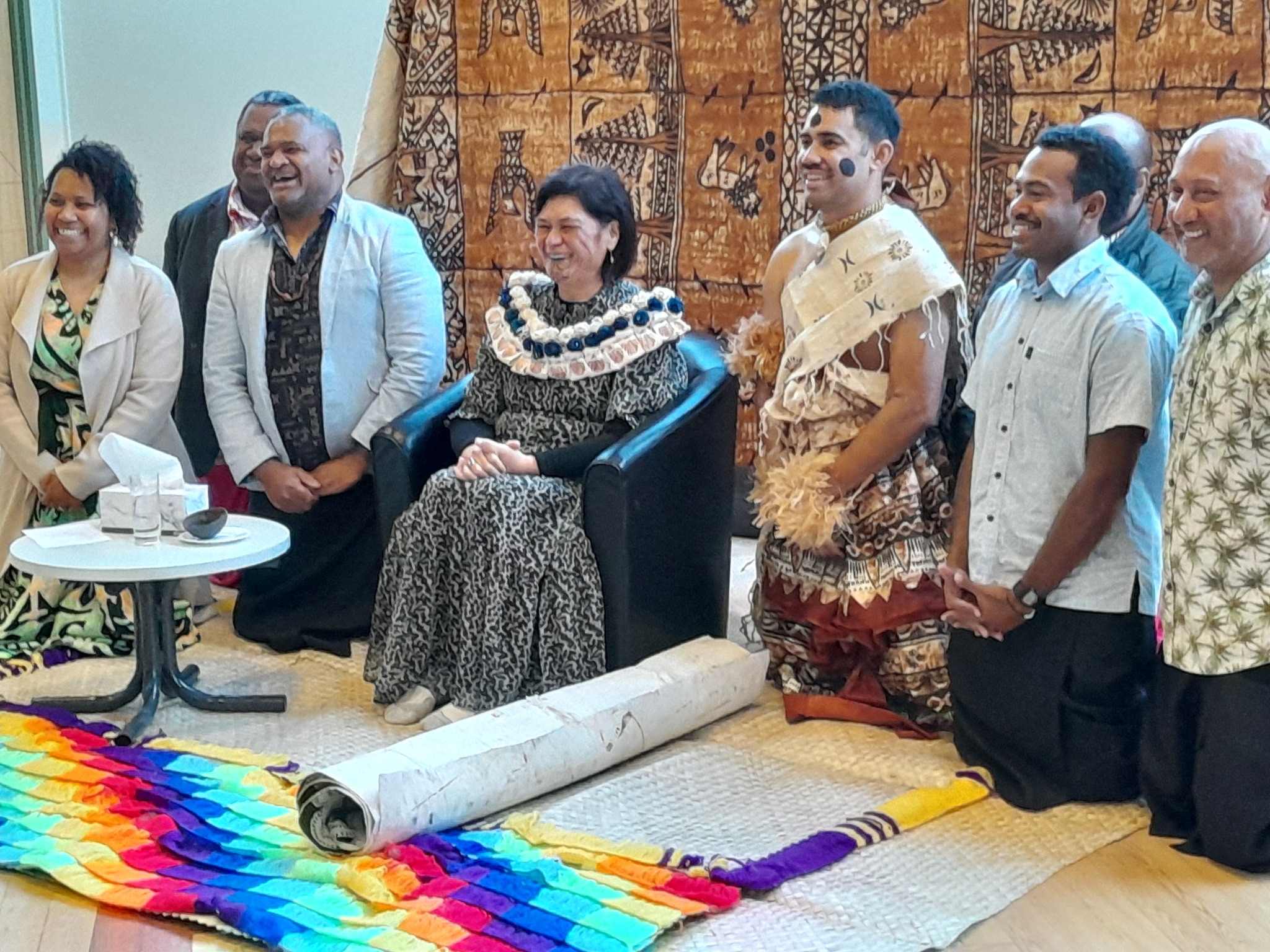
Te Ao o Rongomaraeroa, in association with the Archibald Baxter Memorial Trust, hosted the Honourable Nanaia Mahuta for this year’s Archibald Baxter Memorial Trust Annual Peace Lecture on Weds 17 Sep, 5:30pm at the College Auditorium.
“Indigenous Economic Inclusion – A Case for Integration”
When powerful countries use money, technology, or resources as weapons, it creates fragility and mistrust. Indigenous economies, built on care, sharing, and long-term responsibility, provide a stronger, fairer, and more resilient future that puts people, planet, peace and prosperity at the forefront of their considerations.
This excerpt is from an article originally published on the university Te Pānui Taura | Postgraduate News Bulletin. Kōrero by Brigham Riwai-Couch, Māori Communications Adviser.
Studying at the University of Otago – Ōtākou Whakaihu Waka was initially far off her radar, but a soon to be Doctor of Education now finds herself leading meaningful research here.
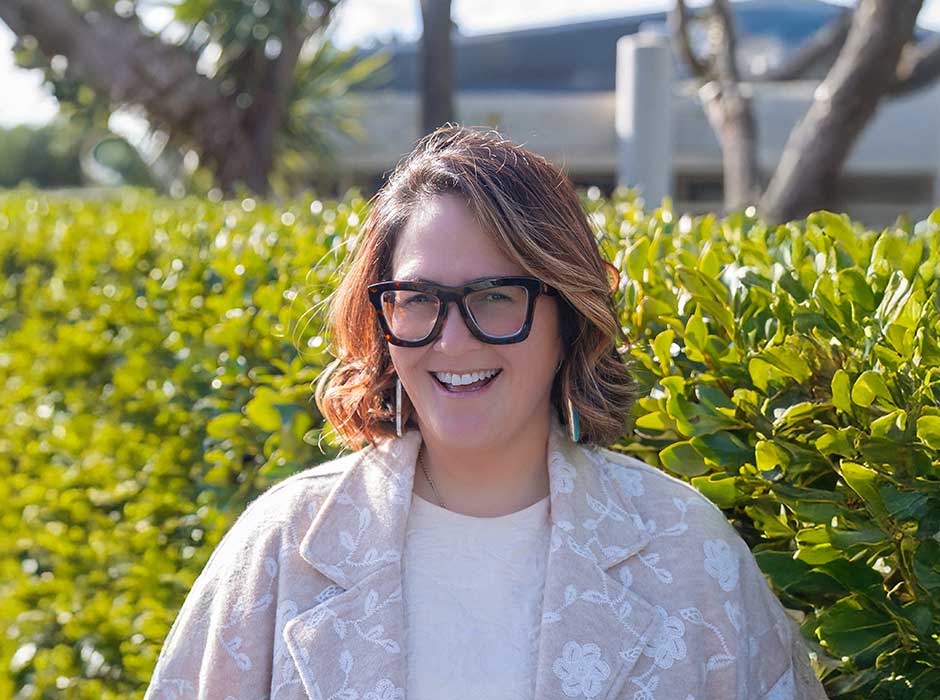
Bianca Elkington (Ngāti Toa, Ngāti Tama, Ngāti Koata, and Ngāi Tahu), has always had a firm belief that education is more than classrooms and qualifications.
She believes that for Māori students especially, using whakapapa and identity are crucial to making spaces where students can thrive.
Kua ea te Hui Taumata o Te Tumu 2025! Kātahi te rā mīharo ko tēnei!
The second annual Te Tumu research symposium hui was held on Wednesday 2 July in Te Wānanga, in the newly refurbished Te Tumu building. We had over 60 attendees throughout the course of the day to listen to 16 postgraduate students and academic researchers share their research stories and journeys in a collegial and warm setting. Guided by the ethos of the 2024 inaugural symposium, the event similarly aimed to promote knowledge sharing and deepen connections across te whānau o Te Tumu. Colleagues, whose research resonated with the broader kaupapa of the school, also participated.
Professor Patrick Vakaoti, Te Tumu Dean, opened the symposium by launching attendees from the metaphorical mooring post of Te Tumu Herenga Waka, towards new research learnings with the saying “the master’s tools will never dismantle the master’s house”. This thought-provoking provocation by black feminist Audrey Lorde served as a touchstone throughout the day, prompting attendees to question why we do research: What house will we build? Or will we strive to repurpose, rebuild or refurbish the one we occupy currently, and how will we do this?
Te Ao o Rongomaraeroa, the National Centre for Peace and Conflict Studies is pleased to broadcast this timely call. We invite you to sign your name to the call on the Avaaz petitions website.
We are proud of all the writing published in the last few months. 2023 has been a productive year for many, with a number of students and alumni having recently published work.
As we near the end of the second semester, this is a great chance to get together, socialise, and celebrate the year! We will be doing just that at an event for all centre whānau including current Master’s and Ph.D. students, alumni, and staff.
Aragalaya, #GoHomeGota & Sri Lanka’s unprecedented protests event recording of the in-person public lecture delivered on 26 August 2022 by Dr Sanjana Hattotuwa at the invitation of Te Ao O Rongomaraeroa Student Association is up now on YouTube.
This excerpt is from an article originally published on the university Te Pānui Taura | Postgraduate News Bulletin. Kōrero by Koren Allpress, Internal Communications Adviser.
Lived experience is contributing in a very real way to one University of Otago student’s studies.
Based in his hometown of Loikaw, near the eastern border of Myanmar, Master of Peace and Conflict Studies candidate John Philip is part way through the first year of his course, which he is completing remotely.
Myanmar has been under military control since a coup in February 2021, and Philip is experiencing the effects of that on his friends and family, as they literally fight for their lives and for democracy.
Dr Jenny Te Paa Daniel has kindly shared this useful resource on pepeha for Pākehā and Tauiwi from E-Tangata. It is also now linked up on our blog Resources page.
We have three new publications in by Te Māreikura Dr Jenny Te Paa Daniel who is leading Te Ao O Rongomaraeroa National Centre for Peace and Conflict Studies as our Acting Director.
Dr Te Paa Daniel has gifted us three wonderful pieces to feature in the Series:
Whaowhia te kete mātauranga. Fill the basket of knowledge.
Nau mai haere mai to the new blog site for Te Ao o Rongomaraeroa! This blog site is updated collectively by students, staff, and community afflilaited with the Centre. On this blog site you can find working papers, events, news items, resources, recordings, and more.
Have something you’d like to add to the blog site? Reach out to us at: peaceandconflict[at]otago.ac.nz


 Te Ao O Rongomaraeroa would like to give a warm congratulations PhD recipient, Obinna Nweke. Obinna successfully defended his thesis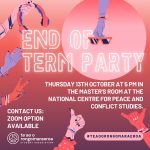
 Aragalaya,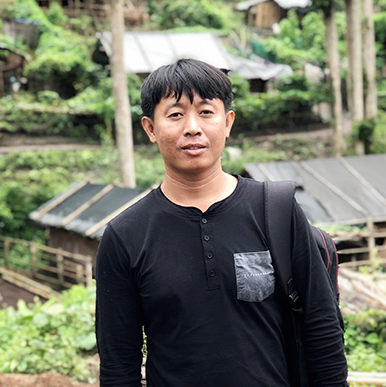
 A warm congratulations PhD recipient, Samwel Oando. Sam successfully defended his thesis
  We have three new publications in by Te Māreikura Dr Jenny Te Paa Daniel who is leading Te Ao O Rongomaraeroa National Centre for Peace and Conflict Studies as our Acting Director.
  We have a new submission to The Working Paper Series by alumni Alexandra Scrivner,