

PhD Opportunities
The University of Otago Physics Department invites applications for the 2026 PhD program. Applications will be assessed at the departmental level. Some projects have dedicated studentships funded from research grants; for others, successful applicants will be nominated for department-level or University of Otago PhD scholarships that cover university fees and provide a stipend for the 3-year PhD.
The application deadline for the 2026 round is January 31, 2026.
To apply, please send an email to physics.office@otago.ac.nz with the subject line
“Otago PhD 2026: {Name}”. Please include the following information:
- a 1-page academic CV;
- your academic record or transcript with explanation of grading and a GPA;
- your country of citizenship;
- contact information for at least two academic referees;
- your choice of project(s) and supervisor(s), from those listed below;
- a 1-page statement of purpose, outlining your career goals and why you want to study for a PhD in our department.
Funding key: Projects marked with ★ have a specific grant-funded PhD studentship attached. Projects marked with ◆ have additional external funding available on a competitive basis. Projects without a symbol will be part of the departmental or University of Otago PhD scholarship nominations.
If you would like more information about any individual project, please reach out to the associated staff member for a friendly chat.
Available PhD Projects
Antarctic atmosphere and space debris
The rapid expansion of the space industry has resulted in an unprecedented pace of rocket launches and satellites in orbit. Over the past 15 years, rocket launches have nearly tripled, and the number of satellites has surged tenfold, raising significant concerns about environmental impacts. Deorbiting satellites at end-of-life by re-entry releases hundreds of tons of metallic particles annually into the atmosphere, with potential consequences including disruption to ozone recovery via introduction of long-lived ozone-depleting substances. With projections of up to 100,000 satellites by decade’s end, high-altitude pollution from rocket exhaust and re-entries could persist for decades or centuries. This PhD project will provide key insights and recommendations for the management and mitigation of atmospheric re-entry, building on current understanding of ozone in the atmosphere and climate system.
Related links/publications:
Atmosphere research group;
Sustainable Space Initiative.
- Prerequisites/skills: Degree in Physics, Meteorology or related field.
- Supervisor(s):
Associate Professor Annika Seppälä;
Dr Priyanka Dhopade (Mechanical & Mechatronics Engineering, University of Auckland)
Enhanced seasonal predictability for the Southern Hemisphere
The Antarctic polar atmosphere is a key region driving seasonal-scale changes in the Southern Hemisphere. However, the full picture of chemical-dynamical coupling within the polar region, and links to lower latitudes, remains unsolved. This project builds on recent discoveries by our group with national and international collaborators.
Related links/publications:
Atmosphere research group.
- Prerequisites/skills: Degree in Physics, Meteorology or related field.
- Supervisor(s):
Associate Professor Annika Seppälä
Antarctica sea ice and ice–ocean interactions in a changing climate
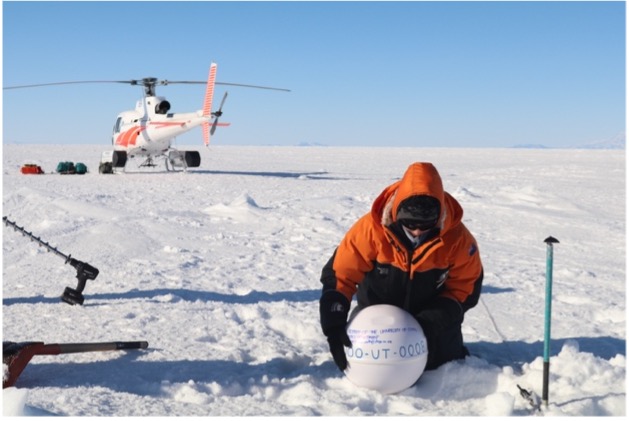
Antarctic sea-ice extent reached record lows in both summer and winter of 2023. A decline began around 2016 after an apparently stable or slightly increasing period since satellite observations began. The Otago Antarctic sea-ice physics group is part of the international effort “Antarctica InSync”, investigating the recent rapid decline. We focus on sea-ice formation and decay in a changing climate, particularly the impacts of freshwater from ice shelves and resulting changes (e.g., supercooling and ocean stratification). We examine these processes through laboratory experiments, field observations, and computational modelling. Projects suit students with backgrounds in physics and/or mathematics, especially thermodynamics, fluid mechanics, optics, and computational physics.
Related links/publications:
Sea ice and ice–ocean interactions publications
- Prerequisites/skills: BSc (Hons), MSc or equivalent in physics or a related discipline.
- Supervisor(s):
Associate Professor Inga Smith (Physics);
possible co-supervisors: Associate Professor Greg Leonard (Surveying), Dr Fabien Montiel (Mathematics & Statistics)
Early warning of solar flare magnitude by subionospheric VLF
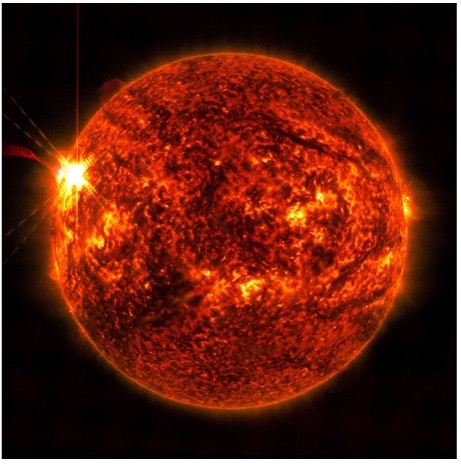
Solar flares are the largest explosions in the present-day solar system. They are challenging to forecast and can produce X-rays and radiation storms that negatively impact radio communications and the space environment. Subionospheric VLF phase and amplitude respond strongly to flare X-rays; recent work shows that VLF phase on long propagation paths provides good estimates of peak X-ray flux magnitude and its time variation. This project will use AARDDVARK subionospheric observations to test our ability to provide near-real-time warning of flares and the changing X-ray environment.
Related links/publications:
Space Weather 17, 1783–1799 (2019)
- Prerequisites/skills: MSc/Honours in Physics (space physics, geophysics, atmospheric- or solar-physics preferred); strong data analysis skills.
- Supervisor(s):
Professor Craig Rodger
Improving modelling of Geomagnetically Induced Currents in the New Zealand electrical network
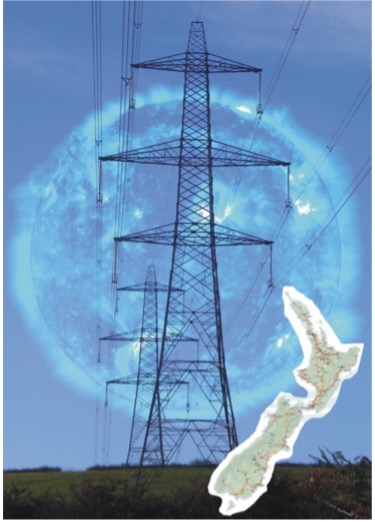
Extreme space weather can drive very large geomagnetically induced currents (GIC) in grounded systems like power grids. Recent work indicates that a 1-in-100-year storm could cause large-scale blackouts in New Zealand, with billion-dollar economic impacts. Most approaches treat GIC as quasi-DC and purely ohmic, but some argue inductive properties of the grid are critical for <10 s variations that affect peak currents, harmonics, reactive power, and voltage stability. New Zealand operates one of the densest sets of GIC sensors globally. This project will develop existing ohmic GIC models and test them against large events where rapid, high-magnitude GIC variations were observed.
Related links/publications:
Safeguarding our power grids
- Prerequisites/skills: MSc/Honours in Physics (space physics, geophysics, atmospheric- or solar-physics preferred), or similar; data analysis and electromagnetic modelling skills valued.
- Supervisor(s):
Professor Craig Rodger;
Dr Daniel Mac Manus
Plasma turbulence in the Sun’s corona and accretion disks
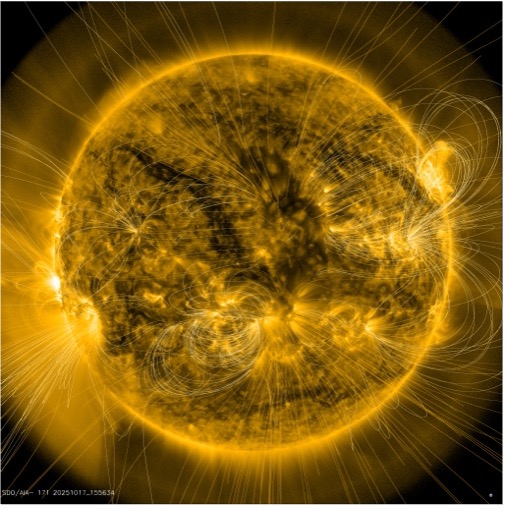
Plasma astrophysics asks how magnetised, conducting matter organises fields, flows, and radiation across the Universe — from the Sun’s corona and wind to disks and jets around black holes. Our group builds predictive models using a mix of asymptotic theory and supercomputer simulations, working to understand the fluid and kinetic plasma physics that control astrophysical processes. We test theories via collaborations with missions such as Parker Solar Probe, using detailed in-situ measurements to turn the heliosphere into a natural laboratory for wider astrophysics.
Projects are available on topics including:
- Coronal heating from Alfvén waves: how does large-scale solar magnetic geometry drive and shape Alfvénic turbulence, setting cascade pathways, and the partitioning of heat between ions and electrons? (recent work)
- Strongly magnetised accretion disks: strong magnetic fields seem to explain a variety of puzzles in high-energy accretion theory. How are such fields sustained, and what is their influence on accretion rates and other observables? (recent work)
Related links/publications: Astroplasma Group
- Prerequisites/skills: MSc/Honours in Physics or Applied Mathematics; strong background in mathematical modelling and scientific computing.
- Supervisor(s):
Associate Professor Jonathan Squire
Bayesian Computation for Compute-Intensive Analysis of Complex Measurements
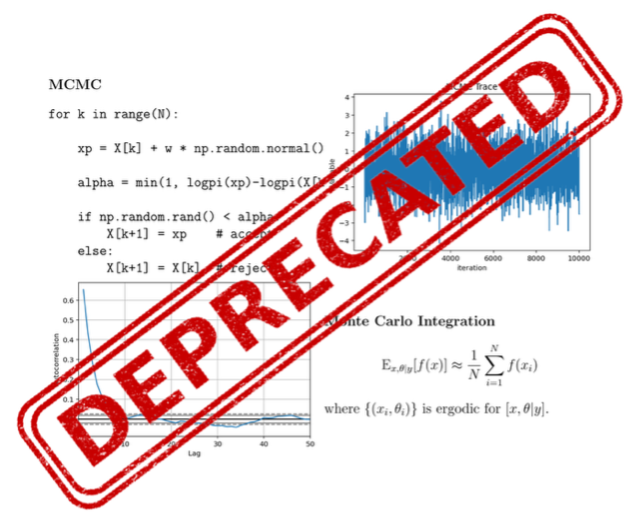
Every measurement has error, and every model is incomplete — yet science depends on drawing sound conclusions from both. This project tackles that grand challenge: how to make quantitative, defensible statements when uncertainty is everywhere. Our team develops scalable Bayesian methods that extend the boundaries of what can be computed from complex physical data, through advances in modelling and computation. By improving the machinery of inference, we make it possible to model systems once considered too complex to handle accurately. Better computation drives better science, and clearer understanding of complex systems, from shallow groundwater to evolutionary genetics. Grow your skills with the team leading advances in Bayesian computation for the analysis of complex measurement data, with opportunities spanning theory, algorithms, and industrial applications.
- Prerequisites/skills: Strong background in one or more of: statistics, physics, inverse problems, Bayesian inference, physics-based modelling, scientific computing, or applied mathematics.
- Supervisor(s):
Associate Professor Colin Fox (primary).
Possible co-supervisors include international collaborators such as Markus Eisenbach (Oak Ridge National Laboratory), Volker Oesch (TU Graz), Rob Scheichl (Heidelberg), and Oliver Ernst (Chemnitz).
Emergence of collective behaviour in active matter
Projects are available on the non-equilibrium statistical mechanics of chemically-driven active mater systems. Active matter is matter composed of large numbers of active “agents”, each of which consume energy in order to move or to exert mechanical forces. Examples of active matter span scales from self-organising bio-polymers to schools of fish and flocks of birds. The Jack group works on the theory of chemically-driven active mater, particularly focused on explicitly modelling chemo-mechanical energy coupling and exploring the emergence of collective behaviour using mathematical tools from many-body quantum mechanics.
- Prerequisites/skills: BSc (Hons), MSc or equivalent in physics or a related discipline.
- Supervisor(s):
Associate Professor Michael Jack
Solid state quantum memories and transducers using rare earth ions in magnets ★
Rare earth ions in solids provide a unique set of properties for quantum information technology devices. Rare earth quantum memories for light leverage exceedingly long coherence times for both optical and spin transitions, as well as very large ratios of inhomogeneous to homogeneous linewidths, enabling wide-bandwidth operation. Rare earths have also recently achieved prominence in microwave-optical frequency conversion for quantum signals; if made practical, this could strongly impact scaling of superconducting-qubit quantum computers. We have recently shown that rare earths in magnetic crystals could lead to significantly improved performance for both applications. We are looking for new team members to better understand this exciting new class of materials and to create improved memories and transducers.
Related links/publications:
Recent work in this area.
- Prerequisites/skills: BSc (Hons), MSc or equivalent in physics or a related discipline, or similar.
- Supervisor(s):
Associate Professor Jevon Longdell;
Dr Luke Trainor
Spin-dynamics of few dysprosium atoms in an optical tweezer ◆
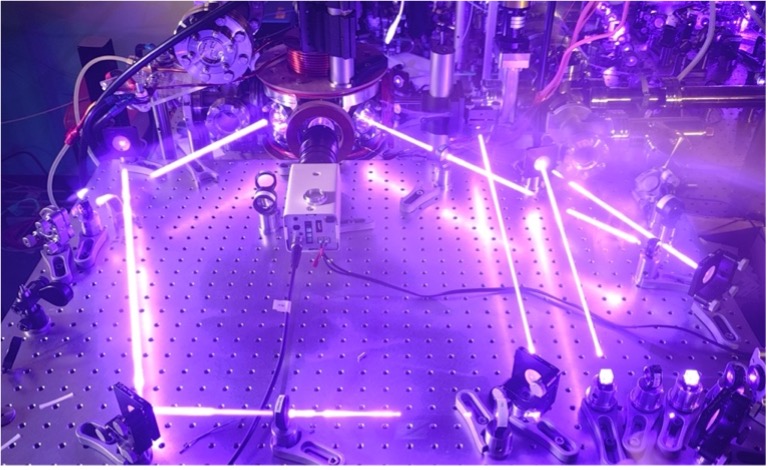
Individual atoms can be held and manipulated by tightly focused laser beams called optical tweezers. This platform enables studies of few-body physics with an unprecedented level of control, and allows for direct observation of quantum events. Dysprosium is, alongside terbium, the most magnetic atom that exists, which makes it of particular interest. It can have an appreciable magnetic atom-atom interaction in addition to the electrostatic interactions that usually dominate. Interacting dysprosium atoms are therefore expected to have rich spin-dynamics. This project aims at experimentally studying the spin-dynamics of few interacting dysprosium atoms in an optical tweezer. The research may lead to improved magnetic field quantum sensors in the future.
- Prerequisites/skills: MSc in physics or equivalent; experience with optics and/or atomic physics.
- Supervisor(s):
Associate Professor Mikkel F. Andersen
Brillouin scattering microscopy for cellular biomechanics ◆
Brillouin microscopy is an emerging technology that utilizes light-sound scattering to characterize 3D material viscoelastic properties with microscopic resolution without requiring physical access. This allows mechanical characterization in otherwise inaccessible regions, including the interior of cells or within the lens of eyes. However, light-sound scattering is a weak process and generally requires long acquisition times as well as elaborate systems to maximize sensitivity. This project develops a novel approach with beam shaping in a stimulated Brillouin microscope to overcome many limitations and translate the newly developed method into cellular biomechanics.
- Prerequisites/skills: MSc with a research component ≥25% FTE or equivalent, or a four-year Bachelor’s degree with Honours First Class or Second Class Division 1.
- Supervisor(s):
Dr Michael Taylor
Resonant enhanced nonlinear and quantum optics ★
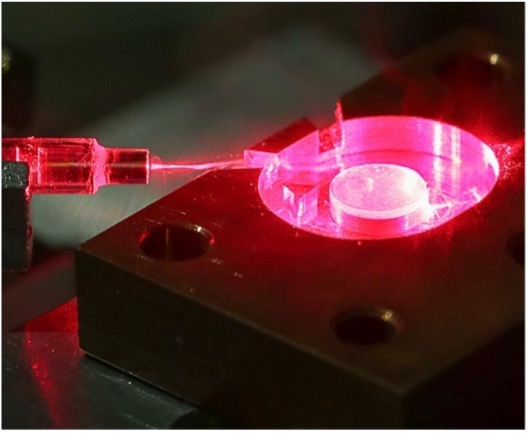
Nonlinear optics allows us to change the colour of light. Usually very high fields are required; we generate these in some of the world’s best ultra-high quality crystalline whispering gallery mode resonators, fabricated here in New Zealand. In them light is trapped at the rim of the resonator, allowing different colours of light to interact. We have several experimental projects available:
- Entangling superconducting-based quantum computers: ★
by converting microwave qubits into optical qubits we can connect (entangle) different cryogenic based quantum computers through an optical fibre. - Detecting ozone and climate gases from space: ★
we aim to detect the THz signatures of e.g. ozone in the atmosphere using nonlinear optics in a photonic platform for compact satellite missions. - Dual frequency comb spectroscopy: ★
mixing microwave and optical frequencies can generate electro-optic frequency combs, which we explore for spectroscopy.
Related links/publications:
Resonant Optics group
- Prerequisites/skills: MSc or strong BSc (Hons) equivalent in physics.
- Supervisor(s):
Professor Harald Schwefel
Rydberg atomic sensing with laser-interrogated vapour cells ★
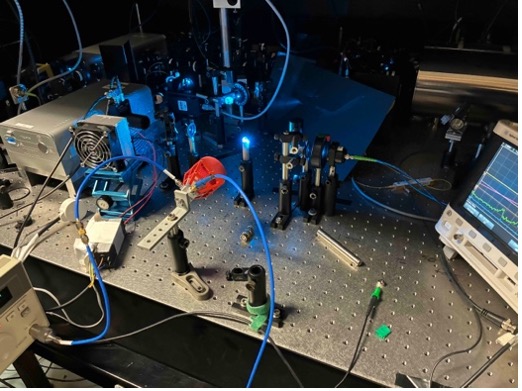
The project will deliver a working prototype of a quantum-enabled 3D scanning unit for measuring antenna patterns and polarization properties in the GHz to THz frequency domain. The transducer of the scanning unit is based on miniature non-metallic vapour cells containing rubidium atoms. Using laser light the atoms are connected to Rydberg states, where they become very sensitive to external electric fields. By appropriate choice of the atomic quantum states in play the state of polarization of the incoming field can be determined.
- Prerequisites/skills: MSc or strong BSc (Hons) equivalent in physics.
- Supervisor(s):
Professor Niels Kjaergaard
Rydberg quantum optics with ultracold atoms in optical tweezers ◆
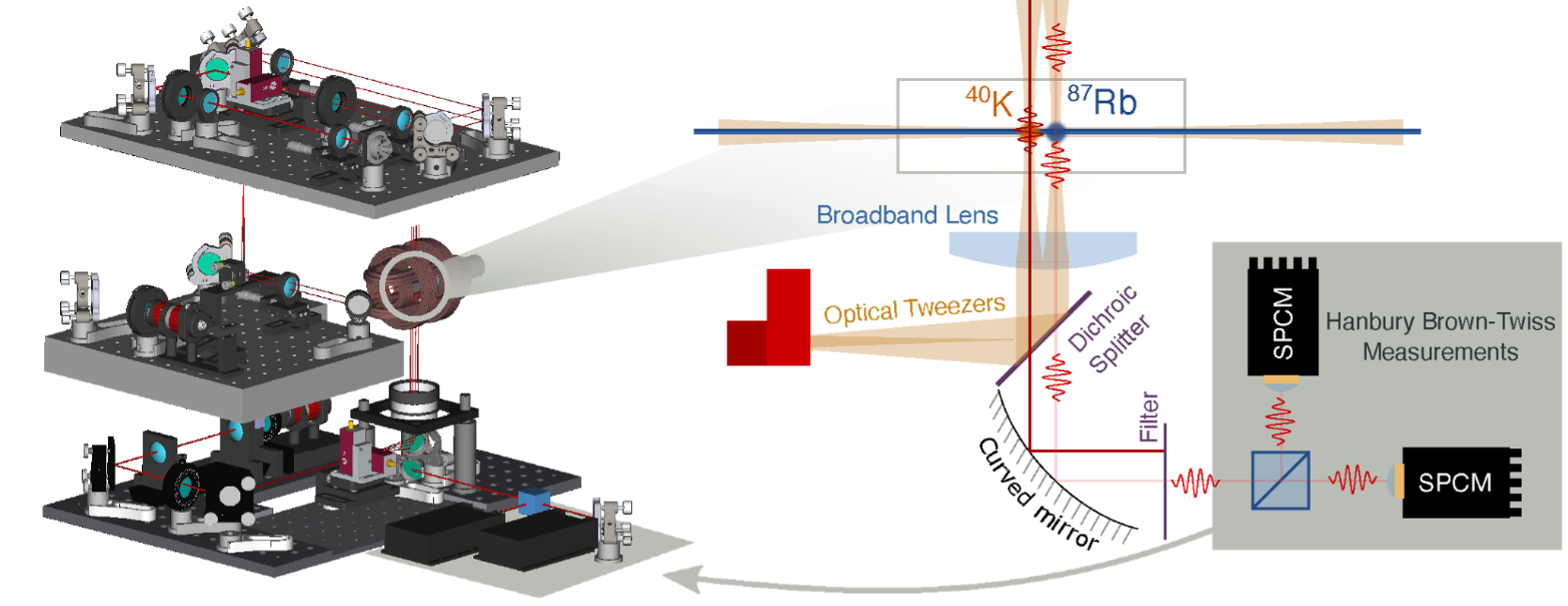
The project aims to study Rydberg-mediated interactions between ultracold atomic ensembles held in optical tweezers and is supported by a Marsden Fund Grant and the Dodd-Walls Centre for Photonic and Quantum Technologies. Over the past decade, our group has successfully used a steerable tweezer platform as an optical collider to investigate cold collisions between ultracold atomic clouds. In parallel, we have built up expertise on Rydberg electromagnetically induced transparency (EIT) in room-temperature vapour cells. This project will combine our optical tweezer capabilities with Rydberg EIT to study how the transmission of light through one ultracold atomic ensemble is affected by a photon stored in another distant ensemble, each held in separate tweezers.
- Prerequisites/skills: MSc or strong BSc (Hons) equivalent in physics.
- Supervisor(s):
Professor Niels Kjaergaard
Novel supersolid properties
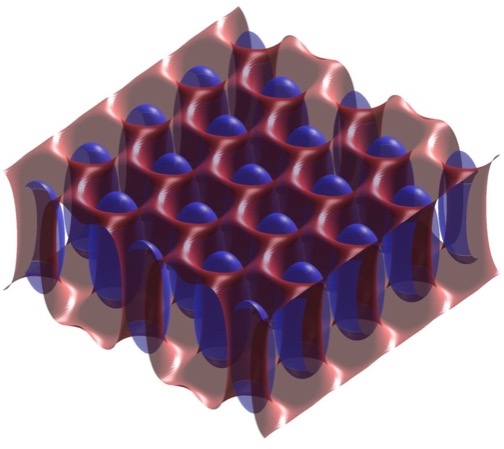
Projects available focused on equilibrium, dynamical and topological features of supersolids formed in systems with dipolar, spin-orbit and soft-core interactions. The Blakie group works on the theory of quantum materials formed from ultra-cold quantum fluids, particularly Bose-Einstein condensates. Projects will generally involve a combination of theoretical and computational methods, and are often closely related to experiments being performed by our international collaborators.
Related links/publications:
AMOQT group
- Prerequisites/skills: BSc (Hons), MSc or equivalent in physics or a related discipline, or similar.
- Supervisor(s):
Professor Blair Blakie
Exciting quantum fluids of light
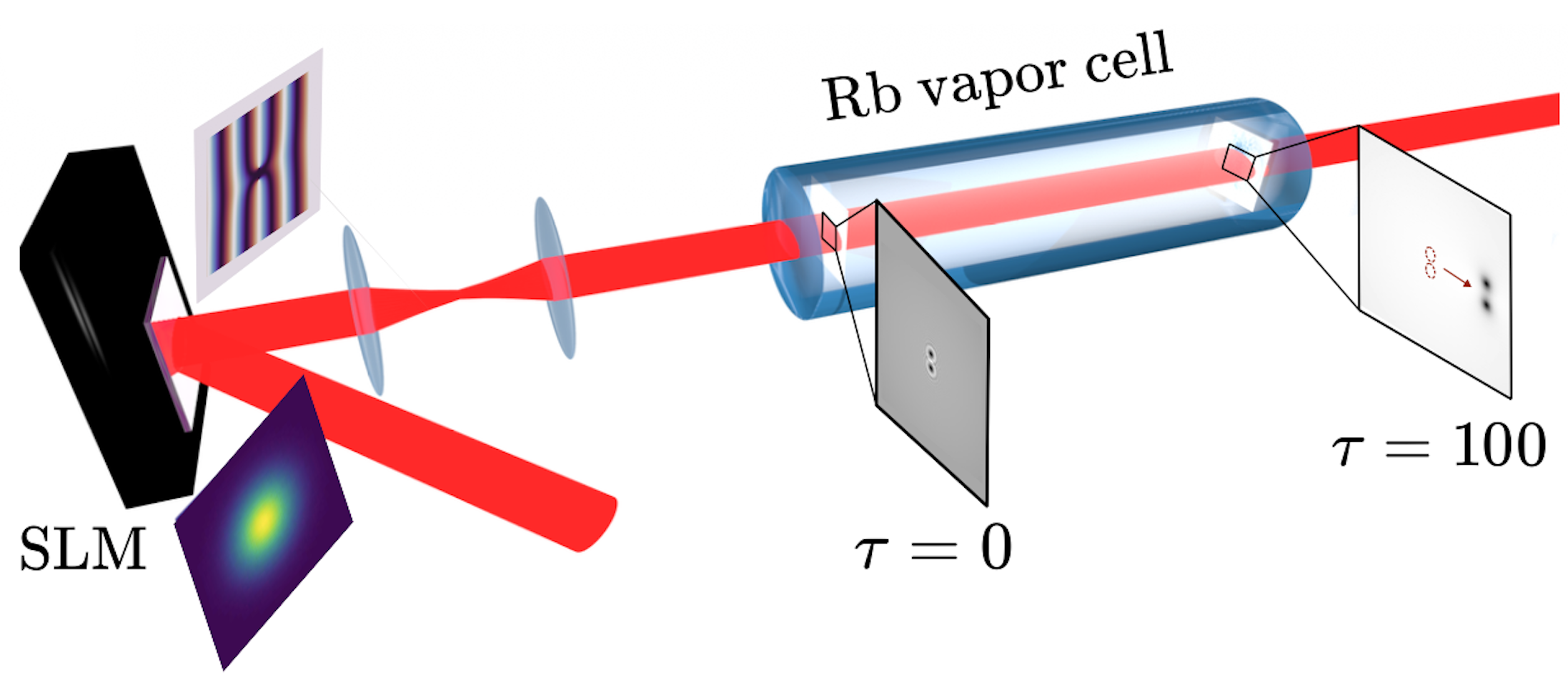
How do quantum fluids respond to high-energy forcing? A detailed understanding of quantum fluid dynamics has the potential to greatly impact emerging quantum technologies, with applications in quantum metrology and control. While turbulence studies in ultra-cold atomic superfluids are measurement-limited, quantum fluids of light are an emerging platform enabling ultra-high precision studies of superfluid dynamics. Precise and controllable excitations can be injected into this pristine optical analogue system. This research will use analytical and computational methods to study the dynamics and turbulence of quantum fluids of light, in collaboration with the experimental group of Quentin Glorieux (Paris).
Related links/publications:
Quantum fluids group at Otago
- Prerequisites/skills: MSc or strong BSc (Hons) equivalent in physics.
- Supervisor(s):
Associate Professor Ashton Bradley
Anderson localisation in ultracold gases
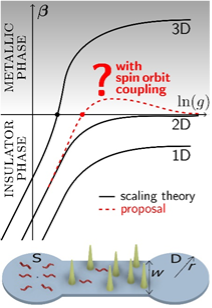
Seemingly different phase changes form universal classes, determined solely by symmetry and dimensionality of the system. This fundamental field still holds as yet unresolved puzzles. One such puzzle relates to the nature of the metal-insulator (Anderson) transition (in two-dimensional plane) in the presence of disorder, which this theoretical project aims to address. For continuous phase transitions, such as the Anderson transition, there exists a single parameter that diverges exponentially at the transition point, determined by a critical exponent unique to the specific universality class. We will build on our previous theoretical work and collaboration with experimental groups demonstrating the Anderson Transition to further explore this field.
- Prerequisites/skills: MSc or strong BSc (Hons) equivalent in theoretical physics.
- Supervisor(s):
Professor David Hutchinson