
Rope and more : Work completed on Donaghys collection

Monday, April 15th, 2013 | Anna Blackman | No Comments

Among our largest collections of business archives are the records of rope makers Donaghys Industries, who began operations in Dunedin way back in 1876. They are still in this trade 136 years later, but have also widely diversified into the rural, industrial, marine and aquaculture markets. In the 1990s the company moved its head office to Christchurch but it maintains offices in Dunedin and Melbourne.

Hocken’s relationship with Donaghys goes back to the 1980s when we received most of the current collection. In 2010 staff were invited to the company’s Bradshaw Street premises where we collected further financial records, photographs, administrative files, photographs, ephemera, and other records, some dating back over a century. Arrangement and description work was completed in 2011, increasing the size of the collection by over 50 percent to 45 shelf metres (that’s 2,500 individual items). More recently, the entire collection was entered onto our Hakena archives and manuscripts catalogue which has made the collection much easier to search and access.

Shown here are some label illustrations (MS-3560/0560) and 1960s photographs taken by Campbell Studios in Dunedin (MS-3560/0633). Two show rope manufacture processes, an in one a worker can be seen in the famous 380-metre ‘rope walk’. Another shows a bale of rope bigger than a Mini.

We are delighted that Donaghys Industries have ensured the preservation of their historic records, and are always interested in hearing from other local businesses.

David Murray


The Liquid Dossier. Nick Austin 16 February – 13 April 2013

Monday, February 18th, 2013 | Anna Blackman | No Comments

Bringing together a disparate collection of paintings and sculptures and combinations thereof, The Liquid Dossier showcases works that Nick Austin created during his 12 months as the recipient of the 2012 Frances Hodgkins Fellowship at the University of Otago.

Previous works by Austin referenced socks, fish aquariums and spider-webs and were inspired by formal structures derived from concrete poetry, ideograms, puns and crosswords. In The Liquid Dossier Austin adds the concept of the McGuffin, an object of desire that drives a narrative plot but which is ultimately unimportant to its resolution, to his art making tool box. The McGuffin in this exhibition is both the dossier of the exhibition’s title and something ineffable in each of the show’s works.

Bearing a keen interest in the tactility of language and the often-strange relationship between material and object, The Liquid Dossier also dwells on the Hocken’s function as a repository of papers and pictures. In the past year Austin’s inquiry has broadened to encompass the institutional structures of the library, archive and gallery.

Simultaneously concrete and elusive, Austin’s work is always open-ended and inconclusive. As with the contents of a dossier, the works in this exhibition are loosely bound to each other in a manner that draws our attention to overlooked or absent items. As a result his works trigger fluid, accidental associations and digressive meanings rather than convey any fixed or predetermined ideas. The disjunctive space between the titles of Austin’s individual works and what is visible in them delays the inference of meaning and creates a distance that enables poetic qualities to develop.  Austin likens his work to a poetry collection that dramatises the mysteries of the creative process.

Nick Austin, Homesick, 2012, acrylic on canvas, 1450 x 1850mm. Image reproduced courtesy of the artist and Hopkinson Cundy, Auckland.

Blog post prepared by Sarah Snelling, Registrar

Farewell Anne Jackman

Thursday, January 17th, 2013 | Anna Blackman | No Comments

Anne Jackman, Senior Reference Librarian

The Hocken whānau is sad today to be saying farewell to Anne Jackman.  As well as being an exceptional Reference Librarian and Hocken ambassador since 2001, Anne has been an outstanding manager, mentor, advocate and friend to many former and current staff members.  Well-regarded for her ability to deal with any situation with grace and good humour, we have relied on her – we hope not too much – for her organisational skills and insights, and for her ability to provide the solutions to numerous quandaries.  Long-term staff in particular attest to her integral part in establishing our convivial and supportive workplace culture.

Anne, we will all miss you, and wish you all the best in your new role at Knox.

From the staff of the Hocken Collections with all our best wishes.

New acquisition : Legend Land of Mysteries

Friday, January 4th, 2013 | Anna Blackman | No Comments

On 23 December 1953 Queen Elizabeth II and the Duke of Edinburgh arrived in New Zealand for a royal tour. It was a big deal for the country, and it’s been estimated that three quarters of New Zealanders saw the young Queen.

A new addition to the Hocken Collections is a memento of that time of optimism. Legend Land of Mysteries, written by Florence Wynn-Williams was a Christmas gift presented by the author to the Queen for Princess Anne. We have acquired the author’s copy, one of only six published, and it is the only copy whose binding matches that of the presentation copy. Consisting of children’s poems with hand-drawn and coloured illustrations, it is a delightful work with a distinctly New Zealand flavour.

One of the book’s charming illustrations:

Blog post prepared by Hocken Publications Coordinator, Pete Sime

Art in the Service of Science – Dunedin’s John Buchanan

Monday, November 26th, 2012 | Anna Blackman | 1 Comment

John Buchanan, Milford Sound, looking north-west from Freshwater Basin, 1863, watercolour 222 x 509mm. Donated to the Otago Museum by Peter Buchanan in 1898 and transferred to the Hocken Library in 1948. Hocken Pictures 7,445

It is always a surprise when encountering art works known from reproduction to discover how small they really are.  John Buchanan’s Milford Sound from Freshwater Basin 1865, is a modest in size but grand in conception.  It was made to show the wonders that lay over the Southern Alps, recently explored by James Hector of the Otago Geological Survey and went on display at the New Zealand Exhibition of 1865.

Sketches for the watercolour were made in November 1863 when the Survey’s chartered boat, the Matilda Hayes, was guided by Henry Paremata to anchor at Anita Bay at the entrance to Milford Sound.  Hector’s report to John Hyde Harris, the Provincial Superintendant, was serialized for the Otago Daily Times and conveys some of the excitement he felt:

“The scenery is quite equal to the finest that can be enjoyed by the most difficult and toilsome journeys into the Alps of the interior, and the effect being greatly enhanced as well as the access made more easy by the incursion of the sea …into their alpine solitudes.”

Hector’s sophisticated understanding of glaciation is evident:

“The sea in fact now occupies a chasm that was in past ages ploughed by an immense glacier, and it is through the natural progress of events by which the mountain mass has been reduced in altitude that the ice stream has been replaced by the waters of the ocean.  The evidence of this change may be seen at a glance.”

The head of Milford Sound was the ideal place to recuperate from the arduous six month sea journey from Port Chalmers:

“Two hours sail brought us into a fresh water basin, where we anchored, and next day, as I intended to remain here some time, a large tent was put up on shore, and everything in the yacht taken out and overhauled…”

Ever observant of life in the natural realm, Buchanan has depicted the Sound without the Matilda Hayes evident, but with frolicking dolphins and birds in residence.  Hector describes the novelty of the surrounding smorgasbord of stones, speculating optimistically on the possibility that there might be gold in the hills:

“The geological structure of the mountains around Milford Sound is more complicated than in any other part of the West Coast that I have examined.  The prevailing rock is syenitic gneiss, associated with schist, greenstone, porphyry and felspathic schist, succeeded towards the lower part of the Sound by fine grained gneiss of newer age, felstones, quartzites and clay slates.  No metallic ores were observed, but several might be expected to occur among the last mentioned group of strata, if a locality were found to have been traversed by fissures in which vein-stone could form.”

Hector had earlier that year explored an overland route to the West Coast.  He provisioned in January 1863 in Oamaru, laying in three dozen boxes of sardines, vinegar, mustard, curry and sauces as well as 3 bars of soap, five pounds of tobacco and a case of Geneva [genever, a spirit distilled from a mash of grains and flavoured with juniper berries – the original “Dutch courage” drink.]”

On this trip, John Buchanan took his share of the supplies, and camped in the Matukituki Valley for four months to botanise in the beech forest in the lower Matukituki Valley and the open tops of the mountains above the valley.  Useful research for his 1865 New Zealand Exhibition essay “A Sketch of the Botany of Otago” was undertaken, and he prepared a vegetation map of the area.  On 2 March 1863, while climbing the 2339 metre peak Mt Alta, near Wanaka Buchanan discovered a lovely flowering plant at an altitude of 6000 feet (1828.8 metres).

John Buchanan, Southern part of Lake Wanaka, 1863, watercolour 189 x 250mm. Donated to the Otago Museum by Peter Buchanan in 1898 and transferred to the Hocken Library in 1948. Hocken Pictures 7,446

After three glorious summer months spent roaming in the mountains above Lake Wanaka as well as exploring the Matukituki Valley, Lindis Pass and Waitaki Valley, Buchanan packaged up his findings, and sent them off to Joseph Dalton Hooker at Kew.  Buchanan lists this material as “328 species of which 110 are alpines from above an altitude of 3000 feet, the highest  7500 feet”.  Hooker rewarded Buchanan’s diligence by naming the Mt Alta plant Ranunculus buchanani in his honour.

Buchanan also painted a one-third life-sized version of a magnificent flowering specimen of Ranunculus lyalli, the Mount Cook lily.  This plant had been described in its non-flowering state by Hooker, and named for its discoverer, David Lyall (1817-1895), surgeon and naturalist on the HMS Acheron.  Hooker described it in Flora Novae-Zelandiae as “…the monarch of all buttercups…the only known species with peltate leaves, the “water-lily” of the New Zealand shepherds.”

John Buchanan, Ranunculus lyalli, Hook. fil. (Wanaka Lake) 1863, watercolour, pen and ink, 686 x 425mm, exhibited at the New Zealand Exhibition, Dunedin 1865, exhibit 876 (9) with the title Ranunculus lyalli, Hook. fil. new species. One third natural size. Donated to the Hocken Library by Professor Geoff Baylis in 1963. Hocken Pictures 20,327.

Buchanan was one of many plantsmen to supply Kew with material from the colonies, and how this was treated is the subject of a lecture by science historian Jim Endersby from Sussex University, who will give the provocatively titled talk “Imperial Science: the invention of New Zealand’s plants” at the  Hutton Theatre, Otago Museum on Thursday 29th November at 5.30pm.

An exhibition of John Buchanan’s work will be on display in the Hocken Library Gallery from 22 November to 9 February 2013.  Linda Tyler will give a floortalk in the exhibition at 10am on Saturday 1 December 2012.

Blog post prepared by Linda Tyler, Director, Centre for Art Research, The University of Auckland, P B 92019

Auckland DDI 09 923 9977


WhakanuiaTe Wiki o te Reo Māori

Wednesday, July 25th, 2012 | Anna Blackman | 1 Comment

 
E ngā kōtuku rerenga tahi, koutou ngā manu tioriori, i waiho mai i ngā raukura nei hei tākiri i te manawa, hei hiki i nga parirau, kia taea ai te hōkai ki te rangi, tēnā koutou.

Before the written word in New Zealand, Māori lived with an oral language reaching back to the homeland of Hawaiki.  Within an oral tradition there is company and conversation, ritual and performance, and the warmth and intimacy of the human voice.  That voice is carried on the living breath, linking the present to the ancestral past.

It was into this world of oral knowledge that the early Europeans introduced a print culture and its attendant literacy.  Once Māori mastered the art of writing as well as an introduced orthography, they became prolific correspondents. Māori wrote not only to each other, but also to the new governing power.  In their correspondence, Māori developed a written convention based largely on the protocol of the marae and particularly that of whaikorero. Letters on display, one from Wiremu Tamihana Tarapipi Te Waharoa illustrate this use of the oral tradition extending into letter writing.

The introduction of literacy also saw changes to Māori language use with a shift of emphasis from the ear to the eye. It was no longer necessary to commit the words of rituals to memory because they could be written down and referred to when required. This resulted in Māori families across Aotearoa committing genealogies, tribal histories, chants and proverbs to the written page rather than to memory. Many of these notebooks have found their way into heritage collections such as the Hocken and some of these are included in the exhibition.

As the literate Māori population burgeoned in the 1830s and 1840s, Europeans were also employing learning technologies intent on gaining insight and understanding into Māori language, knowledge and culture. Illustrating this are two taonga from Europeans who lived in the Waikouaiti area.  Wesleyan Missionary James Watkin’s notebook of collected Māori vocabulary shows Kai Tahu dialect and Watkin’s detailed enthusiasm for learning te reo rakatira. Also on display are Land agent W.B.D. Mantell’s unique bundles of cards recording phonetically, the names of hapū of Otago. Presumably they were developed by Mantell as a mnemonic learning device to understand the relationships between groups of hapū and their associated land and natural resource rights.

On display at the Hocken Collections is a simple exhibition of 10 taonga. The exhibition was co-curated with Associate Professor Poia Rewi, Dr Katharina Ruckstuhl and Nikita Hall from the University of Otago who are researching Māori Language use among Dunedin whānau. We wanted to bring together a collection of taonga that celebrate the enduring mana of the Māori language; taonga that illustrate how the oral tradition, invigorated by the written word, continues to express the tone and soul of the people.

Tēnā anō rā tātou katoa. Ka huri.
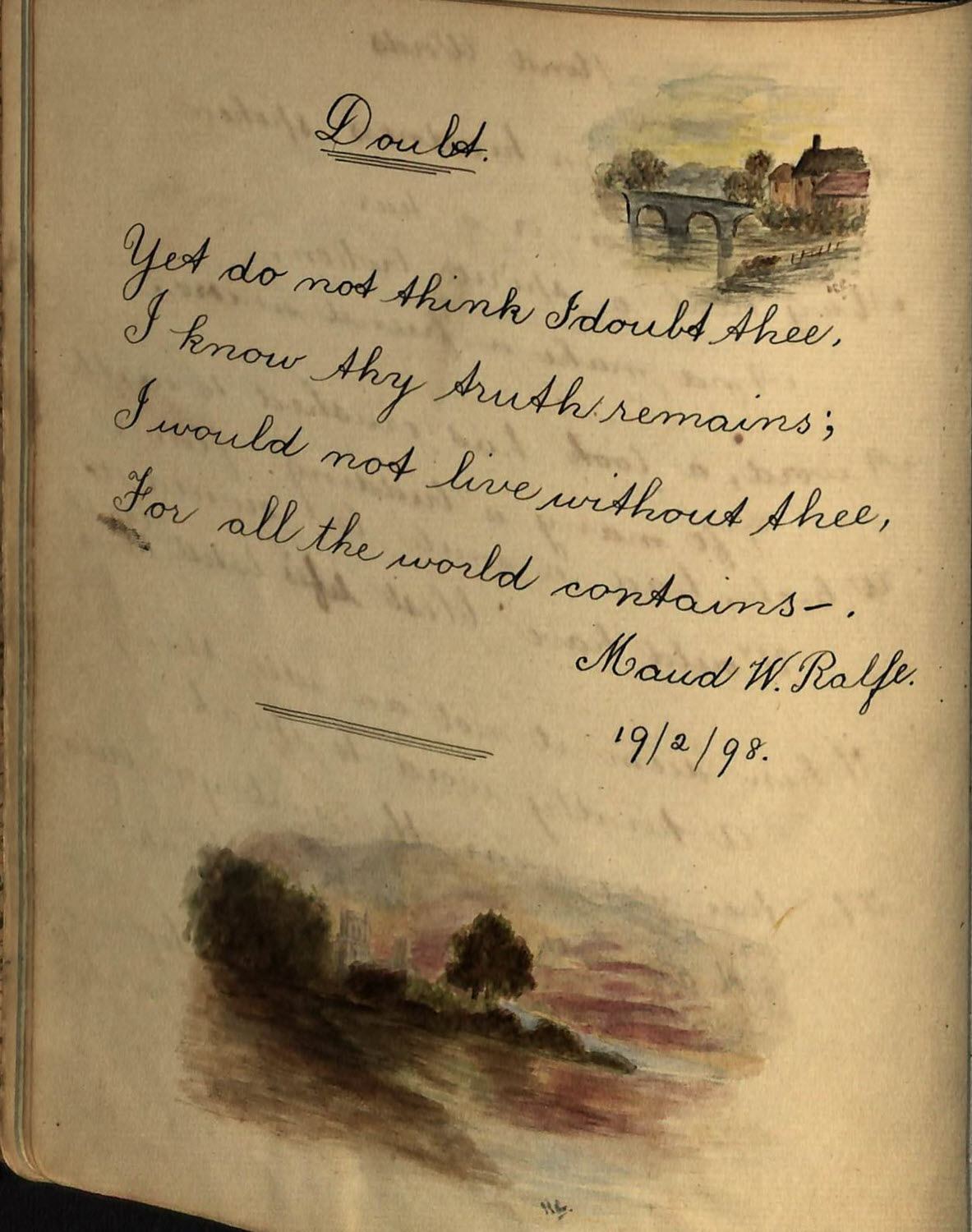
ITEMS ON DISPLAY
1. A Korao no New Zealand. Sydney: Printed by G. Howe, 1815. Facsimile. WI. Hocken Collections.
2. Alphabet sample written by Hongi Hika, c.1814. No.68 in Samuel Marsden Correspondence 1813-1815, MS-0054, Hocken Collections.
3. Letter from Wiremu Tamihana Tarapipipi Te Waharoa to Edward Shortland, 1 May 1866. Shortland Papers, MS-599/1, Hocken Collections.
4. Letter from Matene Te Whiwhi, Otaki, 19 November 1863. Shortland Papers, MS-0385/002, Hocken Collections.
5. Mohi Ruatapu (Ngāti Porou) Manuscript containing whakapapa, karakia, historical narratives, May 1875. MS-0045c, Hocken Collections.
6. Hauhau Prayer Book entitled Karakia mo te Hauhau, c.1860. Misc-MS-0175, Hocken Collections.
7. Notebook of Southern place names, waiata and vocabulary, c.1929. Ulva, L. Belsham Papers, Misc-MS-0933/002, Hocken Collections.
8. Vocabulary of Māori words compiled by Reverend James Watkin at Waikouaiti, c.1840. MS-0031, Hocken Collections.
9. W.B.D. Mantell, Names of hapū of Kai Tahu, 1848. MS-0402, Hocken Collections.
10. Digitised pages 1-15 of vocabulary of Māori words compiled by Reverend James Watkin at Waikouaiti, c.1840. MS-0031, Hocken Collections. Audio by Takiwai Russell-Camp (Kai Tahu).

Jeanette Wikiara is the Māori Resources Portfolio Librarian at the Hocken Collections, University of Otago.

“Join the swinging tea set!”

Thursday, July 12th, 2012 | Anna Blackman | 1 Comment

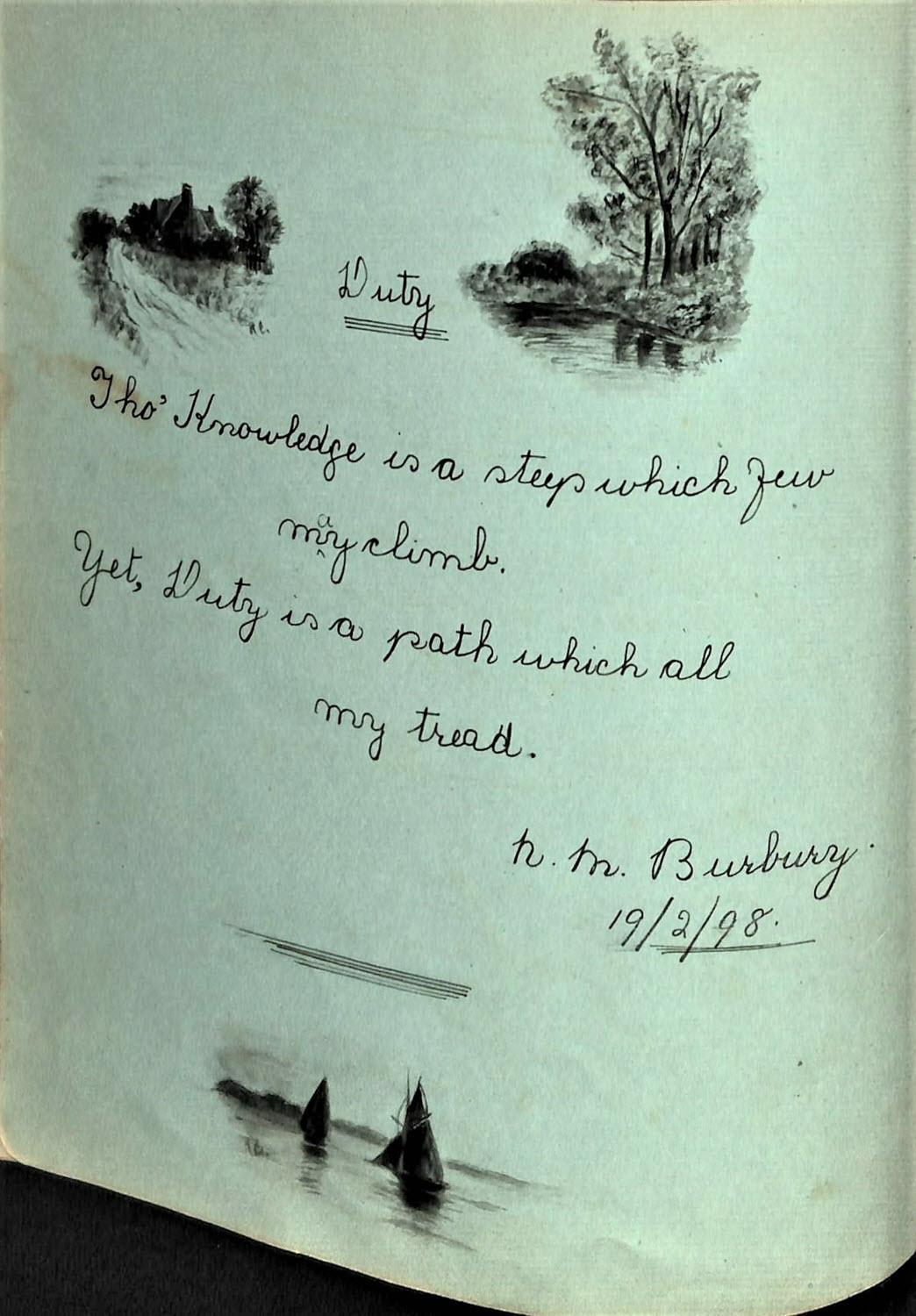
Today we’d be surprised to see tea marketed to teenagers.  However, in the 1960s, the New Zealand Tea Council made a concerted effort to engage with youth culture, promoting their product with brightly coloured ‘mini-magazines’ which included posters they described as ‘tea-riffic’ and ‘psychedelic.’  These posters were reported to have ‘caused a sensation right around New Zealand,’ ‘making the scene […] anywhere the “switched on” movement gathered.’

 
One of the ‘mini-mags’ c.1968 was clearly published in the warmer months.  Featuring a range of recipes for iced tea drinks and ‘go-withs,’ it presented tea as the go-to drink for any occasion.  On one page, readers are encouraged to ‘throw a partea,’ with recipes provided for alcoholic and non-alcoholic punches.  A recipe for one of these, ‘Tea-juana punch,’ is provided below.  Another page promotes iced tea as the right drink for the ‘surfin scene,’ and offers a glossary of ‘surfin’ terms.’

Featured also is a ‘Pop Profile’ of Auckland band the Dallas Four (incidentally the winners of the 1968 nationwide ‘Tea Rave Band Contest’).   They are photographed with their preferred drink of iced lemon tea.  Trade publications (titled Teamen) from the Tea Council indicate that along with the ‘Tea Rave’ contest, a wide range of events were sponsored throughout the country to promote tea to a younger audience.  They included a ‘Tea Dress’ contest, a ‘Tea is Fashion’ event, and a ‘Great Tea Race.’
As the Tea Council was simultaneously directing its advertising towards older age groups, the intensity of their push could well have been a response to something happening in the marketplace – perhaps competition from coffee?  Instant coffee was introduced to New Zealand in the 1960s, and a quick check of a New Zealand Official Yearbook from the period suggests that the Tea Council might have had valid cause for concern.  In 1968, New Zealand imported 7,179,006 tonnes of tea, and 3,972 tonnes of raw coffee.  The corresponding quantities in 1970 were 7,636,228 tonnes and 6,123 tonnes, respectively – reflecting quite a caffeinated leap ahead for coffee!

The Council’s promotion of tea to teens revolved around the concept of tea as a new and exciting option, part of the counter-culture almost;  one that could set a drinker aside from their peers as a ‘fashion leader’ or a ‘trend setter.’  The kind of people who ‘woke up to tea’ were ‘not afraid to laugh at convention.’  Drinking tea was presented as a rebellion of kinds; a chance to ‘sort the way-outs from the never-ins.’

The advertising recognises teenagers as active consumers with ample leisure time.  One poster encourages the ‘tea-in,’ a ‘laze-around listen-along tea session where you invite your friends, listen to the latest and just be downright different. […] A ‘tea-in’ can be as mobile as you like.  Load your surfboards, transistor record player, bikini and suntan lotion into the car, pack a couple of thermos flasks and throw a ‘tea-in’ beach style.’

It’d be interesting to know how these advertising efforts were received.  Do you have any recollection of them?   Did they convince you that ‘tea is the fashion?’

Tea-juana Punch
3 tablespoons tealeaves
1 quart boiling water [4 ½ cups]
4 cups sweet white wine
½ cup lemon juice
Orange slices
Pineapple sticks
Whole strawberries or cherries
Lemon slices

Pour briskly boiling water over tealeaves.  Let stand for 5 minutes; add wine and lemon juice and pour over ice.  Garnish with fruit.  Serves 8 to 10.

Sources
MS-3890 Box 18 [Promotional material relating to beverages]
The New Zealand Official Yearbook (1971)
Teamen (April 1968, June 1969 and September 1969)
www.teara.govt.nz/en/food-and-beverage-manufacturing/8

Blog post prepared by Kari Wilson-Allan, Assistant Archivist

The New Zealand Women’s Weekly

Monday, June 25th, 2012 | Anna Blackman | 1 Comment

Our earlliest issue from 1933

New Zealand’s longest running women’s magazine is turning 80 this year. The New Zealand Woman’s Weekly has been celebrating recently after more than 4000 issues. The magazine has remained popular over its 80 year history and it is the most highly used periodical title in the Hocken. Students and researchers have been using the New Zealand Woman’s Weekly for all sorts of research, and one of the most recent examples of this was Frances Walsh’s book, “Inside stories: a history of the New Zealand housewife“.
 
2 January 1941
While the Hocken has a good collection of the New Zealand Woman’s Weekly, including some microfilm, it is far from complete. From the 1930s to the late 1960s we have many gaps. We would love to receive any New Zealand Woman’s Weekly issues that people don’t want anymore and we need. We rely mostly on public generosity for these older issues.


7 July 1986
 Please email or call us if you think you might have something, we would love to hear from you.


Some recent issues

Email: serials.hocken@otago.ac.nz   Ph 03 479 4372


Blog post prepared by Library Assistant – Periodicals, Megan Vaughan

Preparation for the Transit of Venus in 1882

Wednesday, May 30th, 2012 | Anna Blackman | 1 Comment

The 1882 transit of Venus, attracted widespread interest as it has in 2012. Two official observatories were designated in Otago: at Dunedin (with observers R. Gillies, A. Beverley and Henry Skey), and at Clyde (Dr James Hector, Director of the Colonial Museum in Wellington). We are fortunate that the Hocken Collections include a letter written by Hector about his experiences at Clyde as well as a photograph of his temporary observatory for the transit due on 7 December 1882.

Temporary observatory at Clyde, 1882. From left, unknown, Rev Mr Clinton, James Hector (in observatory. The telescope is a six-inch Cook telescope, on loan from Mr G.V. Shannon of Wellington).
Hocken Collections: S08-223. The photographer is unknown
 A few years earlier there had been another transit of Venus, but observations throughout New Zealand were generally disappointing because of poor weather. Central Otago skies are generally clearer than most other parts of the country, and it seems likely that Hector decided to make the observations there himself, having missed out in 1874 due to cloudy weather in Wellington. He wrote to his wife, Georgiana, a few days before the Transit was due to tell her of the preparations that had been made. His letter (MS-443-3/21) is written, partly in ink and partly in pencil, on the back of telegraph forms:
Clyde
4 Decr. 1882
My dear Georgie
I am now ready for the Transit having finished the fitting up of the Observatory & nothing remains but to get my chronometer error and to practise with the Telescope & with my assistants so that they may be well drilled in their duties. Whenever I have been able to leave I have been off in various directions to see gold diggings & mines & last night I gave a lecture to an audience of about 200 which is a large number for this place. Some of them drove in 20 or 30 miles to hear it. I had made a lot of diagrams  on blank calico & it went off very well. So you see I have not been idle. There are a few very nice folks here but as a township it has gone back sadly. Indeed the whole of this district has quite a deserted look whereas it was at one time the most bustling part of N.Z. The diggers have all gone to other places but have left lots of good rich deposits quite untouched. The expense of living & of getting water for washing the gold has been the great drawback. If they would only contrive machinery to make the big river lift up part of its water to the level of the Plains there might be abundance of food grown & abundance of gold obtained.
Mr. & Mrs. Walter Johnston with Werry & Blair spent Wednesday night here, which made a pleasant change. They were such a mess of dust after coming thro’ the gorge but seemed to have enjoyed their trip up Lake Wakatipu. They were also at the Wanaka Lake. I was there last Sunday & found it lovely. I had not seen it for 18 years! & found very little change – except a few houses & farms, very little planting of trees, but a great destruction of native vegetation of all kinds by fires & rabbits. The borders of the lake & the little Islets all look quite bare. In the forenoon I basked in the sun in a beautiful garden that belongs to the hotel by the side of the Lake. It reminded me of Lucerne somewhat. In the afternoon I drove to see the Govt nursery garden where they raise trees for distribution in the district & in the evening went for a sail on the Lake in the Moonlight with a lot of children. I must take you to see the Wanaka some day. In the course of six months they will have a fine steamer on it.
I rode over to Galloway one day with Mr Clinton the clergyman to call on the Rees family who used to live in the Wakatipu Lake in olden days. One of the girls is going to be married to a young Clinton in a few days (a lawyer here). They have made Galloway such a pretty place – but he has only been managing for Robt Campbell & he has suddenly got notice to leave which is very hard on him. Another day I rode south to Alexandra & —— the river to examine  some new reefs near to where Frasers station is. He is down in Dunedin at present so I have not seen him.
I have a little sitting room & bed room at a queer tumble down Inn, kept by Mrs ?George, a fat old lady who makes us very comfortable. Ashcroft sleeps in the Observatory hut but has his meals with us. The Observatory is just out of the town on the edge of a plain that extends about 7 miles before it reaches the hills on the other side of the valley. I have taken possession of an empty old Iron house of four rooms & have fitted up all the topographic fixings & led in wires from the Telegraphic office in the Town so that we send messages direct. In front of the hut I have put up a canvas tent —— for observing from with the big telescope. I have lots of visitors on fine nights to see the stars thru it. We have had many dull days since I came up but the nights are generally fine. Last night we had hard rain for the first time (Sunday).
I hear the coach coming past the obs. so must run over with this. I will start back on Friday & hope to get home about Wednesday week.
With much love to all
Your J. Hector
Transit day was fine over most of New Zealand, and the Evening Post (7 December 1882) reported an almost unqualified success for the New Zealand observations. “The only failure among the more important observations was that of Dr Hector, at Clyde, whose view was vexatiously intercepted by a dense cloud almost at the very instant of contact. There are, however, amply sufficient complete onservations for all the purposes aimed at, and the 7th December 1882 will long stand as a red letter day in the annals of astronomy”
Blog post very kindly prepared by regular Hocken researcher, Simon Nathan.

Music at Hocken

Wednesday, May 23rd, 2012 | Anna Blackman | No Comments

It’s New Zealand Music Month, and a good time to (re)introduce the Hocken recorded music collection! We currently have over 16,000 items in various formats (vinyl, CD, 78rpm discs and cassettes), and are increasing our collection holdings constantly. We collect all genres of New Zealand music (with special emphasis on Otago and Southland recordings), and acquire major current releases, as well as all releases and re-releases from the re-born Flying Nun label.
CD stacks at the Hocken
We don’t only collect current music on CD. While CDs still dominate as a physical format, the not-so-humble vinyl LP and 7” disc have made a recent resurgence. A number of major New Zealand releases have been issued on vinyl, including Crowded House’s Intriguer, Flight of the Conchords’ I Told You I Was Freaky, the upcoming Ladyhawke album Anxiety, and The Veils Sun Gangs. Vinyl releases from local artists such as Opposite Sex, The Aesthetics, The Futurians, and Onanon have also been acquired for Hocken’s collection, as have vinyl re-releases by The Dead C, The Bats and the 3Ds. The recent boutique (400 copies only) Toy Love album Live at the Gluepot, was a vinyl only release, available only from Real Groovy on International Record Store Day (http://www.recordstoreday.com/Home). Considering the band’s Dunedin roots (they started as The Enemy), it was vital we obtained a copy (which we did)! The album sold out on the day, and is now out-of-print, and in-demand. More details can be found here http://www.toylove.co.nz
Parlophone 78rpm disc label from 1927

Much of Hocken’s music is rare. The earliest recording held is a 78rpm disc of Wellington baritone John Prouse singing ‘The Maid of Morven’, recorded in London in 1905. We hold the first New Zealand recordings – concert performances of Ana Hato and Deane Waretini from 1927. Early Flying Nun releases are also rare (and valuable), as many have never been re-issued, and are viewed enthusiastically by international and local collectors. We are fortunate to hold such an extensive collection of these rarities, and we invite you to come and (re)discover our music. More information on Hocken’s music collections can be found here http://library.otago.ac.nz/hocken/music.html.

Blog post prepared by Amanda Mills, Liaison Librarian – Music and AV
 
Anna Blackman anna.blackman@otago.ac.nz
 

Any views or opinion represented in this site belong solely to the authors and do not necessarily represent those of the University of Otago. Any view or opinion represented in the comments are personal and are those of the respective commentator/contributor to this site.